
ZDS-MetalRebuild Metal Repair Epoxy for Cold Repair
Metal repair epoxy supports selected industrial rebuilding, dimensional restoration, localized sealing, and metal bonding tasks without making hot work the primary repair method. Compare routes by equipment, substrate, damage, service conditions, and repair function. Confirm the exact grade, preparation, working time, cure requirements, and service limits against current ZDSChem technical documentation.
Series Definition
What ZDS-MetalRebuild Covers
ZDS-MetalRebuild covers metal rebuilding, cold repair, dimensional restoration, leak sealing, and structural bonding materials. It helps buyers assess the failure before comparing a repair compound with welding, machining, replacement, or another engineered method.
Metal Rebuilding
Restore localized material loss where the repair objective and current product documentation support the application.
Cold Repair
Evaluate a controlled repair route where hot-work restrictions, shutdown conditions, or access affect the decision.
Dimensional Restoration
Rebuild worn or undersized areas before checking the required fit, profile, alignment, or finish.
Sealing and Bonding
Assess selected sealing points or metal interfaces after confirming service conditions and design requirements.
ZDS-MetalRebuild TDS Library
Compare metal rebuilding and cold-repair products by application, service temperature and cure profile, then download the model-specific technical data sheet.
| Model | Product & best for | Service temperature | Working time (25°C) | Cure profile | TDS |
|---|---|---|---|---|---|
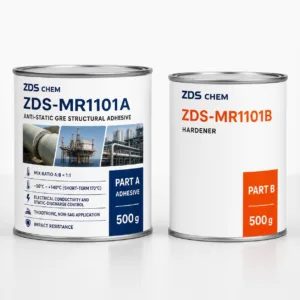
| ZDS-MR1101 | Anti-Static GRE Structural AdhesiveGRE/FRP pipe joints and anti-static oil, gas, offshore or desalination service. | -50°C to +140°C Short-term 170°C | 30-45 min | 24 h Room temperature | |
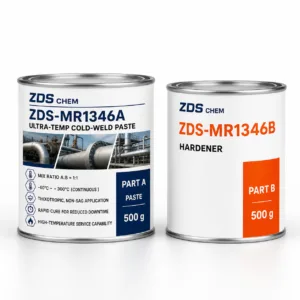
| ZDS-MR1346 | Ultra-Temp Cold-Weld PasteHigh-temperature steam and oil/gas pipelines; emergency leak and metal repair. | -40°C to +300°C | 5-15 min | 4-6 h initial 24 h full cure | |
| ZDS-MR5017 | Quick-Alloy Repair CompoundFast repair of cracks and holes in pipes, valves, pumps and metal castings. | -50°C to +100°C | 5-15 min | 5-20 min initial 24 h full cure | |
| ZDS-MR5000 | Cast Steel Repair CompoundRebuilding cast-steel pumps, valves, flanges, fittings and machinery. | -60°C to +150°C | 30-45 min | 24 h | |
| ZDS-MR5001 | Cast Iron Repair CompoundRestoring cast-iron pumps, housings, valves and pipe fittings. | -60°C to +180°C | 30-45 min | 24 h | |
| ZDS-MR5002 | Steel Repair CompoundGeneral steel rebuilding on pipes, flanges, valves and industrial equipment. | -60°C to +180°C | 30-45 min | 24 h | |
| ZDS-MR5003 | Copper Repair CompoundCopper and bronze repair on heat exchangers, tube sheets and valves. | -60°C to +150°C | 30-45 min | 24 h | |
| ZDS-MR5004 | Aluminum Repair CompoundAluminum flanges, pipe fittings, castings and lightweight components. | -60°C to +180°C | 30-45 min | 24 h | |
| ZDS-MR5005 | Stainless Steel Repair CompoundStainless tanks, pipelines, pumps, valves and corrosion-resistant equipment. | -60°C to +180°C | 30-45 min | 24 h | |
| ZDS-MR5006 | Fiberglass Repair CompoundFiberglass, composite structures and protective lining repair. | -60°C to +150°C | 30-45 min | 24 h | |
| ZDS-MR5007 | Machinable Aluminum Repair CompoundDimensional restoration where cured aluminum repair must be machined. | -60°C to +180°C | 30-45 min | 24 h | |
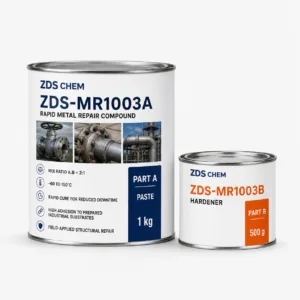
| ZDS-MR1003 | Rapid Metal Repair CompoundEmergency repairs on pipes, valves and flanges where downtime is critical. | -60°C to +150°C | 5-15 min | 6 h | |
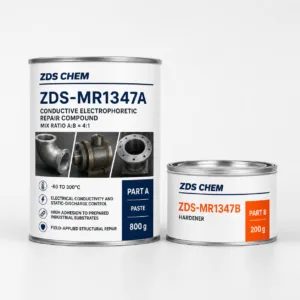
| ZDS-MR1347 | Conductive Electrophoretic Repair CompoundConductive repair of metal parts and components used in electrophoretic systems. | -60°C to +300°C | 30-45 min | 24 h | |
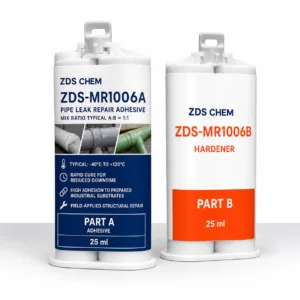
| ZDS-MR1006 | Pipe Leak Repair AdhesiveRapid leak repair on PVC and PPR pipes and fittings. | -40°C to +120°C Typical | 5-15 min | 10-20 min initial 24 h full cure | |
| ZDS-MR5018 | Nano-Ceramic AdhesiveBonding and repair of ceramic, glass-lined and mineral components. | -40°C to +120°C Typical | 30-45 min | 4-6 h initial 24 h full cure | |
| ZDS-MR5019 | Multi-Purpose Repair CompoundGeneral repair across metal, ceramic, glass and industrial pipe substrates. | -40°C to +120°C Typical | 30-45 min | 4-6 h initial 24 h full cure | |
| ZDS-MR1348 | Conductive Electrophoretic AdhesiveConductive bonding and rebuilding of metal components in electrophoretic service. | -60°C to +300°C | 30-45 min | 24 h | |
| ZDS-MR5008 | Super Metal Repair CompoundHeavy-duty rebuilding of pumps, valves, flanges and industrial pipelines. | -40°C to +120°C Typical | 30-45 min | 4-6 h initial 24 h full cure |
Product Subtypes
Metal Repair Epoxy Routes to Compare
Compare metal repair epoxy by repair function rather than by the word epoxy alone. Define the job, required final condition, service environment, and information needed for a technical recommendation.
Rebuilding Compounds
Consider localized metal loss caused by wear, corrosion, impact, or service damage, with the original geometry recorded.
Cold Repair Materials
Review isolation, surface condition, access, repair thickness, and return-to-service requirements.
Restoration Materials
Provide measurements, tolerances, loading conditions, and any machining or finishing steps required.
Sealing and Bonding
Review fluid exposure, pressure, joint design, movement, and failure consequences against defined acceptance criteria.
Equipment
Metal Repair Situations and Equipment
Start with the equipment problem, not only the material name. A pump casing with erosion, a damaged valve flange, and a pipe section with wall loss can require different repair decisions even when each involves a metal surface.
Pump Casings
Review erosion, corrosion, damaged sealing areas, worn fits, and localized surface loss on pump components.
Valves and Flanges
Define sealing-surface damage, bolt-area damage, corrosion, dimensional loss, and the pressure-service context.
Pipes and Fittings
Distinguish localized loss from damage requiring reinforcement, replacement, or an engineered pressure-boundary solution.
Metal Components
Describe the component function, access, movement, and finish required for bases, brackets, housings, or fixtures.
Repair Assessment
Substrates and Damage Types to Record
Identify the metal or suspected metal, coatings, contamination, moisture, surface profile, and soundness around the visible damage. Steel, cast iron, stainless steel, and aluminum can require different preparation and compatibility checks.
FEATURED SOLUTION
Selection Guide
Use the epoxy repair material selection guide to organize substrate, damage, exposure, and repair requirements.
Epoxy vs Welding
Compare metal epoxy with welding when shutdown, hot work, design, safety, or service conditions affect the route.
Technical Consultation
Submit project service conditions for a project-specific review by ZDSChem.
Selection Factors
Information Used to Narrow the Repair Route
A technical recommendation depends on the substrate, failure, service conditions, repair objective, job-site constraints, and purchasing requirements. Provide complete project information before selecting a grade or requesting a sample.
Substrate
Identify the metal, surface condition, coating, corrosion state, contamination, and preparation access.
Damage
Record the cause, dimensions, depth, edges, voids, cracks, and condition of the surrounding material.
Service Exposure
Report fluid, chemical contact, temperature, pressure, immersion, vibration, movement, and thermal cycling.
Repair Objective
Define sealing, rebuilding, bonding, dimensional recovery, protection, or another maintenance objective.
Job Conditions
Provide shutdown time, hot-work restrictions, access, tools, application space, cure environment, and inspection method.
Procurement
State sample quantity, document needs, pack information, target market, planned volume, and repeat-supply expectations.
Application
Application and Curing Considerations
Product selection and job-site application are separate decisions. Make the equipment safe and compare actual conditions with current instructions. Ratios, working times, thicknesses, cure conditions, limits, resistance, and pressure suitability are product-specific.
01
Application Guides
Use current application guidance when planning preparation, mixing, application, cure, and inspection.
02
Technical Data Sheets
Confirm grade-specific properties, instructions, service limits, and other technical requirements.
03
Safety Data Sheets
Review current safety information and follow applicable handling and site procedures.
Repair Boundaries
When Another Repair Route May Be More Appropriate
Metal repair epoxy is not automatically suitable for every failure. Welding, machining, replacement, mechanical reinforcement, or another ZDSChem series may be more appropriate after assessing the equipment, service conditions, and consequences of failure.
Apply relevant engineering, plant
pressure, and safety requirements to critical or regulated service.
Do not treat a live leak, unstable
component, or contaminated surface as a routine sample application.
For damage beyond a localized area
determine whether reinforcement, replacement, or redesign is required.
Check chemicals, temperature, pressure
movement, and loading against current product documentation.
A successful visual repair does not prove
long-term performance or approval for another application.
Related Series
Related ZDSChem Repair Routes
The appropriate route may sit outside metal rebuilding when failure involves a larger structural area, severe wear, wet service, high temperature, chemical exposure, or an elastomer component. Compare each category against the actual application.
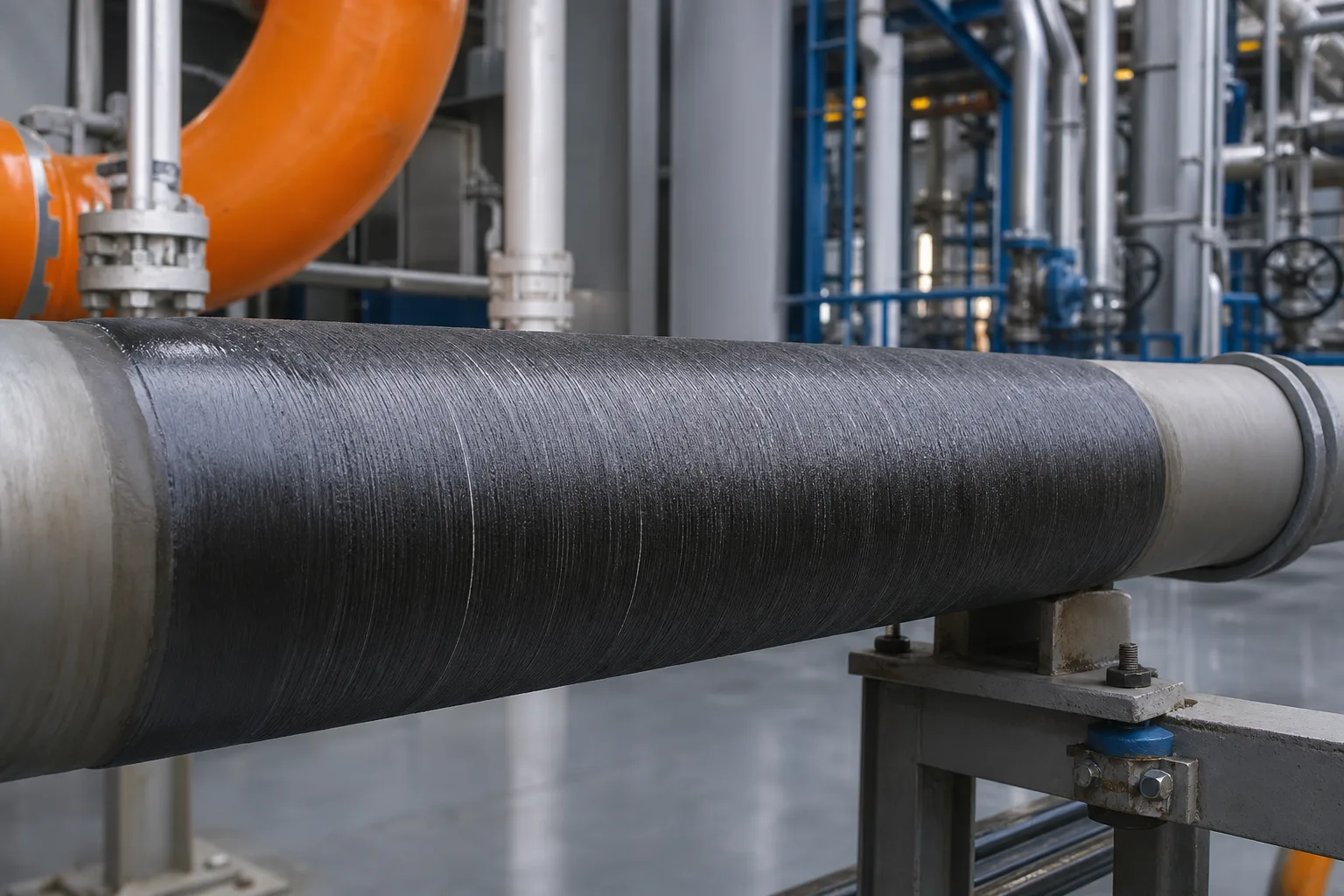
Composite Reinforcement
Compare ZDS-CompositeWrap for pipe reinforcement or structural laminating requirements.
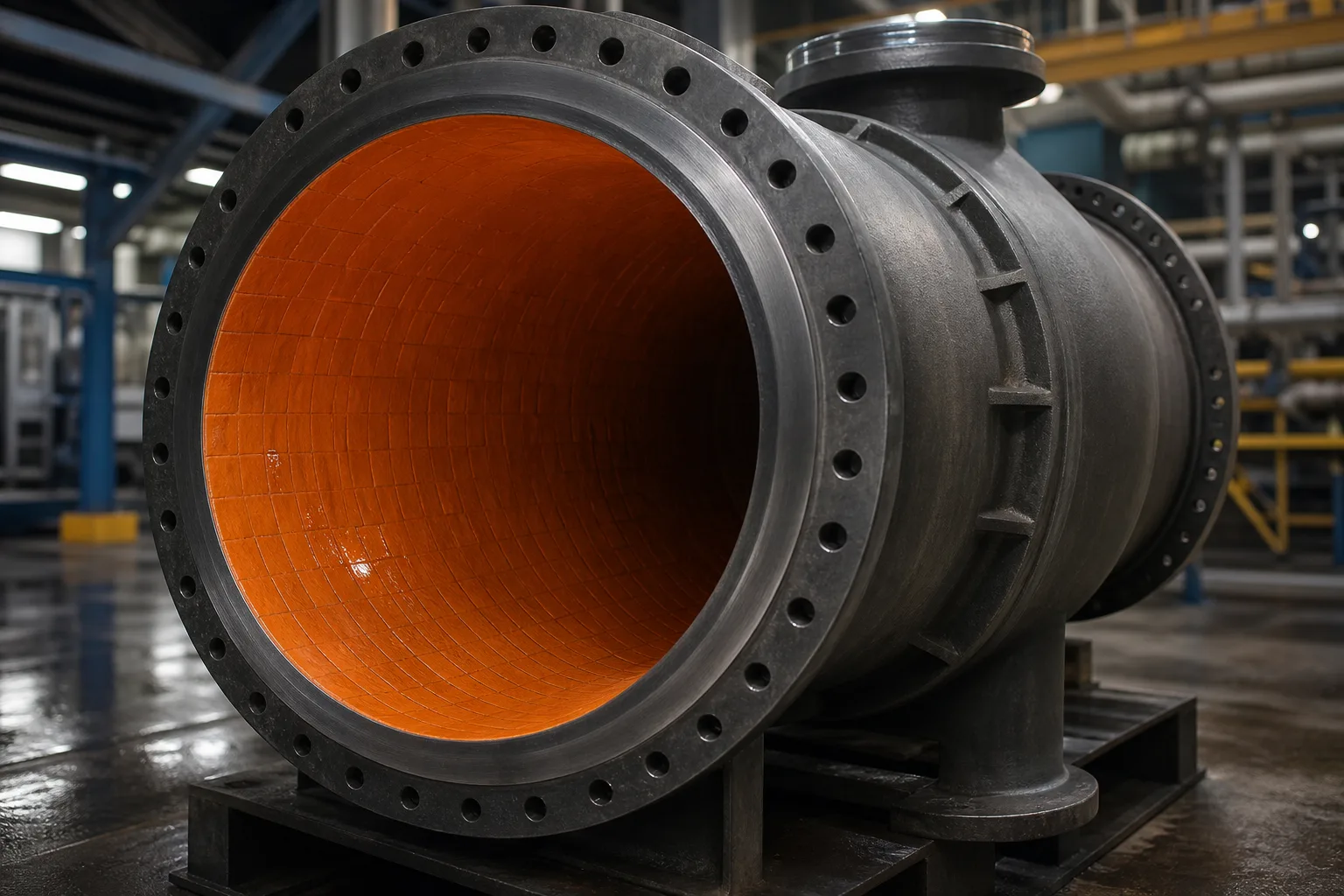
Wear Protection
Review ZDS-CeramicArmor for abrasion, erosion, or cavitation on heavy-duty equipment.
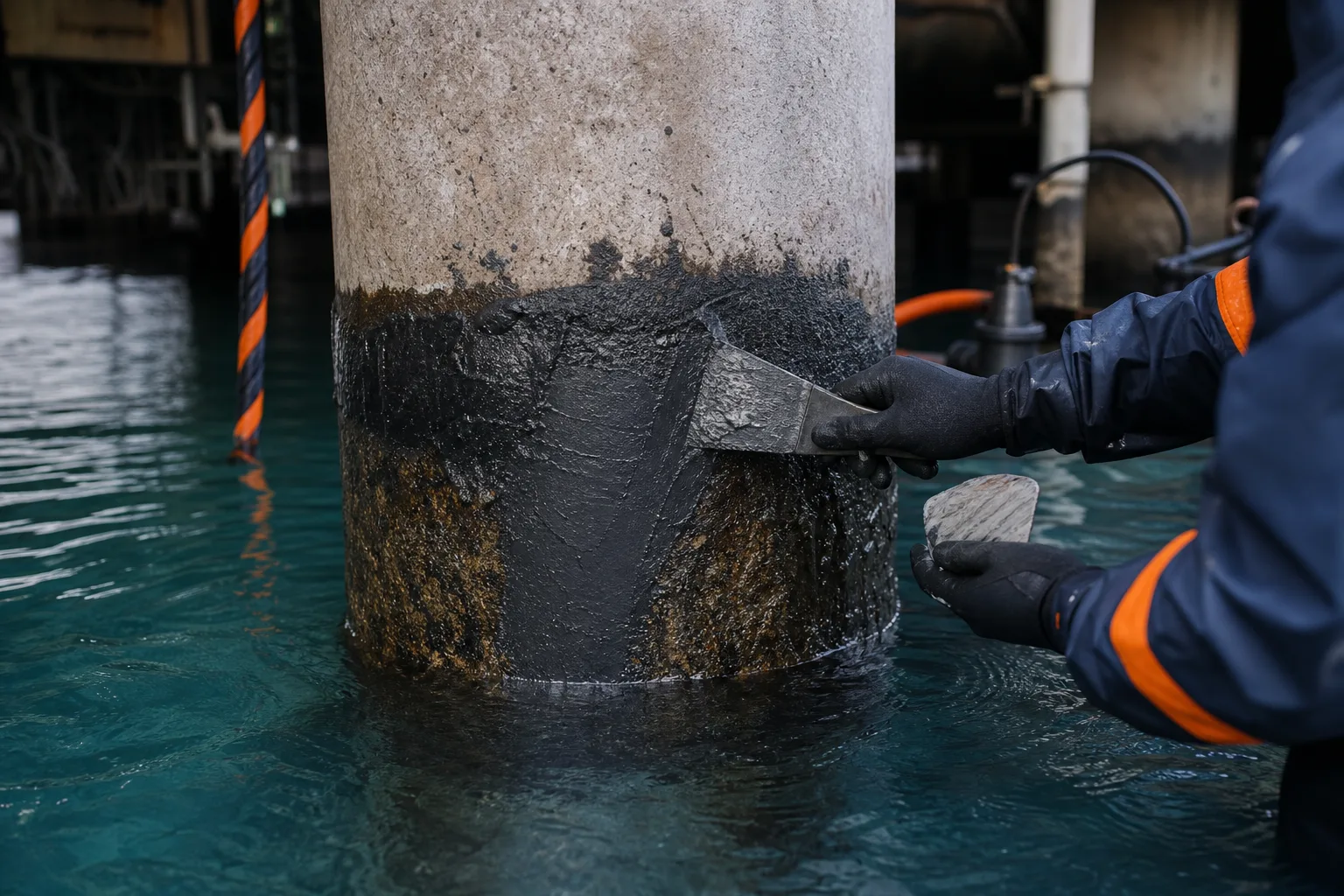
Wet Repair
Compare ZDS-AquaShield for wet or underwater work and confirm the application conditions before sampling.
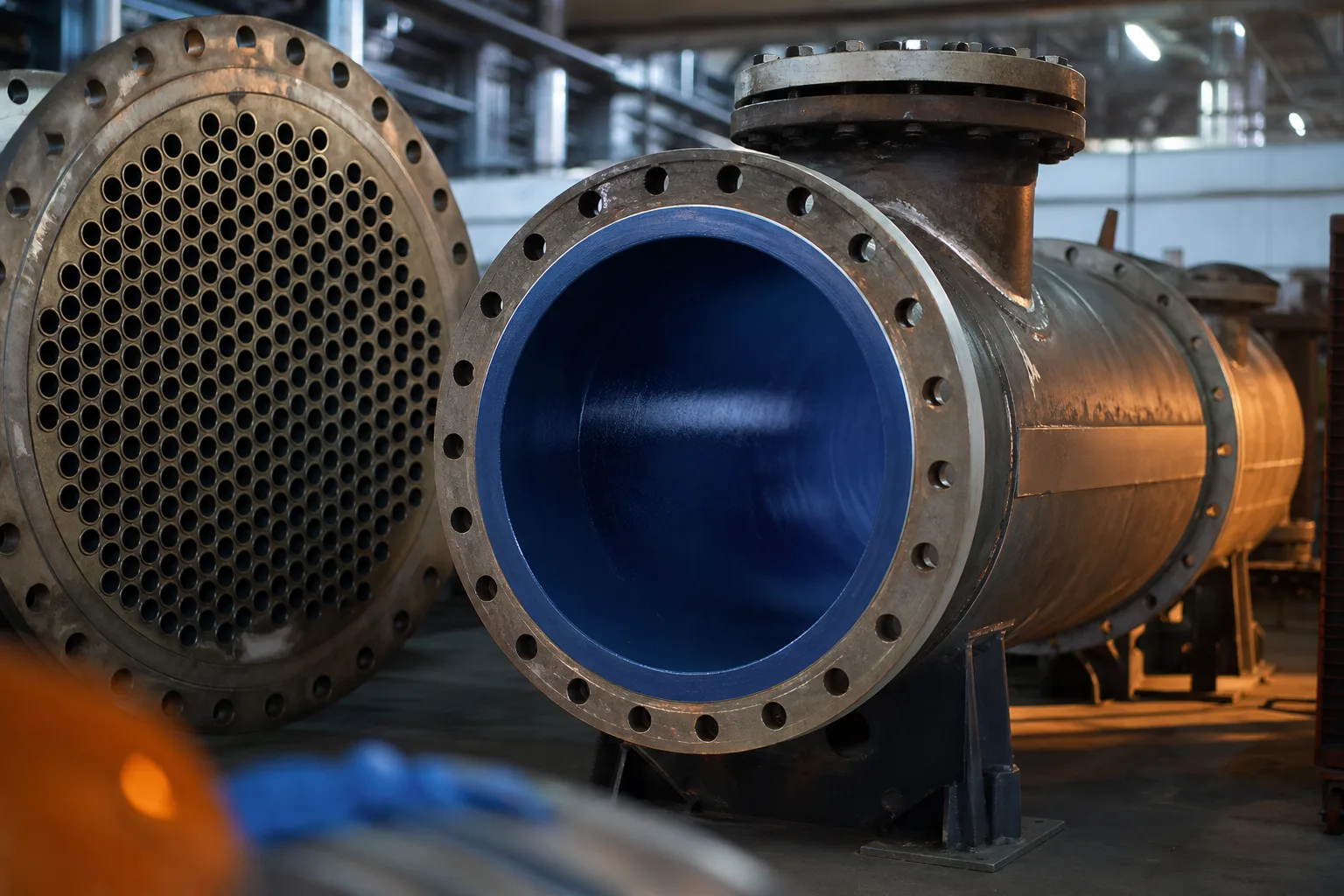
Heat and Chemicals
Evaluate ZDS-FluidGlide for relevant lining, sealing, flue, tank, or fluid-equipment conditions.
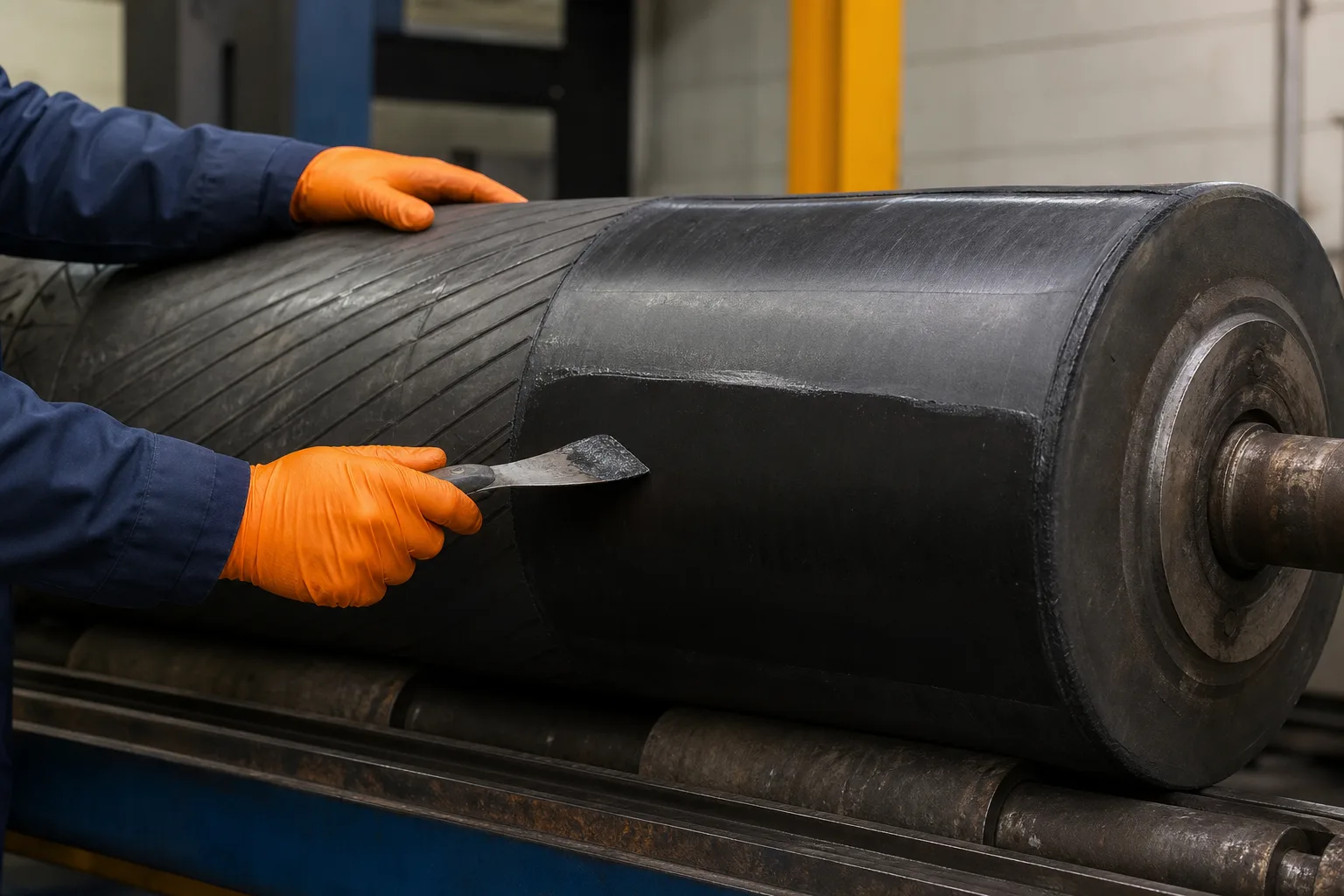
Elastomer Repair
Use ZDS-RubberElast when evaluating belts, rubber linings, rollers, cables, tires, or other elastomer components.
B2B Supply Planning
Documents, Samples, and Supply Planning
A useful sample request identifies the equipment, substrate, damage, exposure, repair function, and target quantity. Buyers may also require pack details, labels, technical and safety documents, and market-specific documentation before an initial order.
2008
Sample-to-Bulk Workflow
Review the repair route, documents, sample criteria, commercial requirements, and repeat-purchasing plan.
2014
Quality Control
Examine the quality-control process and request current documents relevant to the product and market.
2020
Established Manufacturer
ZDS has operated as a professional chemical manufacturer since 1998.
2026
R&D Support
A dedicated R&D team of 30 professionals supports formulation, product improvement, and application review.
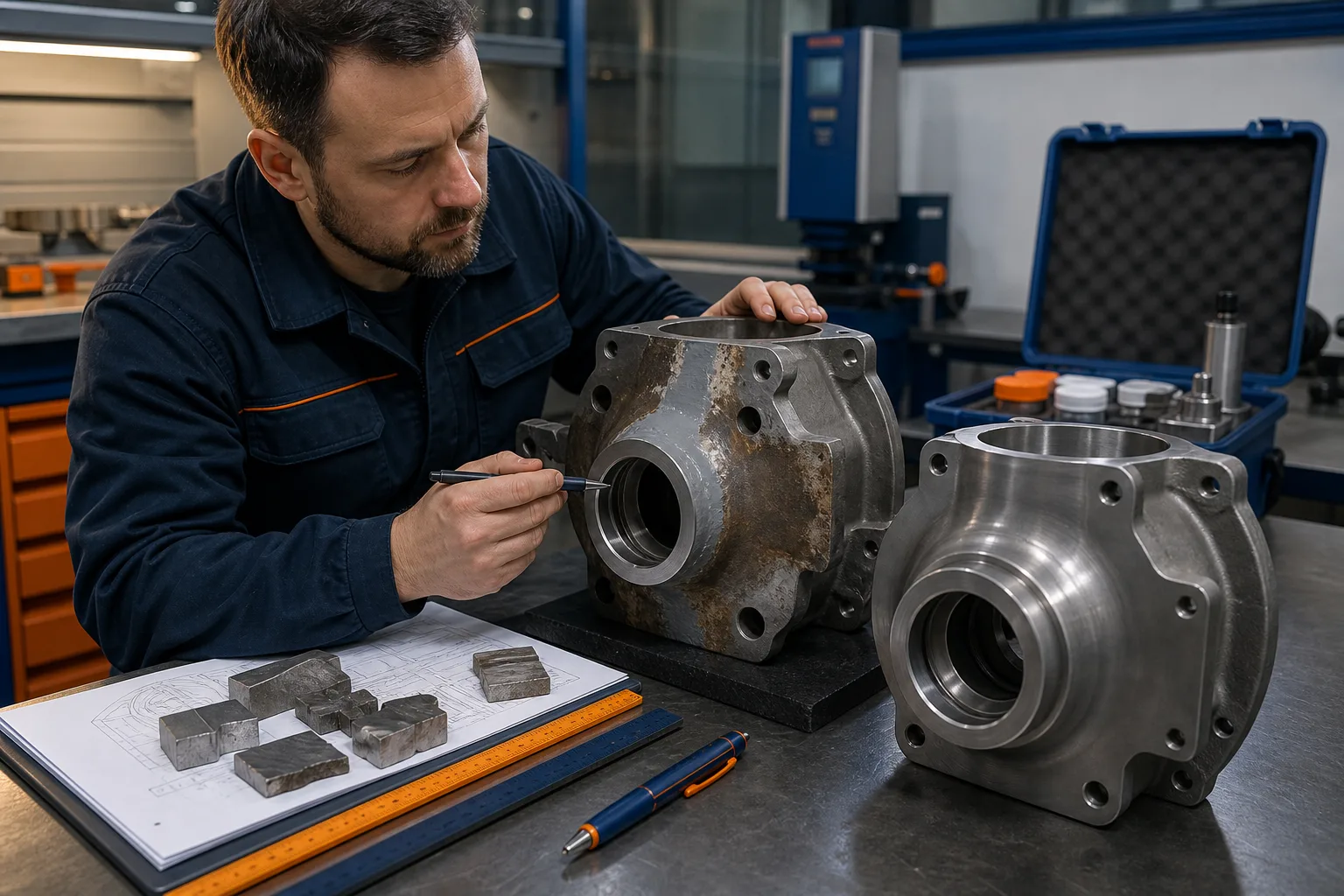
Project Enquiry
Prepare a Metal Repair Epoxy Sample Request
Send the substrate, damage, equipment function, service conditions, repair dimensions, application constraints, target market, and expected quantity. ZDSChem can then identify an evaluation route and determine the required documentation or technical review.
FAQ