
Pump Repair and Protection for Worn Pump Casings
Pump repair coating systems help restore and protect casings, volutes, impellers, covers, and related fluid-handling surfaces affected by erosion, corrosion, cavitation, or chemical exposure. Selection depends on the substrate, damage depth, fluid chemistry, operating temperature, flow conditions, required geometry, and maintenance window. ZDSChem organizes pump repair around rebuilding lost dimensions, protecting exposed surfaces, and preparing the substrate for reliable application. Maintenance teams, repair contractors, engineers, procurement buyers, distributors, and MRO suppliers can use these categories to prepare a project-specific technical request.
Damage Assessment
Why Pump Casings Lose Material and Performance
Pump damage can result from suspended solids, chemical exposure, unstable flow, or unsuitable operating conditions. Existing coatings may also detach because of contamination, incomplete preparation, or incompatibility with the service environment.
Casing Wear and Erosion
Record the wear pattern, wall condition, particle type, concentration, and fluid velocity before selecting a repair material.
Cavitation Damage
Assess localized pitting together with suction conditions, restrictions, pump duty, impeller condition, and operating practices.
Corrosion and Attack
Confirm the fluid, concentration, temperature, cleaning chemicals, and exposure pattern against current product documentation.
Dimensional Loss
Define original geometry, machining allowance, alignment, and structural or mechanical loads before rebuilding worn features.
Material Selection
Choose the Repair Route Before Choosing a Coating
A pump repair coating is not automatically a substitute for metal rebuilding, component replacement, welding, or correction of hydraulic conditions. Confirm mechanical integrity and suitability for a bonded repair system first.
Deep Local Metal Loss
Rebuild the profile, then protect if required. Confirm damage depth, remaining wall, geometry, and load.
Broad Abrasive Wear
Consider wear-resistant resurfacing or coating after reviewing particles, flow path, and application thickness.
Cavitation Pitting
Fill damaged areas and add suitable protection after confirming the cause, pitting depth, and pump duty.
Chemical Corrosion
Restore the substrate before lining. Confirm fluid identity, concentration, temperature, and cleaning cycle.
Worn Precision Feature
Use controlled dimensional rebuilding based on original dimensions, tolerances, alignment, and the machining plan.
Relevant Materials
ZDSChem Material Series Relevant to Pump Repair
Several ZDSChem series can contribute to a repair specification. Final selection requires review of the damaged area and current technical documentation. These categories indicate material functions, not confirmed product specifications.
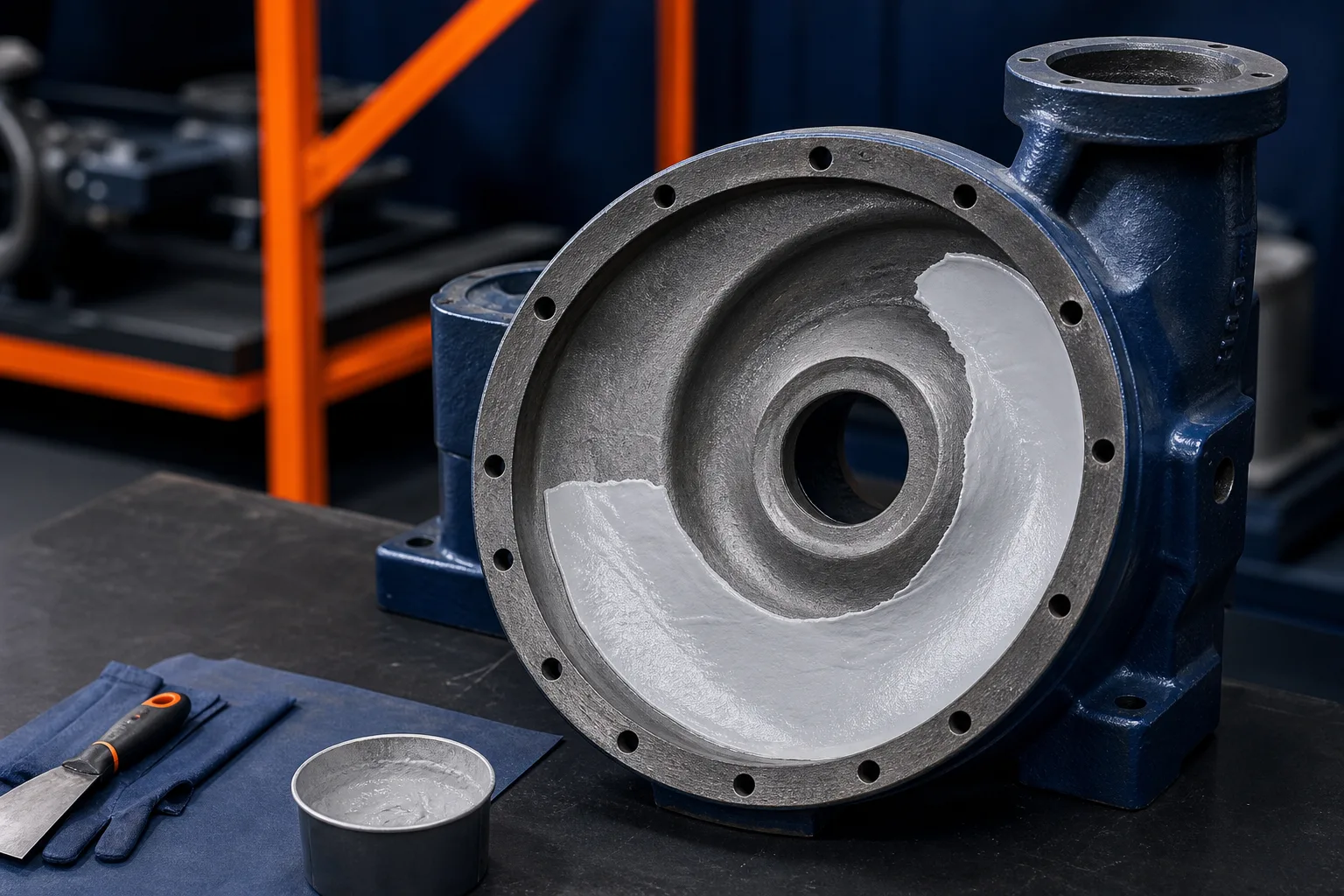
ZDS-CeramicArmor
Ceramic-filled protection for areas exposed to erosion, abrasion, cavitation, suspended solids, or heavy-duty wear.
ZDS-MetalRebuild
Repair compounds for profile rebuilding, cold repair, dimensional restoration, leak sealing, and structural bonding.
ZDS-FluidGlide
Potential lining and coating routes where fluid chemistry, cleaning processes, sealing, or temperature are central.
Work Method
Surface Preparation and Application Planning
Preparation quality can determine whether a casing repair forms a continuous, well-bonded layer. The work method must follow the selected product instructions and address inspection, cleaning, geometry, application, and commissioning.
01
Isolate and Inspect
Remove the pump from service safely, measure metal loss, and identify cracks, through-wall defects, or replacement needs.
02
Remove Weak Material
Strip loose coating, corrosion products, embedded deposits, and unstable substrate until a sound surface is available.
03
Prepare the Substrate
Control oil, salts, moisture, and residue, then create the specified profile while protecting critical tolerances.
04
Restore Geometry
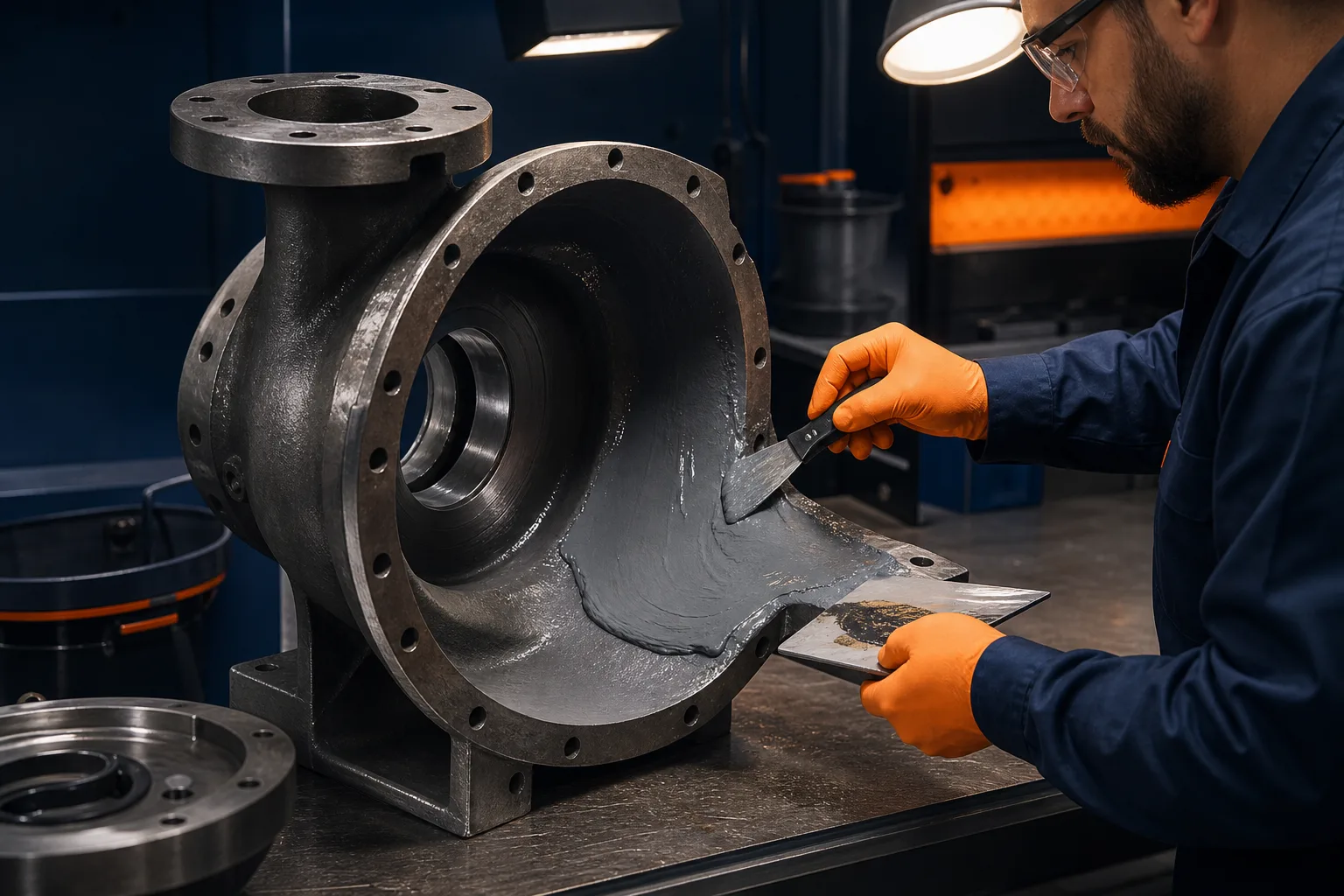
Fill pits and rebuild missing profiles using reference dimensions, templates, or machining plans where required.
05
Apply Protection
Confirm environmental conditions, mixing, work sequence, coverage, and target build against current documentation.
06
Inspect and Commission
Check continuity, coverage, geometry, and acceptance criteria before observing documented cure and return-to-service conditions.
Repair Limitations
Conditions That Require Additional Engineering Review
Bonded repair materials are not suitable for every damaged pump. Cracks, severe wall thinning, unstable substrate, distortion, unknown metallurgy, critical pressure boundaries, and integrity-related damage require engineering assessment.
Confirm that the repair method is
permitted by applicable regulatory, inspection, plant, and equipment-owner requirements.
Correct continuing leakage, contamination
or moisture sources where the application requires a controlled surface.
Do not use a protective layer as the sole
correction for poor suction, recurring cavitation, misalignment, or unsuitable operation.
Confirm compatibility with process fluids
cleaning chemicals, temperature cycles, and expected abrasion before purchase.
Review access, ventilation, worker
protection, waste handling, preparation resources, and available shutdown time.
Use current technical and safety documents
for mixing, application, curing, inspection, and return-to-service requirements.
Project Evidence
Build a Verifiable Pump Repair Record
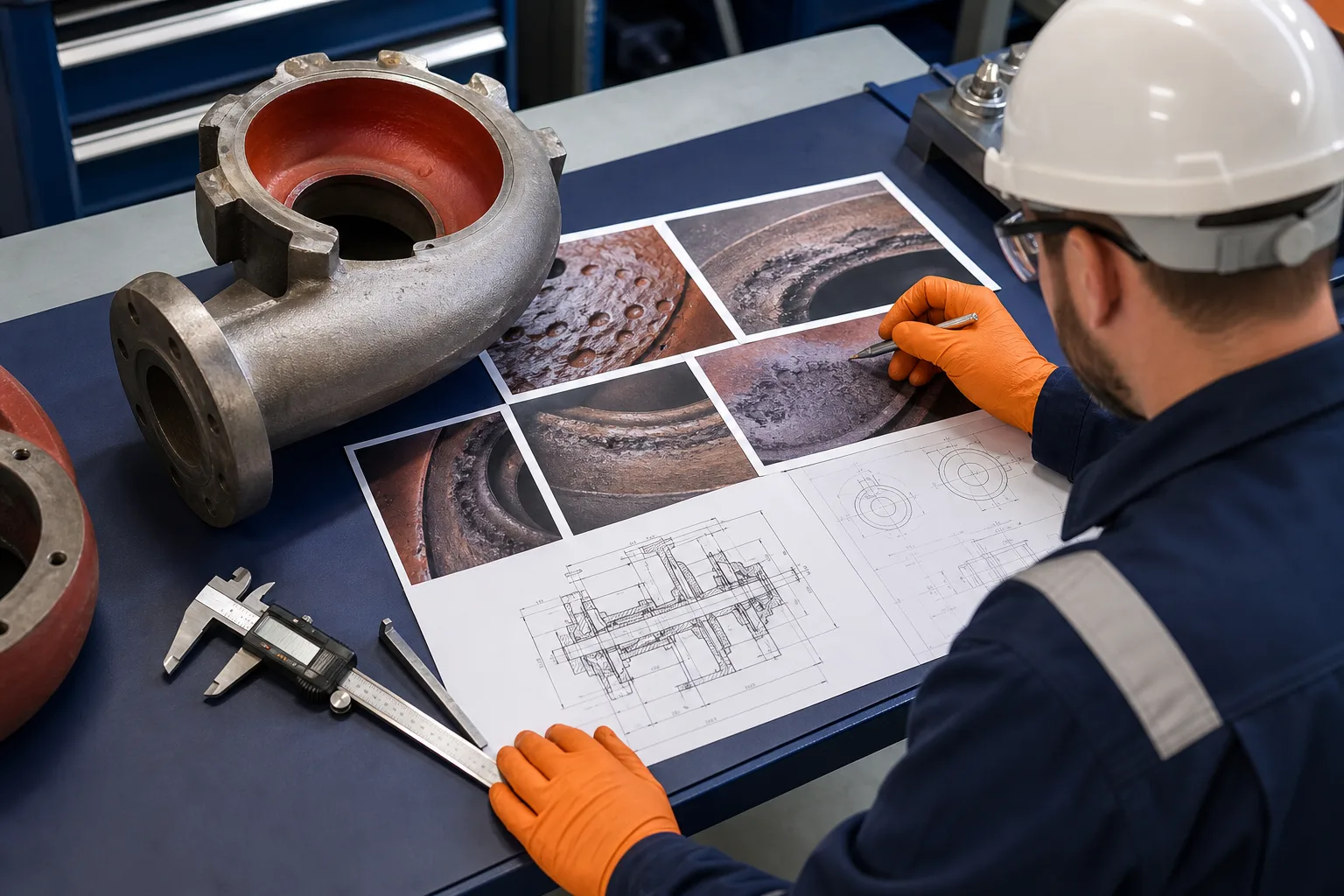
Document the initial condition, substrate, operating environment, preparation, materials, application controls, inspection criteria, and service outcome. Use consistent photographic and measurement reference points.
Technical Request
Information Needed for a Pump Repair Recommendation
A complete technical request helps identify relevant material categories and reduces unsuitable options. Include operating conditions, damage measurements, required geometry, preparation resources, and acceptance requirements.
Pump and Component
Provide the pump type, component name, repair location, and manufacturer drawing when available.
Base Material
Identify the substrate and provide details of any existing coating or previous repair.
Damage Condition
Record the damage type, affected area, maximum depth, and available remaining-wall information.
Handled Media
Identify fluids, solids, chemical concentration, cleaning media, and contamination risks.
Operating Conditions
Provide operating and shutdown temperatures, pressure conditions, flow conditions, and duty cycle.
Geometry and Inspection
Define required dimensions, tolerances, machining needs, alignment, and inspection criteria.
Application Resources
Describe preparation equipment, the application environment, maintenance window, and target quantity.
Supporting Records
Include clear photographs, measurements, drawings, service history, and applicable plant or regulatory requirements.
Project Consultation
Prepare a Pump Repair Material Shortlist
Submit the pump condition, substrate, service environment, photographs, and required repair outcome. ZDSChem can identify relevant product categories and clarify the technical documents needed for evaluation.
Request a Project Quotation
Provide the application scope, target quantity, maintenance schedule, and purchasing requirements.
Request a Project Quotation
Provide the application scope, target quantity, maintenance schedule, and purchasing requirements.
FAQ
Frequently Asked Questions
Ceramic-filled wear-resistant materials are a common starting category for pump casings exposed to abrasive particles, erosion, or turbulent flow. Deep damage may first require a metal rebuilding compound. Selection still needs the substrate, wear mechanism, fluid, temperature, damage depth, and application conditions.
A suitable material can rebuild pitted areas and protect exposed surfaces, but it does not remove the hydraulic cause of cavitation. Suction conditions, restrictions, pump duty, impeller condition, and operating practices should be assessed to reduce the risk of repeated damage.
Provide the pump component, base material, damage type and dimensions, handled fluid, solids content, chemical concentration, temperature, pressure conditions, existing coating, preparation method, maintenance window, photographs, and required inspection criteria. Drawings and service history are useful when dimensions or recurring damage are involved.
ZDSChem can review the available project information and identify a potential material route. Chemical identity, concentration, temperature, exposure duration, cleaning media, and process conditions are required. Compatibility and application requirements must then be checked against current technical documentation.
Qualified buyers can request sample evaluation based on the proposed application and purchasing requirements. Sample availability, evaluation scope, preparation method, acceptance criteria, and commercial feasibility need to be confirmed before testing. A sample result should not replace engineering review of the damaged pump.
Replacement or another engineered repair route may be necessary when the casing has cracks, severe wall loss, distortion, unstable metal, critical pressure-boundary damage, or conditions outside the selected material’s documented limits. The responsible engineer or equipment owner should determine mechanical integrity and regulatory acceptance.