
Technical Consultation for Industrial Repair Materials
Get help narrowing the repair method or ZDSChem product category for damaged industrial equipment. Maintenance teams, repair contractors, engineers, MRO suppliers, and procurement buyers can submit application details for technical review.

Application Support
When to Request a Product Recommendation
Request a consultation when the repair route is unclear, several material categories appear possible, or service conditions need closer evaluation. The review can also help prepare an inquiry before samples, pricing, or purchasing discussions.
Surface Damage
Equipment has abrasion, erosion, corrosion, cavitation, cracking, leakage, or dimensional loss.
Equipment Repair
A pipe, tank, pump, valve, flange, conveyor component, or marine structure requires repair or protection.
Demanding Conditions
The work involves wet surfaces, underwater placement, elevated temperature, chemical exposure, or pressure.
Supplier Application
A distributor or MRO supplier needs help identifying suitable material categories for a customer application.
Contractor Planning
A contractor needs an initial material route before discussing quantities or project pricing.
Product Portfolio
Review the industrial repair product portfolio before submitting application details.
Selection Guide
Use the industrial repair material selection guide for an overview of available repair routes.
Inquiry Requirements
Information Needed for a Technical Recommendation
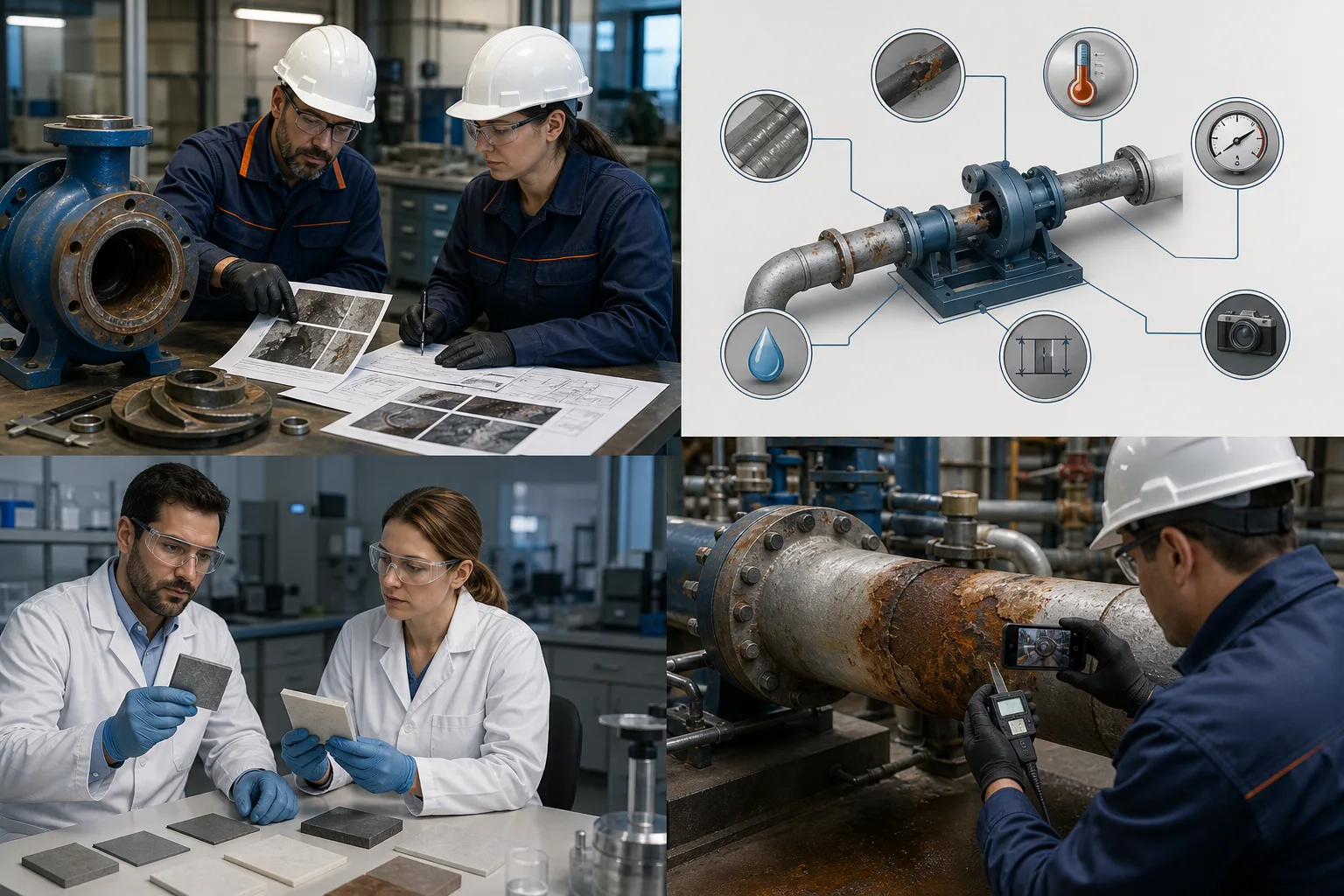
Provide the available project details so the technical team can understand the repair objective and identify unresolved questions. If exact values are unavailable, give the best available operating range and clearly mark estimates.
Repair Details
Equipment, Substrate, and Damage
Describe the component, base material, failure condition, and affected dimensions. Include known measurements and explain the equipment function where relevant.
Equipment
Identify the component and function, such as a pipe, pump casing, tank, valve, flange, roller, conveyor belt, or structure.
Substrate
State the base material, including the known metal, concrete, composite, rubber, or other surface.
Damage
Describe material loss, corrosion, abrasion, erosion, leakage, cracking, delamination, impact damage, or another failure.
Dimensions
Provide the affected area, loss depth, crack or hole size, pipe diameter, wall thickness, and clearance where known.
Service Conditions
Operating and Environmental Conditions
Report the conditions during application and service. Temperature, pressure, process medium, and moisture exposure can affect the initial repair route and product-category shortlist.
Temperature
Include the application temperature, normal operating temperature, and expected peaks.
Pressure
State normal and maximum operating pressure when the equipment contains a fluid or gas.
Process Medium
Identify the liquid, gas, slurry, chemical, or contaminant that will contact the repair.
Moisture
Explain whether the surface will be dry, damp, continuously wet, submerged, or exposed to outdoor weather.
Compare by Condition
Compare product categories when temperature, moisture, or chemical contact is the main selection issue.
Project Evidence
Photos and Intended Result
Add clear images, describe access restrictions, define the required repair result, and report practical project constraints. Drawings, specifications, and existing technical requirements can be uploaded separately.
Photos
Supply clear wide-angle and close-up images, with a safe scale reference where practical.
Surface Access
Explain restrictions affecting cleaning, profiling, drying, clamping, wrapping, or coating access.
Target Result
Define the goal: leak control, rebuilding, reinforcement, wear or corrosion protection, sealing, or elastomer restoration.
Project Constraints
Include the shutdown window, required quantity, location of use, and evaluation schedule.
Upload Specifications
Send drawings, specifications, and existing technical requirements for review.
Review Process
How the Consultation Review Is Organized
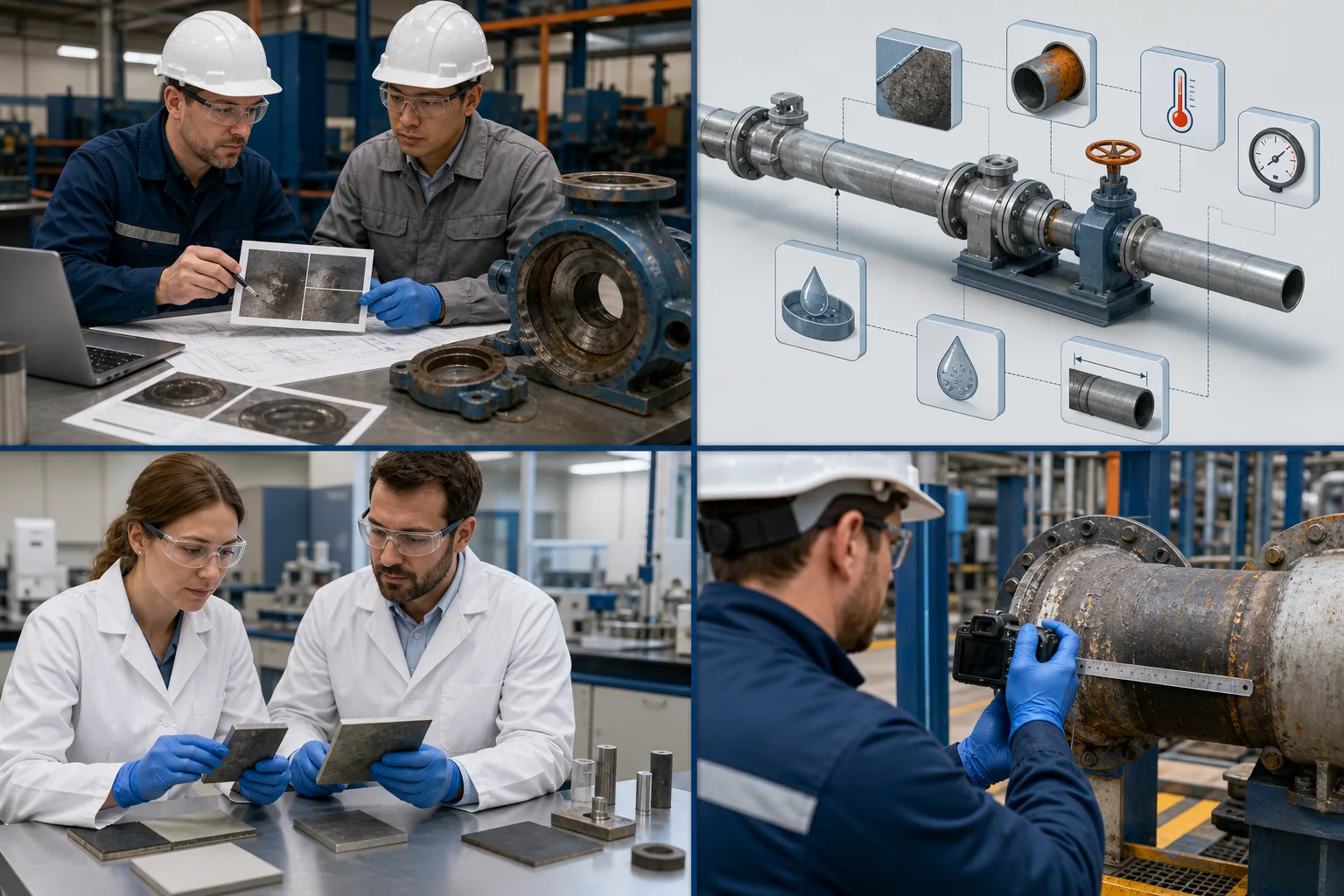
The review organizes the application details, compares service conditions, identifies relevant ZDSChem product series, and outlines the information or documents needed for further evaluation.
01
Application Screening
Information is organized by equipment, substrate, damage, dimensions, and desired outcome.
02
Condition Comparison
Temperature, pressure, process medium, moisture, and mechanical exposure are compared with available repair routes.
03
Category Shortlist
The review identifies relevant ZDSChem series and highlights missing information or preparation concerns.
04
Next-Step Planning
The response may recommend document review, additional project data, or a sample request for evaluation.
05
Seven Repair Series
The primary series cover rebuilding, reinforcement, wear, wet work, severe exposure, topcoats, and elastomer repair.
06
Preparation Support
Surface Preparation Products support cleaning, conditioning, and planning; they are not an eighth primary series.
Review Limitations
What You Can Expect from the Initial Review
The initial response provides practical direction rather than automatic approval for use. It may identify a product series, request missing data, explain preparation factors, and indicate which technical documents should be checked.
Technical Background
Technical Background Supporting the Review
ZDSChem applies the supplied ZDS chemical manufacturing and formulation background to industrial repair material selection and application-specific solution development.
Submit Your Inquiry
Prepare Your Industrial Repair Inquiry
Submit the equipment, substrate, damage, dimensions, temperature, pressure, process medium, moisture conditions, photos, and target result. Complete information supports a focused response and reduces unnecessary follow-up.
Drawings and Specifications
Use the specification upload route to provide supporting drawings and technical requirements.
FAQ
Frequently Asked Questions
Provide the equipment type, substrate, damage condition, affected dimensions, application and operating temperatures, pressure, process medium, moisture exposure, clear photos, and target result. Surface access, shutdown time, location of use, and required quantity also help define a practical product route.
Yes. Submit the information currently available and identify which figures are estimates or unknown. The technical team can indicate which missing details are important before a product category, sample, or application approach can be evaluated further.
No. An initial consultation helps narrow the repair route and identify relevant product information. Final suitability depends on the actual substrate, preparation method, application conditions, operating exposure, current technical documentation, and any engineering or regulatory requirements that apply to the equipment.
Customer-specific formulation requirements can be submitted for evaluation. Feasibility is determined after reviewing the application, performance targets, specification, expected volume, target market, and commercial requirements. Submission does not guarantee development or approval.