
Composite Pipe Repair Guide: Assess, Select, and Install
Composite pipe repair combines a resin matrix and reinforcement layers to restore or reinforce a damaged pipe section. Selection depends on the substrate, damage, remaining wall, pressure, temperature, fluid exposure, access, and repair design.
Repair Scope
What Composite Pipe Repair Is Designed to Address
A composite pipe repair system transfers loads through a prepared and reinforced pipe zone. It may be considered for localized corrosion, wall loss, cracks, punctures, damaged joints, and other defined conditions.
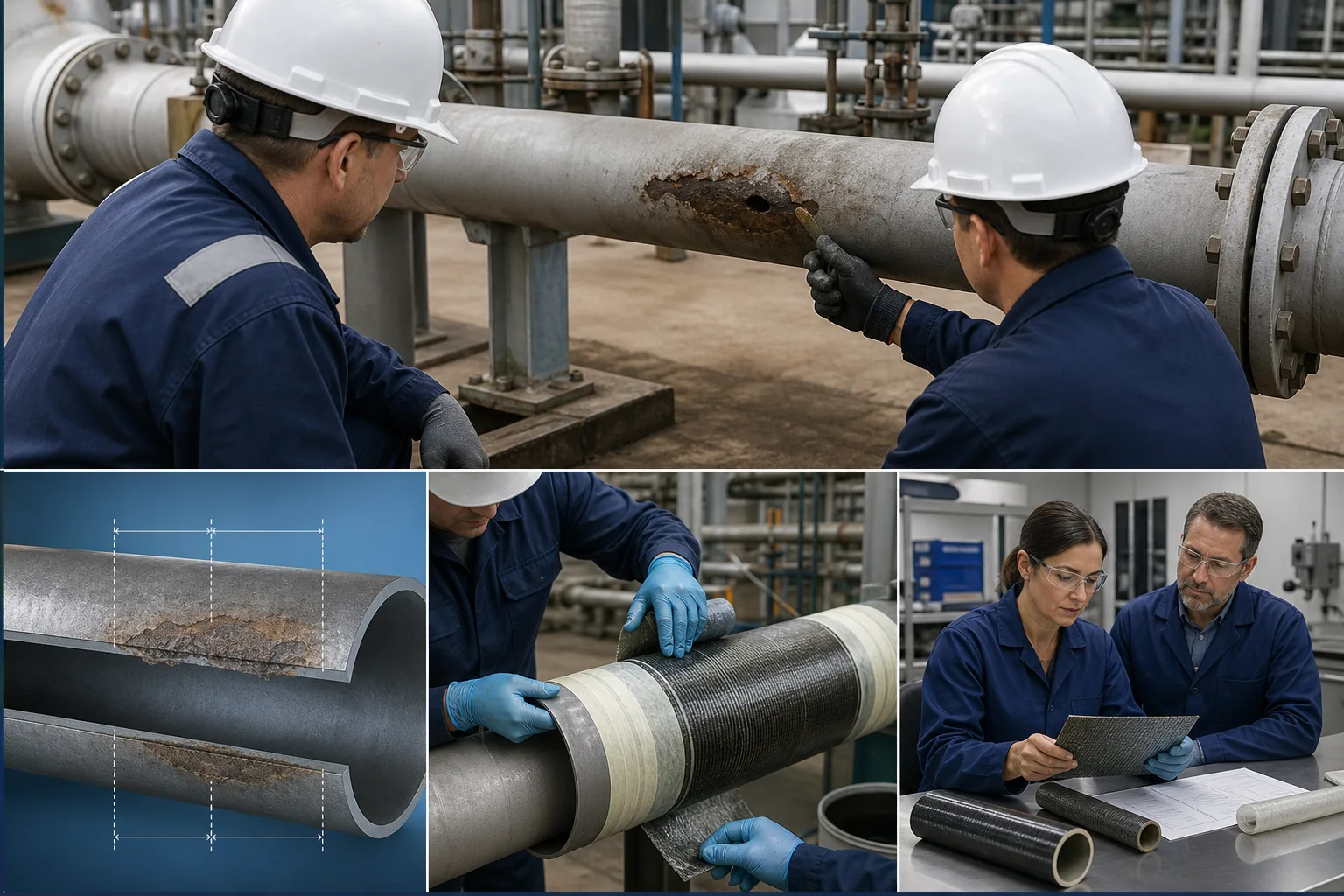
Damage Assessment
Start with Damage Assessment, Not Product Selection
Document the failure condition before selecting resin or fabric. Record pipe construction, damage dimensions, service conditions, and access constraints so the repair route can be assessed against a defined scope.
Wall Loss
Confirm that the remaining wall is stable and characterized; engineering input may be needed before selection.
Active Leak
Determine whether the line can be isolated and prepared or whether a wet or emergency route must be assessed.
Chemical Exposure
Record the fluid, concentration, temperature, and duration, then check current resin compatibility documentation.
Movement and Vibration
Review thermal cycling, pulsation, and movement when assessing resin, reinforcement, and attachment details.
Geometry and Access
Confirm that the complete repair zone can be cleaned, wrapped, consolidated, and inspected.
System Components
How a Composite Pipe Repair System Is Built
Most systems combine a bonding and load-transfer matrix, reinforcement, and a prepared substrate. Primers, conditioners, fillers, or protective layers may also be required. Treat the full layer sequence as one system.
Resin Matrix
The resin wets and bonds the reinforcement; chemistry, working time, cure, temperature, and fluid compatibility must fit.
Reinforcement Layer
Fiber type, orientation, fabric form, overlap, layer schedule, and final thickness must follow the repair design.
Preparation Materials
Cleaning agents, primers, conditioners, fillers, and protective materials can affect bonding and application control.
Material Selection
Compare Resin and Reinforcement Choices
Select resin and reinforcement together. The resin must bond, cure, and tolerate service exposure, while the reinforcement must provide the required load path, handling, orientation, consolidation, and thickness.
Bonding
Assess substrate adhesion, surface compatibility, resin contact, and complete reinforcement wet-out.
Service Conditions
Compare temperature, fluid, moisture, cure tolerance, load transfer, movement, impact, and abrasion.
Application Control
Coordinate mixing and working time with wrap handling, orientation, consolidation, and thickness control.
Installation
Composite Pipe Repair Installation Sequence
The sequence depends on the selected system and repair design. Use the workflow for planning only; current technical data sheets, application instructions, and engineering specifications remain controlling documents.
01
Technical Data Sheets
Check current mixing, application, cure, storage, and environmental requirements before field work.
02
Safety Data Sheets
Review handling, protection, storage, transport, and emergency information for selected materials.
Repair Categories
Where Different ZDSChem Repair Categories Fit
Composite wrapping is one route within industrial repair selection. Determine whether the primary requirement is structural reinforcement, metal rebuilding, wet-surface repair, wear resistance, or chemical protection.
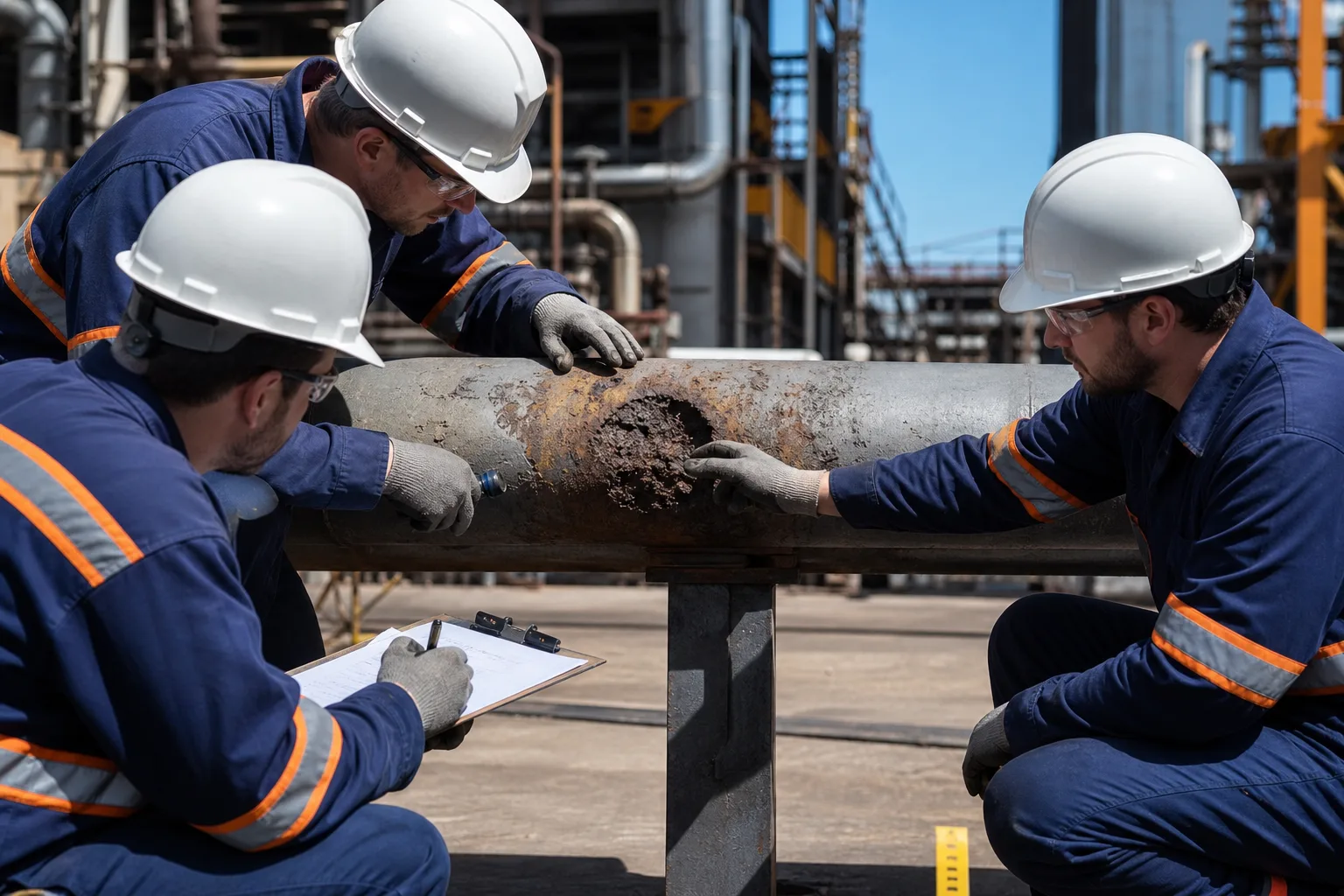
ZDS-CompositeWrap
Start here for composite pipe reinforcement, FRP repair, and structural laminating questions.
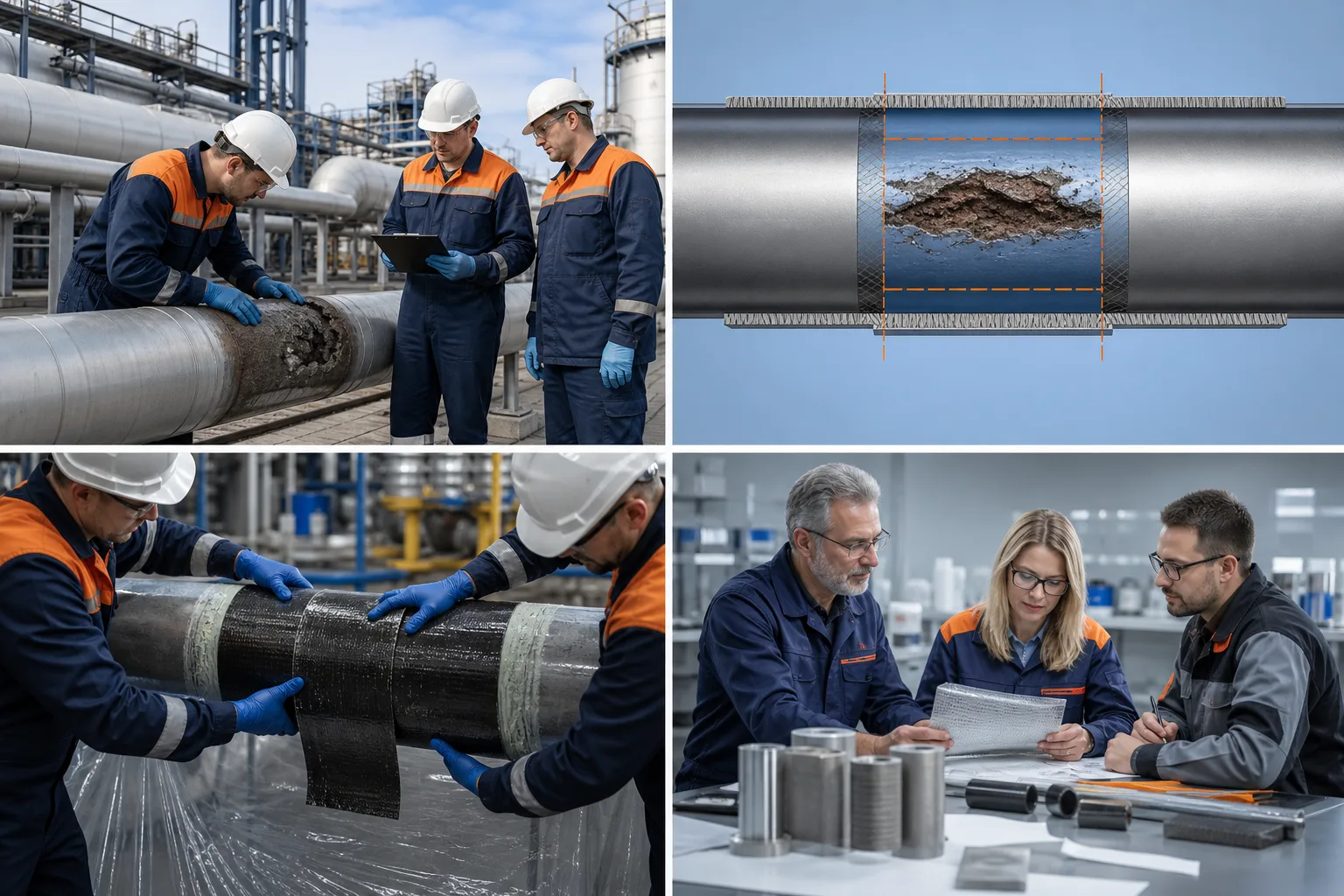
ZDS-MetalRebuild
Compare for metal rebuilding, cold repair, dimensional restoration, leak sealing, or structural bonding.
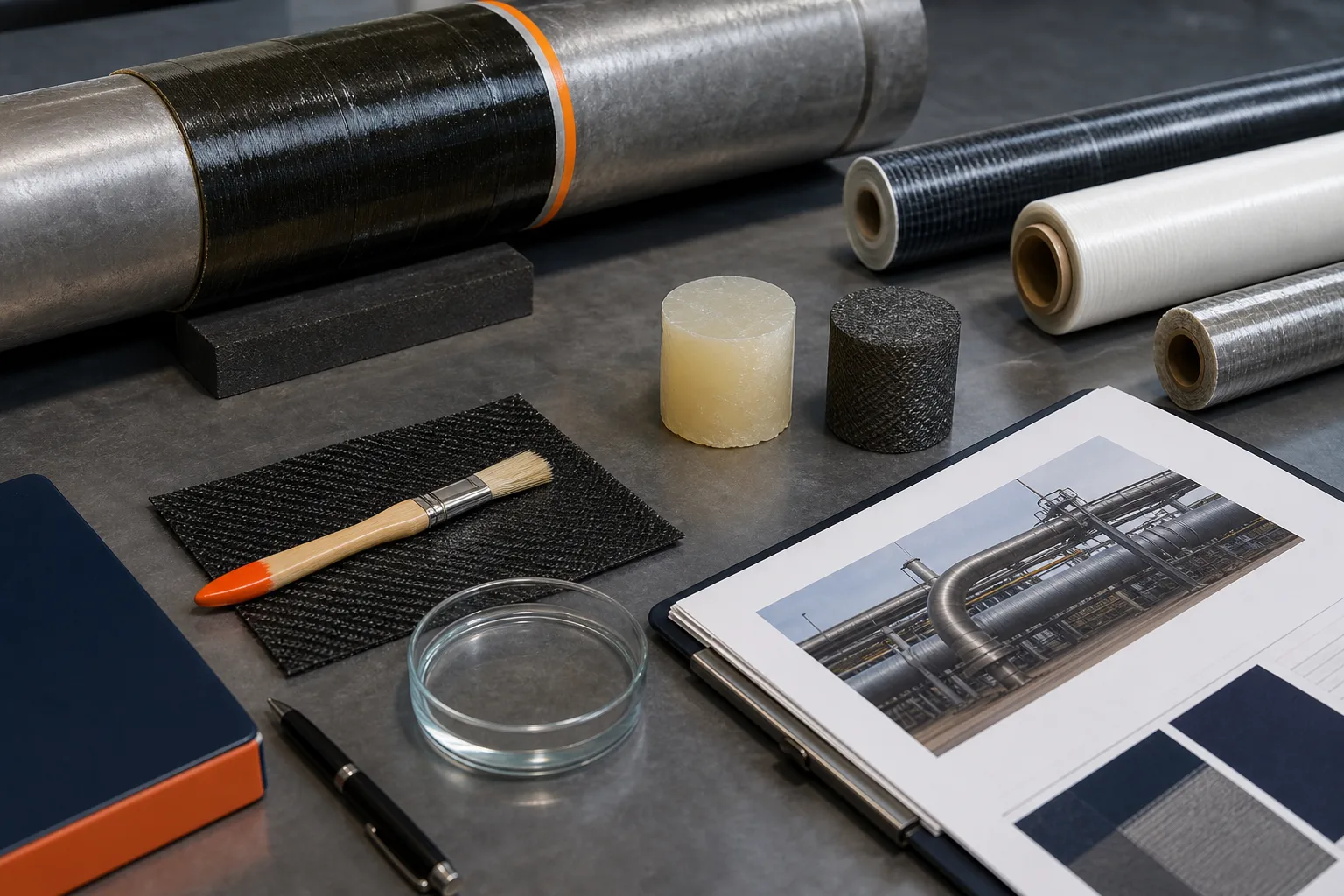
ZDS-AquaShield
Compare when isolation or drying is unavailable, subject to the application conditions and current documentation.
Selection Limits
Limits to Confirm Before Installation
A guide can organize the decision but cannot approve a repair without project information. Escalate uncertain, hazardous, unstable, inaccessible, chemically aggressive, or approval-controlled applications.
The pipe is under pressure, leaking
actively, or conveying a hazardous fluid.
Remaining wall thickness, crack depth, or
damage extent is unknown.
The substrate is unstable, severely
deformed, extensively delaminated, or contaminated.
The repair must tolerate substantial
movement, vibration, thermal cycling, impact, or abrasion.
Fittings, supports, buried sections
inaccessible surfaces, or transitions cannot be fully prepared.
Chemical exposure is aggressive and
verified compatibility information is unavailable.
The repair must meet a project code, owner
standard, pressure qualification, or engineering approval process.
Provide drawings, inspection records
photographs, operating data, and acceptance criteria before finalizing materials.
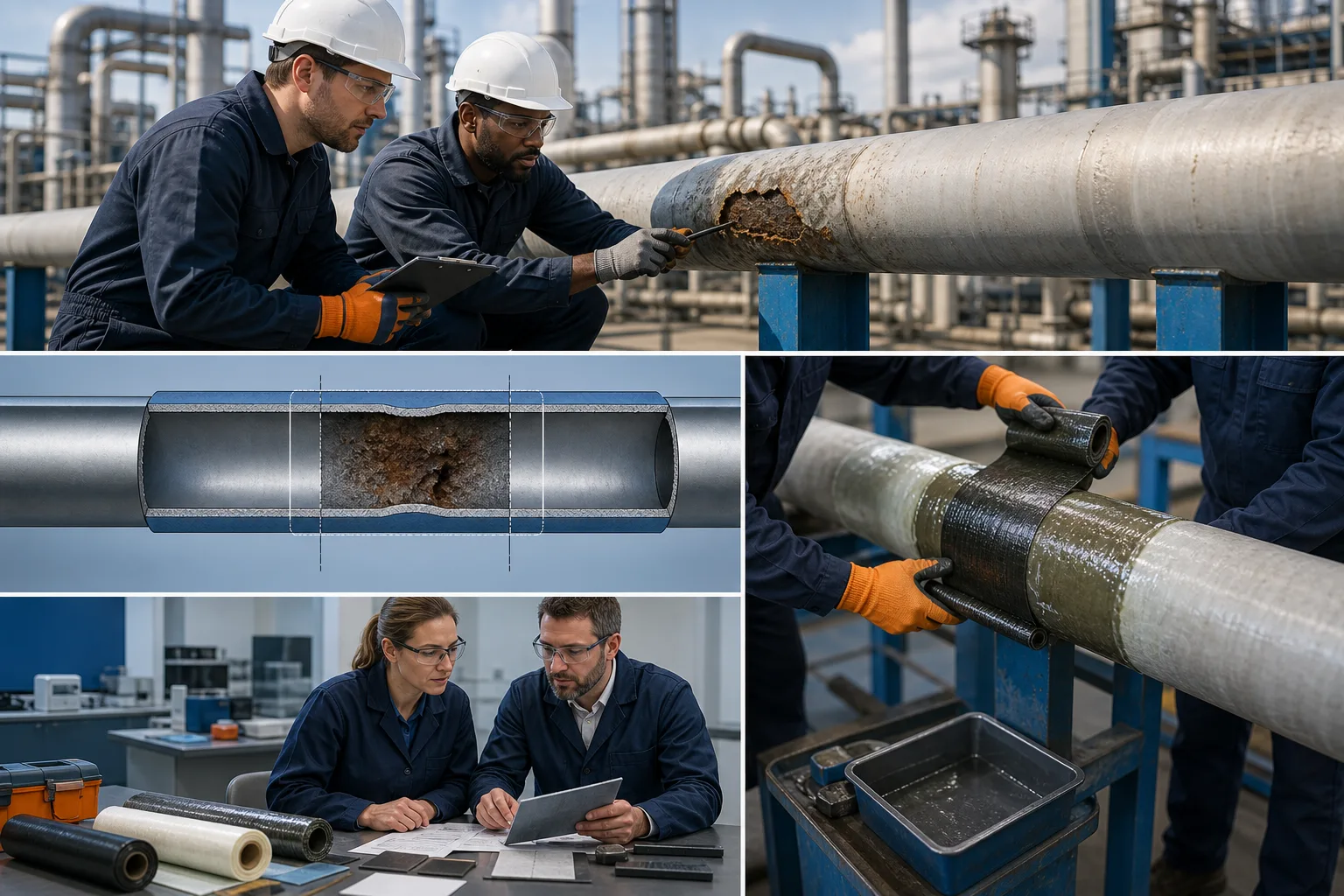
Technical Documents
Documents to Review Before Purchase
Technical documents separate a preliminary shortlist from a usable repair plan. Compare the selected system's current instructions and limitations with site conditions, inspection records, and acceptance requirements.
Technical Support
Technical Support for Pipe Wrap Selection
The ZDS background supporting ZDSChem includes professional chemical manufacturing experience dating to 1998. A dedicated R&D team of 30 professionals supports development, formulation review, improvement, and application adaptation.

Technical Screening
Move from Damage Assessment to a Repair Shortlist
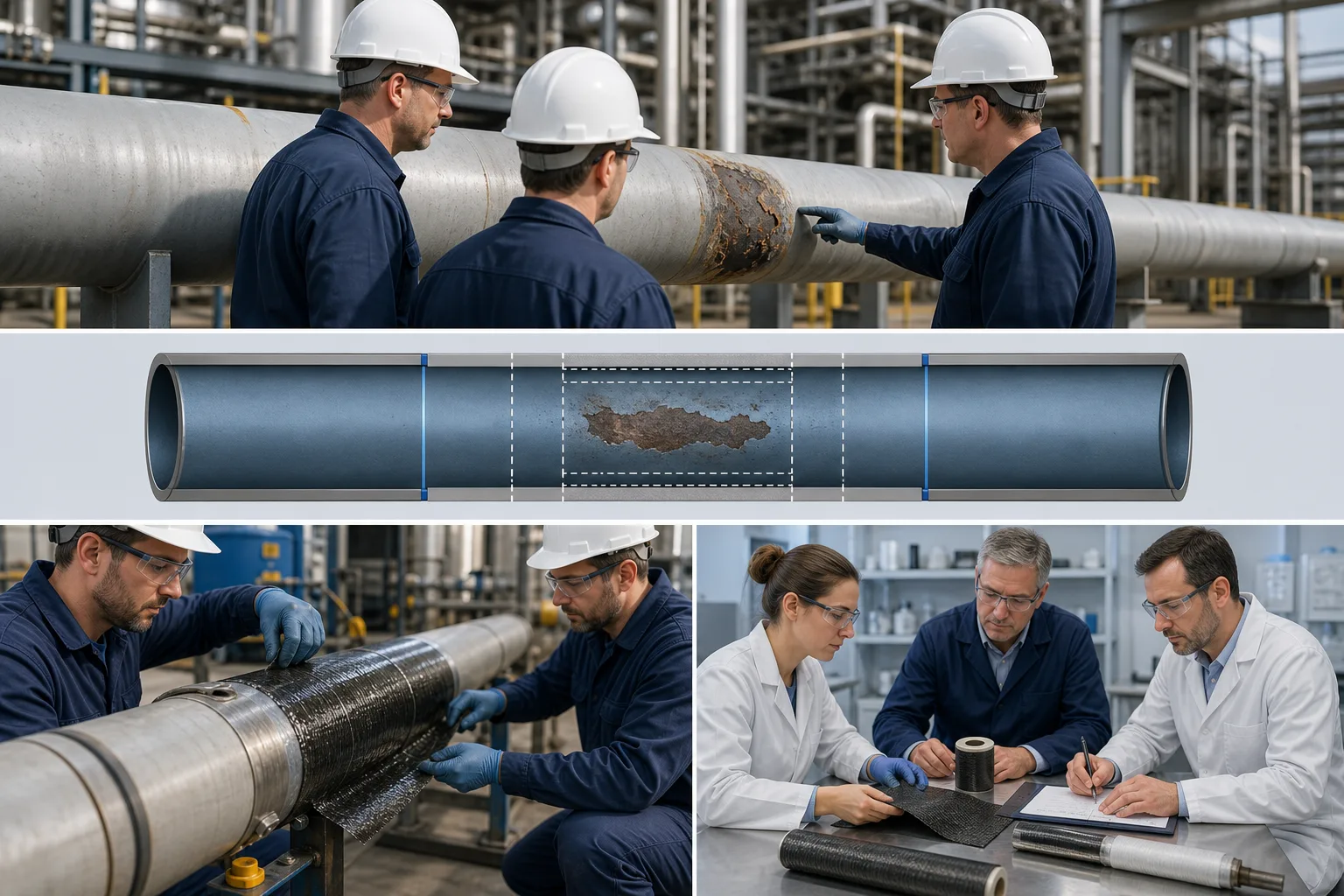
Send pipe details, damage records, service conditions, and photos. ZDSChem can review whether a composite repair route, an alternative material, or further engineering input is appropriate.
FAQ
Frequently Asked Questions
Composite pipe repair is a layered reinforcement method that combines a resin matrix with fiber reinforcement over a prepared pipe section. It is considered for defined damage conditions such as localized corrosion, wall loss, cracks, or punctures when the substrate and service conditions support the repair design.
Assess the pipe substrate, remaining wall condition, damage dimensions, operating pressure, temperature, conveyed fluid, movement, access, and required acceptance criteria. Active leaks, severe wall instability, unknown damage, or aggressive chemical exposure require additional technical or engineering review.
The resin bonds the repair system to the prepared pipe and holds the reinforcement in place. The reinforcement helps distribute loads through the repaired area. Both must be selected as a compatible system, with the layer schedule and application method confirmed in current documentation.
Not every composite wrap system is intended for wet or active-leak conditions. First determine whether the line can be isolated, depressurized, drained, cleaned, and dried. If it cannot, compare a repair category intended for wet or underwater conditions and confirm suitability against the relevant product documents.
Provide the pipe material and dimensions, damage type and size, operating pressure and temperature, conveyed fluid, access conditions, isolation status, repair objective, required standards, photos, drawings, and estimated material quantity. Packaging and documentation requirements are also useful for distributor or procurement inquiries.
Review the applicable technical data sheet, safety data sheet, application guidance, inspection records, and project acceptance requirements. Exact resin chemistry, reinforcement specifications, cure conditions, service limits, and compatibility information must come from current documentation for the selected system.