
Mining, Cement & Steel Equipment Wear Protection
Restore or protect metal, rubber, and fluid-contact surfaces exposed to abrasion, erosion, impact, slurry, heat, moisture, or chemical attack. Selection starts with the equipment, substrate, damage mechanism, and service conditions. The guidance supports plant maintenance teams, repair contractors, reliability engineers, MRO suppliers, and procurement buyers, but does not provide universal approval for every installation.
Selection Basis
Wear Protection Starts With the Actual Failure Mode
An industry label does not determine the repair material. Start with the equipment and damaged substrate, then assess whether the main issue is rubber damage, wear, erosion, cavitation, corrosion, metal loss, leakage, or structural deterioration.
Product Selection
Compare repair categories using equipment, substrate, damage, and service conditions.
Abrasion and Erosion
Assess particle-driven abrasion, erosion, cavitation, impact, and exposure severity.
Chemical Corrosion
Review fluid chemistry and exposure requirements when corrosion is the dominant risk.
Equipment Routes
Recommended Starting Points by Equipment
Use these routes to prepare an initial shortlist. Final selection requires review of the component, service environment, surface preparation, application requirements, and current product documentation.
Conveyors and Transfer Points
Assess rubber, linings, rollers, chutes, and hoppers for flexing, impact, sliding abrasion, or particle erosion.
Crushers, Screens and Chutes
Define whether impact and abrasion require wear protection or lost metal section requires rebuilding.
Slurry and Fluid Equipment
Review solids, chemistry, velocity, pressure, exposure, and whether damage is surface wear or structural.
Fans and Ducts
Confirm dust erosion, moisture, process gases, temperature limits, preparation, and application conditions.
Cement and Steel Equipment
Combine metal rebuilding, wear protection, elastomer repair, and preparation according to the damaged component.
Route Comparison
Match the Repair Route to the Damage Pattern
Use the failure pattern to organize the first technical review. The comparison does not replace assessment of operating limits or review of current product data sheets.
Abrasive Wear and Erosion
Consider ceramic-filled wear protection after confirming the actual wear mechanism and exposure severity.
Rubber Surface Damage
Use an elastomer repair route compatible with component movement, loading, bonding, and preparation.
Metal Loss or Leakage
Consider rebuilding or cold repair; structural and pressure-related work requires appropriate engineering review.
Fluid Contact
Consider lining, sealing, or coating only within documented chemical-resistance and temperature limits.
Structural Pipe Damage
Assess composite reinforcement suitability against the defect, pressure, geometry, and engineering requirements.
Inquiry Requirements
Information That Improves Product Selection
Describe the failure in operating terms. Photographs help, but dimensions, service data, the repair objective, and purchasing requirements allow the proposed route to be assessed more effectively.
Component and Substrate
Provide the equipment, location, substrate, dimensions, existing lining, movement, vibration, drawings, and marked photos.
Damage and Conditions
Describe damage progression, solids, chemicals, temperature, pressure, immersion, impact, movement, and operating cycle.
Objective and Purchasing
State the repair goal, area, quantity, market, packaging needs, and whether supply is for evaluation, a project, or stocking.
Evaluation Process
From Maintenance Issue to Evaluated Repair Route
Move from a defined equipment condition to a documented repair category, then plan controlled evaluation and supply requirements where appropriate.
01
Describe the Condition
Identify the equipment, substrate, damage mechanism, service environment, access, and repair window.
02
Narrow the Category
Compare metal rebuilding, composite reinforcement, wear protection, coatings, elastomer repair, and preparation.
03
Check the Evidence
Review current technical data sheets, safety information, and application guidance for the proposed route.
04
Plan Evaluation and Supply
Qualified buyers can request controlled sample evaluation before discussing project or stocking requirements.
Technical Evidence
Documents and Relevant Project Examples
Organize technical and safety documents for procurement and supplier qualification. Compare project examples by equipment, substrate, damage, and service conditions rather than by industry name alone.
Supplier Review
Manufacturer Background for Technical and Procurement Review
ZDSChem applies an industrial repair materials focus to the wider ZDS chemical manufacturing and formulation background. Customer-specific requirements remain subject to product need, specification, volume, market, and feasibility review.
Manufacturing Background
ZDS has operated as a professional chemical manufacturer since 1998.
R&D Support
A dedicated R&D team of 30 professionals supports formulation, improvement, adaptation, and requirement review.
Quality Management
ISO 9001 and IATF 16949 are management-system certifications, not certifications of individual repair products.
Repair Portfolio
Seven primary repair product series are selected by equipment, substrate, damage, and service conditions.
Selection Limits
Limits That Affect the Final Decision
Severe and changing service conditions prevent general guidance from establishing product-specific limits or service life. Current documentation and, where appropriate, controlled evaluation are required.
Exact temperature, pressure, cure
chemical-resistance, adhesion, abrasion, and service-life values must come from current product documentation.
Repair materials do not automatically
replace equipment redesign, operating-procedure changes, or qualified engineering review.
Pressure-retaining, rotating
high-temperature, and safety-critical equipment must follow site isolation, preparation, application, inspection, and return-to-service procedures.
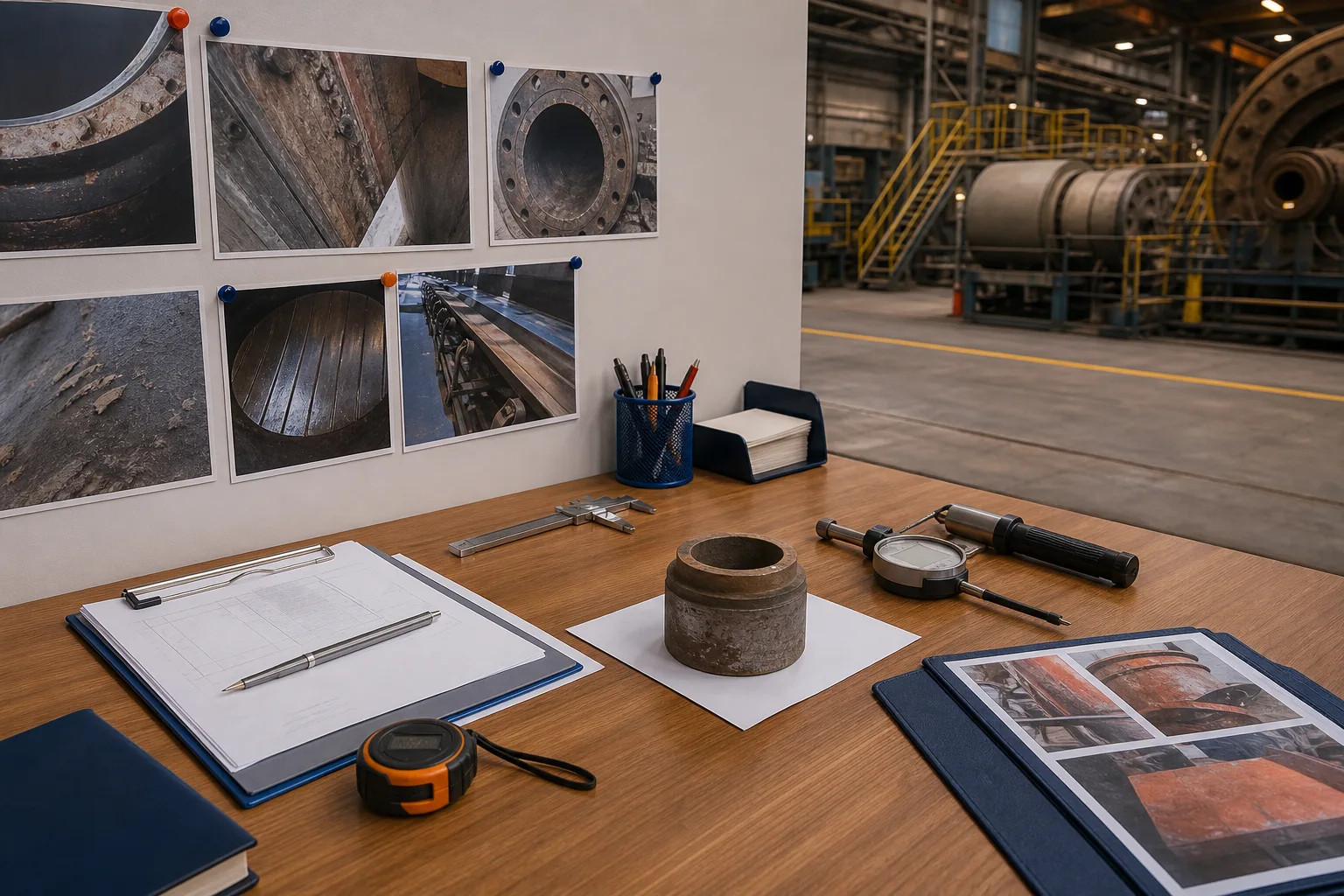
Application Review
Prepare a Wear Protection Recommendation
Send the equipment type, damaged substrate, failure mode, operating conditions, repair area, and purchasing requirement. ZDSChem can identify a relevant product category and the documentation or evaluation route needed.
FAQ
Frequently Asked Questions
ZDS-CeramicArmor is the primary product series to examine for ceramic-filled materials used in wear, erosion, cavitation, and heavy-duty equipment protection. ZDS-RubberElast is more relevant when the damaged component is rubber or another elastomer. The actual route depends on the substrate and service conditions.
Not automatically. Conveyors may involve rubber or elastomer damage, crushers may combine impact and abrasive wear, and slurry pumps may add fluid chemistry, solids, velocity, and pressure considerations. Each component should be assessed by substrate, damage mechanism, and service environment before a product is selected.
Provide the equipment and damaged location, substrate, damage dimensions, operating medium, solids or chemical exposure, temperature, pressure, immersion, movement, access, repair window, expected quantity, and destination market. Photos, drawings, and existing specifications can help the technical team prepare a more useful shortlist.
No. ISO 9001 and IATF 16949 are quality-management system certifications. They do not automatically certify the performance, safety, compliance, or suitability of an individual ZDSChem repair material. Product-specific requirements should be checked against current technical and safety documentation.
Qualified buyers can request a sample evaluation or project quotation after providing the relevant application and purchasing information. Sample selection, evaluation scope, quantity, packaging, documentation, and commercial feasibility require technical and commercial review before confirmation.