
Technical Data Sheets for Industrial Repair Materials
Technical data sheets provide product-specific information for evaluating industrial repair materials. Distributors, MRO suppliers, repair contractors, engineers, maintenance teams, and procurement buyers can use these records to identify documents, check versions, and prepare for sample evaluation, quotation, or stocking. Always confirm the current TDS for the exact product.
Document Selection
How to Find the Right Technical Data Sheet
Start with the repair category or exact ZDSChem product. Narrow the requirement by equipment, substrate, damage type, and service condition before comparing product-specific documents.
01
Identify the Repair Route
Determine whether the work involves rebuilding, reinforcement, wear protection, underwater repair, coating, or elastomer repair.
02
Confirm the Exact Product
Match the TDS product name or identifier with the product record, sample request, quotation, or purchasing document.
03
Review Operating Conditions
Compare the equipment, substrate, damage, temperature, chemicals, moisture, movement, and access conditions.
04
Check Document Control
Record the revision, issue date, or document status when shown and resolve any mismatch before ordering.
Product Series
Browse TDS Records by ZDSChem Repair Series
ZDSChem organizes industrial repair materials into seven primary product series. Surface Preparation Products support these series and are not an eighth primary series. Confirm the exact product document after selecting a category.
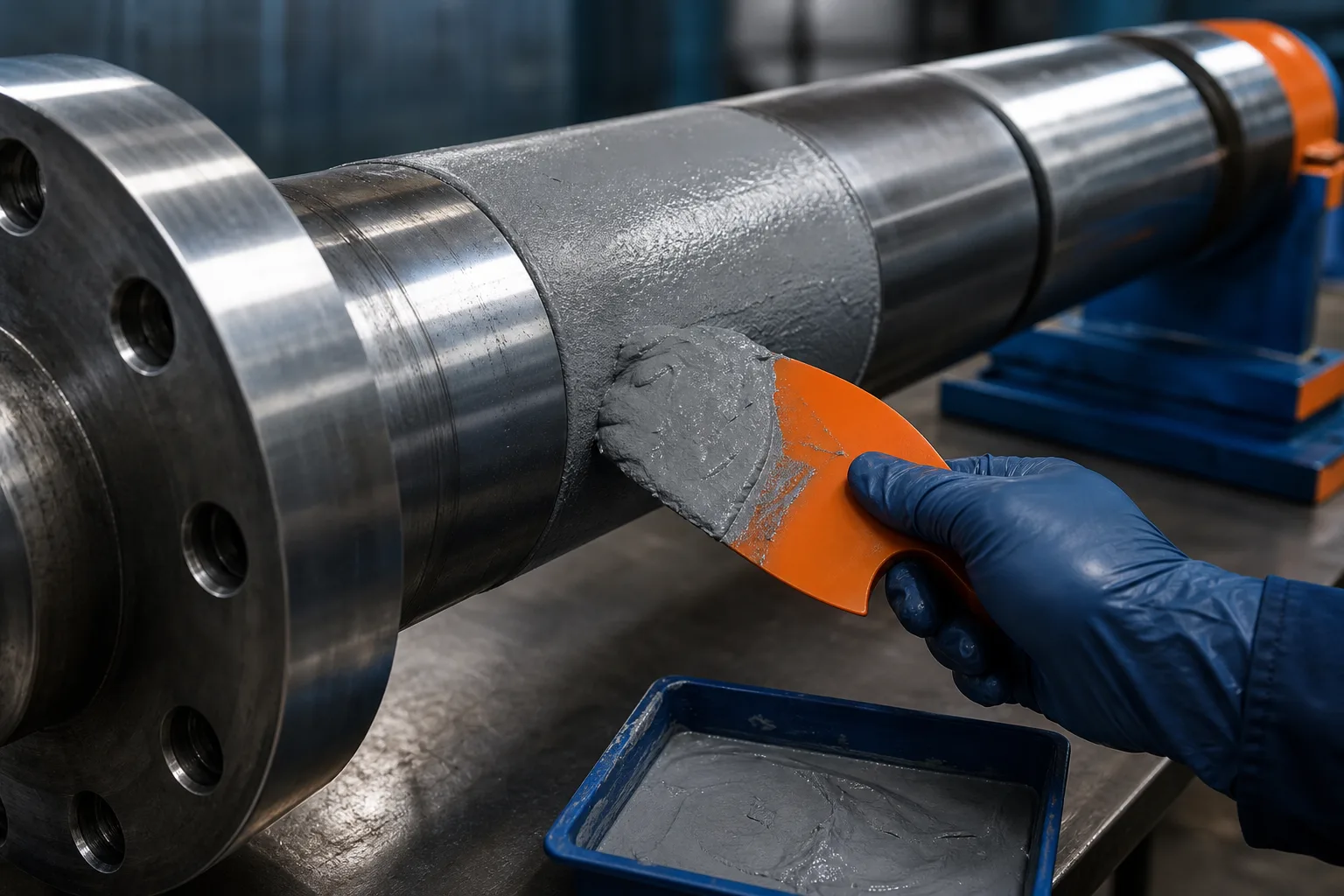
ZDS-MetalRebuild
Metal rebuilding, cold repair, dimensional restoration, leak sealing, and structural bonding materials.

ZDS-CompositeWrap
Composite pipe reinforcement, FRP repair, and structural laminating systems.

ZDS-CeramicArmor
Ceramic-filled materials for wear, erosion, cavitation, and heavy-duty equipment protection.


ZDS-FluidGlide
High-temperature repair, chemical-resistant lining, tank lining, flue protection, sealing, and coating systems.

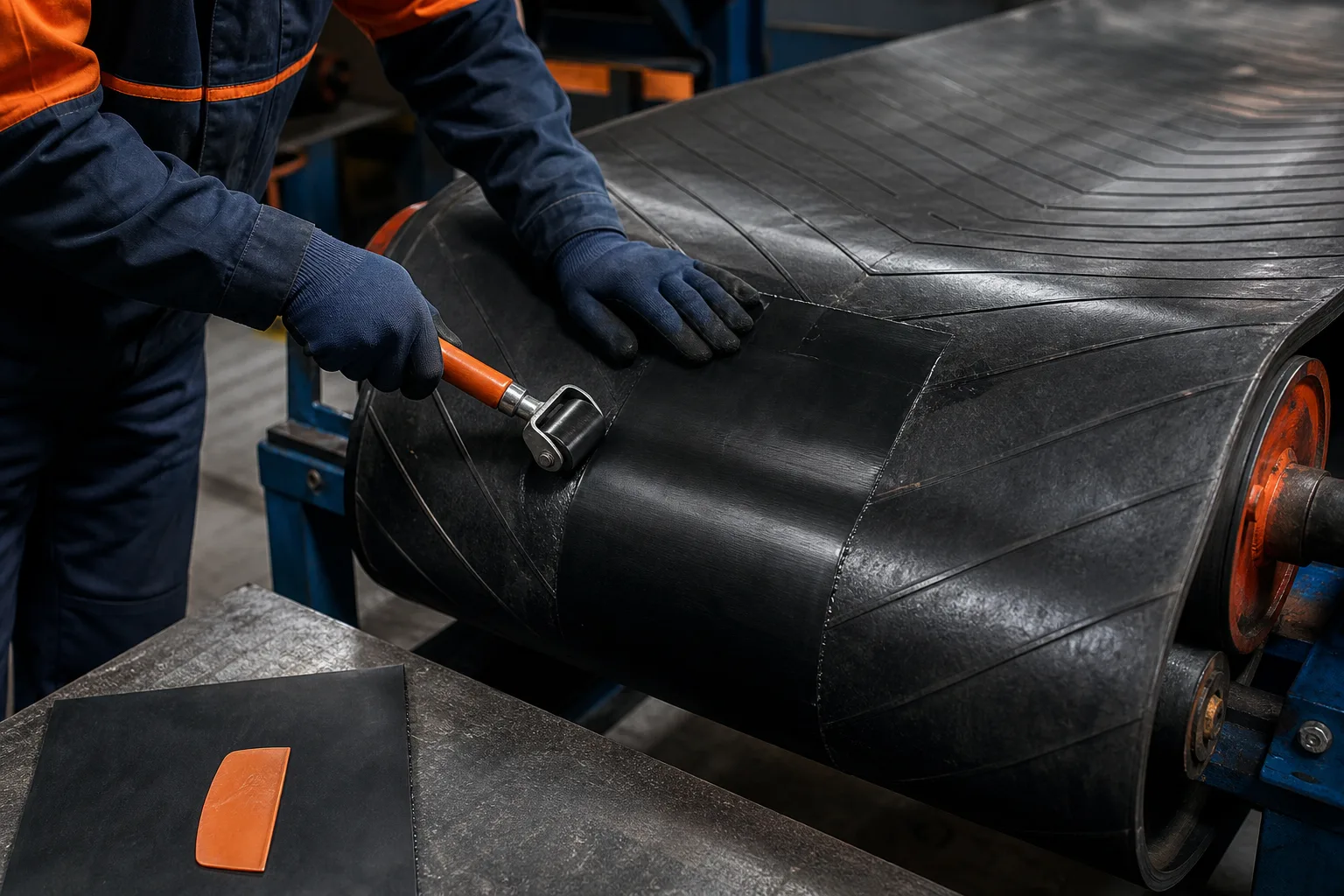
ZDS-RubberElast
Repair materials for conveyor belts, rubber linings, rollers, cables, tires, and elastomer components.
Document Content
What an Industrial Repair Material TDS Helps Verify
Content varies by product and revision. Use only the values and instructions stated in the current product-specific document. Do not infer technical figures from a series name or transfer them from another product.
Product Identity
Confirm the product name, repair category, intended use, and stated application boundaries.
Substrate and Equipment
Check whether the document addresses the relevant repair surface, component, or equipment.
Service Conditions
Compare the documented use with damage, temperature, chemicals, moisture, immersion, UV exposure, or movement.
Surface Preparation
Follow the stated cleaning, roughening, drying, priming, conditioning, or preparation sequence.
Application Instructions
Review mixing, placement, layering, tooling, finishing, handling, and sequence requirements.
Limitations and Records
Note exclusions, compatibility warnings, storage or handling information, and referenced technical or safety documents.
Version Control
How to Compare TDS Versions Before Approval
Version control matters for supplier qualification, project approval, stocking, and repeat purchasing. Retain the document version reviewed for each technical or procurement decision.
Match the Identifier
Confirm that the document applies to the exact product, not only to the wider series.
Record Revision Details
Capture the issue date, revision code, or document status shown on the file.
Compare Decision Factors
Check intended use, substrate, service conditions, preparation, application, handling, and limitations.
Resolve Conflicting Records
Request clarification if the TDS, quotation, sample, packaging, or application instructions appear inconsistent.
Keep the Approved Record
Store the document used for the project or purchasing decision and identify when review is required.
Buyer Workflows
How B2B Buyers Use TDS Information
Product-specific TDS records support assortment planning, technical screening, field preparation, internal approval, and purchasing control across industrial repair supply chains.
Distributors and Importers
Map product categories to regional demand, prepare assortments, support questions, and identify required review documents.
MRO Suppliers
Organize repair materials around equipment, maintenance tasks, service conditions, and replenishment requirements.
Contractors and Engineers
Prepare field shortlists, compare repair routes, identify preparation needs, and support sample or quotation review.
Maintenance and Procurement
Use identifiers, versions, instructions, stated packaging information, and supporting records for purchasing control.
Supporting Records
Pair the TDS with the Right Supporting Record
A TDS supports product selection but is not the only record needed for a responsible industrial repair decision. Use the document set appropriate to the evaluation stage.
Safety and Handling
Use the applicable SDS for hazard, handling, storage, and emergency-response information. A TDS does not replace an SDS.
Application Planning
Consult relevant application guides for practical preparation and installation guidance where available.
Product Discovery
Use the selection guide when equipment, substrate, damage, or service conditions are not yet mapped to a product series.
Supplier Evaluation
Review quality-control and management-system information without treating certifications as product-performance approval.
Practical Evaluation
Request a sample with the application conditions and acceptance criteria required for evaluation.
Selection Limits
Limitations Before Technical Approval or Purchase
A TDS supports screening and application planning. It cannot replace assessment of the equipment, substrate condition, damage geometry, operating environment, access constraints, or required repair outcome.
Do not apply a value or instruction from
one product to another without confirming the applicable document.
Do not assume every product in a series
covers every substrate, damage type, or service condition in the series overview.
Do not use a TDS as a safety document
consult the applicable SDS for safety and handling controls.
Do not treat ISO 9001 or IATF 16949 as
individual product certification or a guarantee of field performance.
Provide project details before selecting
materials for unusual, high-risk, emergency, or specification-controlled repairs.
Technical Background
Documentation Supported by Chemical Manufacturing Experience
ZDSChem applies the wider ZDS chemical manufacturing and formulation background to industrial repair materials. Current product documentation remains the controlling source for technical selection and application decisions.

Technical Consultation
Need Help Matching a TDS to a Repair Case?
Provide the equipment, substrate, damage type, service conditions, preparation constraints, target quantity, and available specification. Technical and commercial feasibility is confirmed after the requirements are reviewed.
FAQ
Frequently Asked Questions
A technical data sheet is a product-specific document that explains intended use, applicable repair context, preparation, application guidance, handling information, and stated limitations. The exact content depends on the product and document version.
A series overview can help identify the right repair category, but final selection requires the TDS for the exact product. Products within the same series may differ in substrate, service-condition suitability, application method, or limitations.
Check the equipment, substrate, damage mechanism, temperature, chemical exposure, moisture or immersion, movement, access, preparation constraints, and required repair outcome. These details help determine whether the document supports the intended application.
No. A TDS supports product selection and application planning, while an SDS provides safety, hazard, handling, storage, and emergency-response information. Use both documents when they are relevant to the work.
No. ISO 9001 and IATF 16949 are quality-management system certifications. They do not certify the performance, safety, compliance, or suitability of an individual ZDSChem repair material.
Yes. ZDS can review application-specific requirements and determine whether a suitable product route or formulation review is feasible. Technical and commercial feasibility must be confirmed after product, service, specification, and purchasing information is supplied.