
ZDS-PolyAspartic Coatings for Outdoor Protection
ZDS-PolyAspartic is a protective coating series intended for outdoor surfaces that require UV resistance, weather stability, and a durable finishing layer. It provides a system route for industrial buyers evaluating topcoats for exposed steel, concrete, composite, and previously coated surfaces. Final product selection requires confirmation of the substrate, existing base layer, exposure conditions, appearance requirements, and application method. The series is designed for distributors, MRO suppliers, coating contractors, maintenance teams, and procurement buyers. A sample evaluation provides a practical way to check compatibility, application behavior, finish, and curing conditions before planning a project or bulk purchase.
Series Definition
What the ZDS-PolyAspartic Series Is Designed to Do
The ZDS-PolyAspartic series is organized around UV-resistant and weather-stable protective topcoats. These coatings are intended to form the exposed finishing layer of a compatible coating system rather than replace every repair compound, primer, build coat, lining, or wear-resistant material beneath it. For many projects, the correct decision is not simply which topcoat to buy. Buyers must determine what substrate is being protected, whether a repair or base layer is already present, and which environmental factors the complete system will face.
Outdoor Protective Finish
Use the series as a starting point when UV exposure, changing weather, and long-term outdoor appearance are important selection factors.
Compatible System Topcoat
Evaluate the polyaspartic layer together with the primer, repair material, intermediate coating, or existing sound coating beneath it.
Commercial Evaluation
Compare sample behavior, documentation, pack information, order quantity, and supply terms before initial stocking or project purchasing.
ZDS-PolyAspartic TDS Library
Review outdoor protective topcoats by intended use, service temperature and cure profile, then open the model-specific technical data sheet.
| Model | Product & best for | Service temperature | Working time (25°C) | Cure profile | TDS |
|---|---|---|---|---|---|
| ZDSPA1600 | Clear Weather-Proof ArmorOffshore platforms, industrial pipelines; protective coating. | Ambient-cure protective service | Typical: 15-25 min | Tack-free: 2 h / 24 h |
Outdoor Conditions
Outdoor Conditions That Affect Coating Selection
Outdoor exposure is not one uniform service condition. A coating on a sheltered structural component faces a different environment from a floor, platform, tank exterior, or coastal installation. Buyers can compare product categories by service condition before narrowing the topcoat route.
UV Exposure
Record whether the surface receives direct sunlight, partial exposure, or mainly sheltered service.
Rain and Moisture
Identify standing water, frequent washdown, condensation, or repeated wet and dry cycles.
Temperature Variation
Provide normal operating conditions and expected seasonal or process-related changes.
Mechanical Traffic
State whether the surface will face foot traffic, wheeled traffic, impact, scratching, or routine maintenance activity.
Chemical Contact
List cleaning agents, process liquids, splash exposure, concentration, contact duration, and operating temperature.
Appearance
Define color, gloss, texture, and finish expectations where these are commercially important.
Application Environment
Record ambient temperature, humidity, ventilation, access, and the available return-to-service window.
Suitable Surfaces
Suitable Surfaces and the Role of the Base Layer
Steel, concrete, compatible composites, and existing coatings can present different preparation and adhesion requirements. The following checks should be answered before a ZDS-PolyAspartic product is shortlisted. They do not confirm universal compatibility with every surface. Cleaning agents, primers, conditioners, and other supporting materials can be reviewed under Surface Preparation Products. Preparation requirements should follow the selected product documents and the actual surface condition rather than a single general procedure.
Prepared Steel
Review corrosion, profile, contamination, repair areas, and existing primer. Confirm primer compatibility and required dry film build.
Concrete
Review moisture condition, strength, laitance, porosity, cracks, and previous treatment. Consider surface conditioning, pore sealing, and a compatible base coat.
Composite Surface
Review resin type, surface condition, previous coating, and exposure. Confirm adhesion and system compatibility.
Existing Coating
Review coating type, adhesion, age, damage, cleanliness, and previous service. Remove unsound material and run a representative compatibility trial.
Repaired Area
Review repair material, cure status, surface profile, and transition to the original substrate. Confirm the overcoating window and repair-layer compatibility.
Application Factors
Application Factors to Confirm Before a Site Trial
Application planning affects both the sample evaluation and the final purchasing decision. Exact mixing ratios, working times, recoat intervals, film thicknesses, and cure schedules are product-specific and should come from current technical documentation. Buyers can consult available technical data sheets and application guides when preparing the trial. Document availability and revision status should be confirmed for the selected product.
01
Document the Surface
Identify the substrate, dimensions, condition, contamination, existing coating, and any completed repairs.
02
Define the Coating System
State whether the layer will be applied over a primer, repair compound, intermediate coat, lining, or sound existing coating.
03
Record Site Conditions
Provide ambient and substrate conditions, ventilation, access restrictions, application area, and available shutdown time.
04
Select the Application Method
Confirm the intended tools, installer experience, finish requirements, and practical coverage area.
05
Plan a Representative Trial
Evaluate adhesion, appearance, application behavior, intercoat compatibility, and curing under representative project conditions.
06
Review Before Scale-Up
Compare the trial against agreed acceptance criteria before ordering material for wider application.
System Boundaries
When Another ZDSChem Series May Be Required
ZDS-PolyAspartic primarily addresses the exposed protective finish. It should not automatically be selected as the main material for deep rebuilding, heavy erosion, structural reinforcement, persistent immersion, or severe process exposure.
Where chemical resistance, tank lining
flue protection, sealing, or high-temperature service is the dominant requirement, review ZDS-FluidGlide systems and the guidance for chemical corrosion protection.
Where slurry erosion, cavitation, or heavy
abrasive wear controls the material choice, compare ZDS-CeramicArmor materials before choosing an exposed finish.
Where the substrate has loss of section
cracks, holes, or dimensional damage, complete the required repair and verify its cure and overcoating compatibility before applying a topcoat.
A combined system can only be selected
after the function and compatibility of each layer are understood. Mixing unrelated products or coating over an unidentified existing finish can increase the risk of poor adhesion, trapped contamination, wrinkling, or incomplete curing.
Documents and Pricing
Information Needed for Samples, Documents, and Pricing
A useful inquiry should identify the product application rather than request a general outdoor coating without service details. The following information helps the technical and commercial teams prepare a relevant sample and quotation route. ZDS maintains a dedicated R&D team of 30 professionals focused on product development and technical innovation. Technical experts with over 30 years of experience contribute to formulation review and application-specific solution development. These resources support evaluation, but final feasibility still depends on the supplied requirements, current product documents, and representative testing. Qualified buyers can also review the Sample-to-Bulk Workflow to plan the steps from initial screening and sample evaluation to commercial purchasing and repeat-supply discussion.
Buyer and Market
Provide buyer type, company market, and intended sales or project use.
Substrate and Base Layer
Provide substrate and existing coating or base-layer information.
Exposure Conditions
Provide outdoor exposure, UV level, moisture, temperature, traffic, and chemical contact.
Finish Requirements
Provide finish, color direction, gloss, texture, and appearance criteria.
Application and Schedule
Provide application method, total area, project schedule, and available trial conditions.
Purchasing and Documentation
Provide estimated purchasing volume, pack requirements, destination market, and documentation needs.
Limitations
Selection Boundaries and Verification Requirements
No polyaspartic coating should be selected from the series name alone. Confirm the product-specific substrate compatibility, surface preparation, mixing procedure, application range, film build, recoat window, cure conditions, chemical exposure, temperature range, and maintenance requirements before use. Representative testing is especially important when the product will be applied over an existing coating, a repaired substrate, an unfamiliar composite, or a base layer from another system. Outdoor UV stability does not by itself prove suitability for continuous immersion, severe abrasion, structural movement, food contact, potable water contact, or a regulated application. Any such requirement needs supporting documentation and a defined approval process.

Project Evaluation
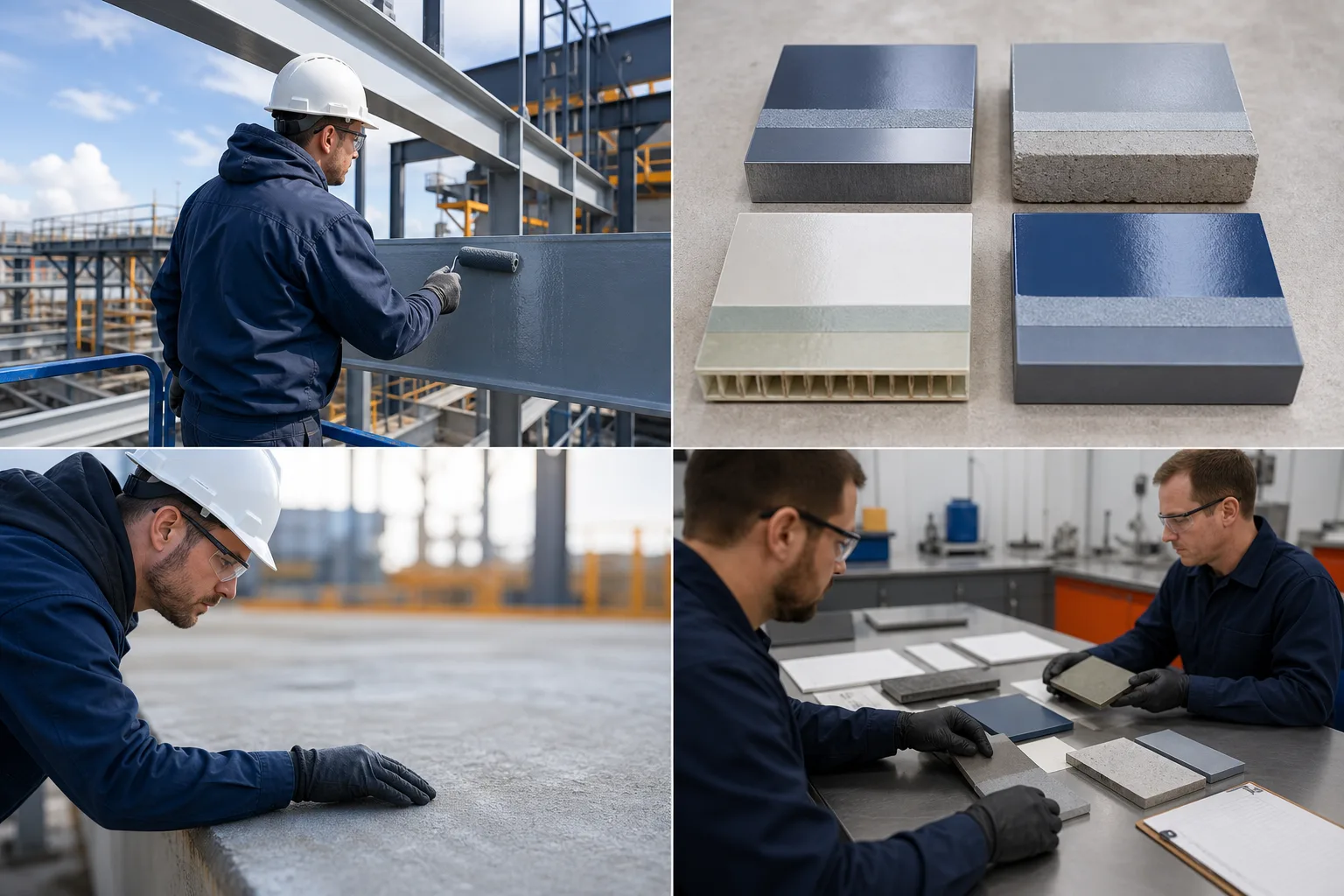
Evaluate a ZDS-PolyAspartic Coating for Your Market or Project
Submit the substrate, base-layer, exposure, finish, application, quantity, and destination-market information. ZDSChem can use these details to identify a relevant sample route and prepare commercial terms for the proposed purchase.
FAQ
Frequently Asked Questions
ZDS-PolyAspartic is organized around UV-resistant, weather-stable protective topcoats for outdoor industrial surfaces. It is intended to provide an exposed finishing layer within a compatible coating system. The exact product route depends on the substrate, base layer, environment, application method, and finish requirements.
Prepared steel and concrete are possible surfaces for evaluation, but they have different preparation, moisture, porosity, profile, and primer requirements. Compatibility must be confirmed against the selected product documentation. A representative trial is recommended before a large-area application.
An existing coating must first be identified and checked for adhesion, cleanliness, damage, and compatibility. Unsound material should not be treated as a reliable base. When the existing chemistry or condition is uncertain, a controlled adhesion and compatibility trial is needed.
No. UV resistance and weather stability do not establish universal chemical, heat, immersion, or abrasion resistance. Buyers should provide the chemicals, concentration, contact duration, temperature, and mechanical conditions so the appropriate coating or lining category can be considered.
Provide the substrate, existing primer or coating, outdoor exposure, moisture, operating temperature, chemical contact, traffic, finish target, application method, project area, destination market, and expected purchasing volume. This information helps prepare a more representative sample evaluation.
Customer-specific formulation, performance, packaging, labeling, or documentation requirements can be submitted for review. Technical and commercial feasibility must be confirmed according to the application, specification, expected volume, target market, and development requirements. Acceptance and performance cannot be guaranteed before evaluation.