
Industrial Repair Material Selection Guide
Choosing an industrial repair material starts with the repair condition, not the product name. Maintenance, engineering, and procurement teams should identify the substrate and damage, then compare equipment geometry, temperature, pressure, service medium, moisture, and cure conditions. This creates a practical shortlist without treating one repair material as suitable for every application. ZDSChem organizes industrial repair materials into seven primary product series, supported by a separate surface preparation category. Use this guide with the industrial repair resource library, product documentation, and project information to move from initial selection to a documented technical recommendation.
Selection Framework
Start With Five Selection Questions
A reliable product comparison becomes easier when the same questions are applied to every repair. Product selection by equipment focuses on common equipment categories, while product selection by service condition focuses on exposure and operating demands.
Identify The Substrate
Identify metal, composite, rubber, elastomer, an existing coating, or another surface receiving the repair.
Define The Damage
Separate corrosion, pitting, erosion, abrasion, cavitation, cracking, leakage, dimensional loss, delamination, or elastomer damage.
Locate The Damage
Record equipment type, repair geometry, access limitations, and whether the repair is local, linear, circumferential, or surface-wide.
Record Service Conditions
Record operating and peak temperature, pressure, fluid or chemical exposure, moisture, immersion, movement, vibration, and shutdown time.
Gather Purchase Evidence
Gather technical data, safety information, application instructions, samples, packaging requirements, and internal acceptance criteria.
Substrate And Damage
Match The Substrate And Damage Mechanism First
The substrate determines preparation requirements and how the repaired area will interact with the equipment. The damage mechanism narrows the choice further. Metal rebuild, composite reinforcement, wear-resistant material, and elastomer repair materials serve different purposes even when used in the same plant.
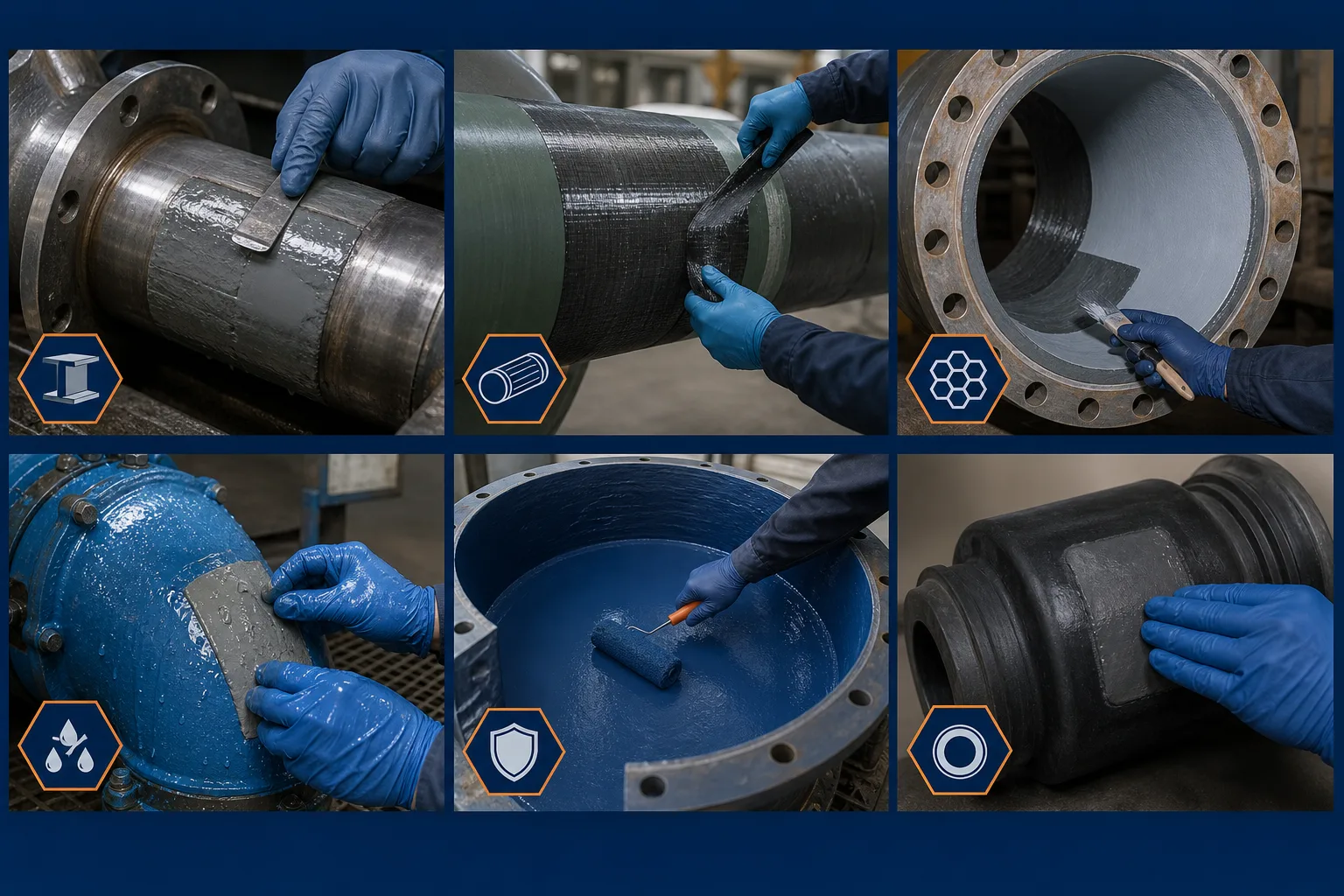
Metal Rebuild And Sealing
Compare ZDS-MetalRebuild for metal rebuilding, cold repair, structural bonding, or local restoration. Confirm geometry, load, surface condition, and intended service.
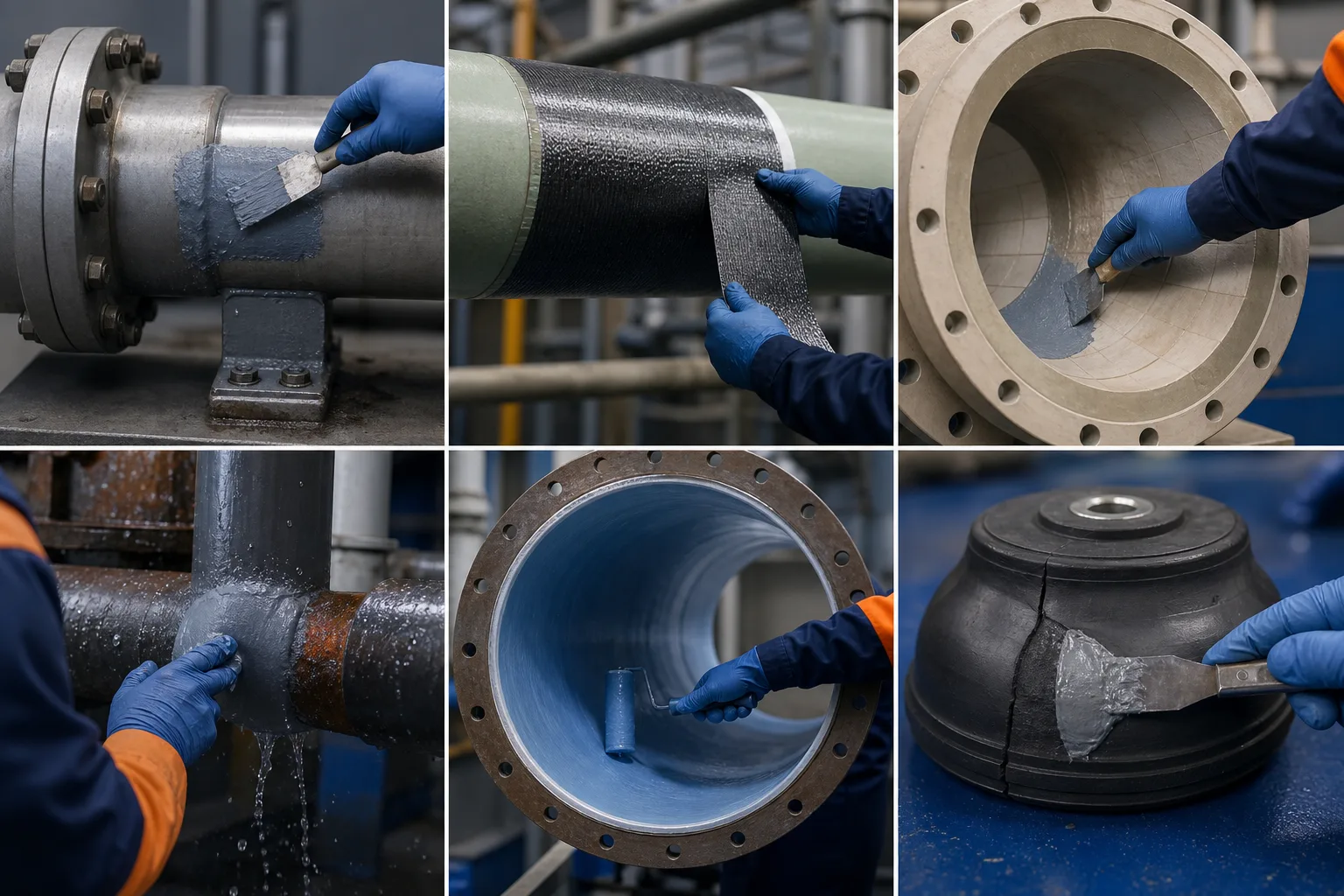
Pipe Reinforcement
Compare ZDS-CompositeWrap for composite pipe reinforcement, FRP repair, or structural laminates. Review wall condition, defect length, movement, and access.
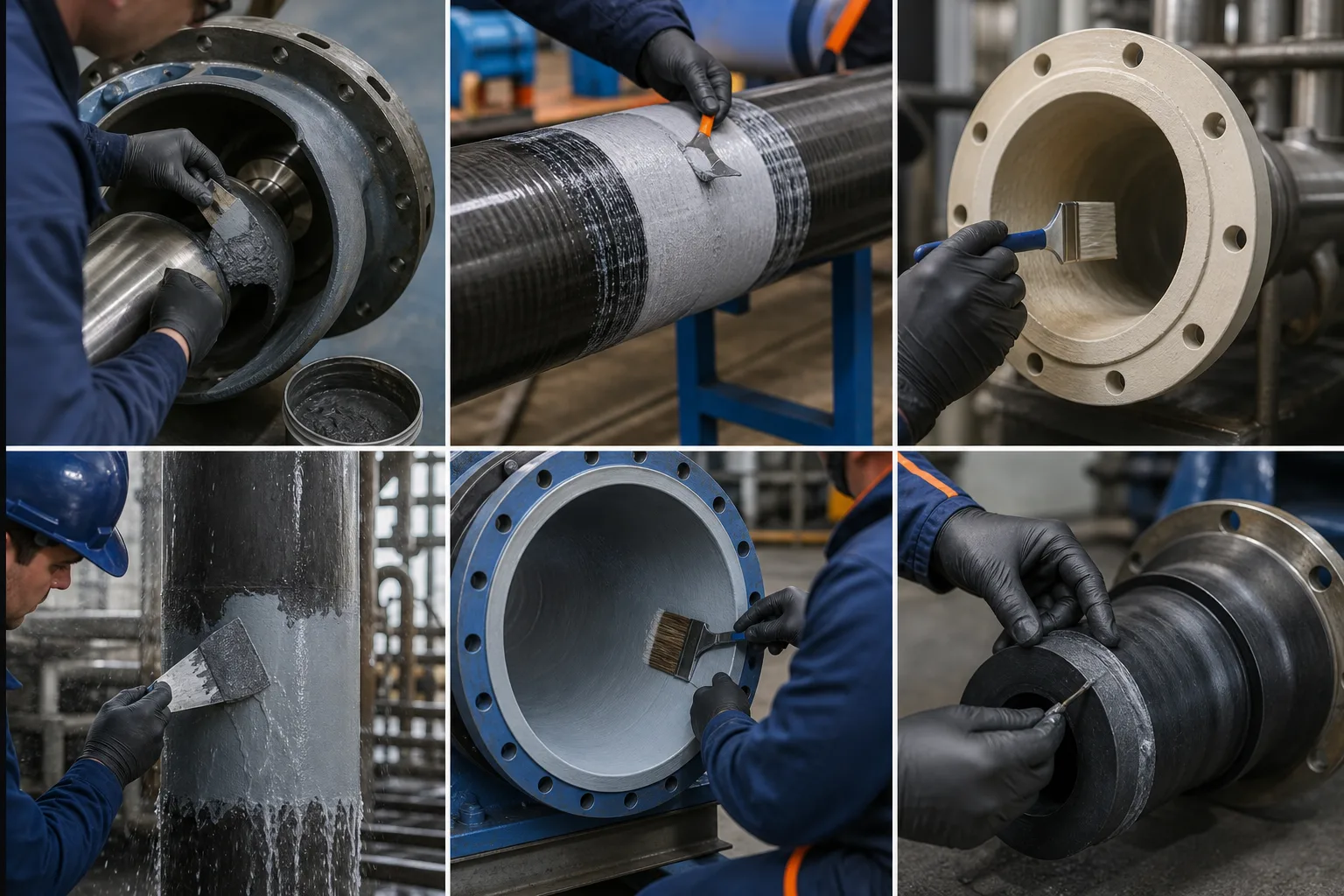
Wear And Cavitation
Compare ZDS-CeramicArmor for ceramic-filled repair materials intended for wear and heavy-duty equipment protection. Review particle size, flow, impact, and damage progression.
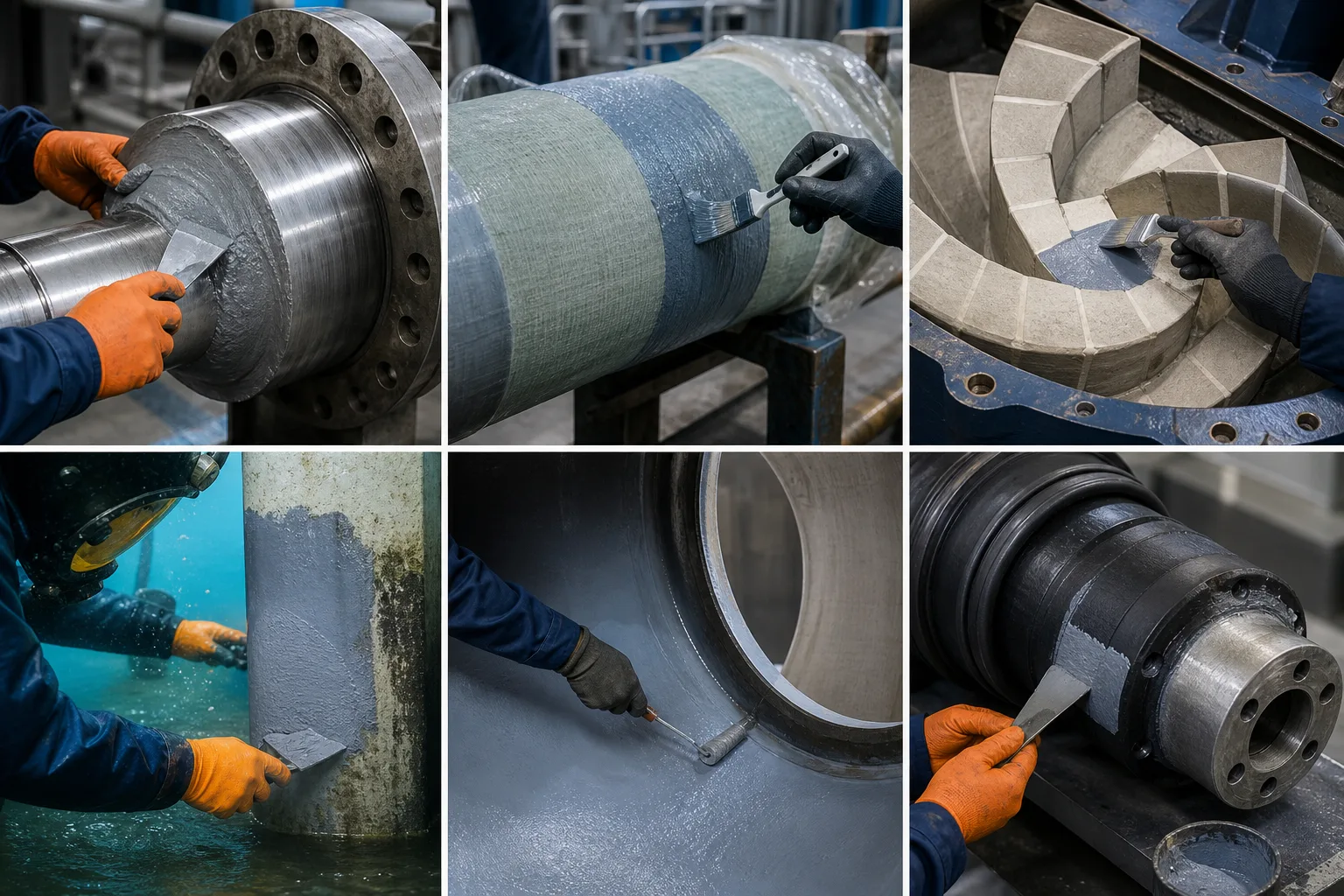
Wet And Underwater Repair
Compare ZDS-AquaShield when water, immersion, or limited drying time affects the repair route. Confirm preparation and cure conditions for the application.
Rubber And Elastomers
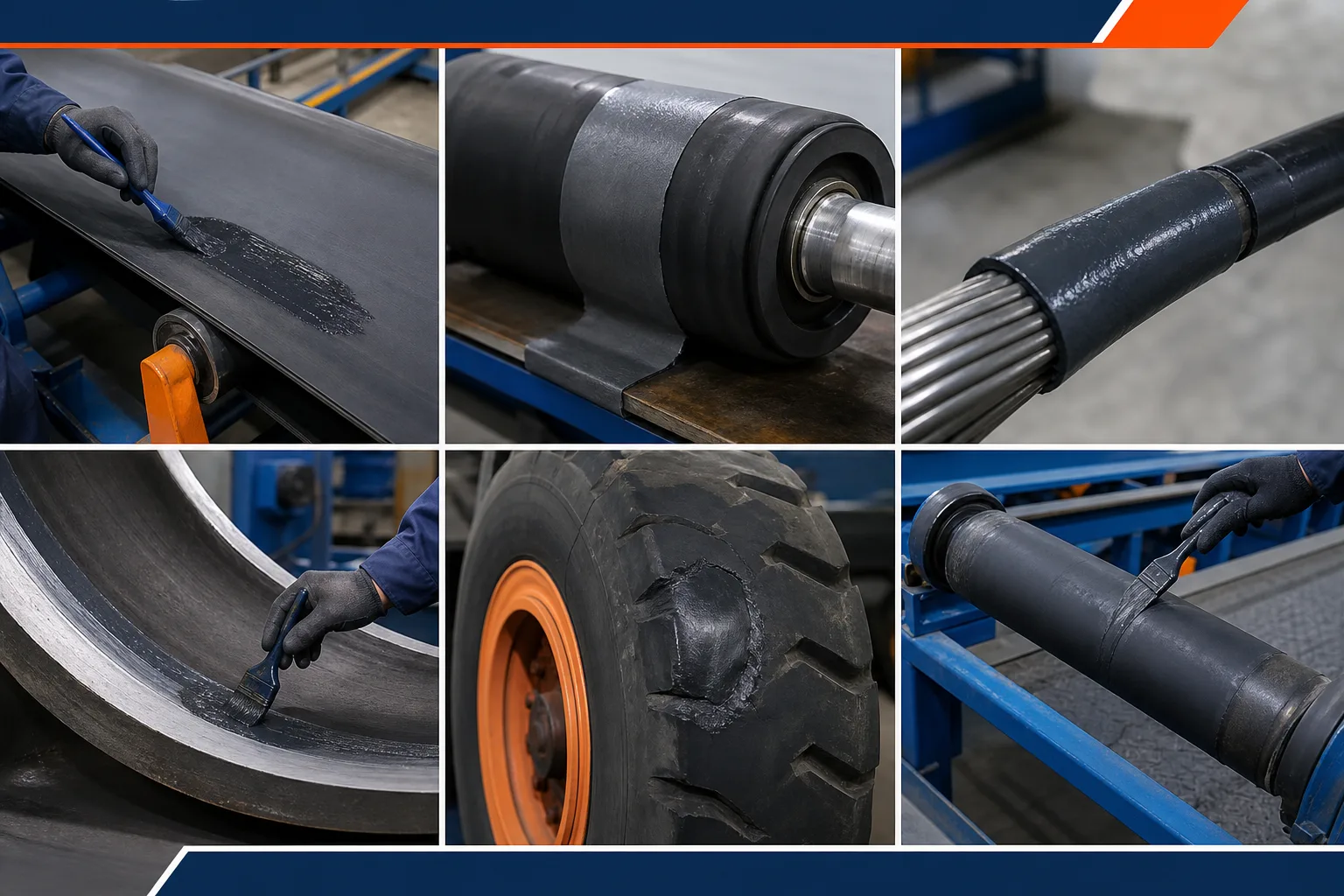
Compare ZDS-RubberElast for conveyor belts, rubber linings, rollers, cables, tires, and other elastomer components. Record flexibility, movement, bond area, and loading.
Product Comparison
Initial Product-Family Comparison
This screening framework organizes a shortlist. It does not provide a performance rating or confirm suitability. Final selection follows current product documentation and the actual equipment condition.
Metal Rebuilding
Compare ZDS-MetalRebuild. Ask whether a local rebuild or bonding route is appropriate for the damaged metal area.
Composite Pipe Repair
Compare ZDS-CompositeWrap. Ask whether pipe condition, defect geometry, and reinforcement design can be documented.
Wear Protection
Compare ZDS-CeramicArmor. Identify the flow, particle impact, or surface wear driving the damage.
Wet-Surface Repair
Compare ZDS-AquaShield. Record moisture, immersion, access, and cure conditions during application.
High-Temperature Lining
Compare ZDS-FluidGlide. Record continuous and peak temperatures, fluids, and exposure cycles.
Outdoor Protection
Compare ZDS-PolyAspartic when the requirement is a UV-resistant and weather-stable protective topcoat.
Elastomer Repair
Compare ZDS-RubberElast. Record movement, flexing, abrasion, and repeated loading during service.
Equipment Context
Use The Equipment To Refine The Repair Route
Equipment type changes the practical selection. A material suitable for a flat metal surface may require different evaluation on a rotating pump, pressurized pipe, flange, or flexible rubber component. Add geometry, access, load, and shutdown information.
Pipes And Networks
Review pipe leak repair for localized leaks, corrosion, and damaged sections. For longer defects or reinforcement, compare composite pipe reinforcement and record material, diameter, wall condition, dimensions, pressure, fluid, and temperature.
Pumps, Valves And Flanges
Review pump repair and protection and valve and flange repair. Document rotating exposure, sealing surfaces, vibration, access, and the return-to-service route.
Tanks And Vessels
Tank and vessel lining decisions depend on medium, immersion pattern, surface condition, and cleaning cycle. Compare tank and vessel lining with high-temperature repair when applicable.
Marine And Submerged
Use underwater and wet-surface repair criteria when drying is limited or work occurs in marine or water-treatment environments. Record water type, flow, immersion timing, access, and delay consequences.
Conveyors And Elastomers
Conveyors, rollers, rubber linings, cables, and tires require attention to flexibility and repeated movement. Also compare abrasion and erosion protection for particle wear or slurry on rigid equipment.
Service Conditions
Review Conditions Before Product Selection
Temperature, pressure, medium, moisture, and cure conditions can change the repair route even when substrate and damage appear straightforward. Record actual operating information rather than relying only on a nameplate or general process description.
Temperature And Cycling
Record normal and peak exposure, heat-up and cooldown cycles, nearby heat sources, and sudden changes. Confirm product-specific limits and instructions in current technical documentation.
Pressure And Load
Include internal or external pressure, changes, vibration, movement, load direction, wall loss, and location relative to joints or supports. Do not treat pressure as a product rating without documentation and project review.
Medium And Chemicals
Identify water, seawater, oils, fuels, acids, alkalis, solvents, slurry, gases, cleaning chemicals, and residues. Review concentration, temperature, duration, cycling, and product-specific evidence.
Moisture And Access
State whether the surface is dry, damp, wet, intermittently immersed, or underwater. Record flow, condensation, contamination, preparation access, and isolation options.
Cure And Return
Describe shutdown window, ambient conditions, ventilation, heat assistance, immersion timing, and return-to-service sequence. Exact working and cure times are product-specific.
Evidence Review
How To Compare Shortlisted Materials
Compare candidate materials against the same evidence points so a short product description does not become the only basis for a technical or purchasing decision.
Scope match
Confirm that the product series addresses the repair type, substrate, equipment, and damage mechanism.
Preparation requirements
Check cleaning, profiling, priming, conditioning, dryness, and access requirements against the worksite.
Mechanical and service exposure
Review available information for load, movement, temperature, pressure, abrasion, immersion, and chemical contact.
Application and cure
Check mixing, application sequence, layers, working time, cure conditions, and return-to-service limitations in relevant documents.
Safety and handling
Read the Safety Data Sheets and identify handling, storage, personal protection, and site-control requirements.
Documentation and supply
Use Technical Data Sheets and application guides for technical review, then confirm pack format, quantity, labeling, and purchasing requirements.
Selection To Supply
From Shortlist To Sample And Repeat Supply
This process is useful for plant maintenance teams, repair contractors, MRO suppliers, procurement buyers, and regional distributors. It keeps technical selection connected to the information and supply decisions required after a repair method is chosen.
01
Describe The Repair
Send the equipment, substrate, damage, and service-condition information.
02
Build The Shortlist
Match the situation to one or more ZDSChem product series and identify missing evidence.
03
Review Documents
Compare technical data, safety information, application instructions, and project requirements.
04
Evaluate When Needed
Arrange a sample route and define the evaluation method before treating sample results as a purchasing decision.
05
Plan The Order
After acceptance, discuss quantity, packaging, documentation, initial stocking, and repeat supply.
Company And R&D
Technical Support Behind The Selection Route
ZDSChem applies a chemical manufacturing and formulation background to industrial repair material selection. ZDS has operated as a professional chemical manufacturer since 1998 and maintains a dedicated R&D team of 30 professionals supporting product development, formulation review, product improvement, and application adaptation. Customer-specific requirements can be reviewed when application, specification, expected volume, and target-market information are available. Technical and commercial feasibility must be confirmed before development begins.
Selection Limits
Limits Of This Selection Guide
This guide is an initial decision framework, not a product specification, pressure-rating table, chemical-resistance chart, or performance guarantee. It does not provide exact temperature limits, pressure limits, cure times, working times, adhesion values, abrasion values, chemical-resistance values, or product lifespan.
Final selection should account for the
actual substrate, preparation quality, repair geometry, loads, service conditions, safety requirements, and applicable project procedures.
Confirm the current Technical Data Sheet
Safety Data Sheet, application guide, packaging information, and required compliance documents before purchase or application.
A repair material should not automatically
be treated as a replacement for welding, component replacement, or another engineered repair method.
Next Step
Move From Shortlist To A Documented Recommendation
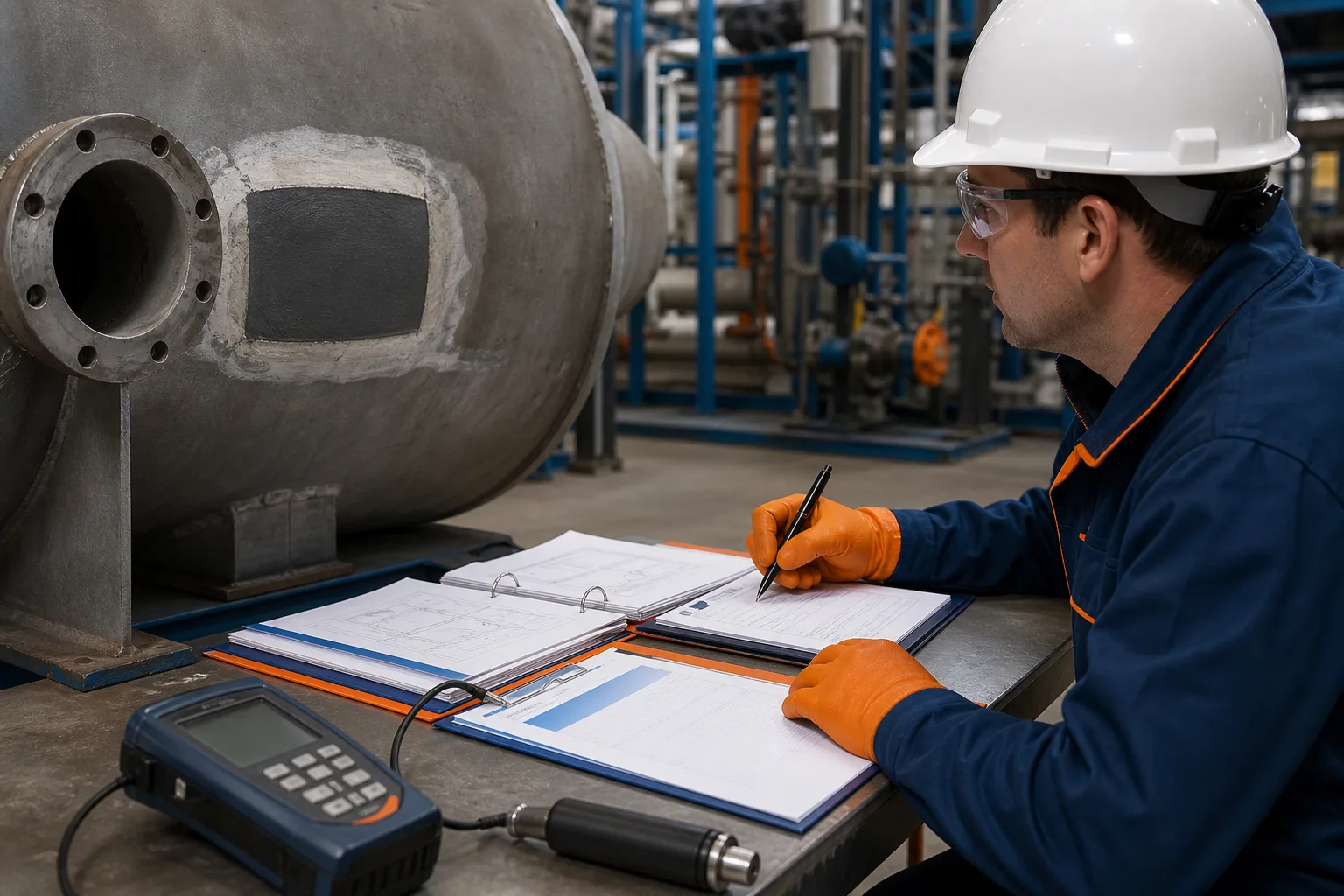
Send the equipment, substrate, damage, temperature, pressure, medium, moisture, cure, and purchasing information that defines the repair. ZDSChem can review application-specific requirements and identify the appropriate next step, such as product documentation, sample evaluation, project quotation, or channel discussion.
FAQ
Frequently Asked Questions
Start with the substrate, damage mechanism, equipment type, repair dimensions, temperature, pressure, service medium, moisture, mechanical load, and available cure or shutdown time. These details help narrow the relevant product series and identify the documents needed for confirmation.
No. Metal rebuilding, composite reinforcement, wear protection, underwater repair, chemical-resistant lining, outdoor topcoats, and elastomer repair involve different material and application requirements. A product series should be matched to the substrate, damage, equipment, and service condition rather than selected as a universal repair option.
Record the moisture state, immersion conditions, water flow, surface access, contamination, damage type, and available preparation and cure conditions. ZDS-AquaShield is the relevant series to compare for underwater-curing and wet-surface repair, but the actual application must be checked against current product documentation.
Review the applicable Technical Data Sheet, Safety Data Sheet, application guide, packaging information, and any project or market documentation requirements. Exact temperature limits, pressure limits, cure information, chemical compatibility, and other technical values must come from current product-level documents.
Yes, application-specific requirements can be submitted for technical review. ZDS maintains a dedicated R&D team of 30 professionals, but customized formulation or product-development requests require technical and commercial feasibility review. A suitable route is not confirmed until the relevant product, application, volume, and target-market information has been assessed.
No. ISO 9001 and IATF 16949 are quality-management system certifications. They support the company quality and process-control framework but do not automatically certify an individual ZDSChem product, its performance, safety, compliance, or suitability for a particular repair.