
Industrial Repair Materials Factory Tour
An industrial repair materials factory tour should help procurement teams, distributors, and technical buyers understand how a potential supplier approaches production, mixing, filling, testing, packaging, storage, and dispatch. This page organizes those stages into a practical supplier-evaluation route without relying on unsupported claims about factory size, capacity, or specific equipment. ZDSChem applies the chemical manufacturing and formulation background supplied for ZDS to its industrial repair material content. ZDS has operated as a professional chemical manufacturer since 1998, while its quality-management framework is supported by ISO 9001 and IATF 16949 certifications.
Factory Review
What Buyers Should Confirm During a Factory Review
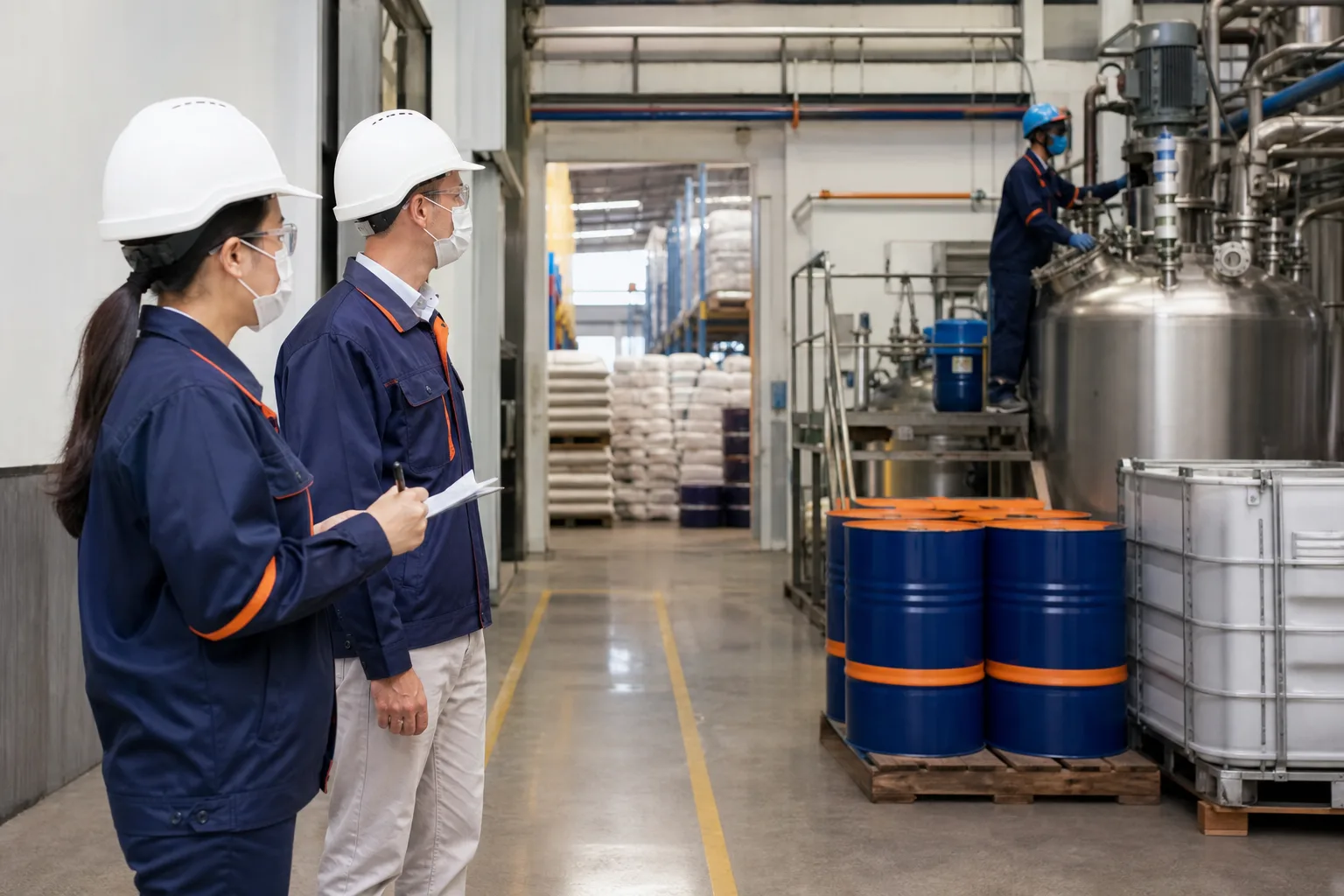
A useful factory review connects visible production activity with the records, responsibilities, and controls behind it. Clean production areas or organized warehouse images can provide context, but photographs alone do not establish product consistency. Buyers should also examine how materials are identified, how process instructions are managed, how batches are released, and how finished goods are prepared for shipment. The review should reflect the products being sourced. ZDSChem organizes its industrial repair materials portfolio into seven primary series covering metal rebuilding, composite pipe reinforcement, wear protection, underwater repair, high-temperature and chemical-resistant systems, protective topcoats, and elastomer repair. Different product forms and applications can require different production, filling, inspection, and packaging considerations.
Factory Workflow
From Production Planning to Finished-Goods Dispatch
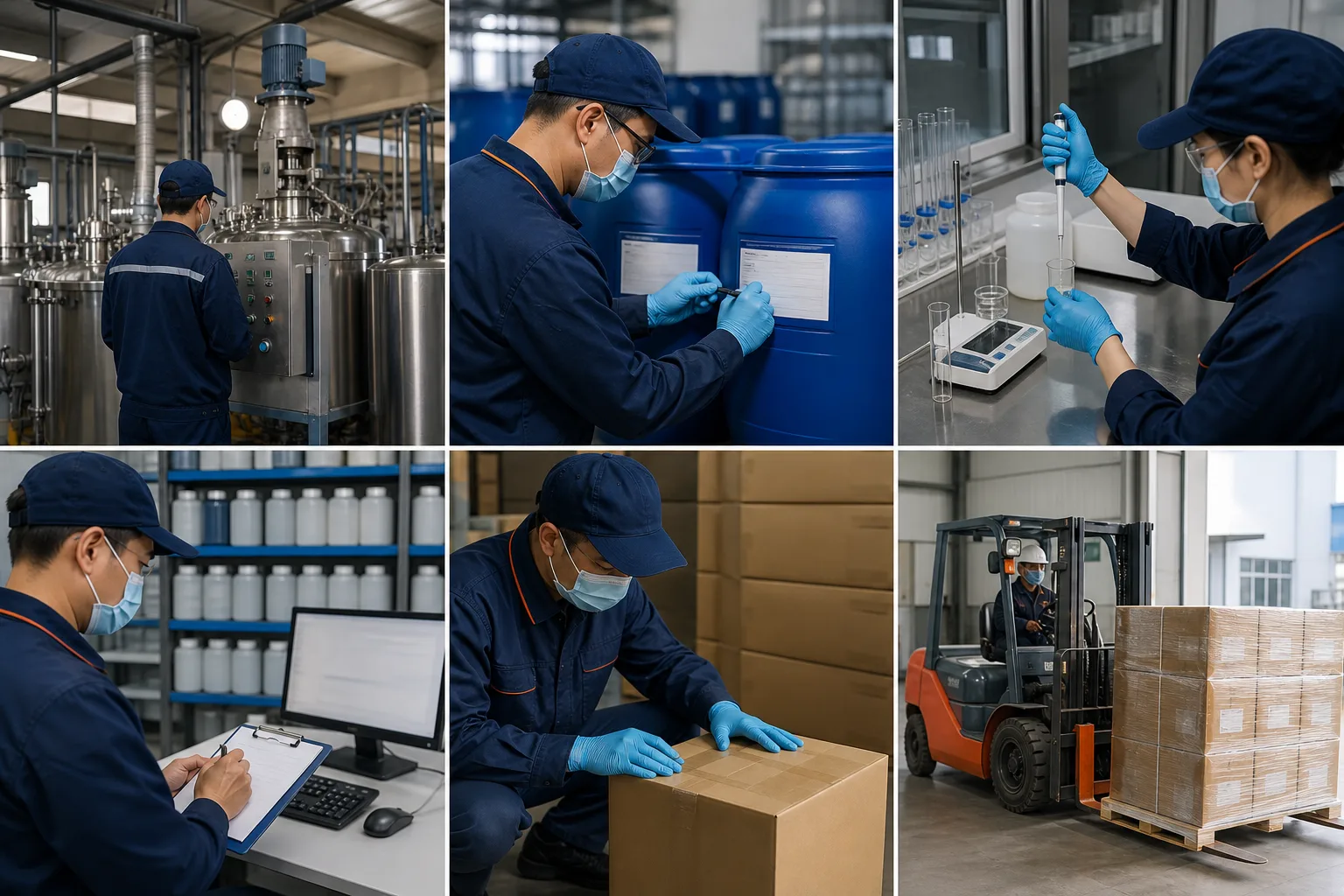
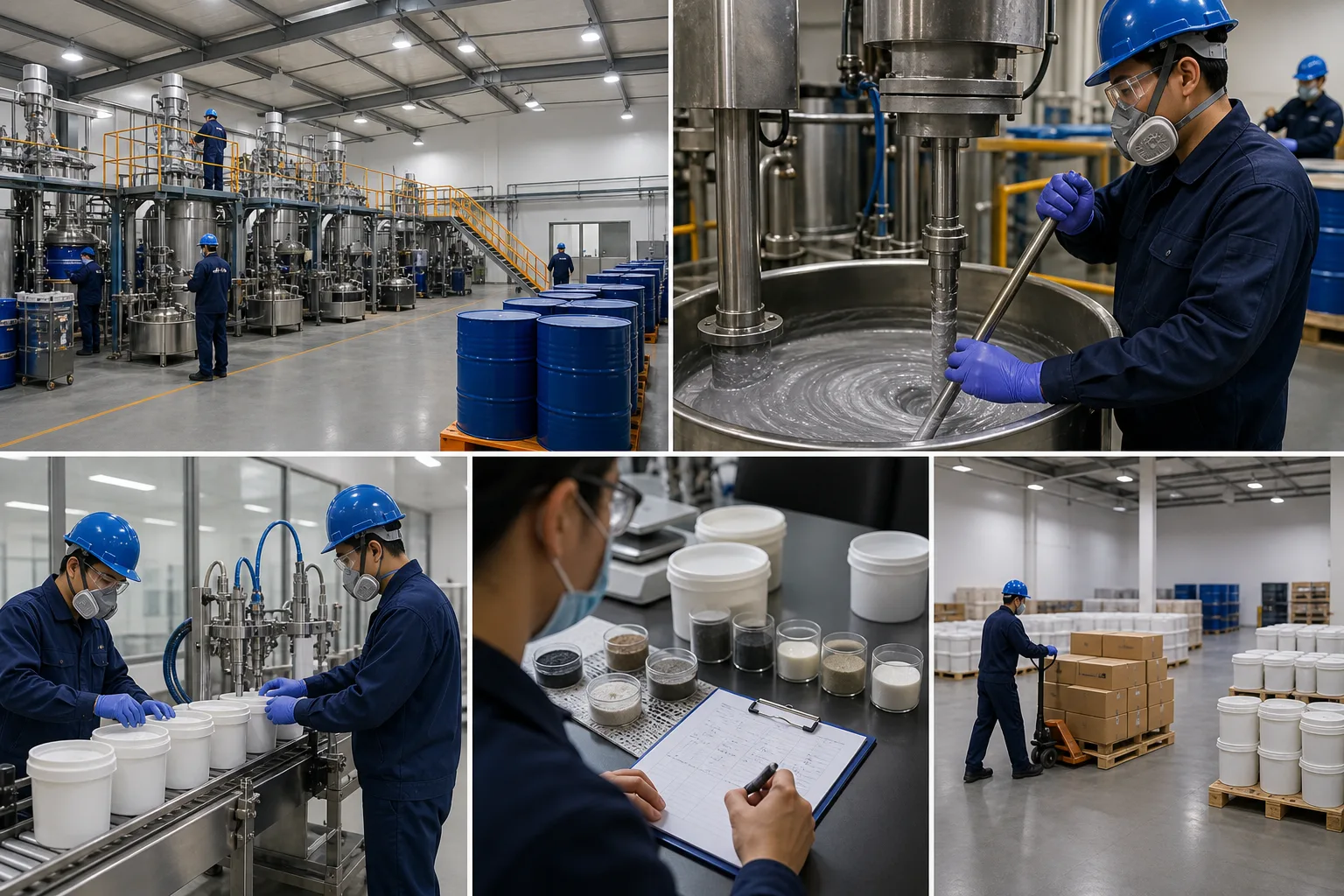
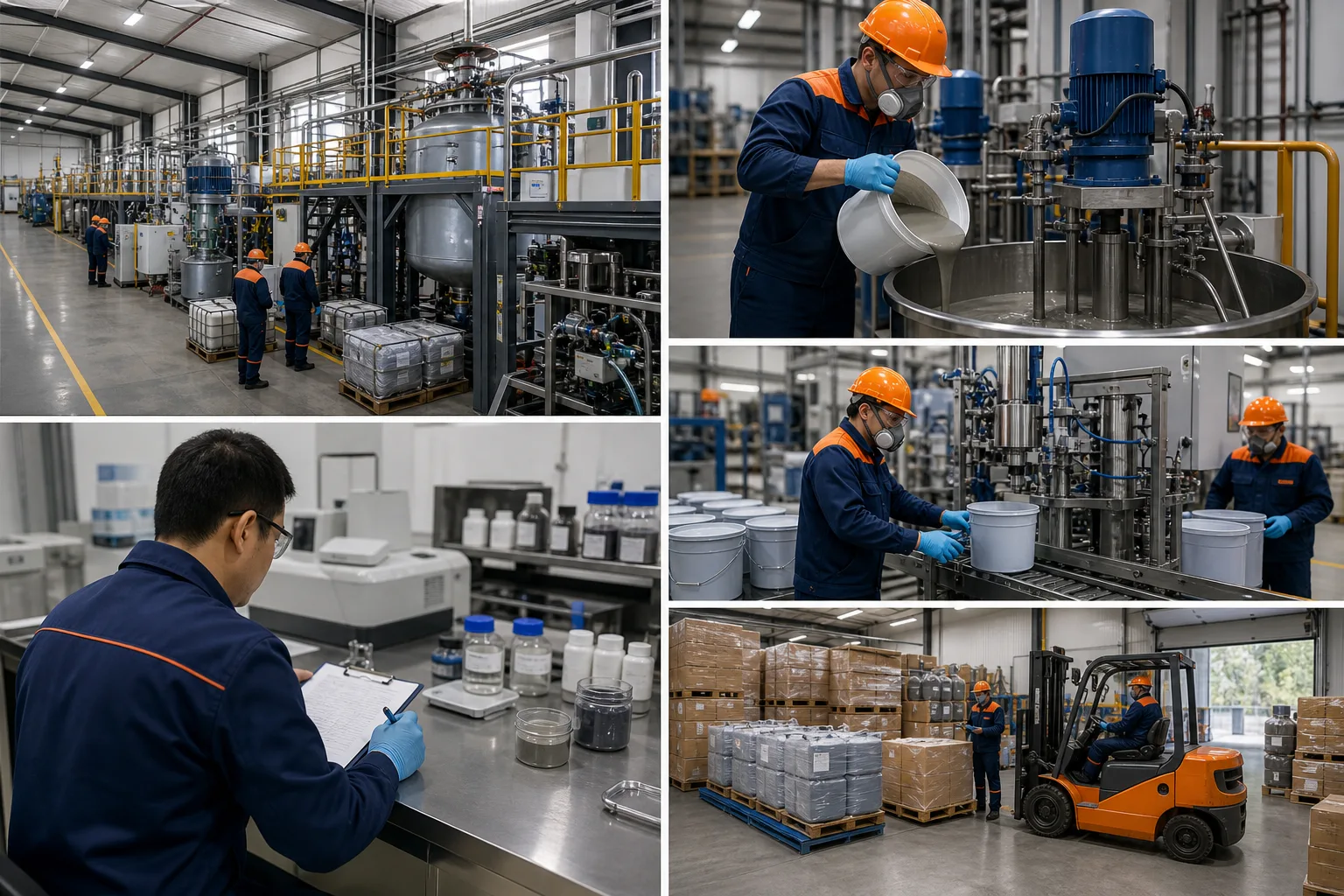
The stages below provide a practical structure for reviewing an industrial repair materials factory. Exact procedures, machinery, batch sizes, and acceptance criteria require confirmation against current factory records and product documentation.
Production Planning
Production Planning and Batch Preparation
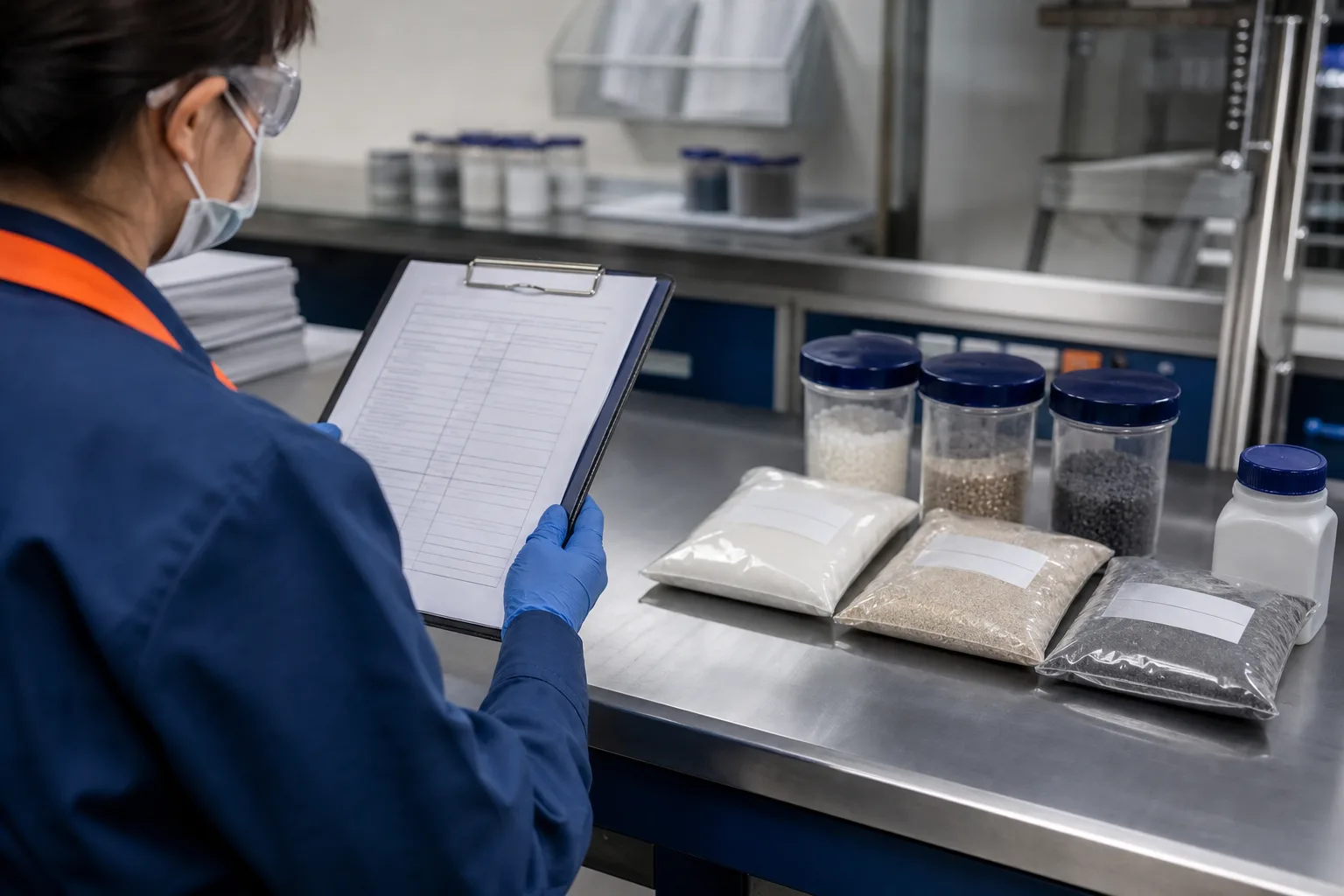
Production begins with defining the product, batch requirements, approved instructions, material needs, and packaging route. During qualification, buyers can ask how production documents are issued, how material status is identified, and how changes are authorized. The manufacturing overview provides additional context for evaluating the wider capability structure.
Material Preparation
Material Preparation and Mixing
Mixing is a central stage for formulated chemical products. A factory review should establish how the relevant process is selected, how instructions are communicated to operators, and how contamination or material mix-ups are addressed. Buyers can use the documented production process to prepare questions about sequence control, material identification, in-process checks, and production records.
Filling And Identification
Filling and Pack Identification
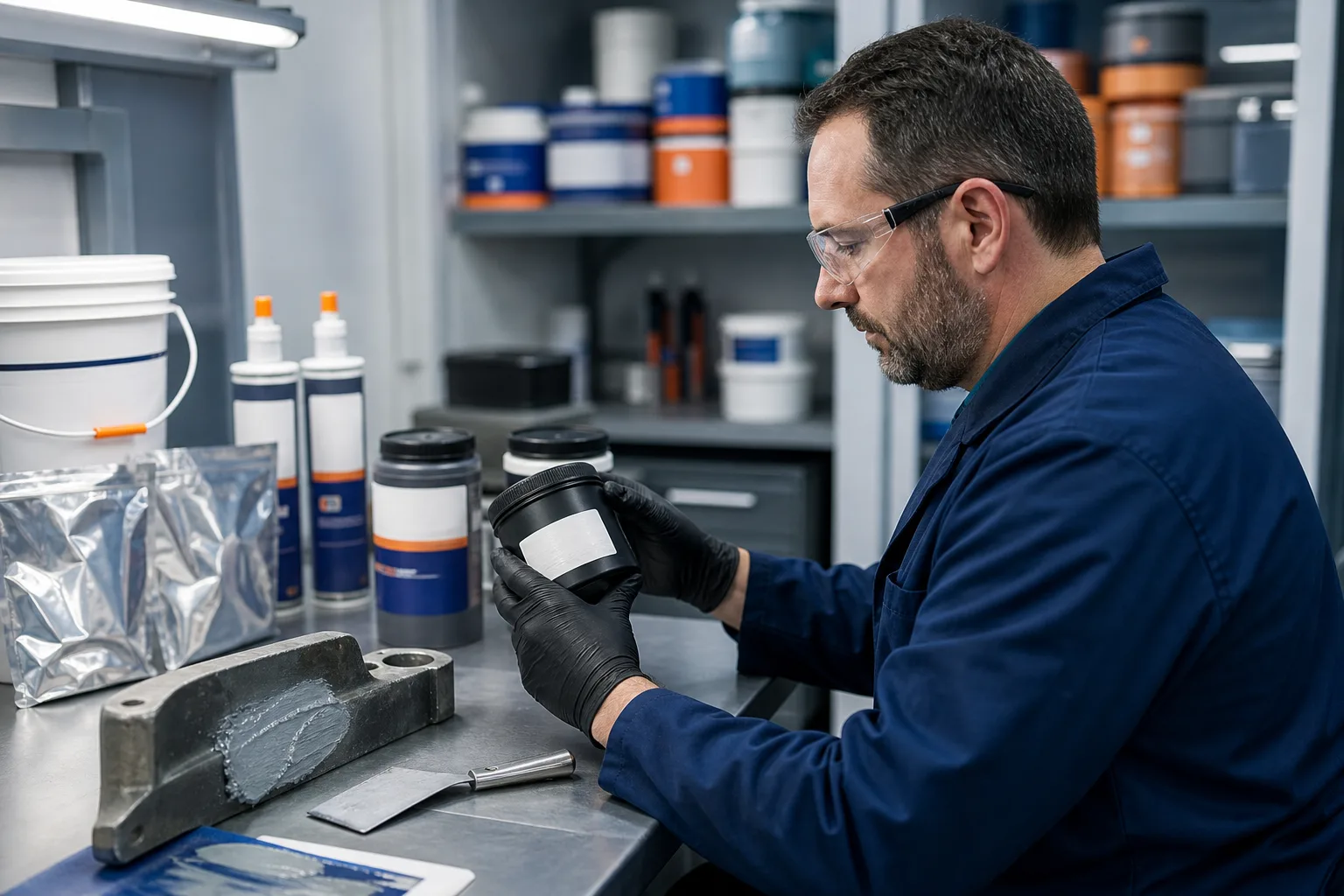
After the production stage, the material moves into its approved pack format. Important review points include fill control, component identification, label accuracy, closure checks, instructions, and carton presentation. Packaging requirements can vary by product, market, and purchasing route, so exact formats should be confirmed through the packaging capability review rather than assumed from general factory photographs.
Testing And Release
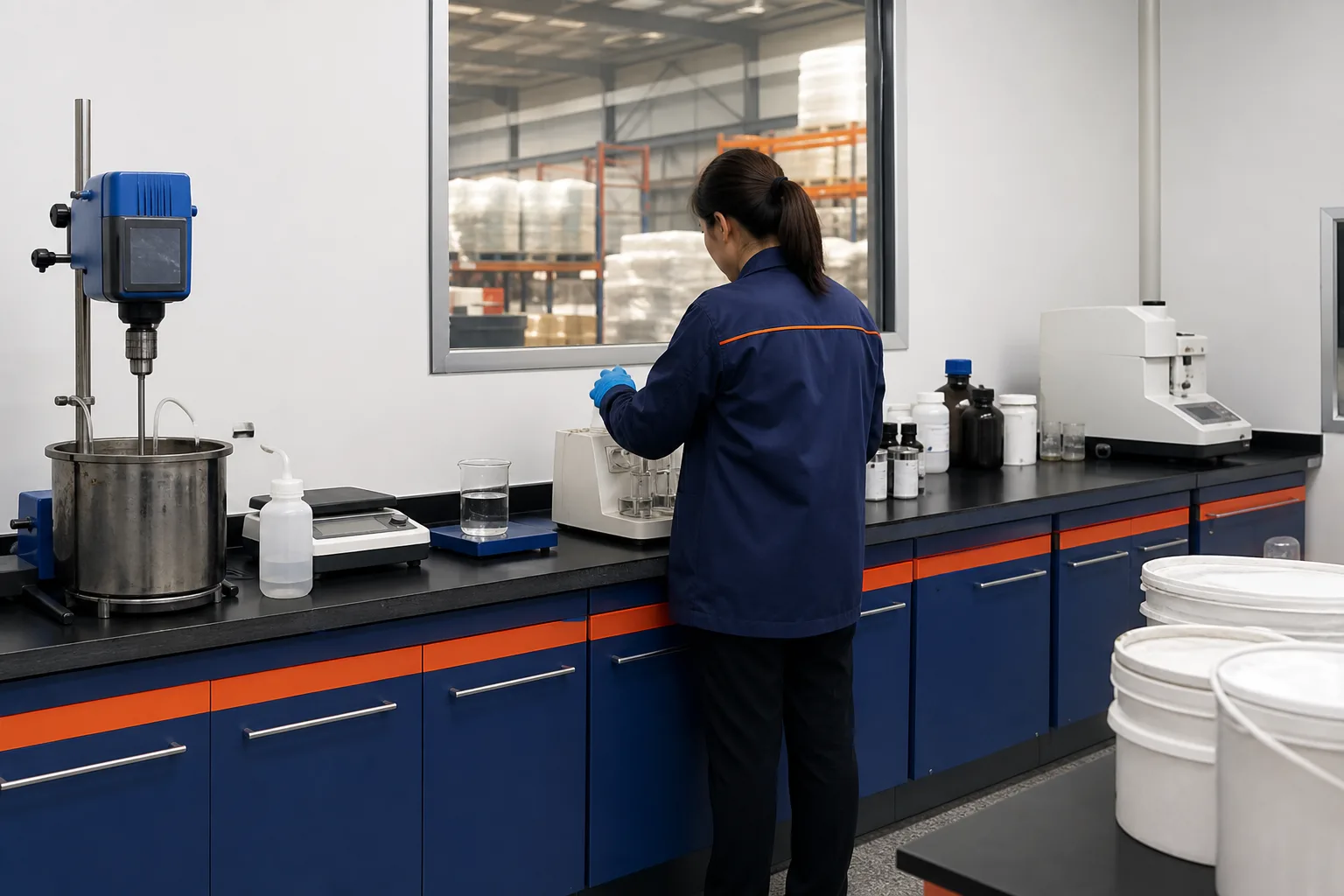
Testing and Batch Release
Testing should be linked to the product specification and the applicable release procedure. Procurement and technical teams should ask which properties are checked, when the checks occur, how results are recorded, and who authorizes release. The available testing-capability information can help buyers distinguish routine controls from application-specific evaluation. Exact methods and acceptance limits must come from current controlled documents.
Packing And Storage
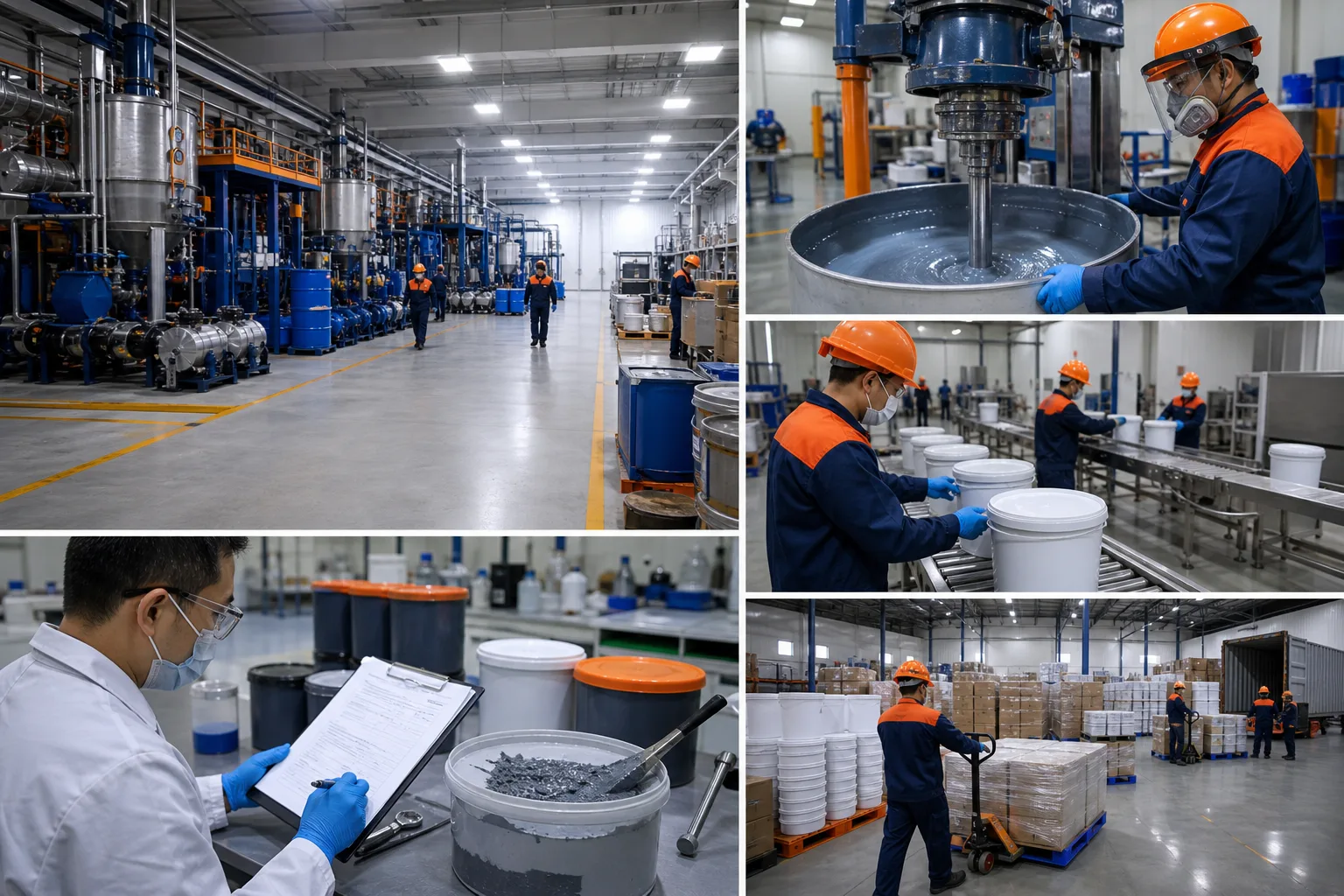
Packing and Storage
Finished units should remain identifiable as they move through packing and storage. A review can consider batch marking, quantity checks, product segregation, handling status, and the connection between finished goods and production records. Buyers evaluating repeat supply should examine the batch traceability approach and confirm which records are available for the products under consideration.
Order Fulfillment
Order Preparation and Dispatch
The final stage connects released goods with the commercial order and shipping requirements. Buyers should confirm how quantities, documentation, labels, cartons, and destination requirements are checked before dispatch. For international orders, export delivery planning provides a route for discussing documentation needs and realistic scheduling without assuming a guaranteed lead time.

Quality Evidence
How Quality Evidence Supports the Factory Tour
ZDS maintains quality-management systems certified to ISO 9001 and IATF 16949. These certifications support a process-control and quality-management framework; they do not certify an individual ZDSChem product or guarantee its performance in a specific repair application. Buyers for whom certification scope or current validity is important should request the latest supporting documents. A supplier review should connect certification information with day-to-day controls. Relevant topics include document management, material identification, production records, inspection responsibilities, nonconforming material handling, release status, and traceability. Buyers can examine the quality-control framework before preparing a remote assessment or on-site review.
Factory Images
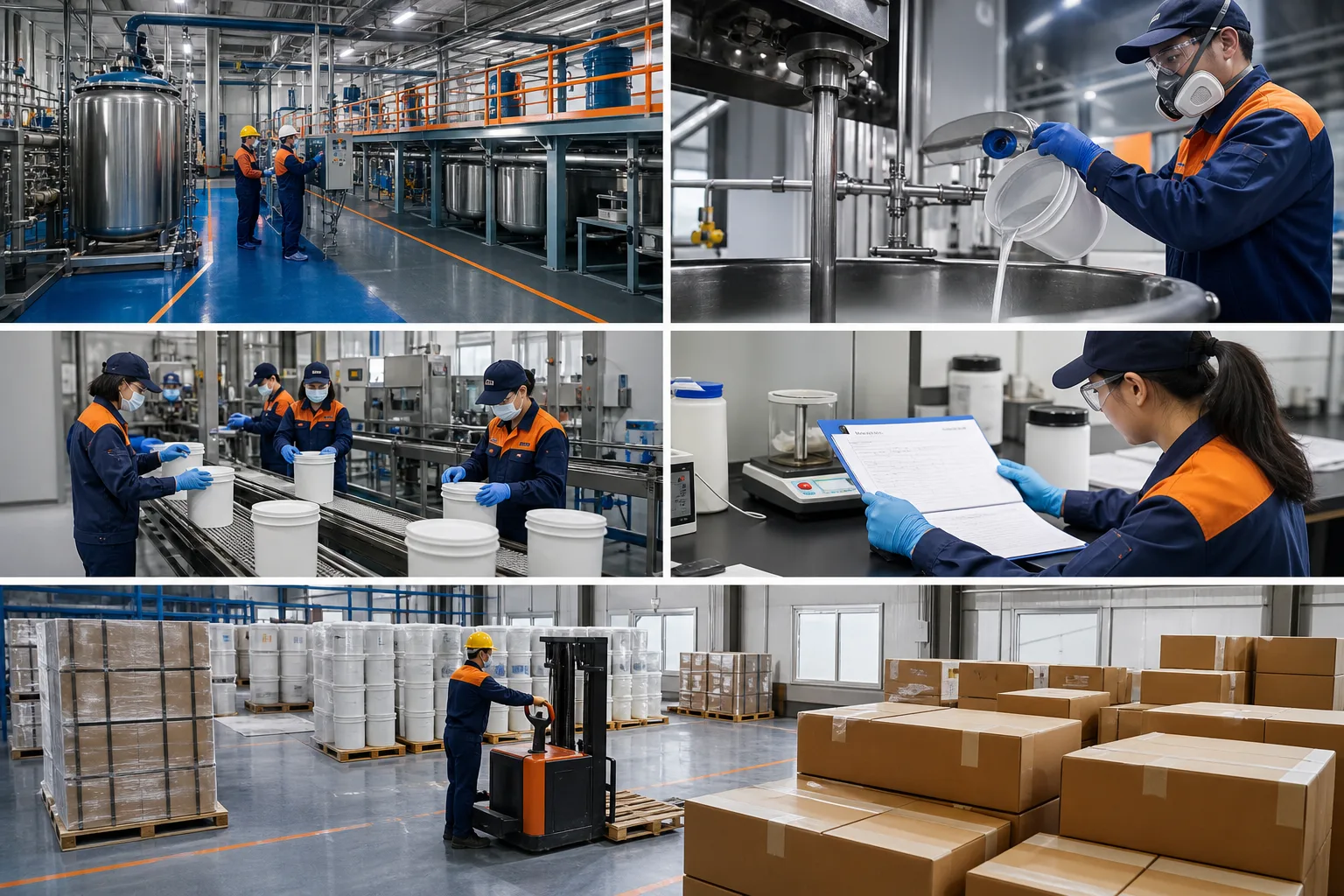
Factory Images and Evidence That Add Decision Value
Factory images are most useful when each photograph has a clear date, location context, process description, and explanation of what the viewer is seeing. Wide images establish the working environment, while close views can show material identification, mixing activity, filling controls, inspection, packing, storage status, or dispatch preparation. Sensitive formulas, customer information, and confidential records should not be visible.
Production evidence
representative production-area images supported by a description of the process stage.
Control evidence
examples of controlled instructions, status identification, or inspection records with confidential data removed.
Testing evidence
an explanation of the property being checked, the applicable method, and the role of the result in batch release.
Traceability evidence
an example showing how finished goods connect to a batch or production record.
Packaging evidence
verified images of available pack formats, labels, cartons, and instructions for the product being evaluated.
Dispatch evidence
order-checking and shipping-document preparation appropriate to the destination market.
Product Evaluation
Connect the Factory Review to Product Evaluation
A factory tour is only one part of industrial repair material qualification. The buyer must also compare the repair substrate, damage type, service temperature, chemical exposure, moisture conditions, application method, and required documentation. Product selection should follow current technical data rather than factory appearance alone. Qualified buyers can use the sample-to-bulk workflow to connect initial material evaluation with commercial review and bulk-purchase planning. Sample results should be assessed against agreed criteria, and successful evaluation of one application should not be treated as automatic approval for different equipment or service conditions.
Direct Confirmation
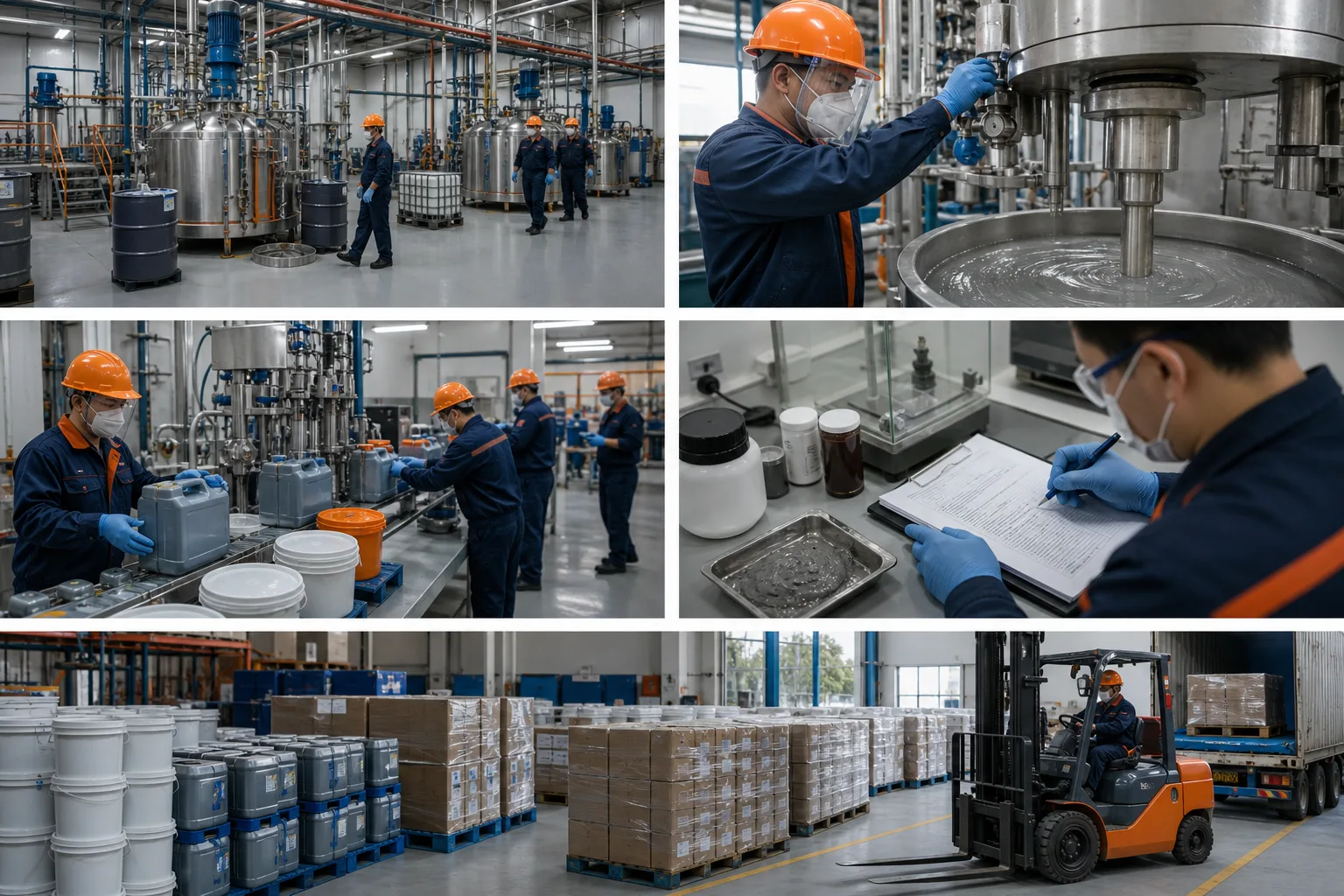
Information That Requires Direct Confirmation
Factory address, facility size, production capacity, exact equipment, annual volume, warehouse conditions, lead times, and detailed test values are not stated on this page because current supporting information has not been supplied. These items should be confirmed directly when they are relevant to procurement, distributor evaluation, or technical approval. The same principle applies to customized formulations, packaging changes, labels, and product-line development. Requirements can be submitted for technical and commercial feasibility review, but availability should not be assumed before the product, market, expected volume, documentation, and purchasing needs are understood.
Supplier Qualification
Prepare Your Industrial Repair Material Supplier Review
Share the product categories, target applications, expected purchasing route, required documents, destination market, and supplier-qualification questions. ZDSChem can then identify the relevant information available for review and clarify which items require further confirmation.
FAQ
Frequently Asked Questions
A useful tour should cover production planning, material preparation, mixing, filling, testing, batch release, packaging, storage, and dispatch. Buyers should connect each visible stage with relevant instructions, records, responsibilities, and product identification controls.
Buyers can include these questions in a supplier-qualification request. Exact factory capacity, machinery, batch size, and production scheduling require confirmation from current operational documentation and should not be inferred from photographs.
No. ISO 9001 and IATF 16949 are quality-management system certifications. They support the company’s quality-management and process-control framework but do not certify the performance, safety, compliance, or suitability of an individual product. Current scope and validity documents should be checked when required.
Provide the required product categories, applications, expected order volume, destination market, documentation list, packaging needs, quality questions, and any supplier-audit requirements. This information helps identify which evidence is relevant and available.
Customer-specific formulation and packaging requirements can be submitted for review. Technical and commercial feasibility must be confirmed after the application, performance target, expected volume, target market, documentation, and purchasing requirements are supplied.