
Industrial Repair Manufacturing Capabilities
ZDSChem supports B2B buyers evaluating industrial repair materials for distribution, maintenance supply, and project use. Manufacturing, batch control, packaging, samples, documentation, and delivery planning are coordinated against each inquiry.
Supplier Evaluation
Capability Areas for Supplier Evaluation
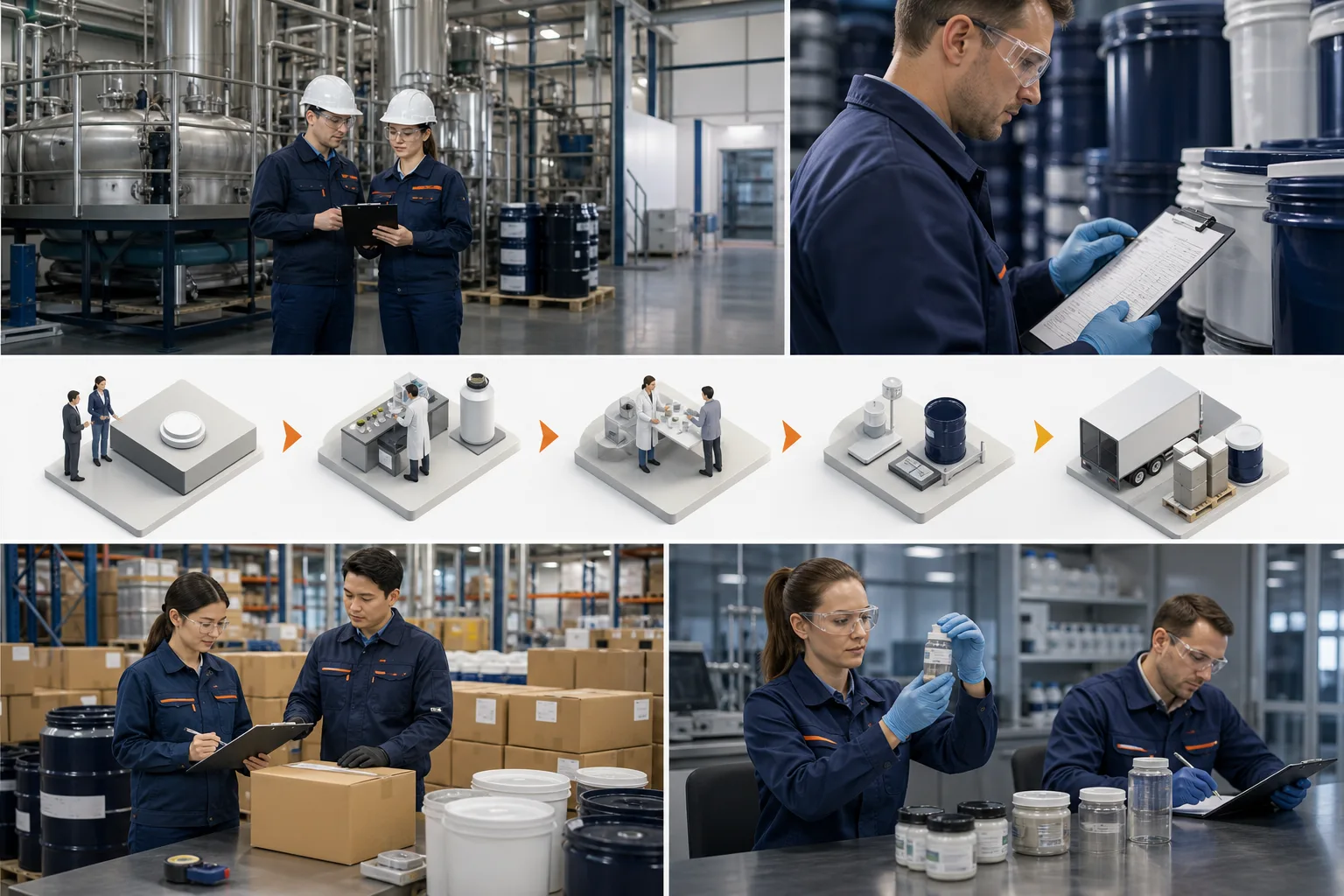
Distributors, importers, MRO suppliers, repair contractors, procurement teams, and technical evaluators can review how requirements move through production, qualification, documentation, and repeat purchasing.
Production Planning
Planning considers the product category, required quantity, application, documentation needs, and requested schedule.
Batch Control
Batch supply uses clear product identification, controlled production information, release criteria, and appropriate records.
Packaging Assessment
Pack format, size, labels, cartons, instructions, volume, and destination requirements can be reviewed for feasibility.
Portfolio Planning
Product categories can be aligned with equipment, substrates, damage types, service conditions, stocking, and replenishment needs.
Sample to Bulk
How Requirements Move from Sample to Bulk Supply
A controlled route prevents a trial product from being treated as approval for every operating condition. Evaluation should use agreed criteria and representative substrates, preparation methods, application conditions, and service expectations.
01
Define the Requirement
Identify the equipment, substrate, damage, temperature range, exposure, repair geometry, shutdown time, and quantity.
02
Narrow the Product Route
Compare the seven ZDSChem repair series and supporting surface preparation materials using the required application information.
03
Plan Sample Evaluation
Set the evaluation method, acceptance criteria, required documents, and sample quantity before testing begins.
04
Confirm Commercial Needs
Review quantity, packaging, labeling, destination, documents, and schedule after sample evaluation.
05
Prepare Repeat Purchasing
Record product identification, ordering details, forecasts, and approved market requirements for replenishment planning.
Purchasing Controls
Control Points That Reduce Purchasing Risk
Supplier qualification should focus on verifiable control points rather than broad claims about factory scale. Technical and procurement teams can use these review areas to prepare focused questions and evidence requests.
Product Definition
Check the product name, series, intended use, pack information, and applicable technical documents.
Batch Information
Confirm available identification, inspection, release, and traceability records for the supplied material.
Packaging Review
Provide pack, label, carton, instruction, volume, and destination details for target-market assessment.
Sample Evaluation
Define the test method, substrate, surface preparation, service conditions, and acceptance criteria.
Supply Planning
Provide quantity, product mix, requested schedule, destination, and replenishment expectations.
Supporting Evidence
Batch and Quality-Control Information
Available records depend on the selected product and order. Confirm the exact evidence before including it in an audit, tender, qualification file, or customer submission.

Quality and Documents
Quality Management and Technical Documentation
ZDS maintains quality-management systems certified to ISO 9001 and IATF 16949. These certifications support quality management and process control; they do not certify individual products or prove suitability for a specific repair.
Current certification scope, validity, and
applicability should be checked through supporting documents.
Available materials may include technical
data, safety information, application guidance, product identification, packaging details, or qualification records.
Document availability and scope depend on
the product and inquiry.
Technical Resources
Technical Resources Behind Product Evaluation
Established in 1998, ZDS has experience in chemical manufacturing, formulation, and technical support. A dedicated R&D team of 30 professionals supports product development, improvement, formulation, and application-specific evaluation.
Technical resources help organize product
review but do not replace field assessment.
Not every requested formulation is
guaranteed to be accepted.
Custom formulation or packaging can be
evaluated against the application, performance target, volume, documents, target market, and commercial conditions.
Technical and commercial feasibility must
be confirmed before development or production begins.
Factory Evidence
Preparing Evidence for a Factory or Supplier Review
Evidence should match the purpose of the review and may include company background, management-system documents, product information, batch-control explanations, document lists, packaging details, and the sample-to-bulk route.
Confirm available images, documents
records, and access arrangements directly.
Do not infer evidence or access from
website content.
Verified factory size, production
capacity, equipment lists, and annual output have not been supplied.
Inquiry Requirements
Information Needed Before Capability Confirmation
Provide the product or repair category, application, expected volume, destination market, packaging needs, required documents, evaluation stage, and target schedule. Technical projects should also include operating and acceptance details.
Identify the substrate, damage condition
operating environment, and preparation method.
Include any specification, test method, or
acceptance criteria.
General capability does not establish
product suitability, availability, regulatory acceptance, delivery timing, or packaging feasibility for every market.
Qualification Review
Start a Focused Supplier Qualification Review
Share your product categories, market, expected purchasing volume, documentation checklist, packaging requirements, and qualification stage for routing to the relevant manufacturing, quality, technical, and commercial review areas.
FAQ
Frequently Asked Questions
Provide the product or repair category, intended application, expected quantity, destination market, required schedule, packaging needs, and document checklist. Technical projects should also include the substrate, damage type, service conditions, preparation method, and acceptance criteria.
The process normally begins with requirement definition and product selection, followed by a sample evaluation using agreed criteria. If the sample is accepted, quantity, packaging, documentation, schedule, and destination requirements still need commercial and operational confirmation before bulk production is arranged.
Customer-specific formulation and packaging requirements can be submitted for review. Feasibility depends on the application, performance target, expected volume, pack and labeling requirements, target market, documentation needs, and commercial conditions. Submission does not guarantee acceptance or successful development.
ISO 9001 and IATF 16949 are quality-management system certifications maintained by ZDS. They support a quality-management and process-control framework but do not certify individual ZDSChem products or confirm their suitability for a specific repair. Current certification scope and validity should be checked in supporting documents.
An exact schedule cannot be assumed from a general capability page. Lead-time planning requires the product, quantity, product mix, packaging status, document requirements, destination, and requested delivery date. A schedule can be discussed after these details have been reviewed.