
Industrial Repair Product Line Development
Organize an industrial repair materials portfolio around defined buyers, industries, applications, positioning, packaging, documentation, launch priorities, and supply planning. The final route depends on market demand, technical feasibility, expected volume, documentation, and commercial review.

Target Buyers
Who Should Use Product Line Development Support?
Product Line Development supports B2B buyers that need to select categories, establish market positioning, and prepare the materials required to build or expand an industrial maintenance and repair portfolio.
Planning Scope
Decisions Covered by the Product Line Review
The review covers eight connected planning areas. Together, they shape the proposed range, market position, technical support requirements, purchasing structure, and launch sequence.
Target Customers
Define the distributors, contractors, maintenance teams, or procurement buyers that will use or resell the range.
Priority Industries
Identify common equipment, operating environments, maintenance problems, and priority application groups.
Product Portfolio
Shortlist repair categories and product series that provide useful market coverage without unnecessary overlap.
Market Positioning
Clarify whether the range serves general MRO, specialist contractors, emergency work, or selected heavy industries.
Packaging Requirements
Review pack sizes, labels, cartons, instructions, and target-market presentation for implementation feasibility.
Document Requirements
Prepare requirements for technical, safety, application, language, and supplier-qualification documents.
Launch Sequence
Establish which categories should enter sample evaluation, qualification, and market introduction first.
Supply Planning
Create a starting framework for initial stock, replenishment priorities, and repeat purchasing discussions.
Product Portfolio
Build the Portfolio Around Repair Applications
Organize the range around equipment problems rather than unrelated materials. Selection can be narrowed by equipment, substrate, damage type, service environment, preparation method, and expected application conditions.
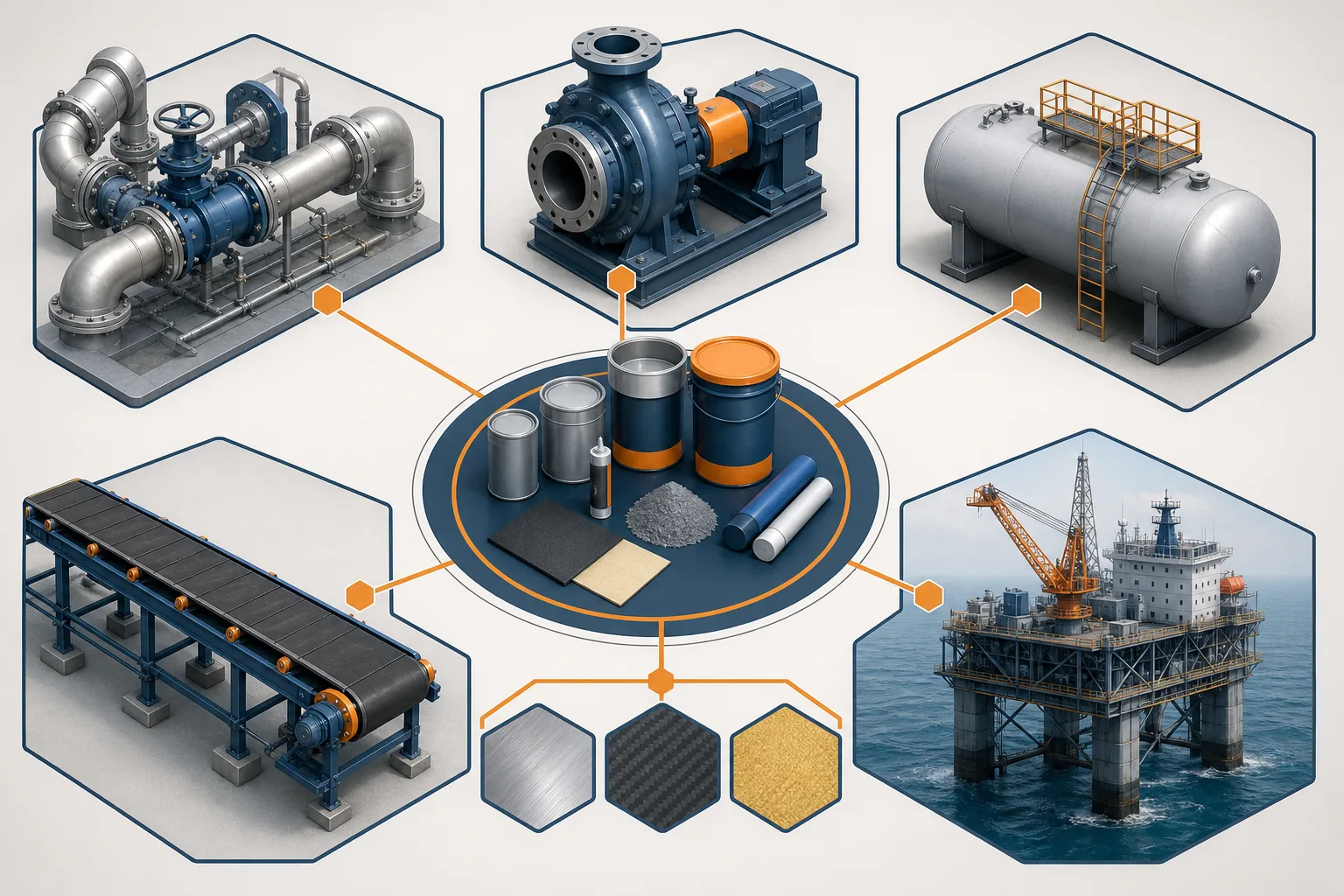
Portfolio Scope
Select Categories for the Intended Market
A proposed line does not need every series. A pump and valve market may prioritize metal rebuilding and wear protection, while pipe maintenance may require composite reinforcement, wet-surface repair, and supporting preparation products.
Final category selection requires current
product documentation and market information.
The proposed range should reflect actual
applications and service conditions.
Categories that do not suit the intended
market may be excluded.
Evaluation Process
How the Evaluation Process Is Structured
The evaluation moves from a defined commercial and technical brief through category mapping, packaging and document review, sample evaluation, quotation, staged introduction, and supply discussion.
01
Define the Brief
Provide target markets, buyers, industries, applications, purchasing expectations, and known regulatory or document requirements.
02
Map Applications
Review equipment, substrates, damage modes, and service conditions to identify suitable series, gaps, and exclusions.
03
Review Implementation
Assess packaging, labels, cartons, instructions, presentation, language, and market-specific document needs.
04
Evaluate Samples
Define sample choices, application information, testing scope, responsibilities, criteria, pricing, and quantity needs.
05
Plan Introduction
Move qualified categories toward purchasing and replenishment discussions without assuming fixed lead times or uninterrupted supply.
Technical Background
Technical Support for Portfolio Evaluation
ZDSChem's manufacturing and technical background supports product line discussions. It does not mean every requested product, formula, package, label, or market configuration will be accepted.
Service Limitations
Feasibility Requires Technical and Commercial Review
Product Line Development is an evaluation service, not a guarantee of launch. Feasibility depends on the application, technical targets, volume, market, documents, packaging request, and commercial conditions.
Product specifications and suitability
require confirmation against current technical documents.
Customer-specific formulation requests
require separate technical and commercial evaluation.
Packaging and labeling options depend on
available formats and implementation feasibility.
Samples do not guarantee approval, market
acceptance, or bulk-order performance.
Launch timing, order quantities, and
supply arrangements are confirmed during commercial review.
Market-specific compliance depends on the
applicable product, destination, and supporting documentation.
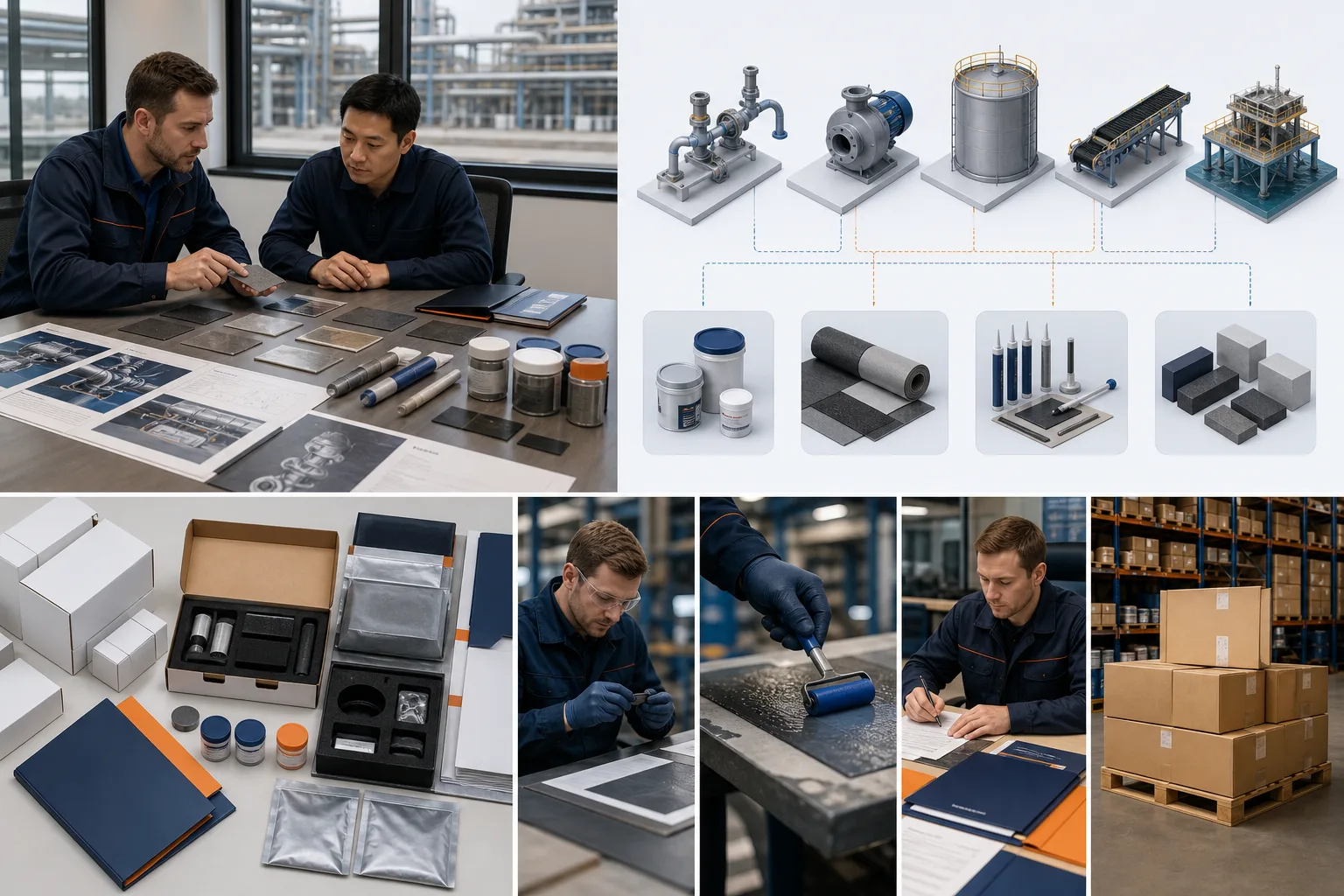
Start the Review
Prepare Your Industrial Repair Product Line Brief
Submit target customers, industries, applications, portfolio goals, packaging needs, documentation requirements, launch priorities, and supply expectations to determine whether an evaluation can proceed.
FAQ
Frequently Asked Questions
Industrial repair product line development is the process of organizing repair material categories around defined buyers, industries, equipment, applications, and commercial goals. It can cover product assortment, positioning, packaging requirements, documentation, sample evaluation, launch order, and repeat-supply planning.
No. The portfolio should reflect the needs of the target market. A focused MRO range may begin with common metal, wear, pipe, or elastomer repair categories, while a specialist distributor may require a different combination. Final selection follows a review of applications, service conditions, documentation, and purchasing plans.
Customer-specific formulation, packaging, labeling, and product presentation requirements can be submitted for evaluation. Acceptance is not automatic. Technical and commercial feasibility must be confirmed according to the application, performance target, expected volume, target market, and available implementation route.
Useful information includes a target-market brief, customer profiles, industry and application lists, desired product categories, packaging requirements, language needs, expected purchasing quantities, and required technical or commercial documents. Existing category plans or specifications can also help define the scope.
Qualified buyers can discuss sample selection and evaluation before bulk purchasing. The intended substrate, application method, service conditions, evaluation criteria, and responsible testing party should be defined in advance. Sample supply or evaluation does not guarantee approval or final product suitability.