
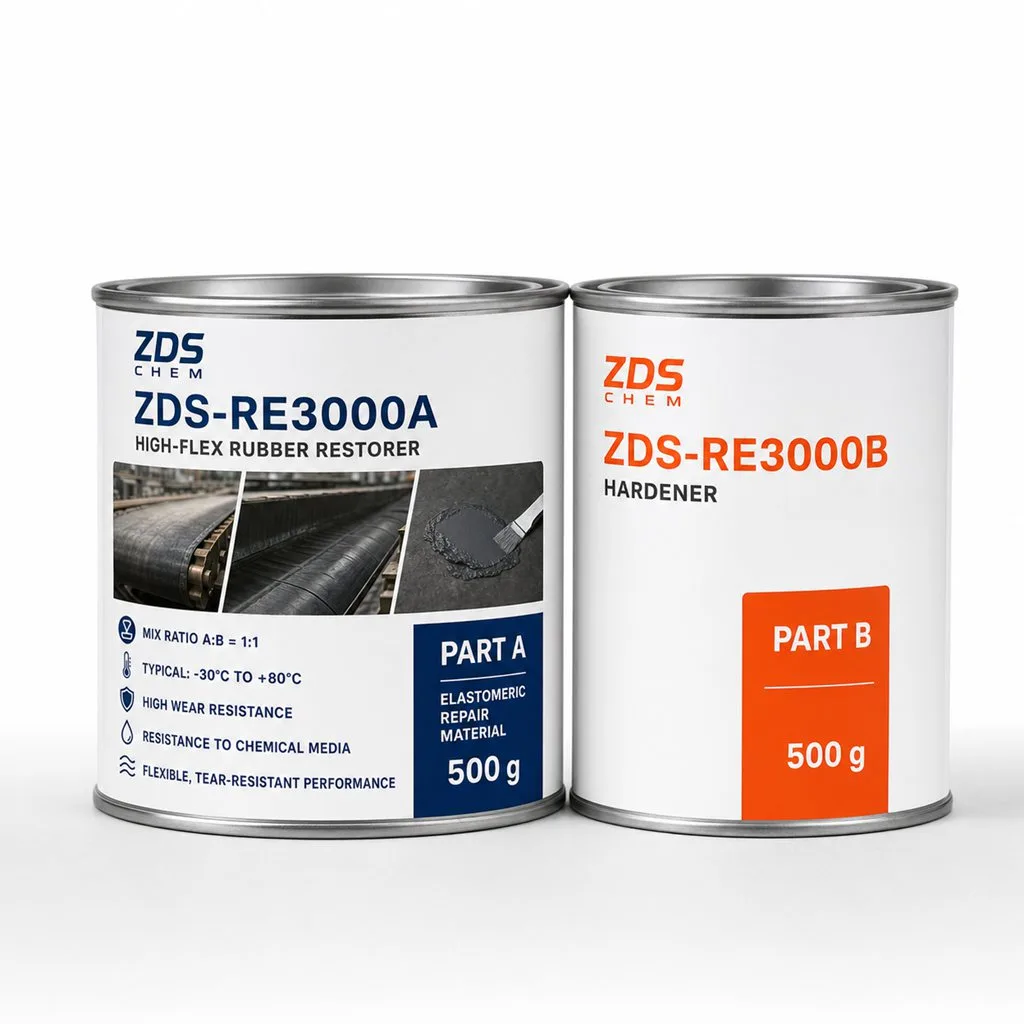
ZDS-RE3000
ZDS-RE3000 High-Flex Rubber Restorer
ZDS-RE3000 repairs and rebuilds damaged conveyor belts and protective linings. It combines flexible, tear-resistant performance with wear resistance.
Product overview
Flexible rubber repair material
ZDS-RE3000 is an elastomeric repair material for rebuilding damaged conveyor belts and protective linings. It restores flexible industrial components where the repair area must move with the component.
Its wear resistance, chemical resistance and tear-resistant flexibility help match the material to demanding service conditions. The component condition, movement and operating media are important fit factors before selecting it for a repair.
Key material properties
- Wear resistance: A useful property when selecting material for worn industrial surfaces.
- Chemical resistance: Identify the fluid, concentration and temperature when discussing suitability.
- Flexibility and tear resistance: Useful material properties for components that flex during use.
Evaluate the material
ZDS-RE3000 technical specifications
| Property | Value / conditions |
|---|---|
| Product model | ZDS-RE3000 |
| Product series | ZDS-RubberElast |
| Product family | Rubber & elastomer repair |
| Substrates and equipment | Conveyor belts, protective linings |
| Form and color | Elastomeric repair material; Typical: Black |
| Initial cure at 25°C | Typical: 15-30 min |
| Service temperature | Typical: -30°C to +80°C |
| Recommended application temperature | Recommended: 10°C to 35°C |
| Recommended application thickness | Recommended: 2-10 mm |
Questions about your operating conditions?
Repair applications
Conveyor belt repair
ZDS-RE3000 repairs and rebuilds damaged areas on conveyor belts. Its flexible, tear-resistant behavior suits components that move during operation, while its wear resistance supports work on surfaces exposed to repeated contact.
Protective lining restoration
Use ZDS-RE3000 for repair and rebuilding of protective linings. Check the lining condition, the movement of the component and the chemical media involved when deciding whether its flexible material and chemical resistance fit the job.
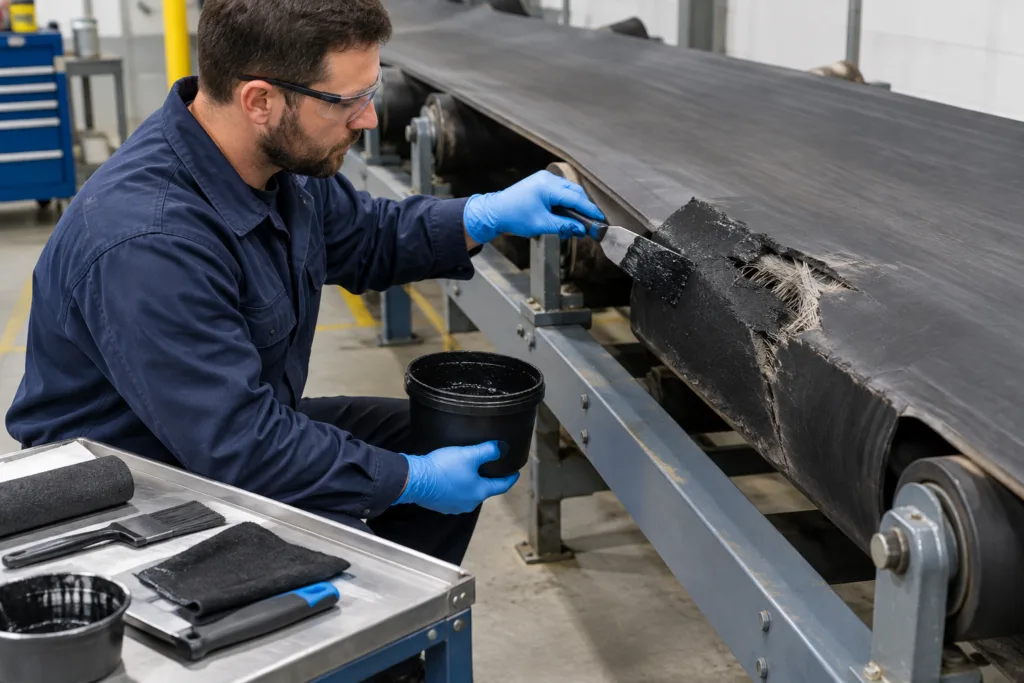
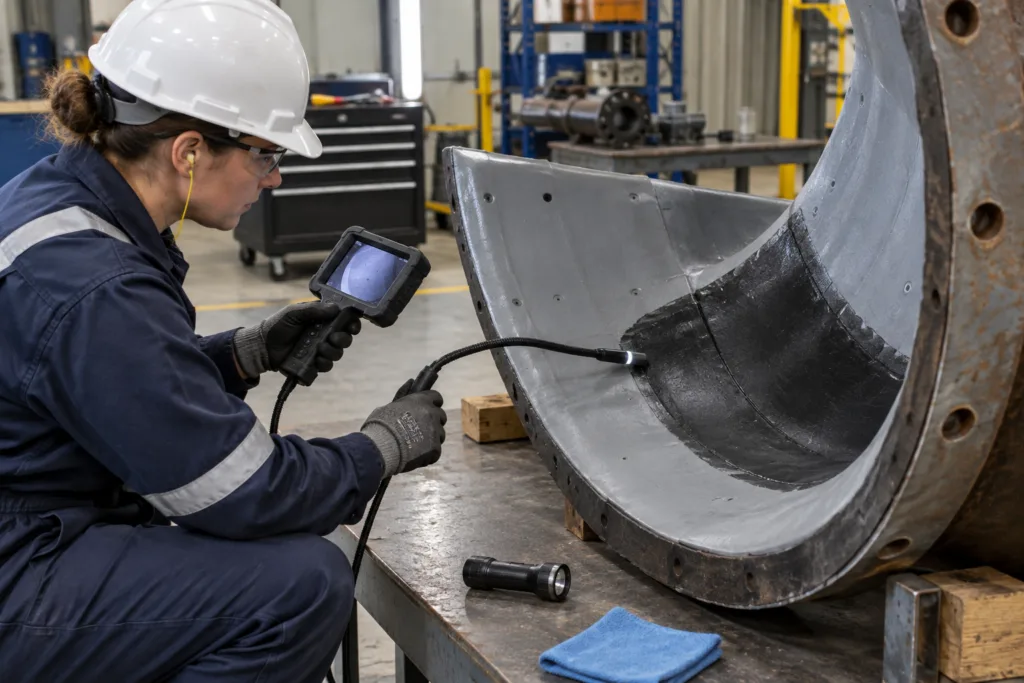
Prepare the work surface
Prepare the flexible component using the product-specific preparation instructions.
- Inspect the flexible component and contact area for damage, loose material and contamination.
- Arrange access to the full work area and the tools needed for the next step.
- Address contamination using the preparation method specified for this product and the actual surface.
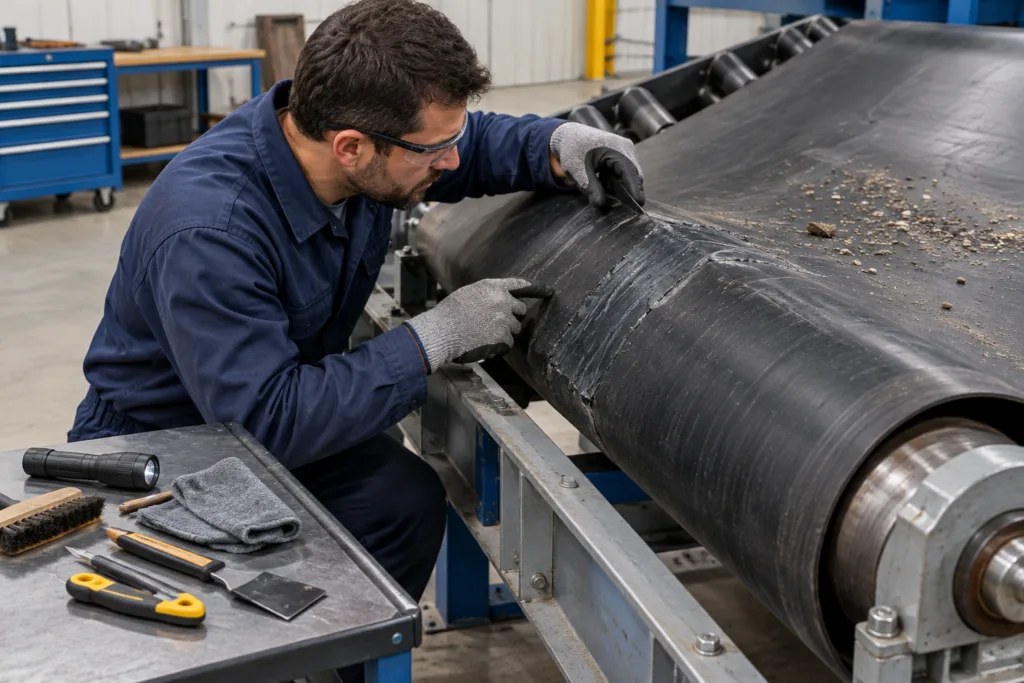
Plan the work
Application and cure planning
- Prepare the flexible component and arrange access and tools before starting.
- Mix the components according to the product instructions after surface preparation and setup are complete.
- Apply the material to the prepared area using the product-specific repair, bonding or coating method.
- Use the technical table to plan the cure stages. Follow the applicable repair or application procedure for handling, loading and return to service.
Product selection questions
What temperatures apply?
Recommended application temperature: 10°C to 35°C. Service temperature: Typical: -30°C to +80°C. Application and service temperatures describe different conditions.
What thickness is recommended?
Recommended: 2-10 mm. Use the stated thickness type and range when planning the work.
Where is this product used?
ZDS-RE3000 is intended for repair and rebuilding. Application settings include Conveyor belts, protective linings.