
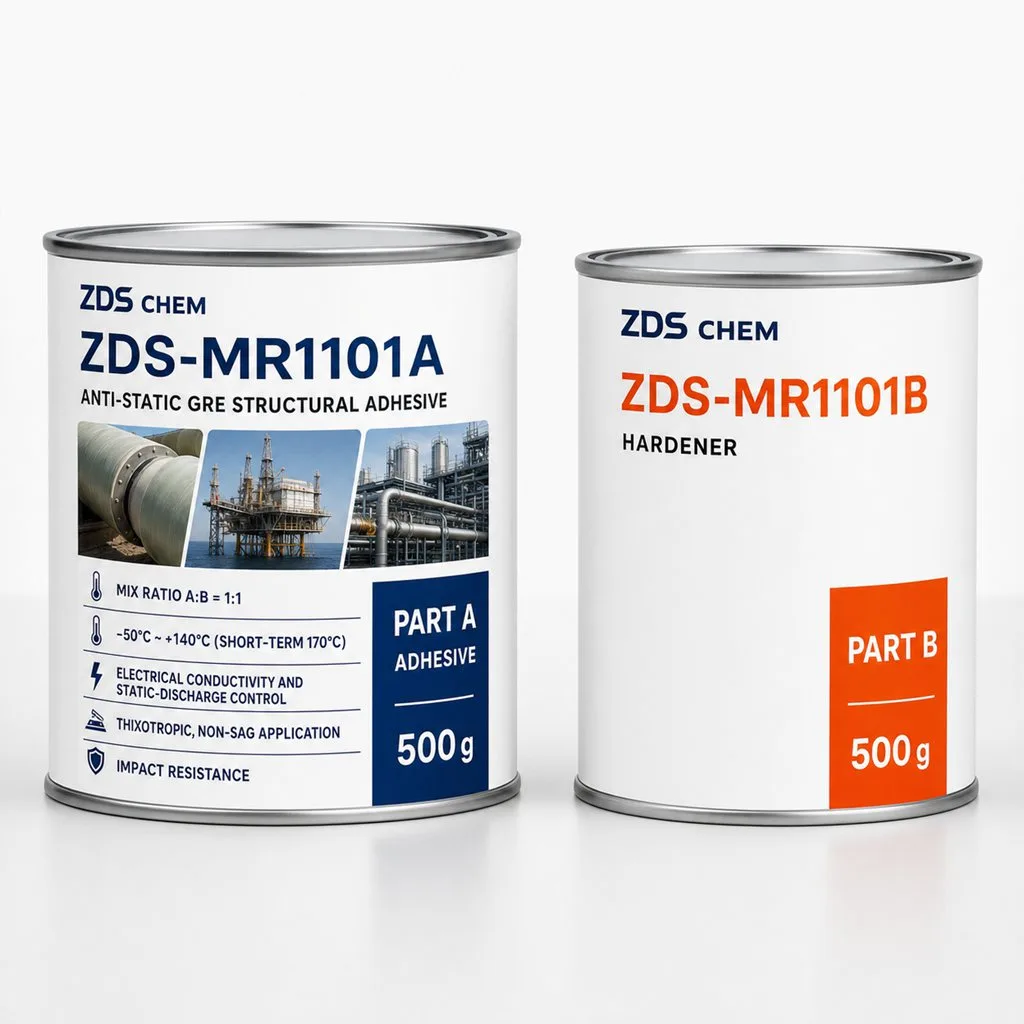
ZDS-MR1101
ZDS-MR1101 Anti-Static GRE Structural Adhesive
ZDS-MR1101 repairs and rebuilds GRE pipe joint bonding areas. Its conductive, impact-resistant adhesive supports designs with static-discharge control.
Product overview
Anti-static GRE repair adhesive
ZDS-MR1101 is a structural adhesive for repair and rebuilding at GRE pipe joints and related industrial equipment. GRE means glass-reinforced epoxy, while FRP means fiber-reinforced plastic. The adhesive provides electrical conductivity for repair designs that include static-discharge control.
Its thixotropic consistency helps keep the material in place during application, and its impact resistance is relevant where a repaired component may face knocks. Choose the product with the contact area, access and operating conditions in mind.
Key material properties
- Electrical conductivity: A conductive material for repair designs that include static-discharge control.
- Non-sag consistency: Helps the material stay where it is placed.
- Impact resistance: A material property to consider when the component is exposed to impact.
Evaluate the material
ZDS-MR1101 technical specifications
| Property | Value / conditions |
|---|---|
| Product model | ZDS-MR1101 |
| Product series | ZDS-MetalRebuild |
| Product family | Metal rebuilding & cold repair |
| Substrates and equipment | GRE/FRP pipe joints, offshore platforms, desalination plants, industrial pipelines |
| Form and color | Adhesive; Typical: Black to dark grey |
| Working time at 25°C | Typical: 30-45 min |
| Initial cure at 25°C | Typical: 4-6 h |
| Full cure / cure conditions | 24 h at room temperature |
| Service temperature | -50°C ~ +140°C (short-term 170°C) |
| Volume resistivity | 0.05-2 Ω·cm |
| Shear strength | >10 MPa |
| Recommended application temperature | Recommended: 10°C to 35°C |
| Recommended bond-line thickness | Recommended: 0.2-1.0 mm bond line |
Questions about your operating conditions?
Repair and bonding applications
GRE pipe joint repair
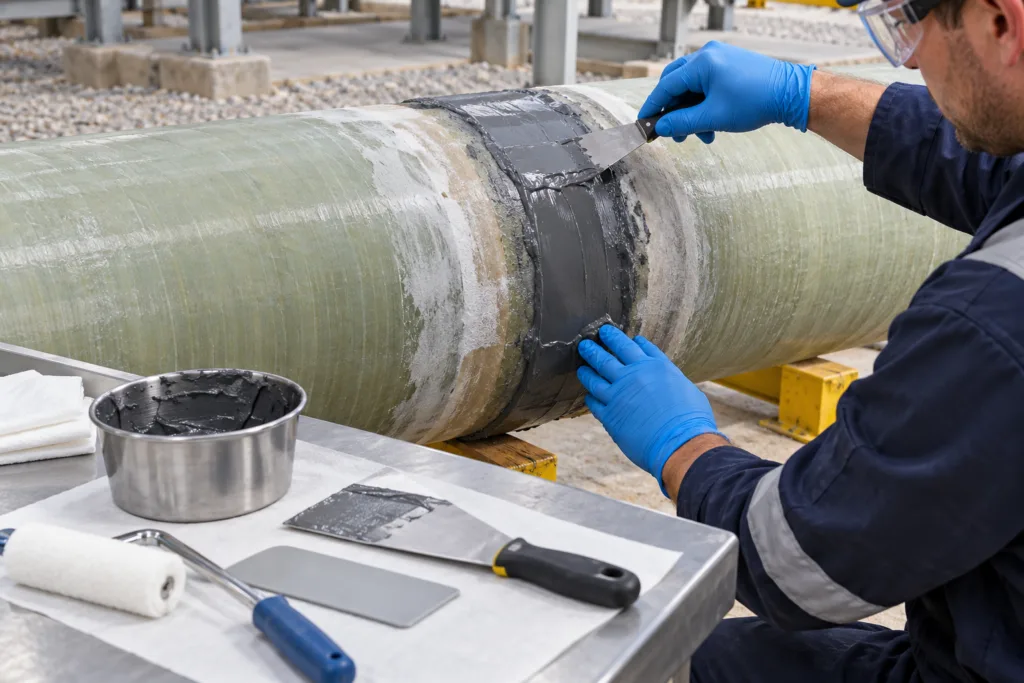
ZDS-MR1101 is used to repair and rebuild bonding areas on GRE, or glass-reinforced epoxy, pipe joints. Its conductive formulation suits repair designs that include static-discharge control, while its impact resistance supports consideration of components exposed to knocks during service.
Industrial access and placement
The adhesive fits repair work on industrial pipelines, offshore platforms, and desalination plants where access to the bonding area can affect the work plan. Its thixotropic consistency helps it stay where placed, making the contact area and available access important factors when selecting it.
Prepare the work surface
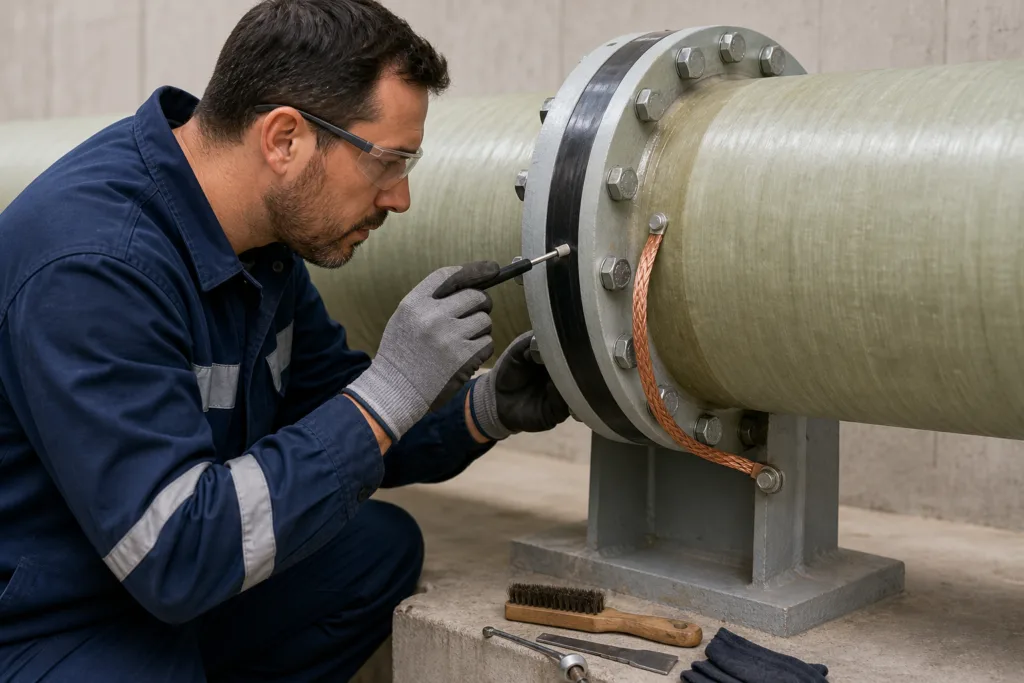
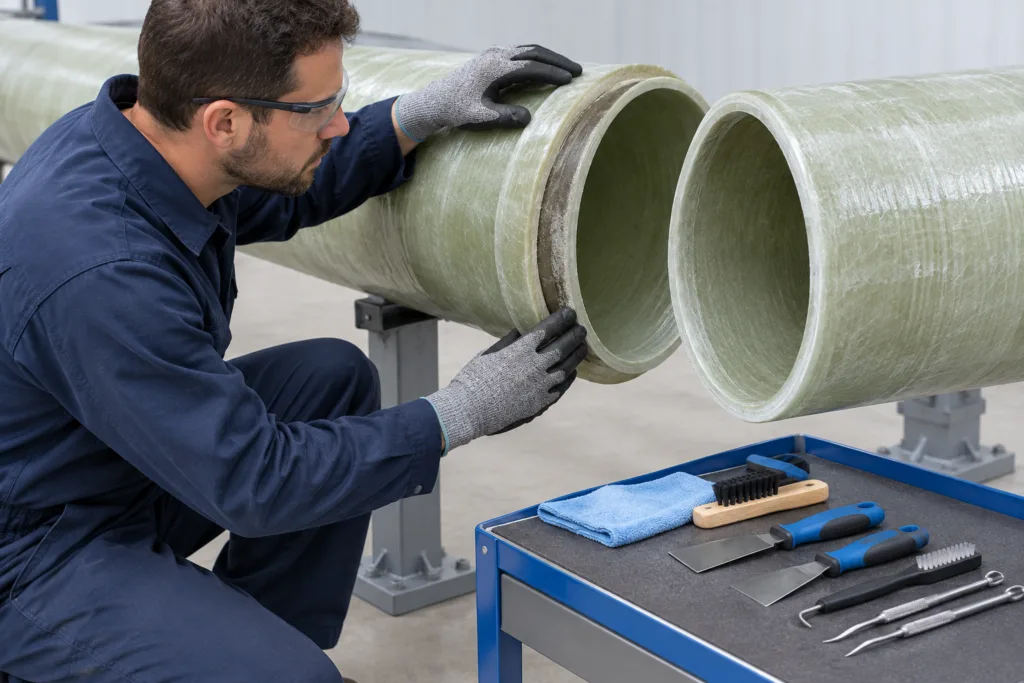
Prepare the bonding area using the product-specific preparation instructions.
- Identify the contact surfaces and inspect for loose material and contamination.
- Arrange access to the full work area and the tools needed for the next step.
- Address contamination using the preparation method specified for this product and the actual surface.
Plan the work
Application and cure planning
- Prepare the bonding area and arrange access and tools before starting.
- Mix the components according to the product instructions after surface preparation and setup are complete.
- Apply the adhesive to the prepared contact area according to the product instructions.
- Use the technical table to plan the cure stages. Follow the applicable repair or application procedure for handling, loading and return to service.
Product selection questions
How much working time is available?
The typical working time at 25°C is 30-45 min. Complete surface preparation and setup before mixing.
What is the full-cure schedule?
Full cure: 24 h at room temperature. Follow the product instructions for the applicable cure conditions.
What temperatures apply?
Recommended application temperature: 10°C to 35°C. Service temperature: -50°C ~ +140°C (short-term 170°C). Application and service temperatures describe different conditions.
What thickness is recommended?
Recommended: 0.2-1.0 mm bond line. Use the stated thickness type and range when planning the work.