
Power Plant Repair Materials for Flue Gas Treatment
Select repair materials by equipment, substrate, damage mechanism, temperature, chemical and moisture exposure, and shutdown conditions. Maintenance teams, engineers, contractors and procurement buyers can compare routes for rebuilding, lining, wear protection, pipe reinforcement and wet-surface repair.
Selection Approach
Repair Material Selection for Power and Flue Gas Systems
Flue gas equipment can face heat, chemical attack, moisture, erosion, cavitation, vibration and repeated operating cycles. Material selection must reflect the component, failure mechanism and required repair function.
Review the industrial repair materials
portfolio before preparing a shortlist.
Use application guidance to compare repair
functions and operating conditions.
Compare materials by equipment to
distinguish duct, fan, pump, vessel and pipe requirements.
A chemical-protection coating is not
automatically suitable for dimensional restoration or structural pipe reinforcement.
Equipment
Equipment Covered by the Repair Route
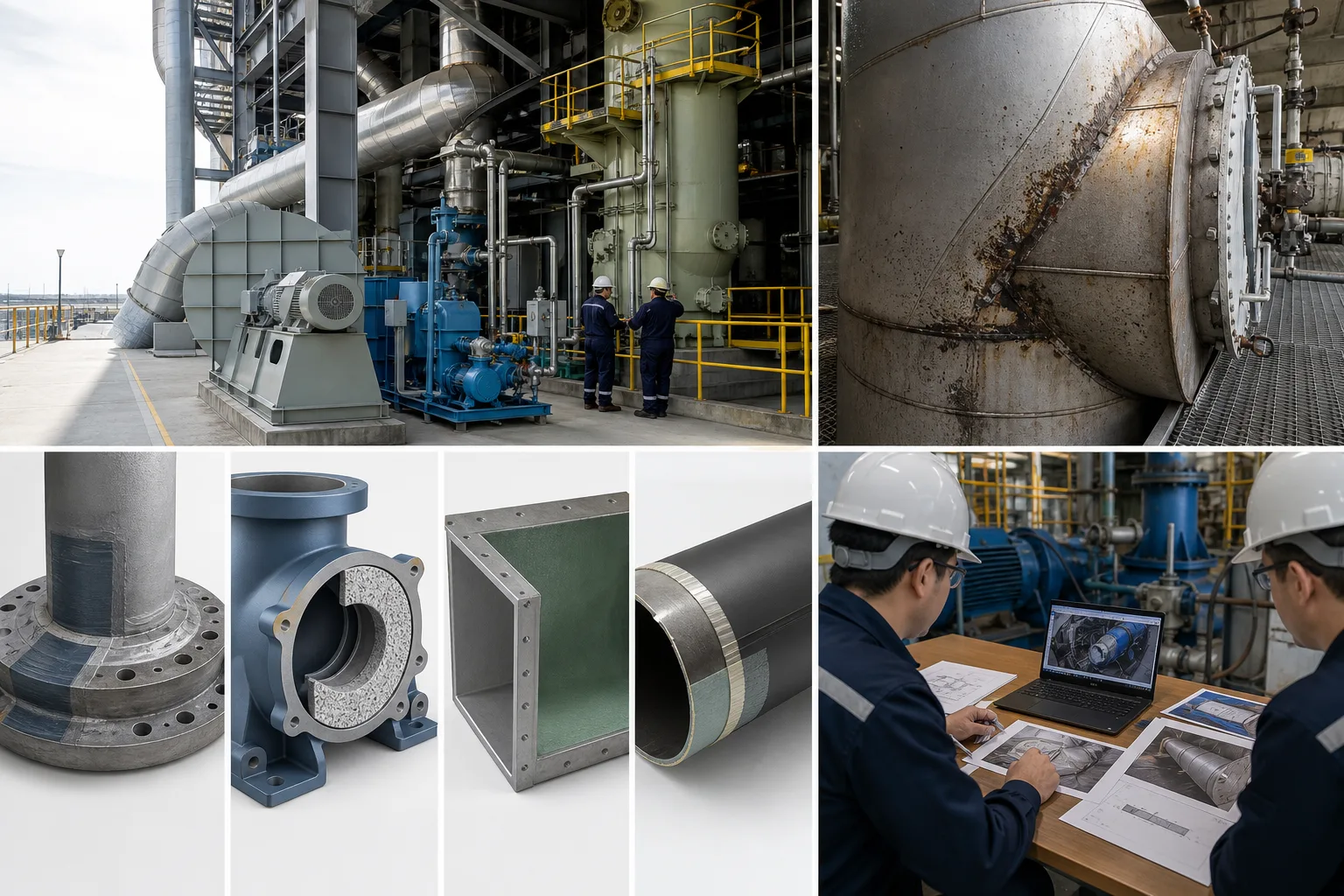
Start by identifying the damaged location and the component's function. Ducts, rotating equipment, pipe connections and wet-process vessels can require different assessment and preparation routes.
Ducts and Stacks
Assess corrosion, deposits and sealing needs across ducts, stacks, transitions and expansion areas.
Fans and Impellers
Match erosion, wear, imbalance or material-loss repairs to component geometry and operating conditions.
Pumps and Connections
Evaluate leakage, cavitation, worn surfaces and damaged sealing areas on pumps, valves, flanges and pipe connections.
Treatment Equipment
Review lining, sealing or rebuilding needs for scrubbers, tanks, vessels and other wet chemical equipment.
Service Conditions
Conditions to Review Before Product Selection
Equipment names alone do not establish suitability. Record the environment around the damage and compare normal service, peak conditions, repair access and preparation requirements with current product documentation.
Heat and Thermal Cycling
Record normal and peak temperatures, heat gradients, operating cycles and the time available for repair.
Chemical and Moisture
Define fluids, condensate, cleaning chemicals, concentrations, wet-dry cycles and immersion or splash exposure.
Wear and Cavitation
Identify particles, slurry, flow direction and impact points at bends, impellers, casings and other high-flow areas.
Access and Repair Timing
Document dry, damp or leaking surfaces, shutdown time, ventilation, access and return-to-service requirements.
Product Routes
Relevant ZDSChem Product Categories
Use these categories as a starting map. Final selection depends on equipment assessment, service conditions, substrate preparation and current product documentation. Surface Preparation Products are a supporting category.
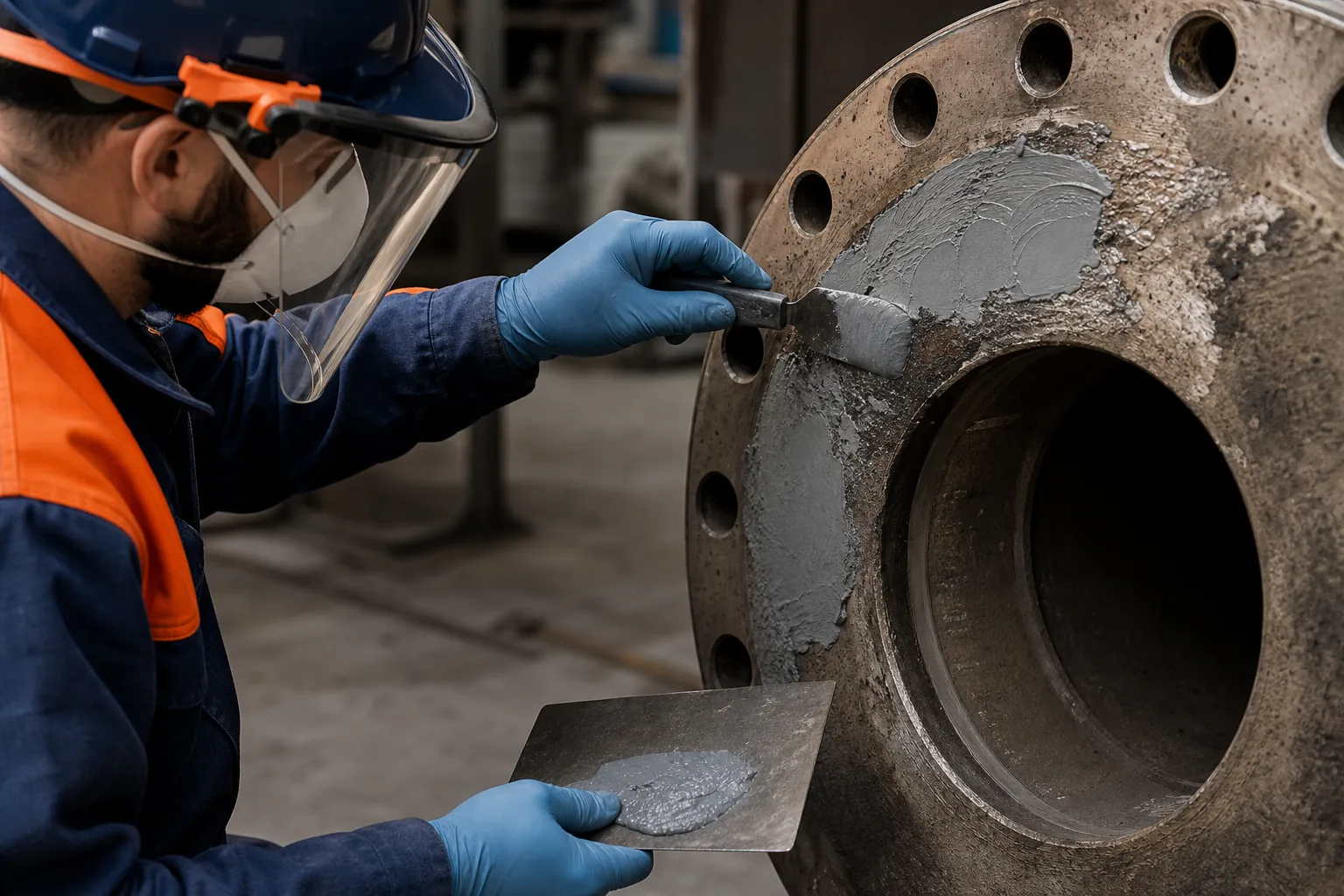
ZDS-FluidGlide
A starting category for high-temperature repair, chemical-resistant lining, flue protection, sealing and fluid-equipment coating.
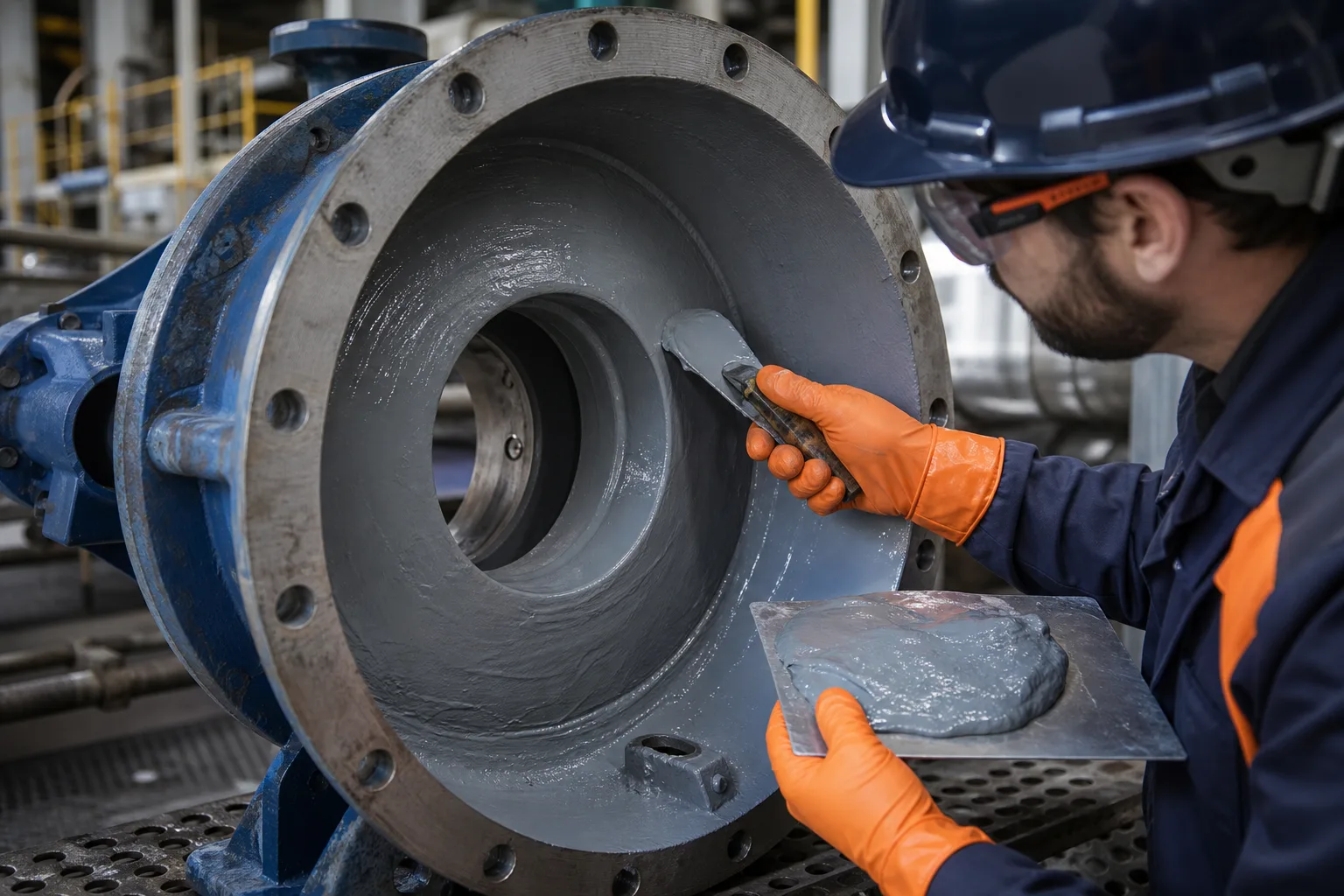
ZDS-CeramicArmor
Ceramic-filled materials for suitable flow-exposed components affected by wear, erosion or cavitation.
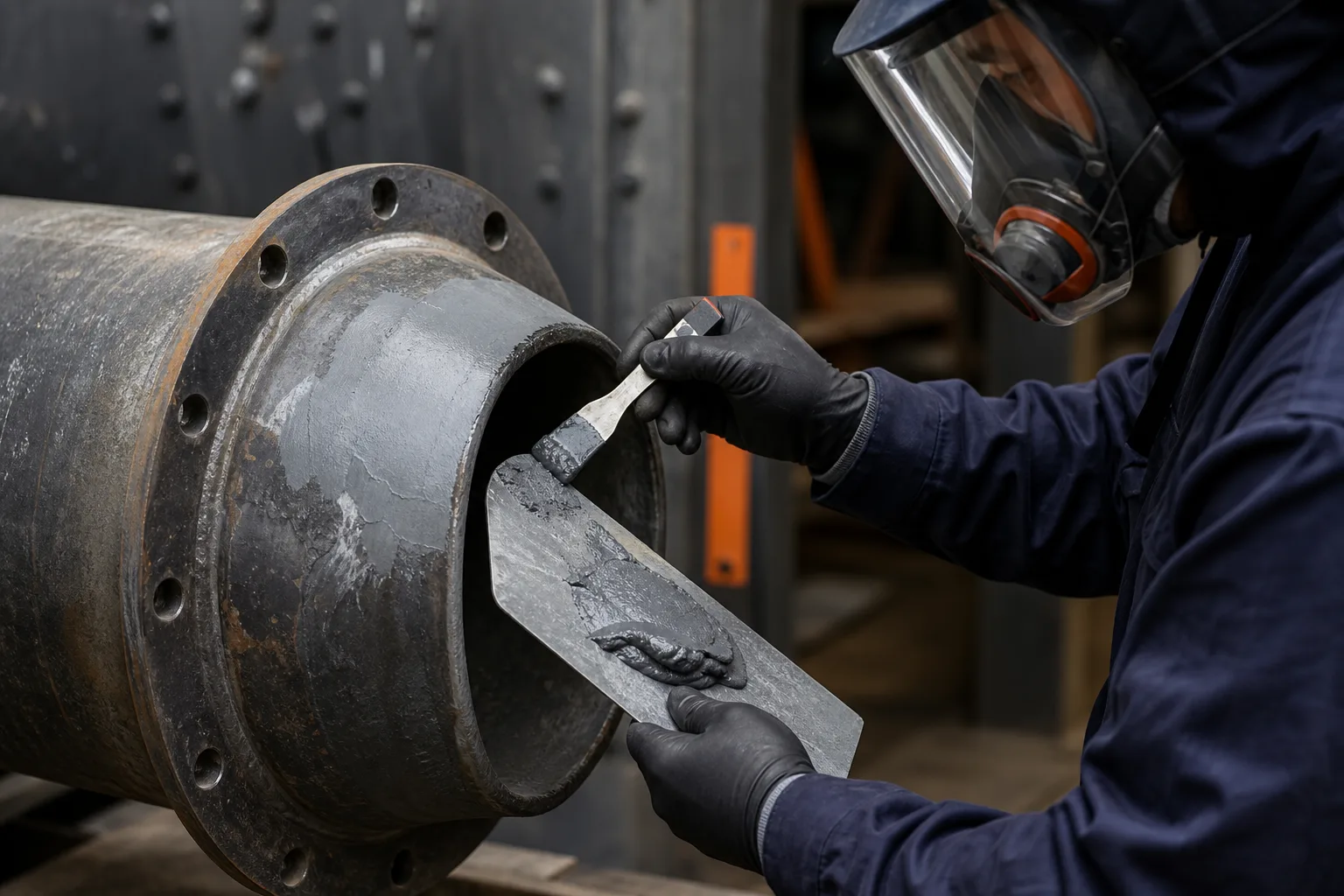
ZDS-MetalRebuild
Materials for metal rebuilding, cold repair, dimensional restoration, leak sealing and structural bonding.
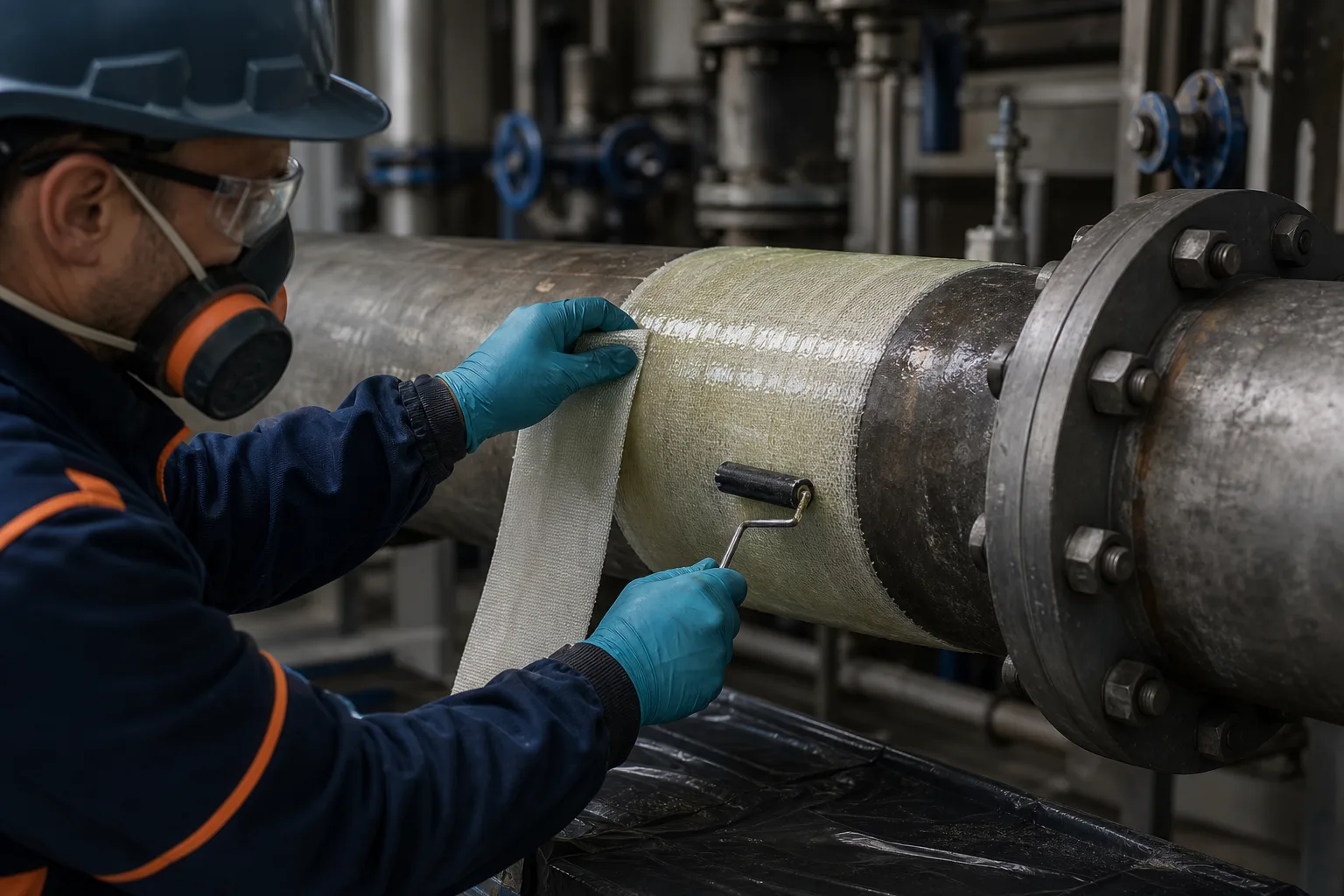
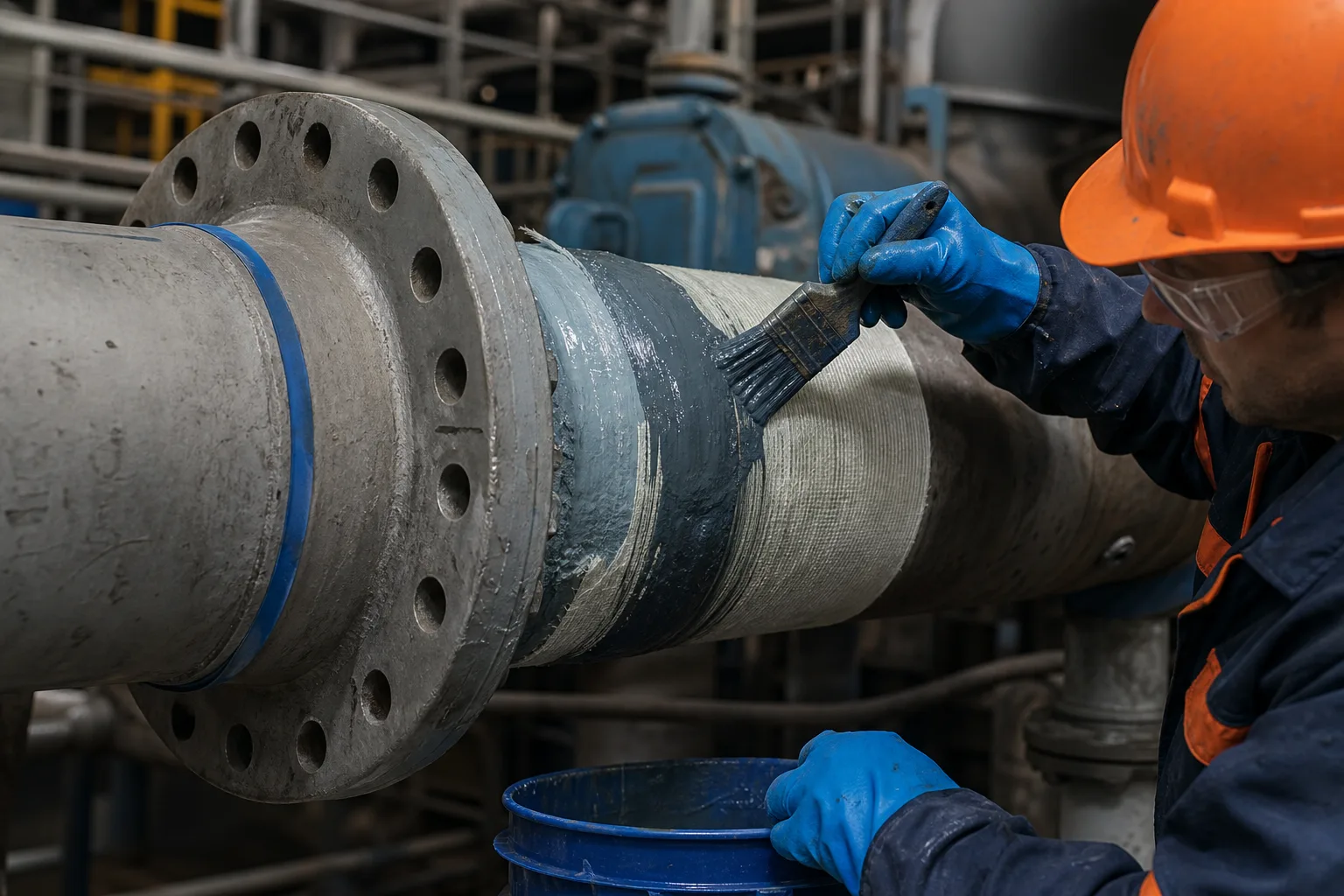
ZDS-CompositeWrap
Composite pipe reinforcement, FRP repair and structural laminating systems requiring engineering assessment.
ZDS-AquaShield
Wet-surface and emergency repair materials for conditions matching the documentation, not a default flue coating route.
Route Comparison
Compare Repair Routes Before Specifying Material
A clear failure description separates localized rebuilding from lining, wear protection, reinforcement or wet-surface repair. Compare the observed condition with its selection factors before specifying a category.
Localized Metal Loss
Assess metal rebuilding or cold repair against substrate condition, geometry, leakage, loads and preparation.
Erosion or Cavitation
Assess ceramic-filled protection against particles, slurry, flow, impact points, substrate and operating conditions.
Chemical Attack
Assess lining or flue protection against chemicals, temperature, wet-dry cycles, access and preparation.
Pipe Reinforcement
Assess composite reinforcement using pipe dimensions, remaining wall, loads, pressure, geometry and engineering design.
Wet or Urgent Repair
Assess wet-surface repair using water exposure, leakage, isolation, access, shutdown limits and documented conditions.
Technical Review
How a Power Plant Repair Inquiry Is Evaluated
A useful inquiry provides enough context to identify a product family and the information still needed for confirmation. A preliminary category match is not a final product specification.
01
Define the Failure
Identify the component, substrate, damaged area, dimensions, failure mechanism and whether damage is localized or widespread.
02
Describe the Service
Provide temperature, chemicals, moisture, flow, solids, pressure, vibration and thermal-cycle information where available.
03
Match the Route
Compare rebuilding, lining, wear protection, reinforcement and wet-surface repair with preparation and access needs.
04
Evaluate Documents
Review current technical documents and define the application method and acceptance criteria before sample evaluation.
05
Prepare the Project
Confirm quantity, site conditions, packaging, labeling, documents, purchasing region and quotation requirements.
Project Documents
Documents and Project Information Buyers May Need
Technical reviews are more efficient with drawings or photographs, substrate details, operating conditions, damaged-area measurements, repair timing, expected quantity and the destination market.
Technical Data Sheets
Compare intended use, application conditions and product-specific technical information.
Safety Data Sheets
Support site reviews covering handling, storage, personal protection and workplace requirements.
Application Guides
Organize preparation and application planning around the selected product and agreed repair scope.
Document Center
Gather available documents required for technical evaluation and procurement review.
Supplier Context
Manufacturing, Technical and Quality Background
ZDSChem is supported by the chemical manufacturing, formulation, R&D, technical and quality-management background supplied for ZDS. These company-level facts provide context for supplier qualification.
Selection Limits
Limits That Affect Final Material Selection
Category guidance does not constitute a product specification or guarantee field performance. Final decisions require current documentation, suitable site conditions and review of the equipment and repair method.
Confirm temperature limits, chemical
resistance, cure conditions, pressure suitability, adhesion, abrasion resistance and service life against current product documentation.
Active leaks, pressurized equipment
severe structural loss or unsafe access may require isolation, engineering review, replacement or another repair method.
Composite reinforcement requires
assessment of pipe condition, design loads, geometry and installation requirements; a product name alone is insufficient.
Agree sample methods, scope, application
conditions and acceptance criteria before testing or field use.
Confirm packaging requirements and
commercial feasibility before bulk purchasing.
Project Consultation
Send the Plant Conditions for a Practical Shortlist
Provide the equipment type, substrate, damage, temperature, chemical and moisture exposure, access constraints, repair area, timing and document requirements. ZDSChem can review suitable routes and identify missing information.
FAQ
Frequently Asked Questions
ZDS-FluidGlide is the starting category for high-temperature repair, chemical-resistant lining, flue protection, sealing, and fluid-equipment coating. The final choice depends on the substrate, chemical exposure, temperature, moisture, preparation, and current product documentation.
Not necessarily. A duct lining, a worn pump casing, a localized metal repair, and a reinforced pipe section have different functions and failure mechanisms. Equipment, damage pattern, service conditions, and repair geometry should be compared before selecting a product category.
Yes. Buyers can submit the equipment type, substrate, damage description, operating conditions, access limits, repair area, timing, and documentation requirements for technical review. The review determines whether a product route is feasible and what information is still required.
Sample evaluation can be requested when the product category and application information are defined. The evaluation method, sample scope, application conditions, and acceptance criteria should be confirmed before testing or field use.
No. ISO 9001 and IATF 16949 are quality-management system certifications. They support the company’s management and process-control framework but do not automatically certify an individual product’s performance, safety, chemical resistance, or suitability for a power plant application.