
Industrial Repair Materials for Plant Maintenance Teams
Plant maintenance repair materials help maintenance, reliability, and procurement teams address corrosion, leakage, wear, erosion, dimensional damage, and shutdown repair needs. Selection starts with the equipment, substrate, damage mechanism, and service condition.
Maintenance Planning
Repair Support for Shutdown and Emergency Maintenance
Limited outage windows require teams to consider equipment access, surface condition, operating exposure, application time, documentation, and quantity. Repair materials may support a repair plan but do not automatically replace welding, component replacement, or an engineered repair.
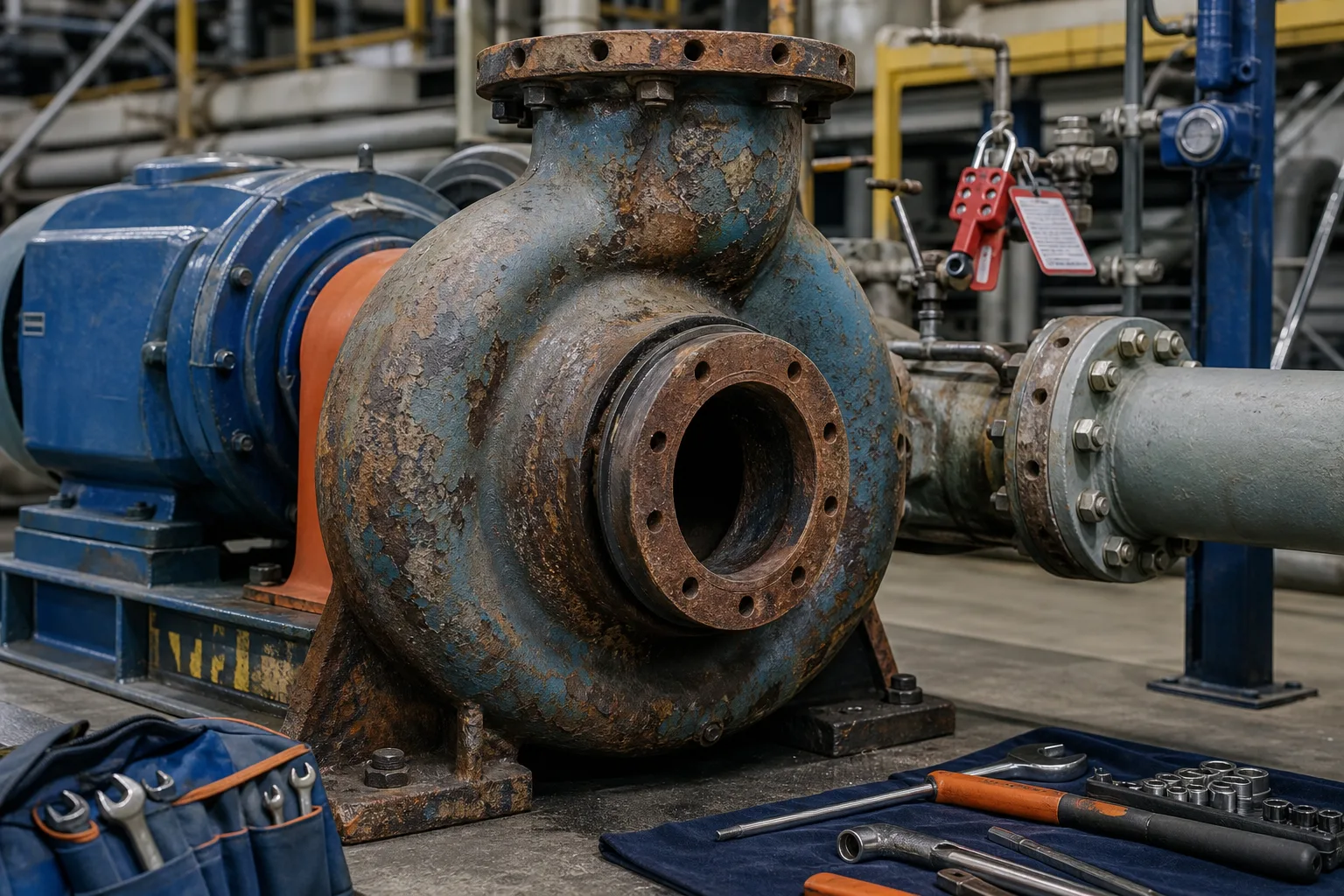
Product Selection
Start With the Failure, Not the Product Name
Build a shortlist from the asset and failure condition. Use equipment and service-condition selection routes to identify likely categories, then compare them within the wider industrial repair materials range.
Equipment and Geometry
Identify the asset, repair location, geometry, movement, and access constraints.
Substrate and Surface
Record the substrate, existing layers, moisture, oil, rust, scale, coatings, and contamination.
Damage Mechanism
Describe leakage, corrosion, erosion, abrasion, cavitation, dimensional loss, bond damage, or layer deterioration.
Service Condition
Capture moisture, temperature, chemicals, impact, weather, ultraviolet exposure, vibration, movement, and load.
Product Portfolio
Product Series for Common Plant Maintenance Needs
ZDSChem organizes its portfolio into seven primary product series. Each is a category-level starting point; final selection requires current product documentation, the actual repair condition, and the equipment owner's procedure.
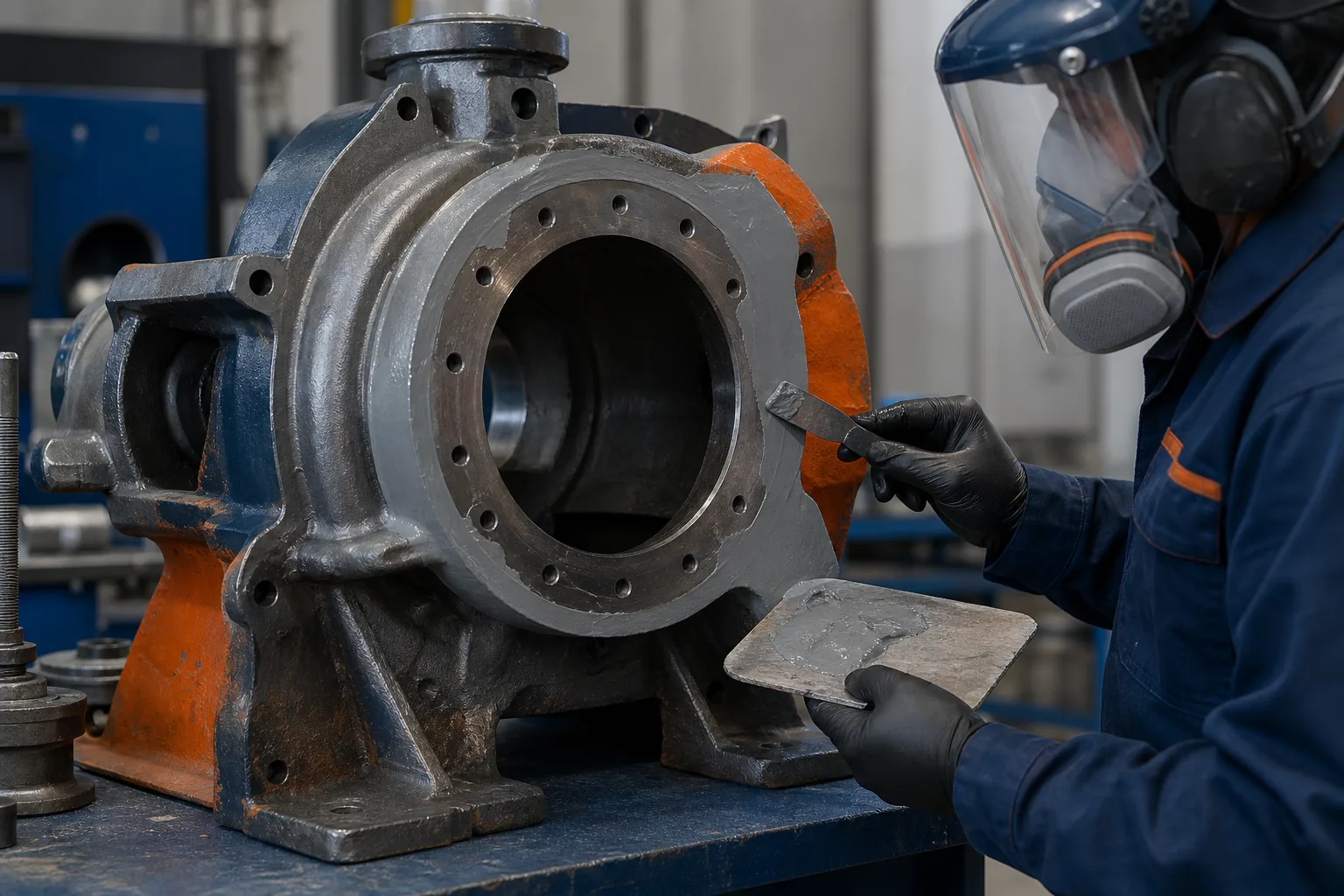
ZDS-MetalRebuild
For metal rebuilding, cold repair, dimensional restoration, leak sealing, and structural bonding assessments.
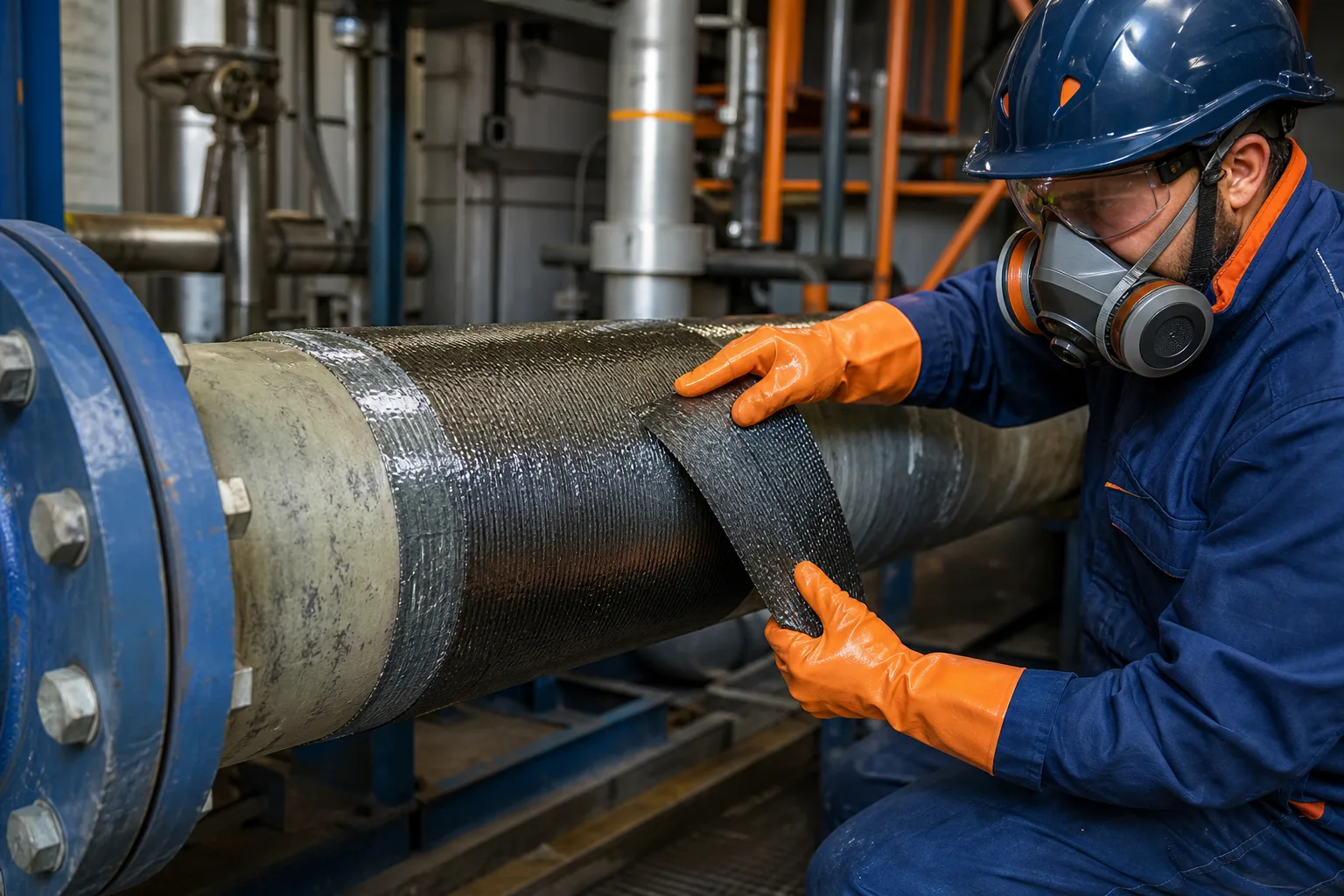
ZDS-CompositeWrap
For composite pipe reinforcement, FRP repair, and structural laminating systems requiring reinforcement planning.
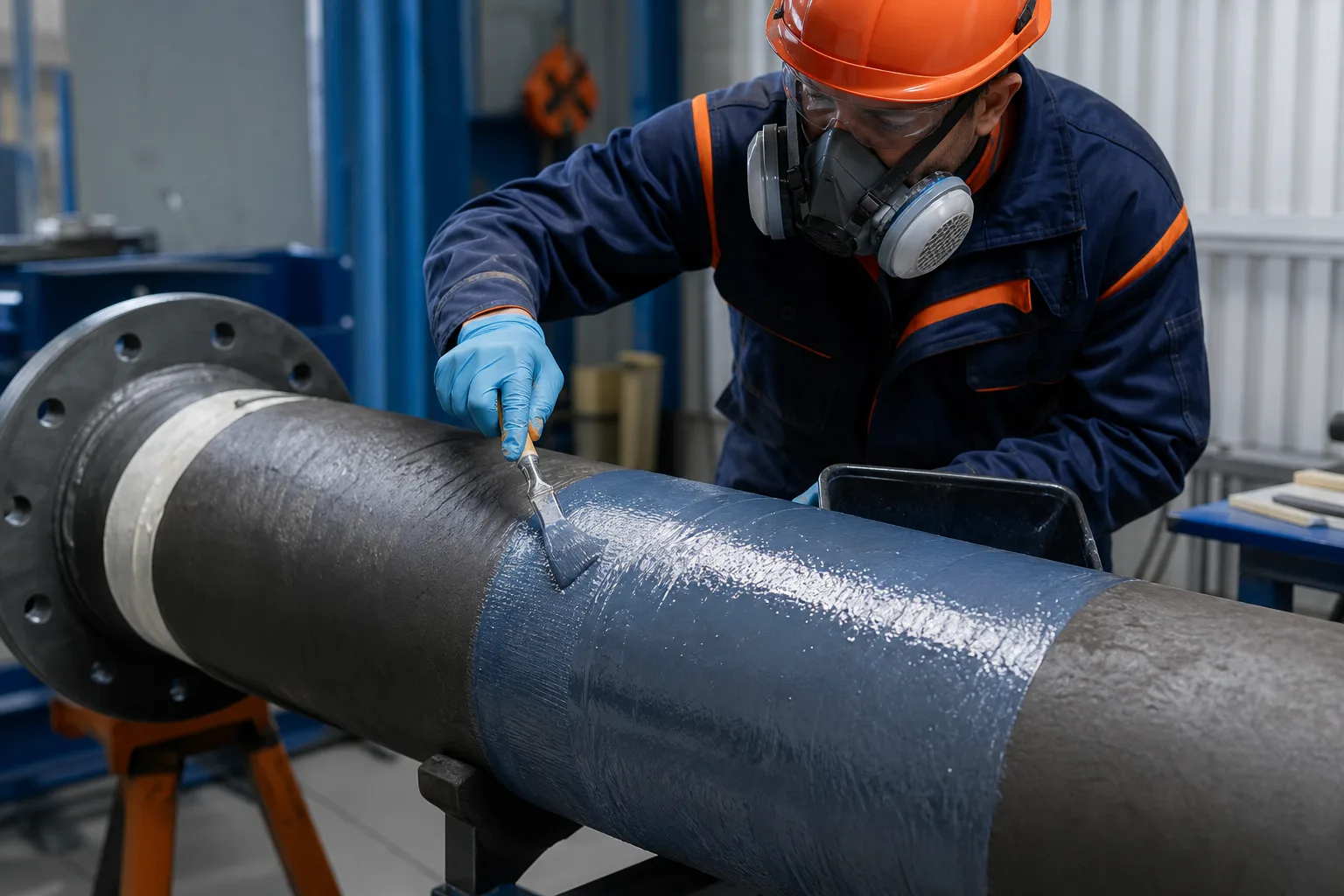
ZDS-CeramicArmor
For ceramic-filled materials associated with wear, erosion, cavitation, and heavy-duty equipment protection.
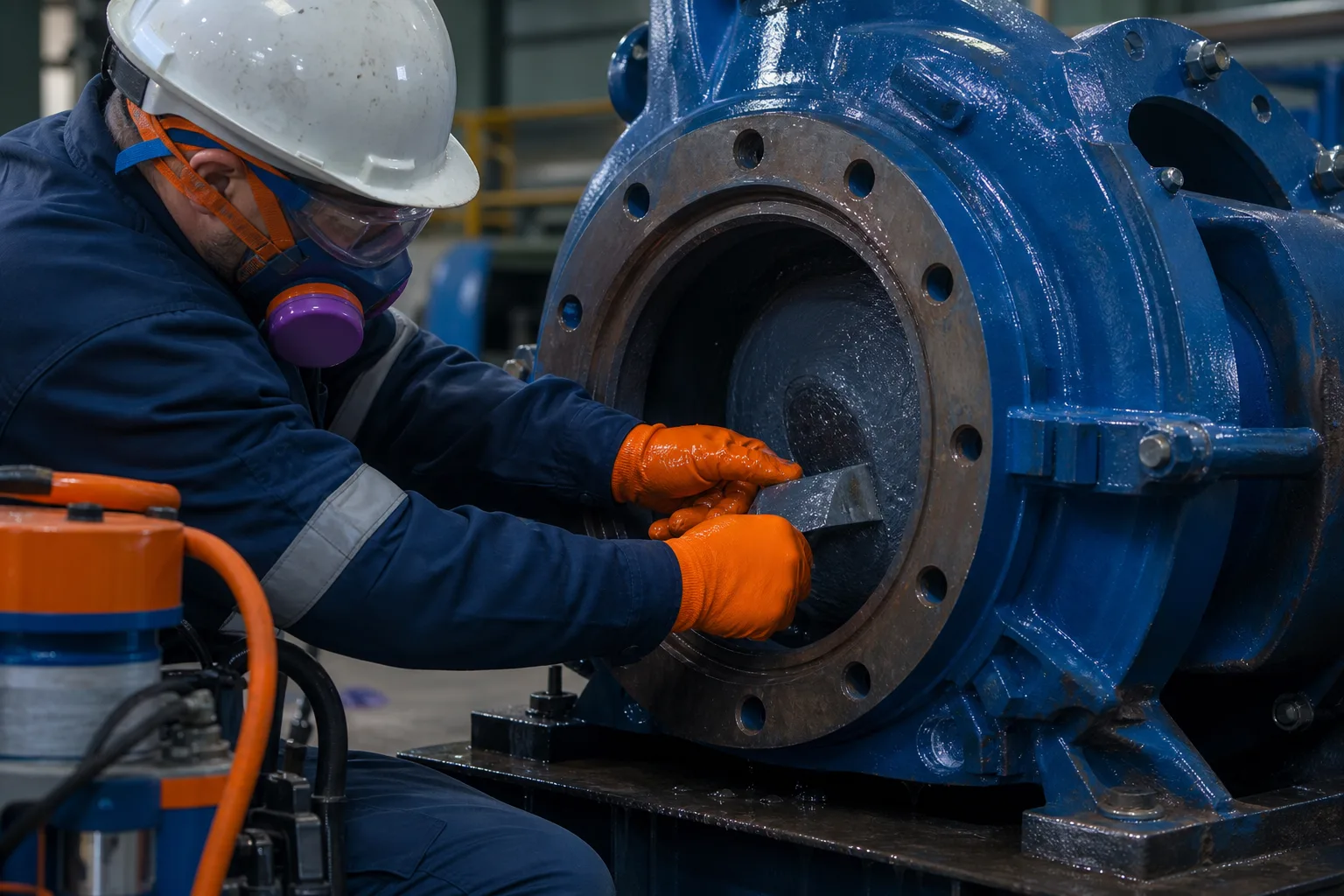
ZDS-AquaShield
For wet-surface, underwater-curing, marine, and emergency routes affected by moisture or submerged access.
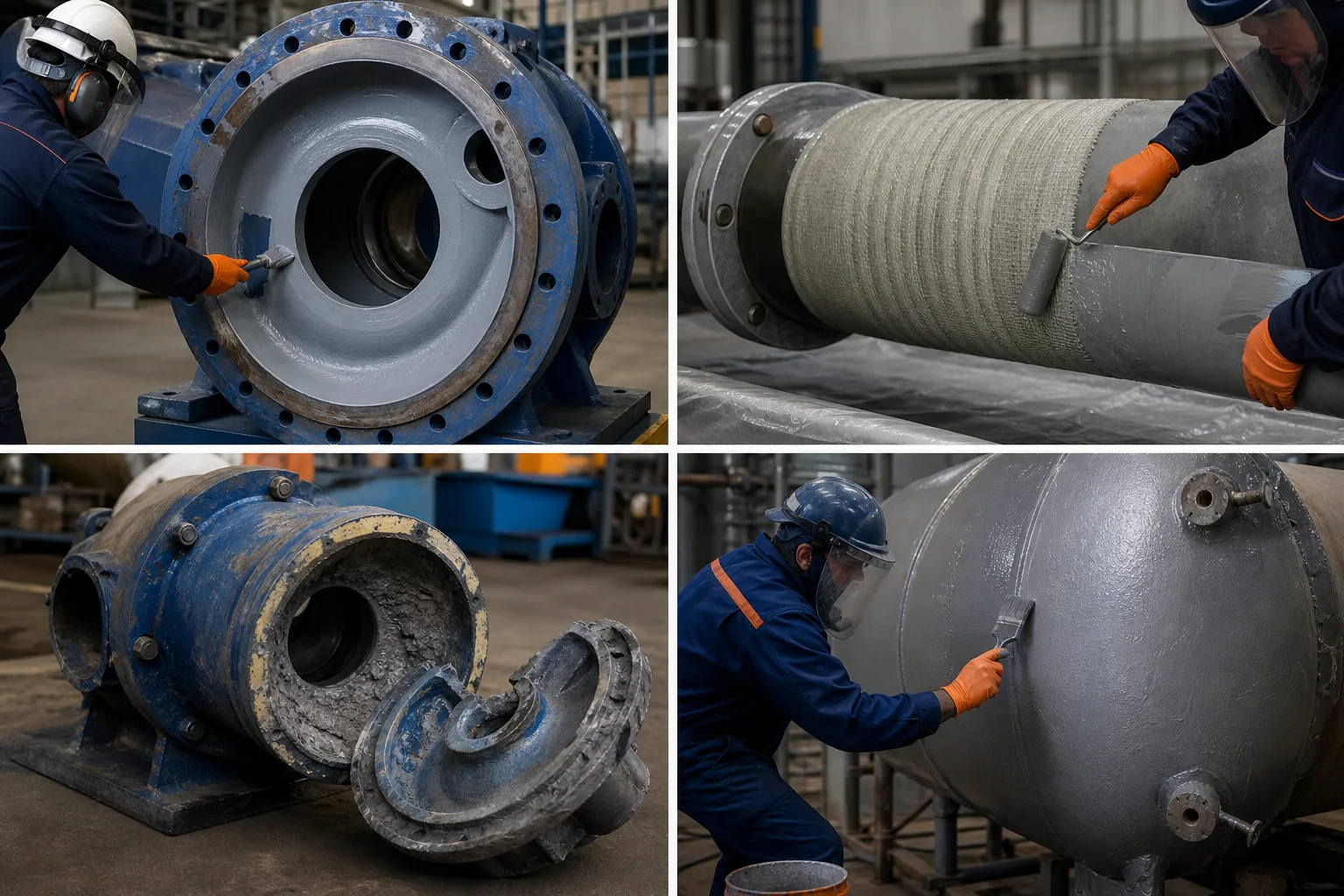
ZDS-FluidGlide
For high-temperature repair, chemical-resistant lining, tank and flue protection, sealing, and equipment coatings.
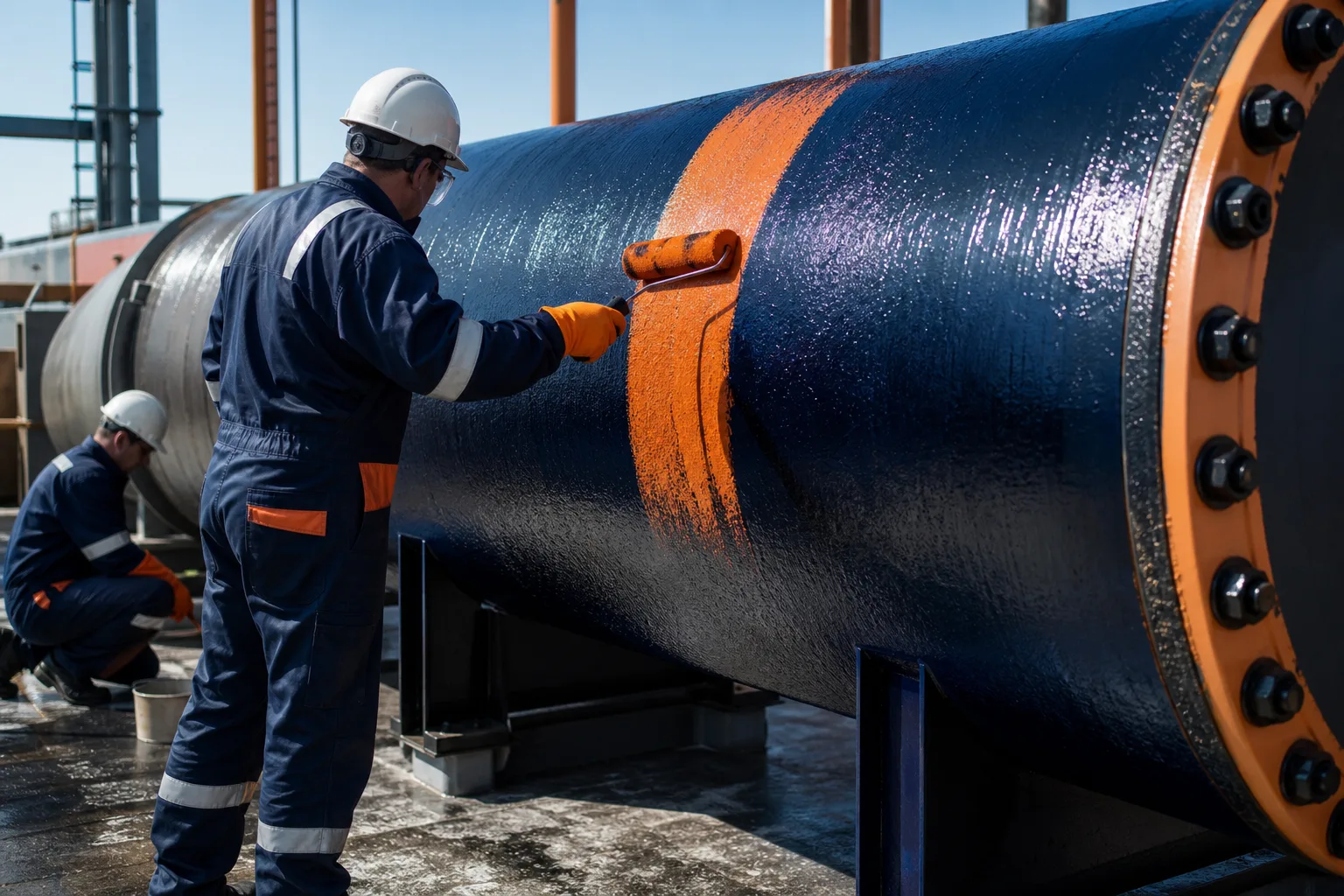
ZDS-PolyAspartic
For UV-resistant, weather-stable outdoor protective topcoats where weather exposure affects selection.
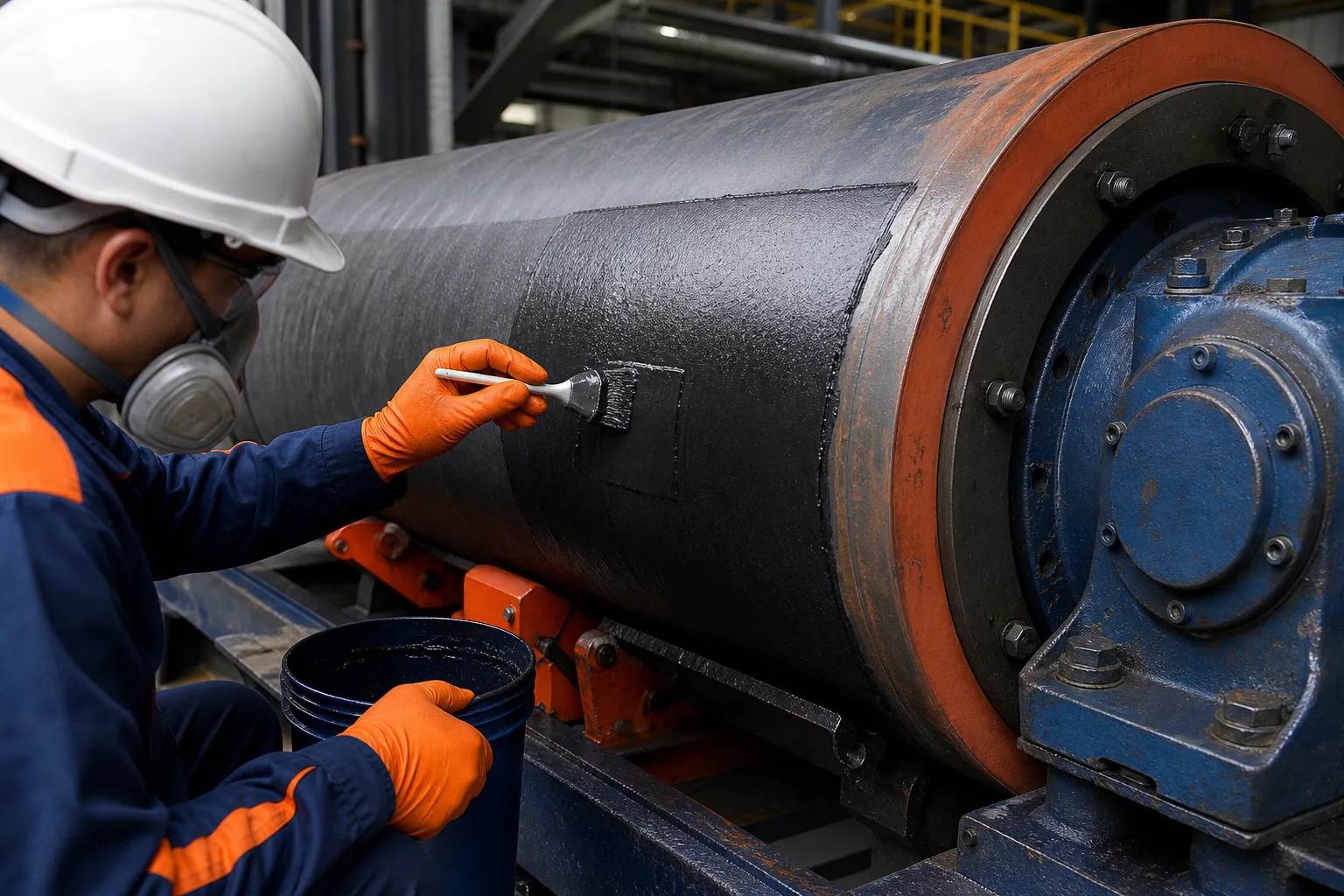
ZDS-RubberElast
For conveyor belts, rubber linings, rollers, cables, tires, and other elastomer components.
Application Routes
Equipment-Specific Repair Planning
Review application routes that match the affected equipment and damage mechanism. Each route remains subject to the actual substrate, operating exposure, repair scope, current documentation, and required approval process.
01
Pipe Leak Repair
Review material routes for pipe leak repair planning and condition assessment.
02
Pump Repair
Review repair and protection routes for damaged or worn pump components.
03
Valves and Flanges
Review repair routes for valve and flange damage, leakage, and surface deterioration.
04
Tanks and Vessels
Review lining routes for tanks and vessels exposed to relevant service conditions.
05
Abrasion and Erosion
Review protection routes for equipment exposed to abrasion, erosion, or particle impact.
06
High-Temperature Repair
Review repair categories where documented temperature exposure affects material selection.
Shutdown Checklist
Selection Factors Before a Shutdown Repair
Convert the maintenance request into a condition-based description. This distinguishes surface protection from dimensional rebuilding, reinforcement, elastomer repair, or work that requires a different engineering method.
Define the Equipment
Record the component, location, geometry, access route, and whether removal is practical.
Describe the Substrate
Identify the base material and any coating, lining, corrosion product, or bonded layer.
Measure the Damage
Record the affected area, dimensions, material loss, leak path, or worn section where measurements are available.
Record the Exposure
Include moisture, chemicals, temperature, wear, weather, movement, and operating load.
Set the Work Window
State isolation timing, shutdown duration, and whether the work is planned, temporary, or recurring.
Prepare Purchasing Data
Estimate quantity and identify the destination market, documents, packaging, labeling, and procurement requirements.
Repair Workflow
From Condition Assessment to Replenishment
Organize the repair route before the outage, confirm evaluation criteria and application requirements, and retain purchasing information when the selected material enters a recurring maintenance program.
01
Capture the Condition
Gather equipment details, substrate data, measurements, service exposure, photographs, and the planned work window.
02
Build a Shortlist
Use equipment, damage, and service conditions to identify relevant series and exclude unsuitable categories.
03
Plan the Evaluation
Organize sample selection and confirm the evaluation method, scope, information, and acceptance criteria.
04
Confirm Application
Review current product, preparation, application, safety, and approval information before requesting a sample.
05
Plan Repeat Supply
Organize the move from evaluation to purchasing, replenishment, and continuity planning.
Technical Documents
Documents That Support Maintenance Approval
Document requirements depend on the selected product, application, market, and purchasing procedure. Confirm current product-specific information, pack format, labels, cartons, instructions, target-market presentation, and commercial details.
Product Selection Guide
Start with the selection guide before requesting current product-specific information.
Technical Data Sheets
Support product identification, intended-use review, application planning, and comparison of stated information.
Safety Data Sheets
Support handling, storage, hazard communication, and workplace safety review.
Application Guides
Help organize preparation, application, and inspection questions before work begins.
Document Center
Locate or request current technical documentation for product and procurement evaluation.
Supplier Evaluation
Technical and Quality Background
ZDSChem is supported by the supplied chemical manufacturing and formulation background for ZDS. Company experience and management systems can inform supplier evaluation but do not establish product suitability for a particular asset.
Selection Limitations
Where Technical Confirmation Is Essential
A product name cannot establish the repair method. Working time, cure time, temperature and pressure limits, chemical resistance, adhesion, abrasion resistance, and other values must come from current documentation and the specific evaluation process.
Controlled Equipment
Pressure-retaining, safety-critical, regulated, potable-water, or controlled assets may require engineering review and approval.
Service Conditions
Wet, underwater, high-temperature, chemical, and heavily abrasive conditions require distinct documented material routes.
Application Controls
Preparation, thickness, access, inspection, and curing affect outcomes; follow product and equipment-owner procedures.
Custom Requirements
Custom formulations, packs, labels, OEM or ODM requests, and product development require feasibility review.
Technical Support
Prepare the Next Maintenance Decision
Send the equipment condition, damage description, service exposure, shutdown window, and purchasing requirements for a product route. For defined work that includes quantities and commercial requirements, submit a project quotation request.
FAQ
Frequently Asked Questions
The relevant category depends on the equipment, substrate, damage mechanism, and service condition. ZDSChem organizes options across metal rebuilding, composite reinforcement, wear protection, wet-surface and underwater repair, high-temperature and chemical-resistant systems, outdoor topcoats, and elastomer repair.
Record the equipment, substrate, damage dimensions, operating exposure, access limitations, shutdown window, quantity, and required documents. These details help narrow the product series before technical and equipment-owner approval.
ZDSChem can review the reported equipment and service conditions and identify a possible product route. Wet, underwater, leaking, or emergency conditions require product-specific documentation and technical confirmation before use.
Provide the component and substrate, failure type, repair dimensions, photographs or sketches, wet or dry condition, temperature and chemical exposure, abrasion or movement, available shutdown time, estimated quantity, and destination-market requirements.
Teams may need a technical data sheet, safety data sheet, application guidance, product identification, packaging information, and other documents required by the plant or destination market. The exact document set should be confirmed for the selected product.
No. ISO 9001 and IATF 16949 are quality-management system certifications. They support the company’s management and process-control framework but do not certify individual product performance, safety, compliance, or suitability for a specific repair.