
High-Temperature Repair for Hot Equipment and Sealing
High-temperature repair compounds help restore, seal, or protect industrial equipment exposed to heat, thermal cycling, chemical media, pressure, or flow-related wear. Selection depends on the full service profile, substrate, damage mode, access, preparation, and cure requirements.
Repair Objectives
What High-Temperature Repair Needs to Solve
Heat-related failures may involve leakage, lost metal, damaged sealing surfaces, hot-flow erosion, chemical attack, or movement from repeated heating and cooling. The material must also suit the substrate, preparation method, and cure procedure.
Hot Equipment Sealing
Seal interfaces, joints, housings, and areas where leakage or surface deterioration affects operation.
Thermal Cycling
Account for stresses caused by repeated startup, shutdown, heating, cooling, expansion, and contraction.
Heat-Related Damage
Address metal loss, erosion, corrosion, voids, or worn surfaces exposed to heat and service media.
Repair Access
Plan around restricted shutdown windows, difficult geometry, preparation access, and return-to-service requirements.
Selection Data
Service Conditions to Review Before Product Selection
A reliable shortlist begins with a clear description of the equipment and its duty. Gather operating, damage, substrate, media, pressure, access, and shutdown data before comparing compounds or requesting technical support.
Temperature Profile
Record normal and peak temperatures, excursions, startup and shutdown conditions, and heating and cooling rates.
Damage and Function
Define whether the repair must seal, rebuild, restore dimensions, bond, line, protect against erosion, or carry load.
Substrate and Geometry
Identify the substrate, wall condition, dimensions, edges, threads, flanges, gaps, vertical areas, and access limits.
Operating Environment
Document media, chemical exposure, pressure, vacuum, flow, vibration, moisture, outdoor exposure, and shutdown time.
Product Routes
ZDSChem Product Routes for High-Temperature Repair
These series provide starting points for evaluation. Product-level temperature limits, cure requirements, chemical resistance, and pressure suitability must be confirmed in current technical documentation.
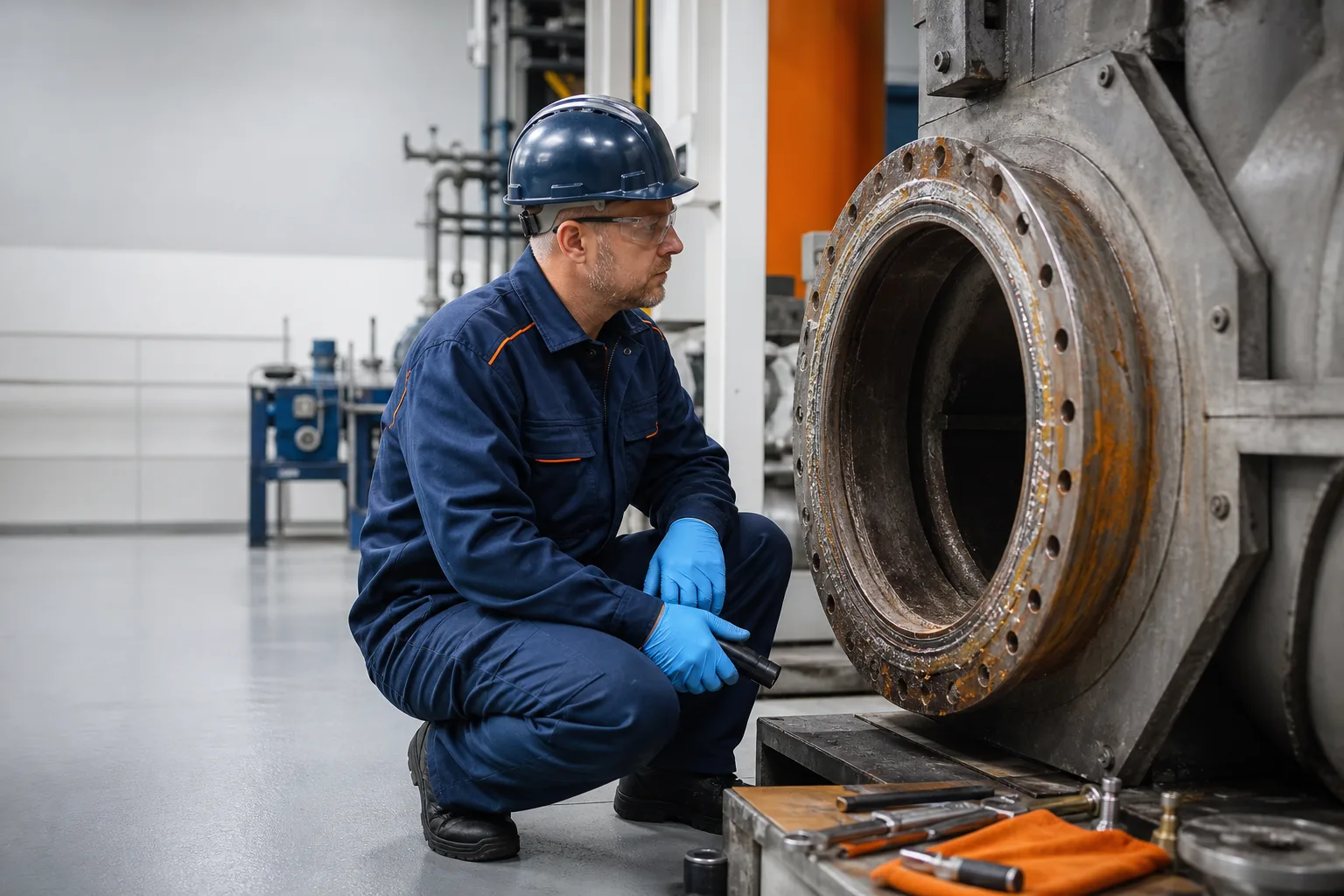
ZDS-FluidGlide
Primary route for high-temperature repair, sealing, chemical-resistant lining, tank lining, flue protection, and fluid coatings.
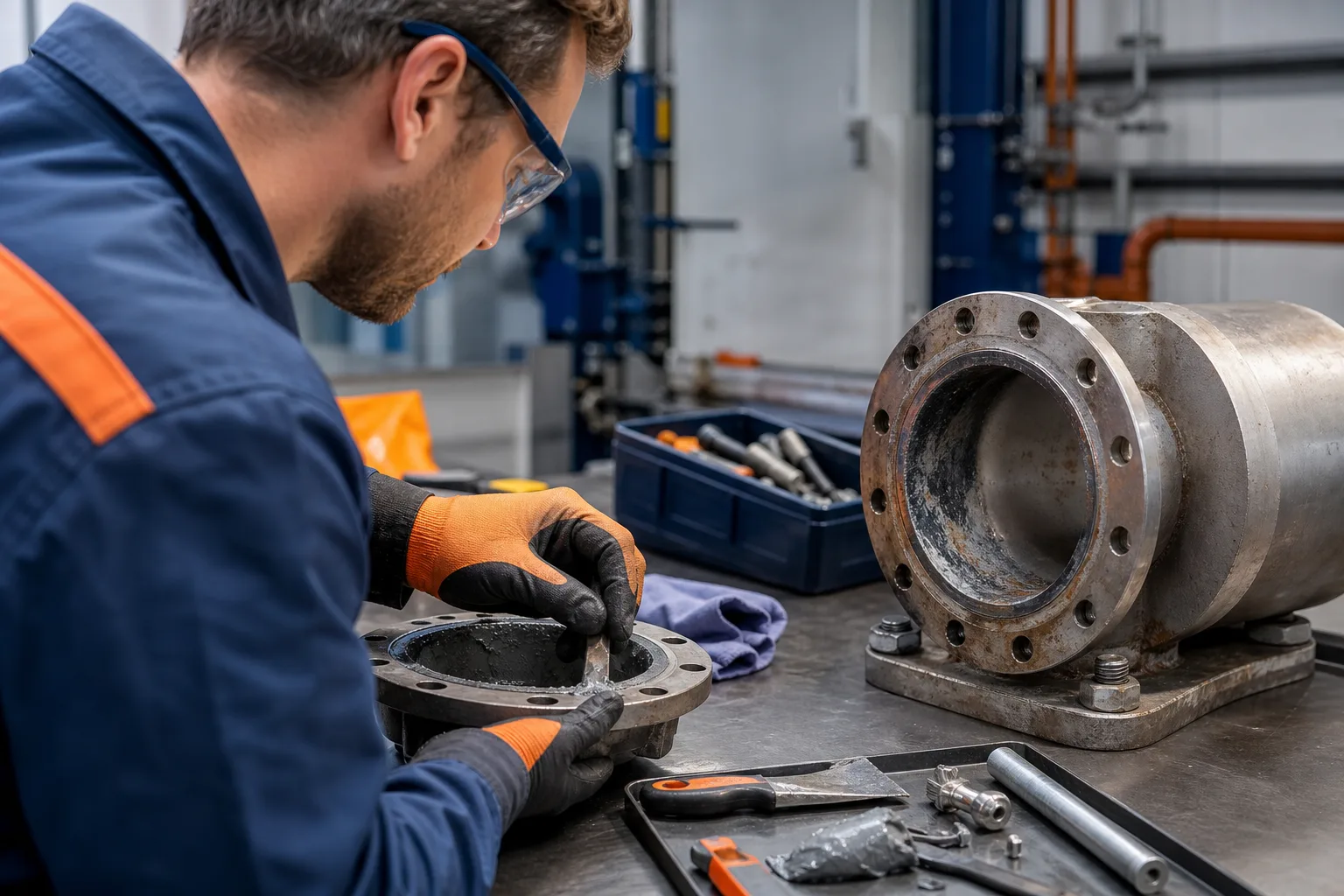
ZDS-MetalRebuild
Consider when metal rebuilding, dimensional restoration, lost geometry, leak sealing, or structural bonding is the main need.
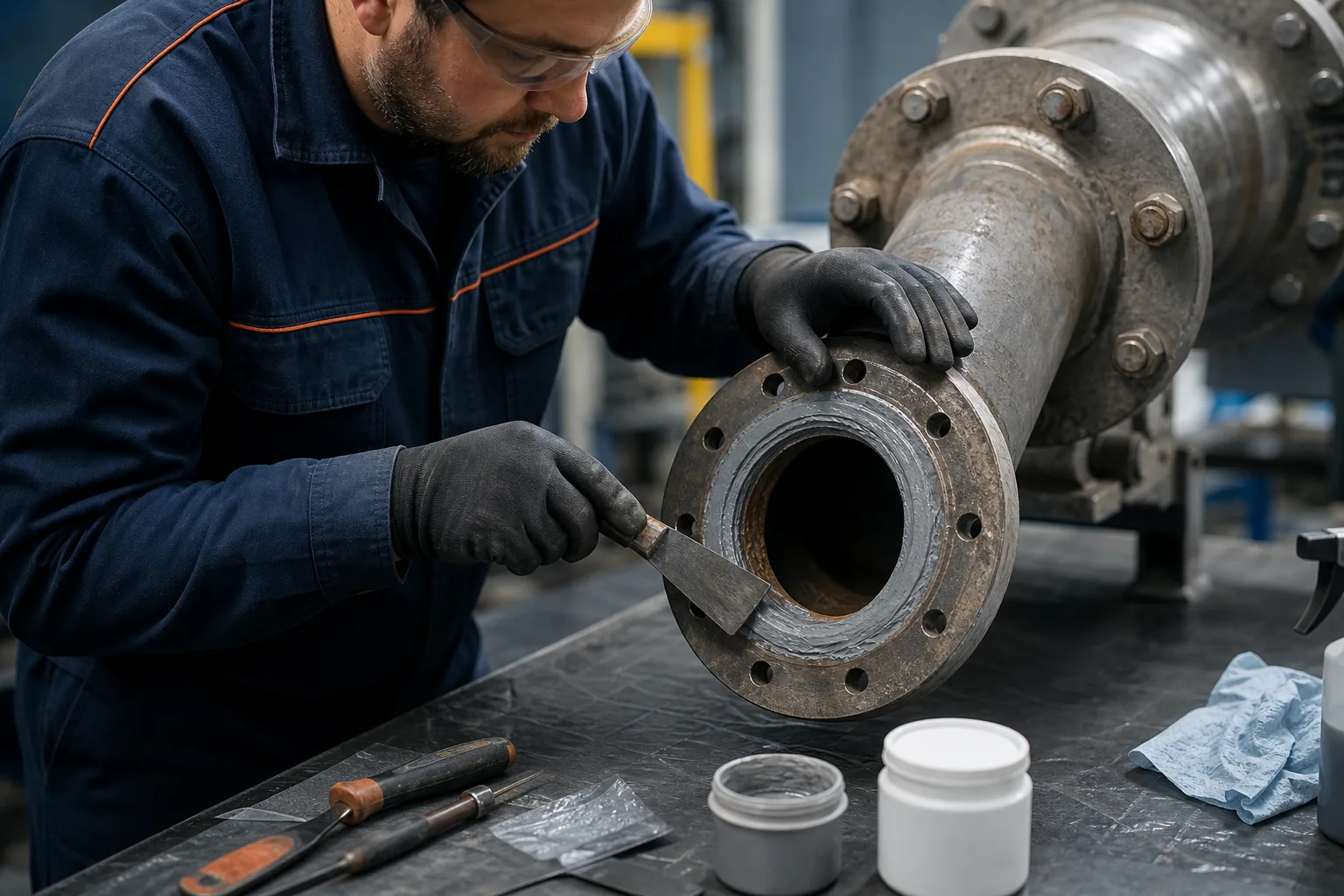
ZDS-CeramicArmor
Consider when elevated temperature is combined with abrasive flow, erosion, cavitation, or severe surface wear.
Comparison Criteria
How to Compare Candidate Repair Materials
A high-temperature reference alone does not establish suitability. Compare each candidate against the full operating profile and prepare enough information for the technical team to identify gaps early.
Operating Temperature
Normal and peak conditions may differ. Prepare temperatures, exposure duration, and possible excursions.
Thermal Cycling
Expansion and contraction affect the interface. Prepare startup frequency, shutdown frequency, and heating and cooling rates.
Substrate and Geometry
Adhesion and placement depend on the surface. Prepare substrate type, condition, dimensions, edges, gaps, and access.
Damage Mode
Sealing, rebuilding, lining, and wear protection require different objectives. Provide photos, drawings, size, depth, and location.
Service Environment
Chemicals, pressure, flow, vibration, and moisture can change suitability. Document each relevant exposure.
Return to Service
Preparation, working time, cure, and inspection affect planning. Provide labor, tools, access, shutdown time, and criteria.
Controlled Application
Preparation and Application Limits
Treat the compound as part of a controlled repair procedure. Equipment condition, preparation, mixing, placement, cure, inspection, and return to service must follow current product documentation and site safety rules.
01
Make equipment safe by isolating
depressurizing, draining, ventilating, and cooling it when required by site procedures and product documentation.
02
Remove loose material, oil, rust, scale
moisture, and other contaminants using the specified preparation method.
03
Measure the damaged area and confirm the
required profile, edges, corners, gaps, repair thickness, and reinforcement needs.
04
Follow current technical data and
application guidance for handling, mixing, placement, cure, and inspection.
05
Verify cure and inspection requirements
before exposing the repair to heat, pressure, chemicals, or flow.
06
High-temperature service does not mean a
compound can be applied to live, pressurized, or hot equipment. Such use requires explicit documentation and an approved site procedure.
Technical Review
Documents for Field and Procurement Review
Request current documentation for the specific product being evaluated. Documentation requirements vary by project and market, so do not rely on an older specification or an unrelated product sheet.
Technical Data Sheets
Review stated product properties, application requirements, and service limitations.
Safety Data Sheets
Support product handling, storage, workplace safety, and preparation planning.
Application Guides
Review available preparation, handling, mixing, placement, cure, and inspection guidance.
Document Center
Organize current technical and safety documents for internal field and procurement evaluation.
Buyer Support
Support for Maintenance Teams and Repair Contractors
Maintenance teams may need a practical shortlist before shutdown. Repair contractors may need to compare substrate, damage, access, and material quantity for a quotation. Support can continue from evaluation through purchasing discussions.
Maintenance Teams
Align product review with shutdown planning, equipment duty, preparation, inspection, and return-to-service needs.
Repair Contractors
Compare substrate, damage, access, repair function, material quantity, and project quotation requirements.
Sample-to-Bulk Workflow
Plan the path from initial evaluation to purchasing discussions when product, project, and commercial conditions are suitable.
Selection Support
Request technical review when product choice or service-condition information requires clarification.
Upload Specifications
Submit equipment data, specifications, photographs, drawings, and acceptance criteria for review.
Technical Background
Manufacturing, R&D, and Quality-Management Background
ZDSChem applies ZDS chemical manufacturing, formulation, R&D, technical, and quality-management experience to industrial repair material selection and support. These resources do not replace project testing or engineering approval.
Established in 1998
ZDS has operated as a professional chemical manufacturer since 1998.
30-Person R&D Team
The team supports development, formulation review, product improvement, application adaptation, and requirement review.
Technical Experience
Experts with more than 30 years of experience contribute to chemical formulation and application support.
Custom Formulation Review
Requirements may be reviewed by application, specification, expected volume, and market, subject to technical and commercial feasibility.
Management Systems
ZDS maintains ISO 9001 and IATF 16949 quality-management systems; these do not certify individual product suitability.
Approval Limits
Limitations to Resolve Before Approval
Suitability must be resolved against current product documentation, equipment risk, service conditions, shutdown planning, site safety procedures, and project acceptance criteria.
No exact temperature limits, working
times, cure times, pressure limits, chemical-resistance values, or adhesion values are stated here for an individual product.
A temperature number without the complete
service profile does not establish suitability.
Thermal cycling, exposure duration
substrate condition, and surrounding equipment stresses also matter.
Active leaks, pressure loads, structural
damage, movement, and inaccessible surfaces may require engineering assessment or a different strategy.
Repair compounds do not automatically
replace welding, component replacement, or a formal integrity-management decision.
Use current product documentation and site
safety procedures before purchase, application, inspection, or return to service.
Technical Consultation
Build a High-Temperature Repair Shortlist
Share the equipment type, substrate, damage, normal and peak temperatures, thermal cycle, media, pressure, access, and repair function. ZDSChem can identify a relevant product category and clarify the documents needed next.
FAQ
Frequently Asked Questions
A high-temperature repair compound is an industrial repair material intended to restore, seal, rebuild, line, or protect equipment that operates in a heat-exposed service environment. Suitability depends on the product documentation, temperature profile, thermal cycling, substrate, damage, media, and mechanical duty.
Start with the sealing function, substrate, normal and peak temperature, heating and cooling cycle, pressure, fluid or gas, surface condition, and shutdown period. ZDS-FluidGlide is the primary ZDSChem series to review for high-temperature repair and sealing, but the specific product must be confirmed against current technical data.
Do not assume that it can. Equipment should be isolated, depressurized, drained, and cooled when required by the product documentation and site safety procedure. Live-equipment application requires explicit technical support and an approved repair method.
ZDS-FluidGlide is organized around high-temperature repair, sealing, linings, flue protection, and fluid-equipment coatings. ZDS-MetalRebuild may be relevant when metal rebuilding or dimensional restoration is the main need, while ZDS-CeramicArmor may be relevant when heat is combined with wear, erosion, or cavitation. Surface Preparation Products support substrate preparation.
Provide the equipment type, substrate, damage location and size, normal and peak temperatures, thermal cycle, pressure or vacuum, service media, chemical exposure, vibration or flow, access conditions, shutdown window, and intended repair function. Photos, drawings, and acceptance criteria can also improve the review.
Customer-specific formulation requirements may be reviewed according to the application, specification, expected volume, and target market. Technical and commercial feasibility must be confirmed before development begins, and customization does not guarantee a particular formulation, performance result, or approval.