
Oil, Gas and Petrochemical Repair Materials
Oil, gas and petrochemical facilities need repair materials selected around the equipment, substrate, damage mechanism, process media, temperature, pressure and available shutdown window. ZDSChem helps maintenance teams, contractors, engineers and procurement buyers shortlist materials for pipelines, tanks, valves, pumps, flanges and process equipment. Possible routes include metal rebuilding, composite reinforcement, wear protection, chemical-resistant lining, wet-surface repair and outdoor protective topcoating. Final selection requires confirmation against project conditions and current product documentation.
Asset Repair Priorities
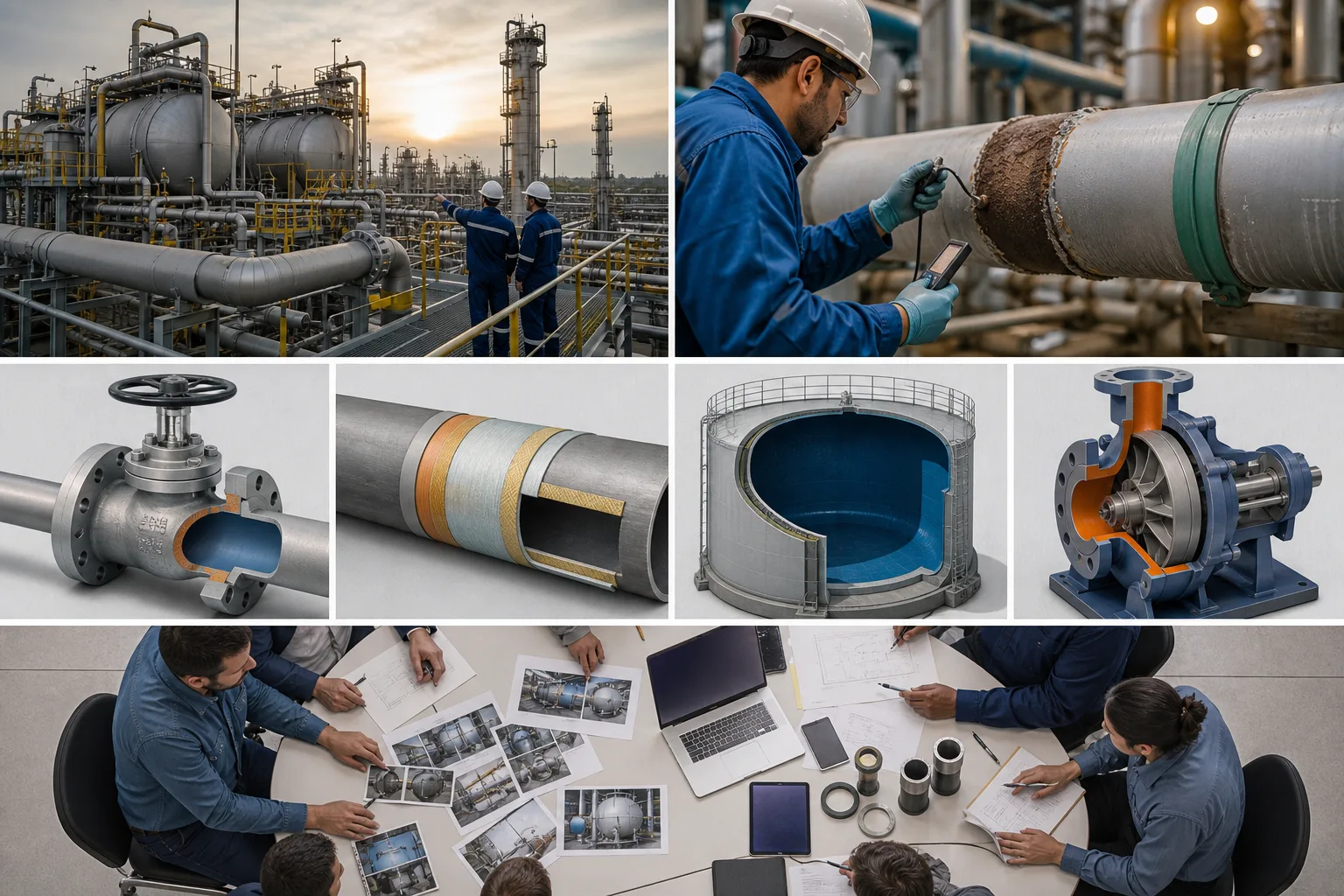
Repair Priorities Across Production, Transport and Processing
Corrosion, erosion, chemical exposure, mechanical wear and thermal cycling affect upstream, midstream, downstream and petrochemical assets. Define whether the repair must restore, seal, reinforce, rebuild or protect.
01
Pipelines and Pipework
Assess external corrosion, wall loss, localized leaks, damaged joints and weakened pipe sections before choosing a repair route.
02
Tanks and Process Vessels
Compare substrate rebuilding and lining routes for corrosion, chemical attack, abrasion and weather-exposed areas.
03
Valves, Flanges and Pumps
Evaluate worn fits, pitting, flange-face damage, erosion, cavitation and static-interface leakage against required tolerances.
04
Process and Utility Equipment
Consider existing defects and future chemical, temperature and flow exposure in fluid-handling and process equipment.
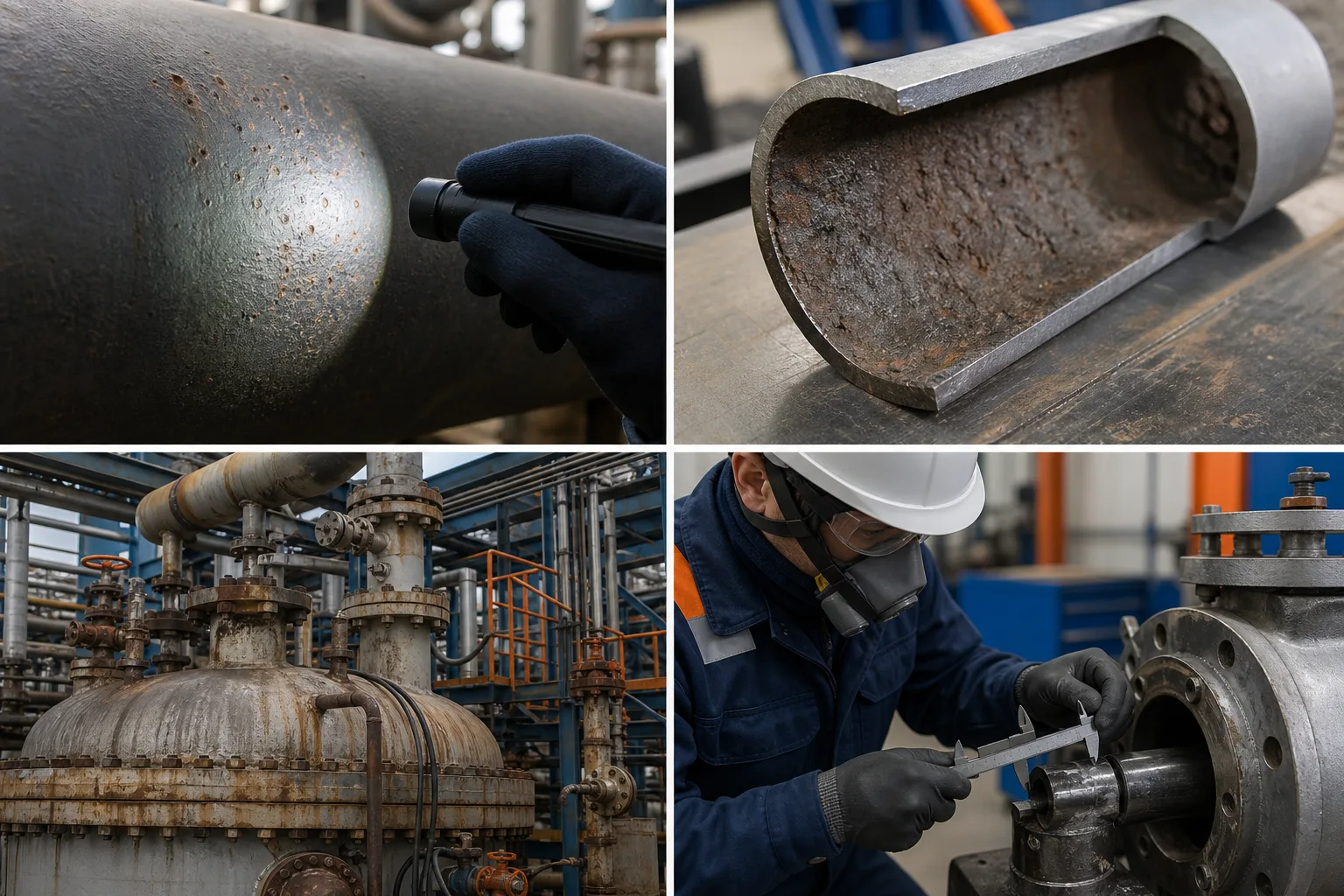
Selection Conditions
Damage and Service Conditions That Affect Selection
A product name alone does not establish suitability. A useful inquiry defines the damage, operating environment, substrate, access conditions and repair purpose before an initial shortlist is prepared.
Product Combinations
ZDSChem Product Combinations for Oil and Gas Equipment
The ZDSChem portfolio contains seven primary series plus supporting surface preparation products. Oil, gas and petrochemical projects may require a combination of materials across different repair stages.
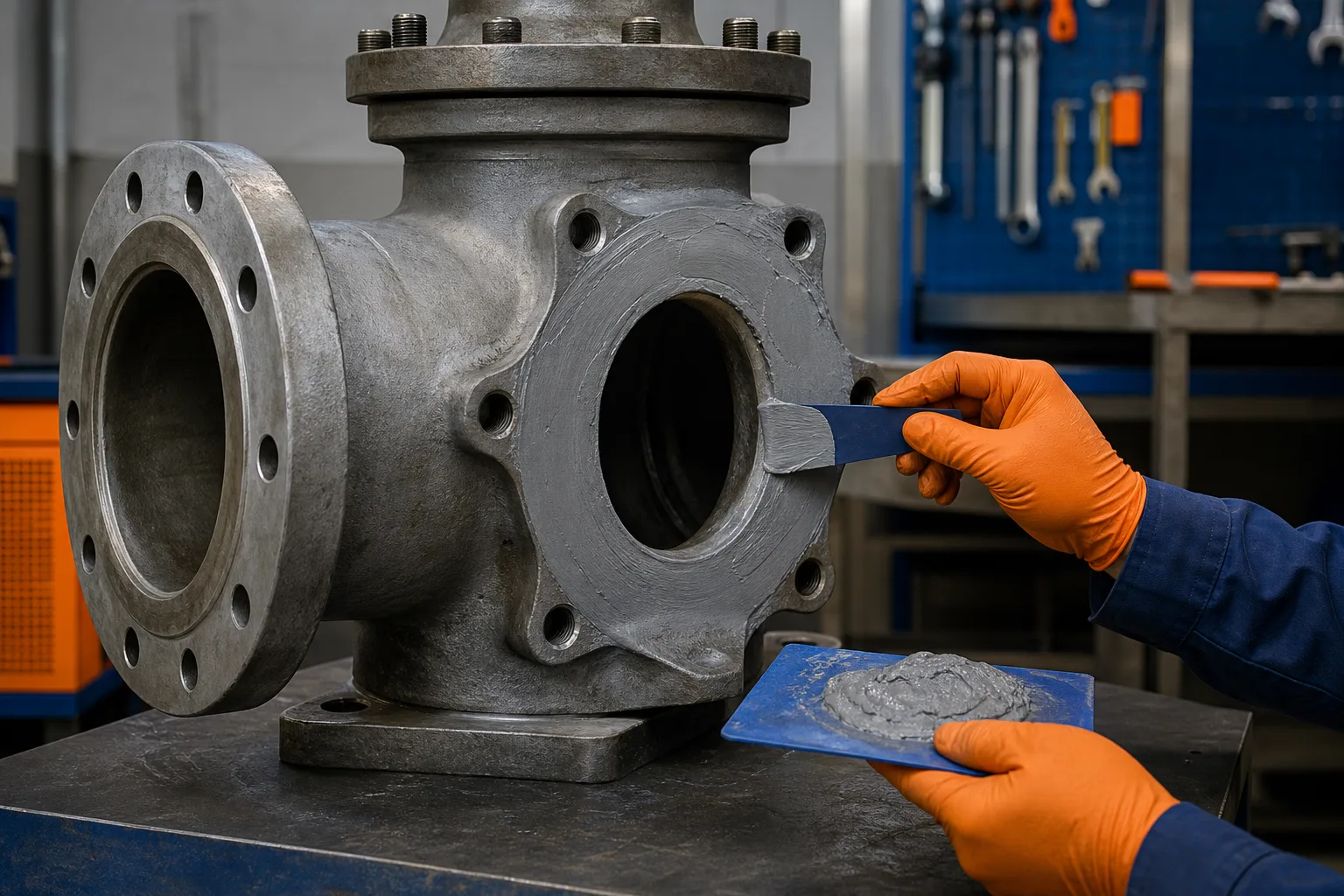
ZDS-MetalRebuild
For metal rebuilding, dimensional restoration, leak sealing and cold repair on valves, flanges, pumps, pipes and worn components.
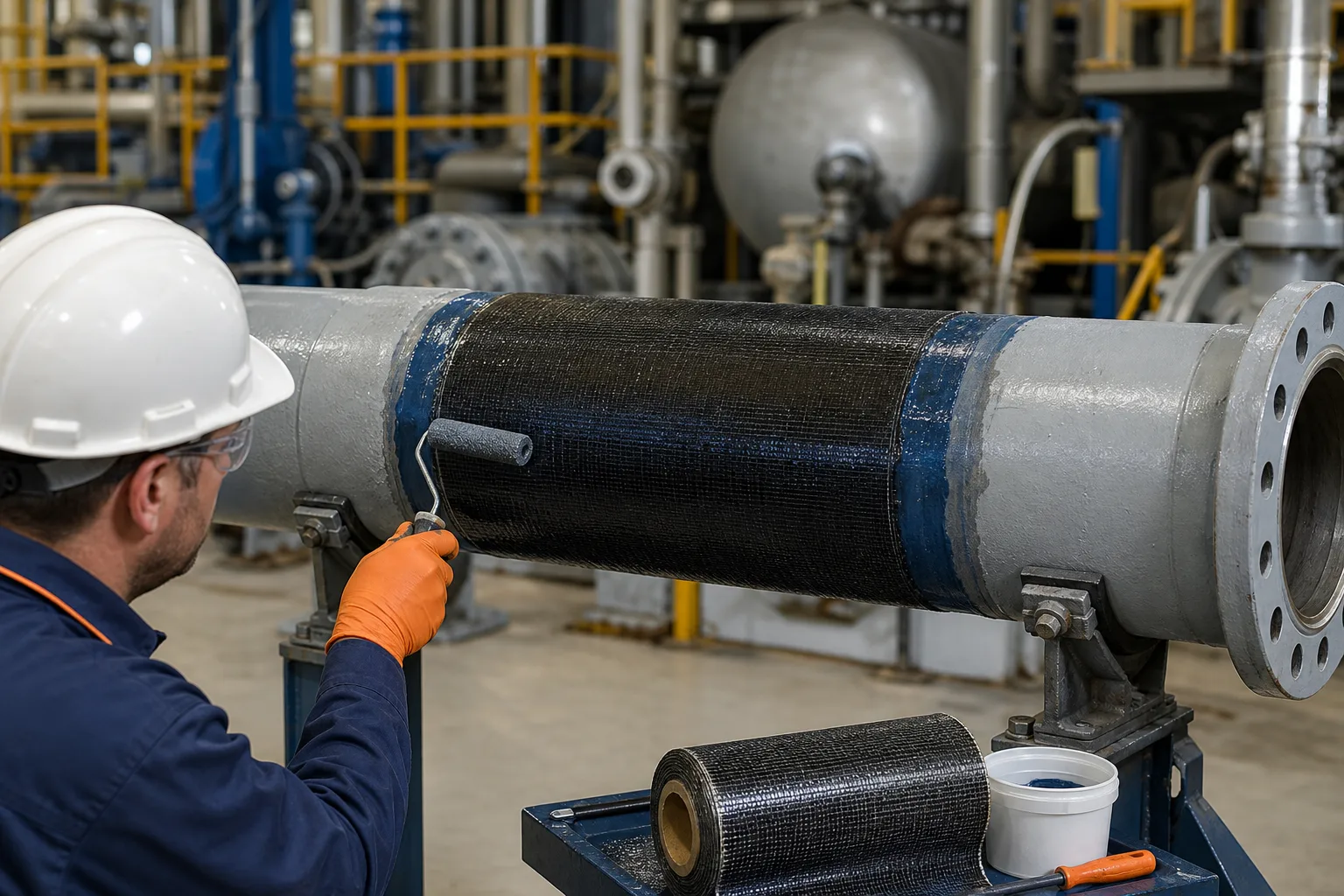
ZDS-CompositeWrap
For composite reinforcement and structural laminating where an engineered reinforcement approach is appropriate.
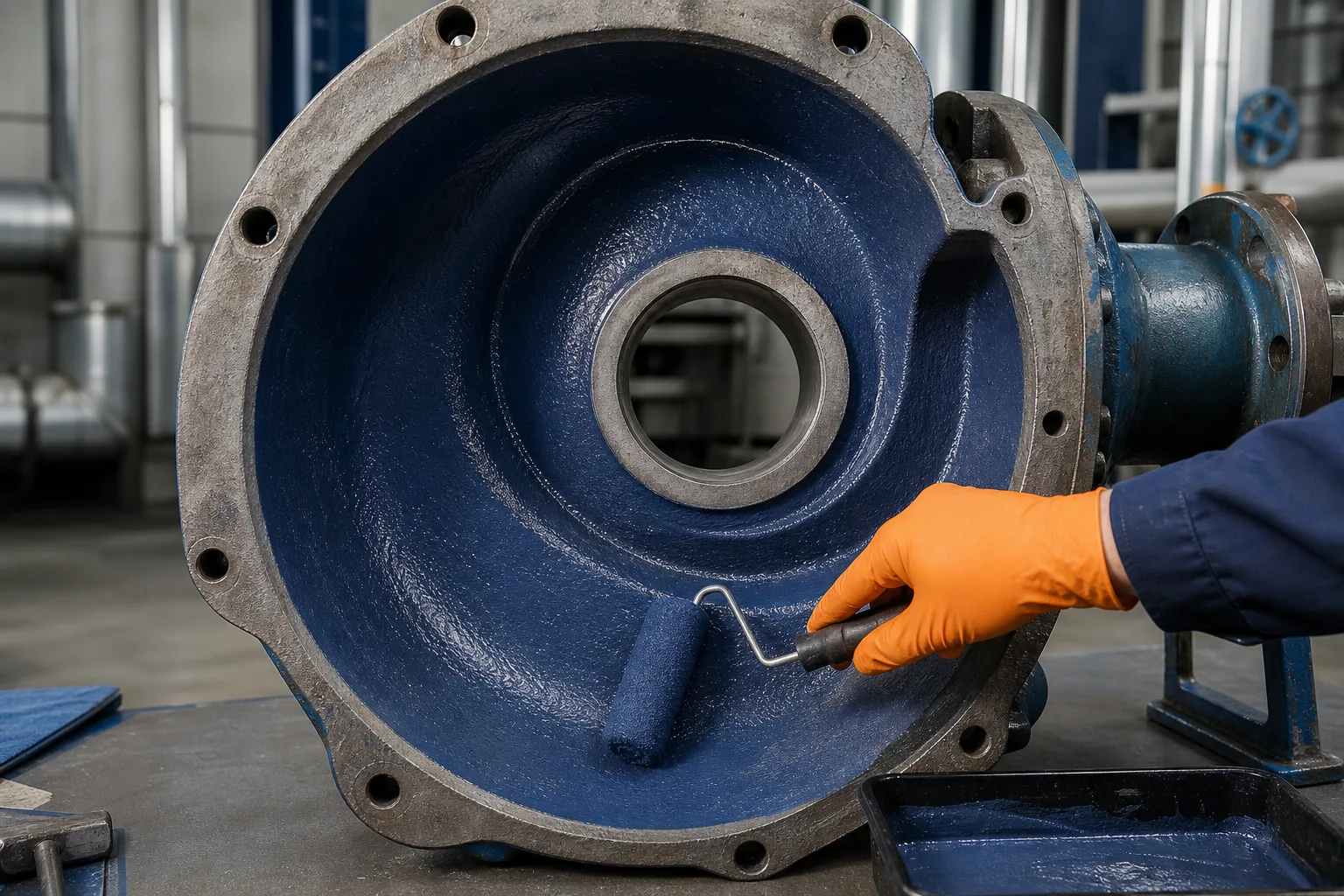
ZDS-CeramicArmor
For wear, erosion and cavitation protection on pumps, elbows, separators, chutes and slurry-exposed equipment.
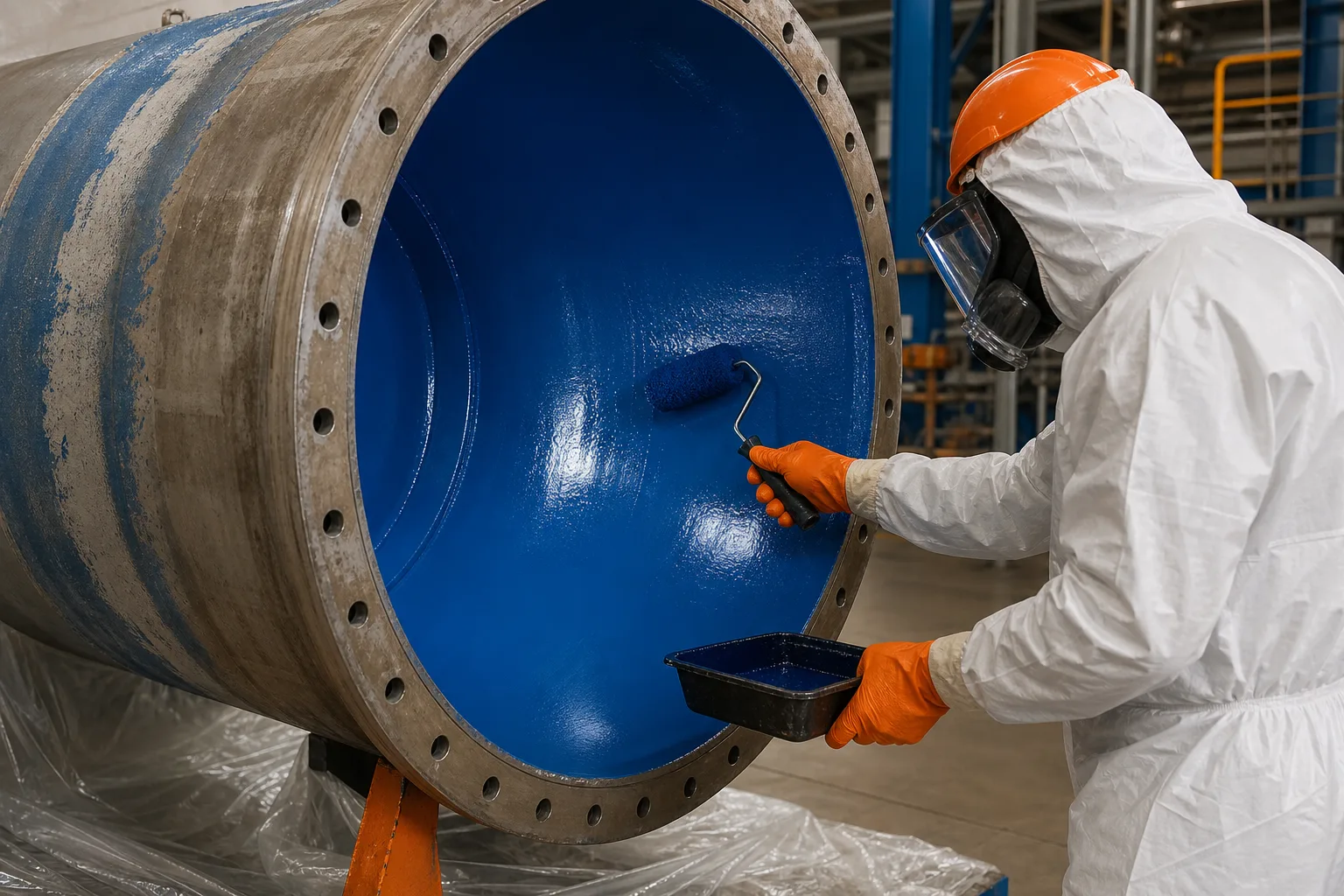
ZDS-FluidGlide
For chemical-resistant lining, high-temperature repair, sealing and protection of tanks, vessels, ducts and process equipment.
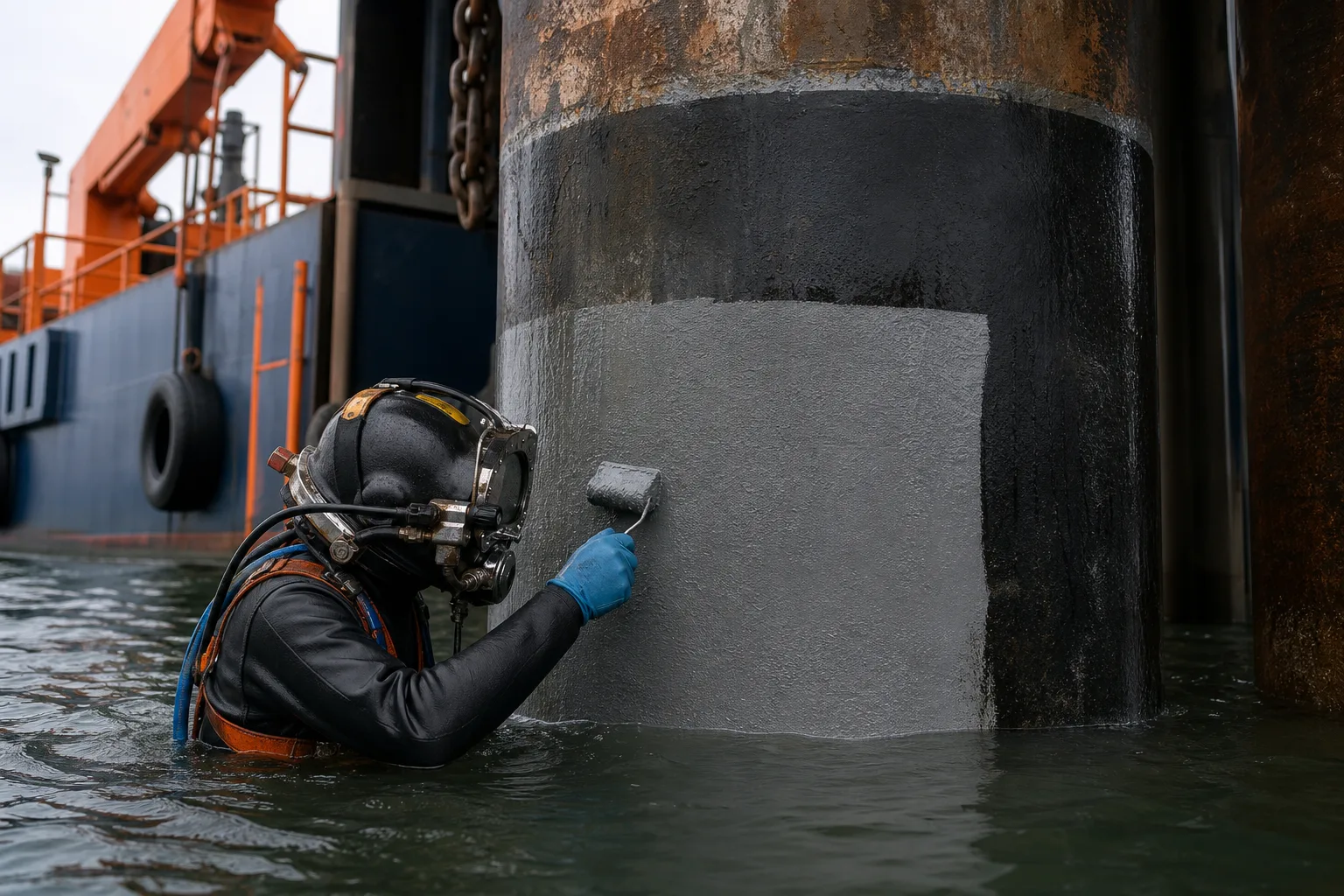
ZDS-AquaShield
For wet-surface, underwater, marine and emergency repair where fully drying the work area is difficult.
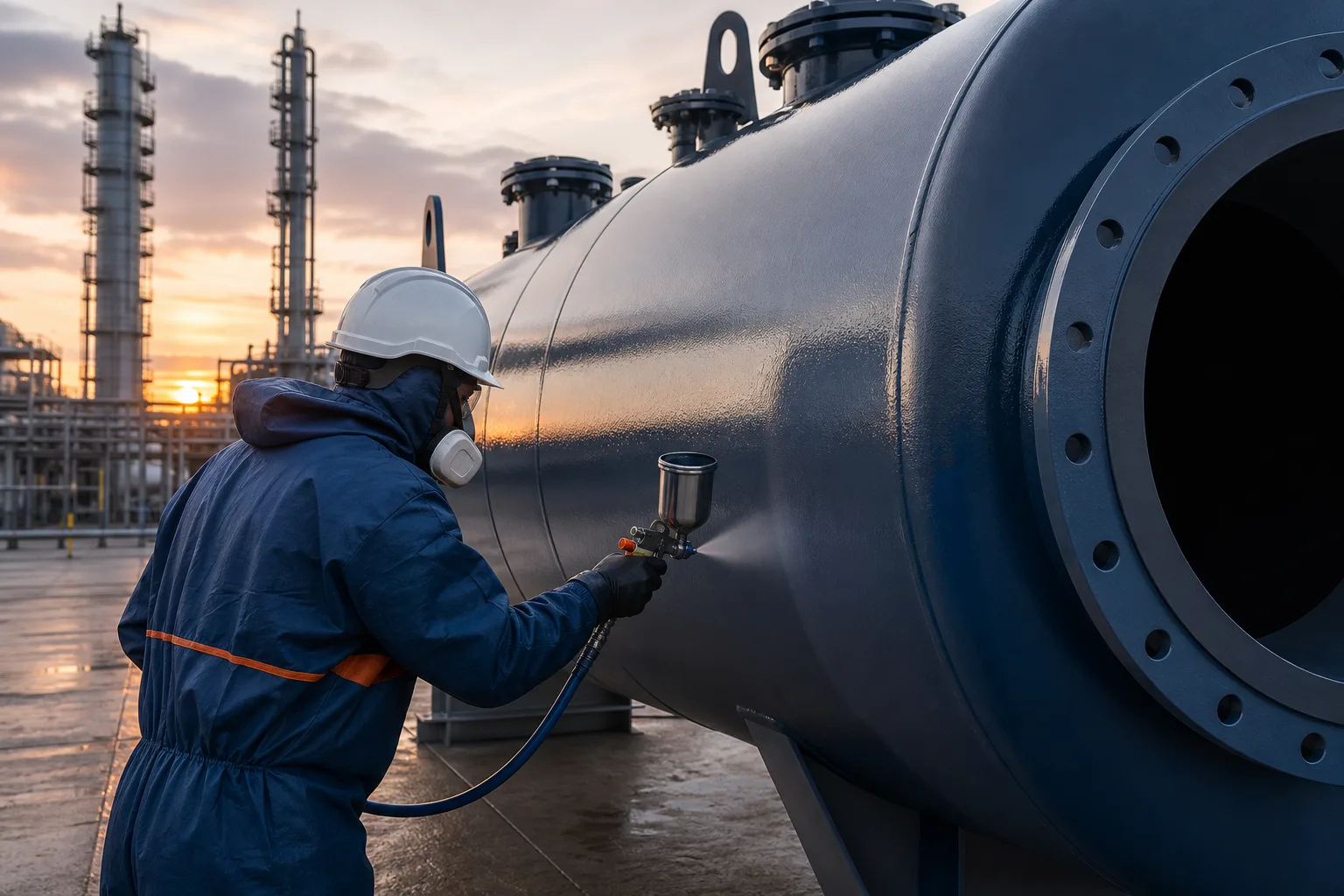
ZDS-PolyAspartic
For UV-resistant, weather-stable protective topcoating on compatible outdoor equipment and exposed surfaces.
Technical Checks
Confirm Compatibility Before Specification
Product categories are a starting point, not a specification. Check chemical resistance, temperature capability, pressure, layer construction, cure schedule and substrate compatibility against current technical information.
BEFORE
Chemical Corrosion Protection
Review available protection routes when equipment faces severe chemical exposure.
AFTER
High-Temperature Repair
Assess high-temperature repair considerations for projects with elevated operating temperatures.
Project Information
Information Needed for Technical and Commercial Review
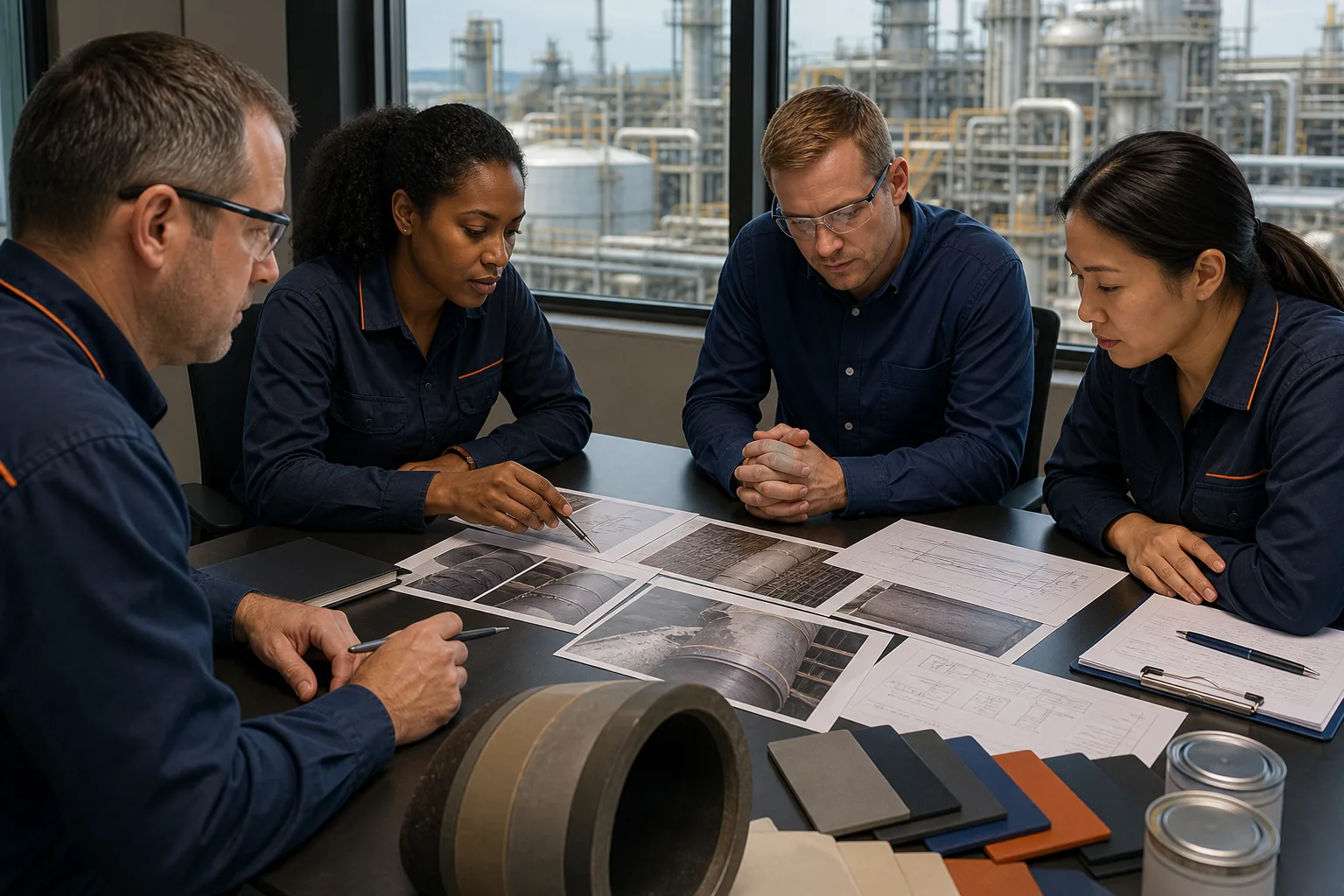
A structured inquiry reduces back-and-forth between maintenance, engineering, procurement and the material supplier. Photographs are useful but should be supported by operating and damage information.
01
Identify the asset
provide the equipment type, component, location, substrate, geometry and accessible repair area.
02
Describe the defect
include damage dimensions, wall-loss or wear information, leak status, previous repairs and available inspection findings.
03
Define service conditions
state process media, normal and peak temperature, pressure, immersion, flow, abrasion and outdoor exposure.
04
Explain site constraints
state whether the area can be isolated, drained, dried, grit blasted, heated or kept out of service during application and curing.
05
Set the evaluation route
identify required documents, sample needs, estimated quantity, inspection criteria, target schedule and purchasing destination.
06
The information helps ZDSChem narrow the
relevant series and prepare quotation discussions. It does not replace the asset owner's engineering assessment, inspection process or required approvals.
Supplier Qualification
Documents, Samples and Supplier Qualification
Technical and procurement teams may need product data, safety information, application guidance and available quality records before approving a repair material.
Technical Document Center
Identify available technical, safety and application documentation for product evaluation.
Quality-Control Framework
Review the ZDS approach to quality management and supplier qualification information.
Sample-to-Bulk Workflow
Connect product identification and sample evaluation with commercial review and bulk planning.
Manufacturing Support
Manufacturing and Formulation Support Behind ZDSChem
ZDS has operated as a professional chemical manufacturer since 1998. A dedicated R&D team of 30 professionals supports formulation development, product improvement and application adaptation.
Repair Limitations
Limits That Must Be Resolved Before Repair
Industrial repair compounds and composite systems are not automatic substitutes for welding, component replacement, pressure-system engineering or code-defined repair procedures.
Active leaks, through-wall defects
structural instability, contaminated substrates, unsuitable preparation conditions or unknown process chemistry can prevent safe or effective use.
The asset owner and qualified engineering
personnel should determine whether equipment can remain in service, whether isolation is required and which inspection or approval steps apply.
Final product selection should follow
current technical documentation and a review of the actual operating envelope.
Project Inquiry
Prepare an Oil, Gas or Petrochemical Project Inquiry
Submit the equipment type, damage description, substrate, process media, temperature, pressure, work conditions, photographs, required documents and estimated quantity for product-route and commercial review.
FAQ
Frequently Asked Questions
Provide the equipment type, substrate, defect dimensions, damage mechanism, process media, normal and peak temperature, pressure, surface condition, shutdown window, and required repair purpose. Photographs, inspection findings, drawings, and documentation requirements can make the initial recommendation more precise.
A composite reinforcement system can be a possible route for some pipe conditions, but it cannot be selected from pressure alone. Pipe geometry, remaining wall condition, defect type, operating loads, process media, temperature, applicable engineering standards, and an approved repair design must be considered before use.
ZDS-AquaShield is the series organized around underwater-curing, wet-surface, marine, and emergency repair materials. The specific product still needs to be checked for substrate compatibility, contamination, water conditions, preparation method, operating exposure, and the required repair function.
Depending on the product and market, procurement teams may request current technical data, safety information, application guidance, available quality documentation, packaging information, and commercial supply details. Document availability and applicability should be confirmed for the selected product and purchasing destination.
ISO 9001 and IATF 16949 apply to the ZDS quality-management system; they do not certify an individual ZDSChem product or prove suitability for a specific repair. Current certificates, scope, validity, and supporting product documents should be checked during qualification.