
Underwater and Wet-Surface Repair Materials
Underwater and wet-surface repair materials are used when a pipe, flange, pump casing, tank, or other industrial component cannot be fully dried before maintenance. Selection depends on the substrate, damage geometry, water movement, pressure, temperature, chemical exposure, access, and required repair function. ZDSChem organizes repair material selection around equipment, substrate, damage, and service conditions for maintenance teams, repair contractors, engineers, MRO suppliers, and industrial distributors.
Repair Challenges
Why Underwater and Wet-Surface Repair Is Difficult
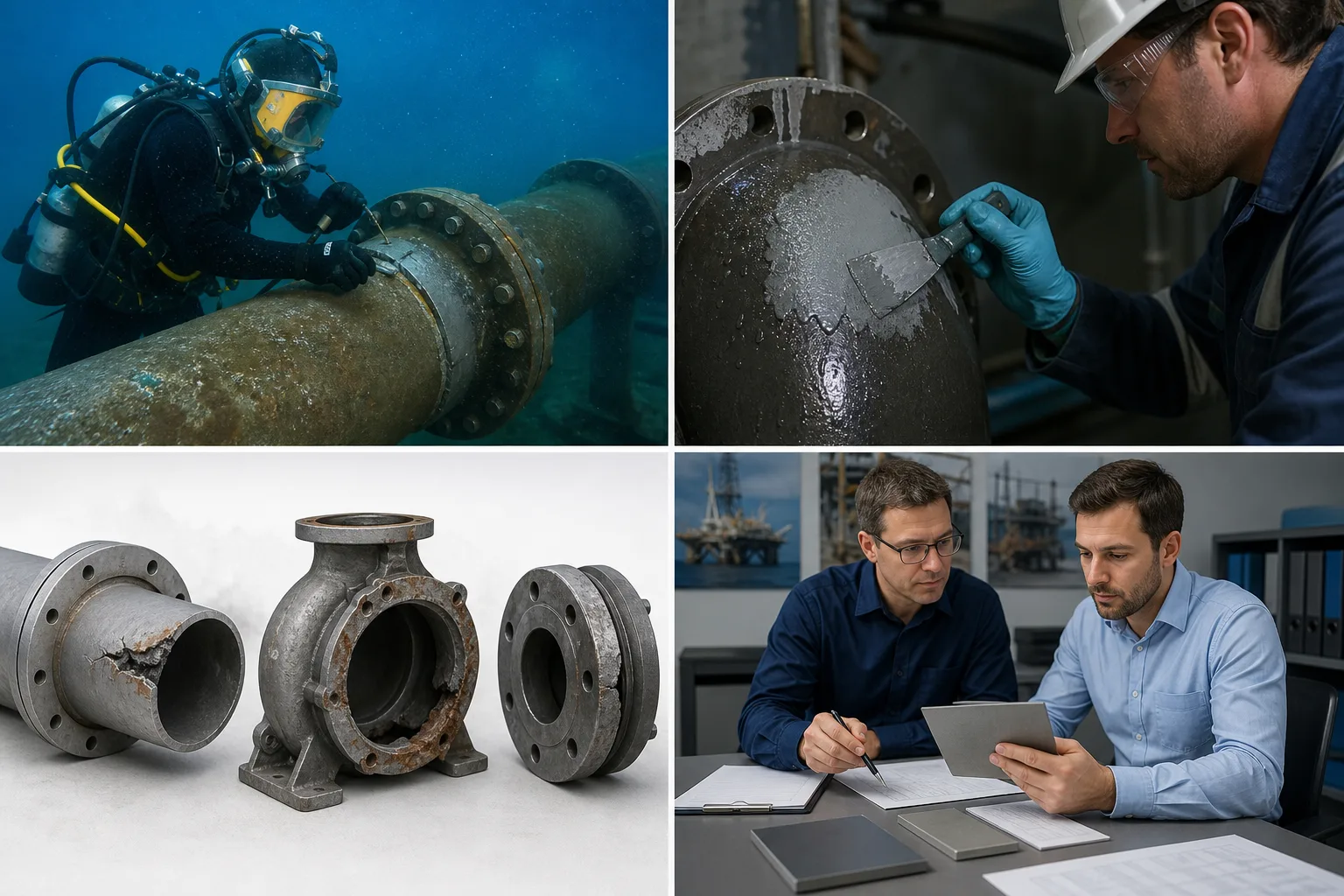
Water, salt, oil, corrosion products, marine growth, existing coatings, and unstable substrate can reduce repair-surface quality. A material intended for dry metal bonding should not automatically be treated as suitable for wet or submerged work.
Water at the Bond Line
Moisture changes substrate contact, while flowing water can affect placement and material retention.
Different Damage Objectives
Sealing, profile rebuilding, reinforcement, and wear protection require different repair logic.
Restricted Site Access
Visibility, tool access, pressure, tidal movement, and shutdown windows can control the repair method.
Selection Guide
Service Conditions to Review Before Product Selection
A useful shortlist begins with a clear description of the repair area. These factors help distinguish underwater sealing from metal rebuilding, wear protection, lining, or reinforcement. Final selection requires current product documents and project conditions.
Substrate
Identify the base material, remaining surface condition, and any coating that will stay in place.
Damage Geometry
Record dimensions, depth, shape, edges, pits, cracks, holes, or missing sections with photos or drawings.
Water Condition
Record fresh or salt water, flow, depth, pressure, temperature, solids, and possible isolation.
Repair Function
Define sealing, restoration, bonding, reinforcement, wear protection, lining, or emergency control.
Operating Load
Note pressure, vibration, movement, impact, abrasion, thermal cycling, and load carried by the area.
Service Exposure
Identify chemicals, salt water, immersion, cleaning agents, sunlight, heat, and process fluids.
Preparation and Access
Describe tools, cleaning, position, visibility, shutdown time, and available inspection or testing.
Product Routes
Which ZDSChem Product Route Fits the Repair?
These categories provide starting points for technical discussion, not automatic approval for every submerged or wet-surface application. Suitability must be confirmed for the substrate, damage, application conditions, and service exposure.
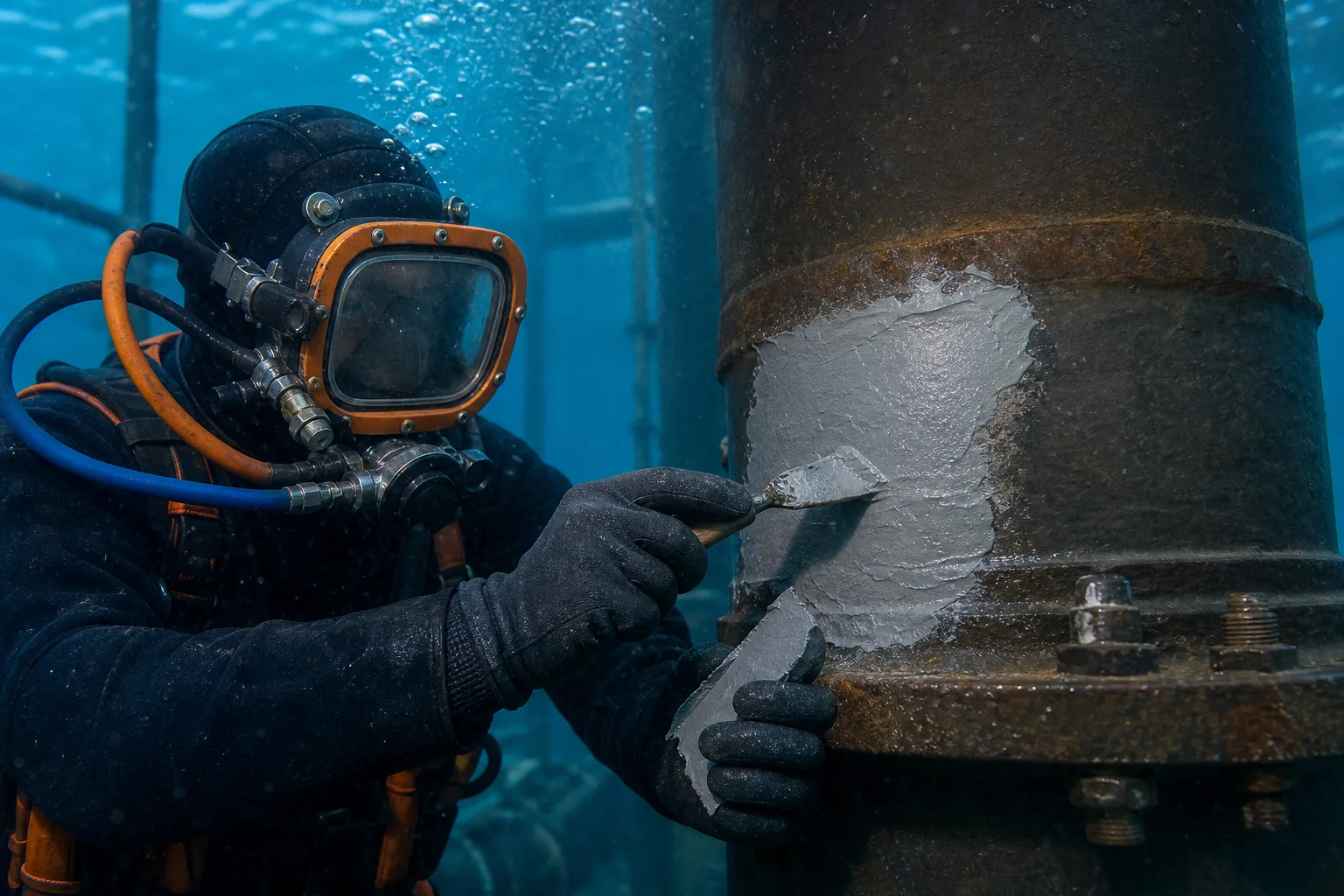
ZDS-AquaShield
Start here for underwater-curing, wet-surface, marine, and emergency repair material evaluation.
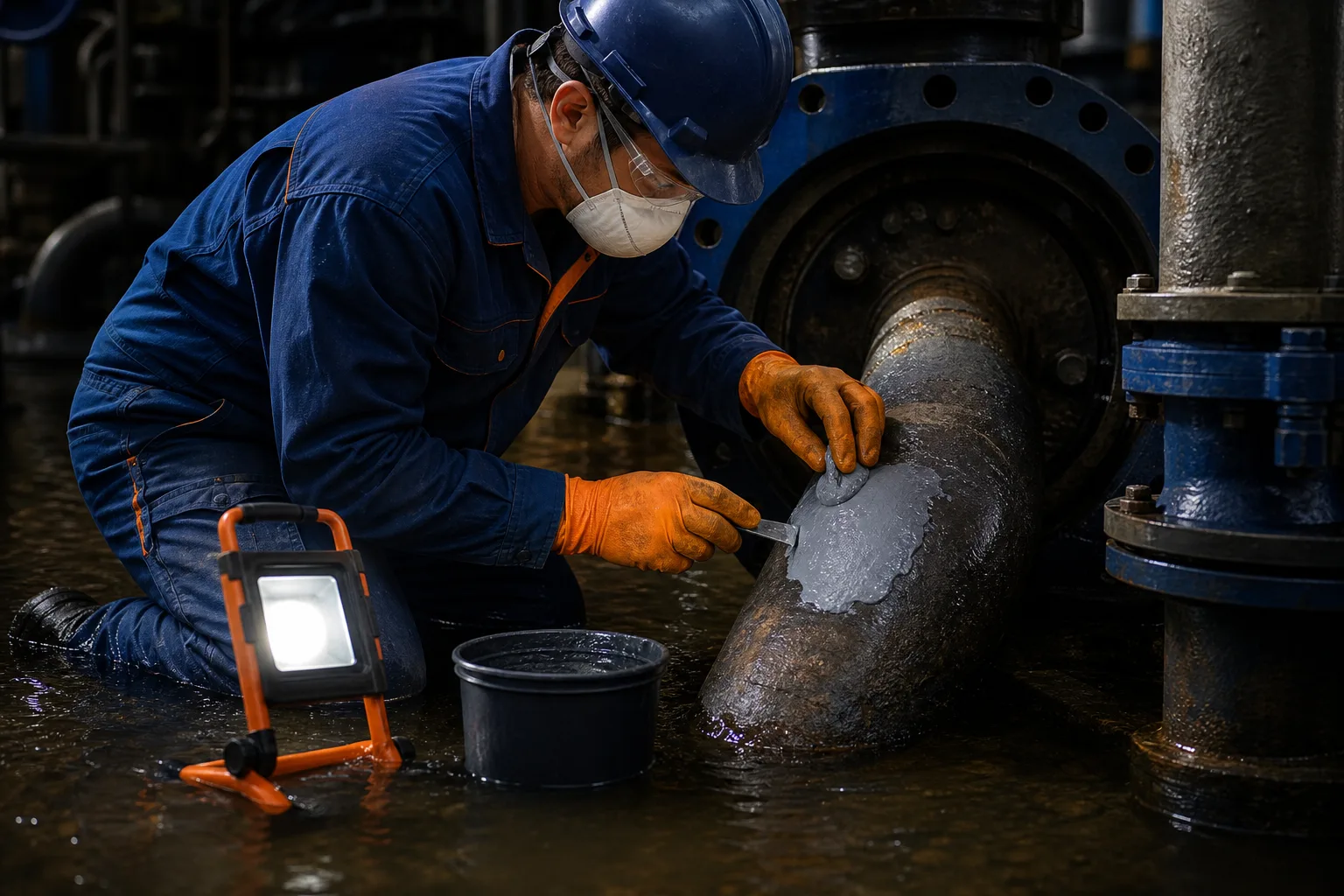
ZDS-MetalRebuild
Consider for metal rebuilding, cold repair, profile restoration, leak sealing, or structural bonding.
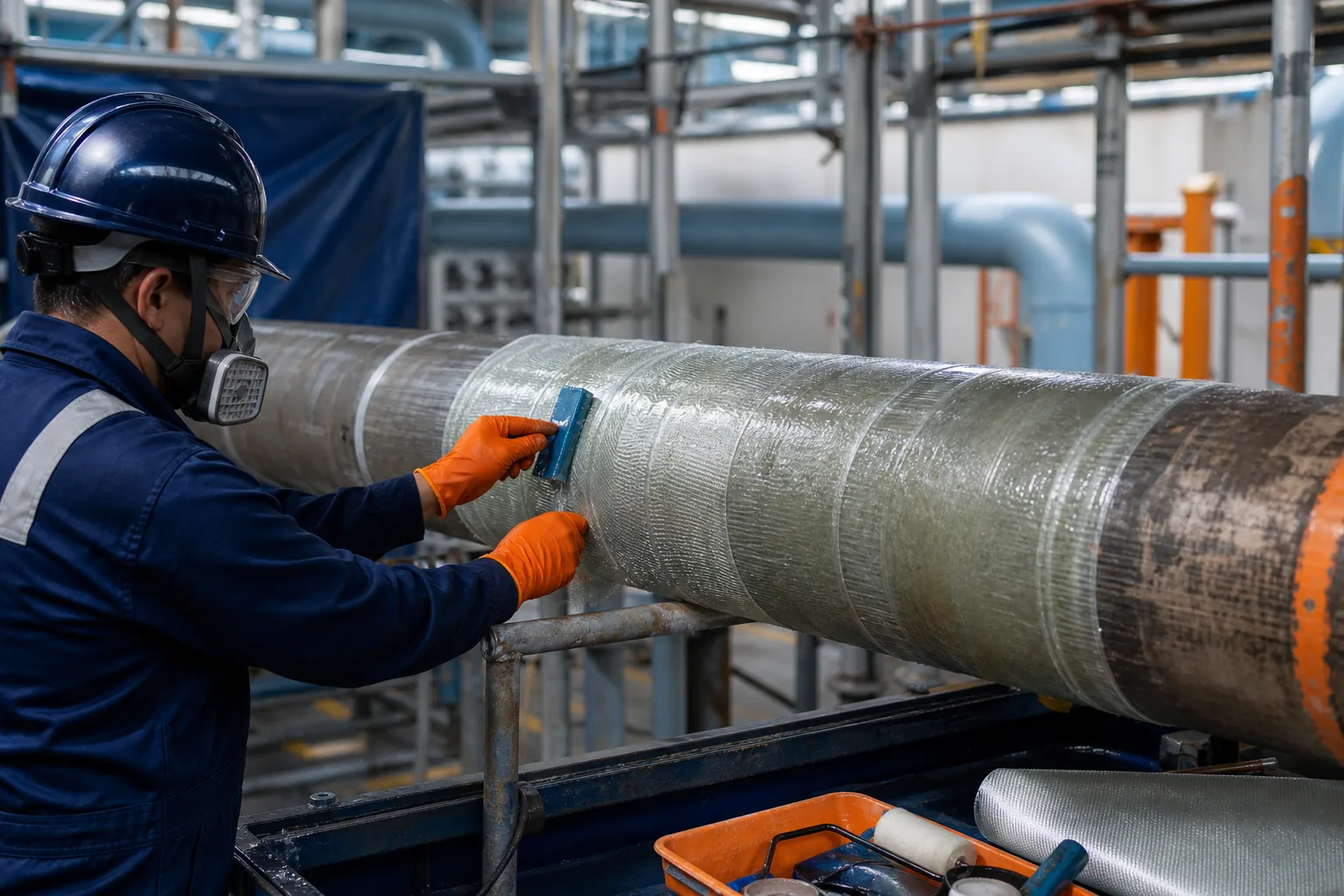
ZDS-CompositeWrap
Consider for external pipe reinforcement, FRP repair, or structural laminating when the design is suitable.
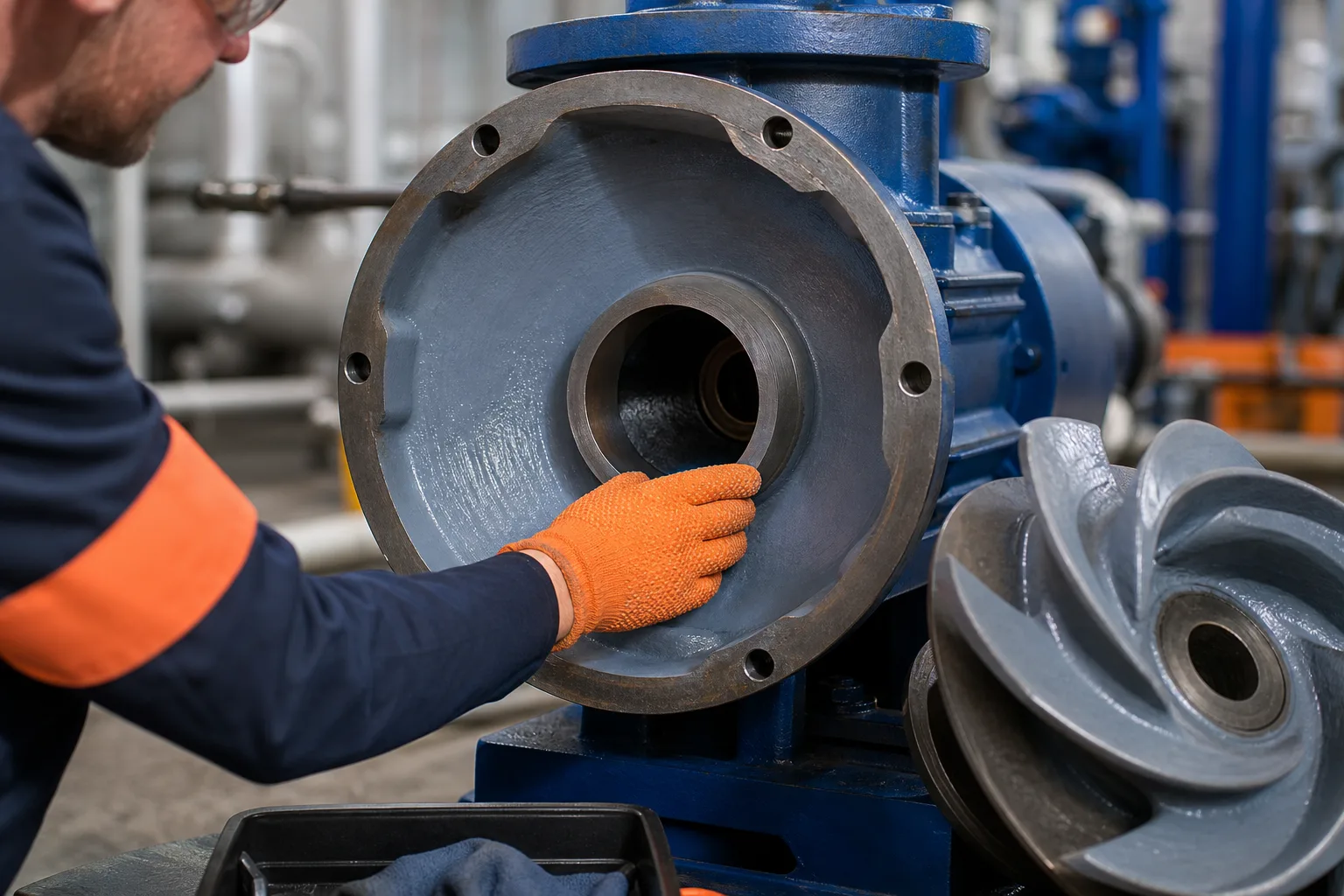
ZDS-CeramicArmor
Compare for pumps and fluid equipment affected by wear, erosion, cavitation, or abrasive flow.
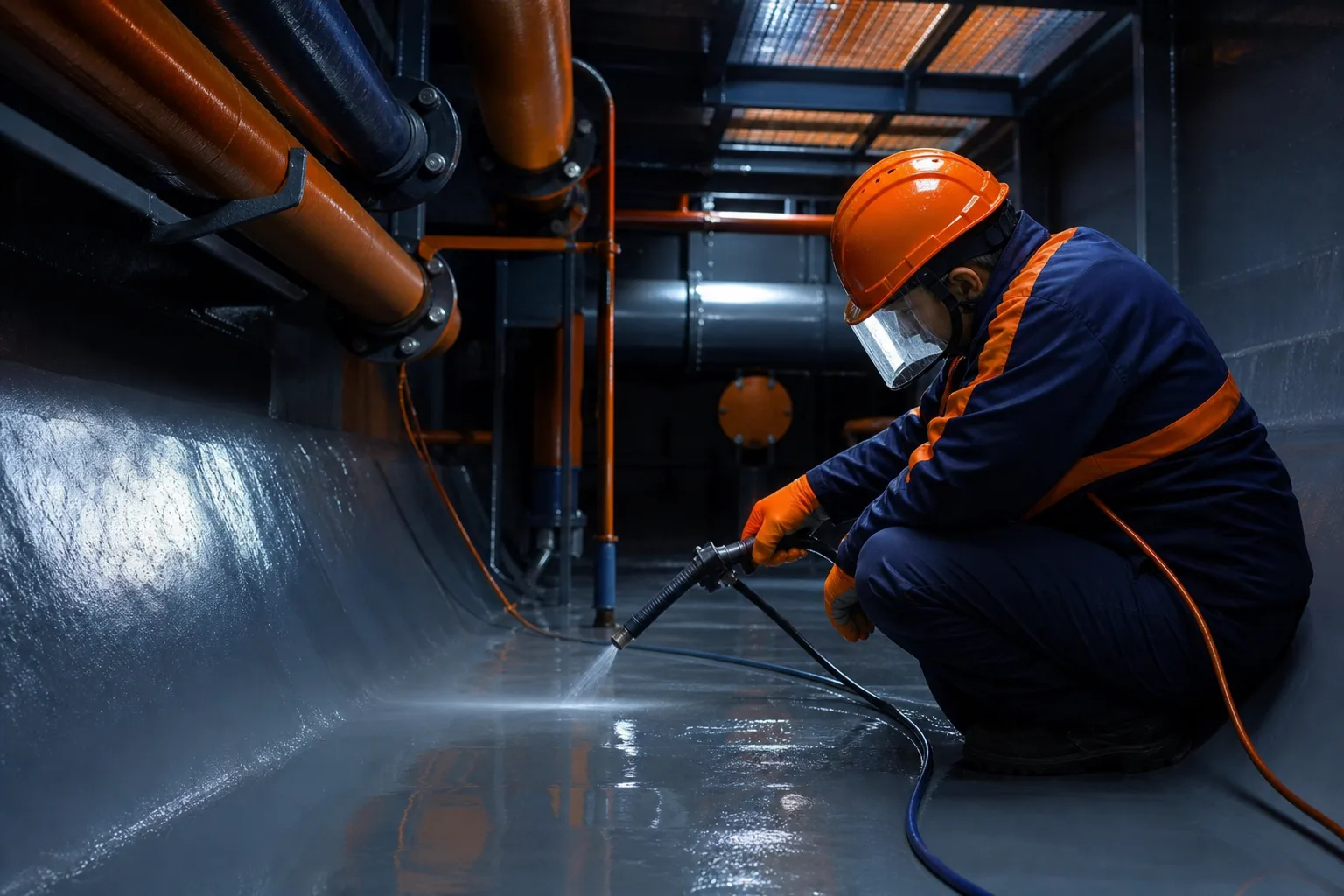
ZDS-FluidGlide
Review for lining or sealing where chemicals, process fluids, immersion, or heat also affect selection.
Route Comparison
Starting Routes for Common Underwater Repair Situations
Compare the equipment, damage, intended repair function, and critical project question before selecting a starting category.
Submerged Leak
Route: AquaShield or MetalRebuild. Can pressure and water movement be reduced during application?
Corroded Profile
Route: MetalRebuild. How much sound substrate remains, and what load will the rebuilt area carry?
Pipe Reinforcement
Route: CompositeWrap. Is the pipe condition and repair design suitable for composite reinforcement?
Wear or Cavitation
Route: CeramicArmor or MetalRebuild. Are abrasion, erosion, impact, flow, and chemicals the main risks?
Chemical Exposure
Route: FluidGlide or another documented route. Which chemicals, temperatures, and lining requirements apply?
Related Applications
Clarify the Primary Repair Requirement
Related application guidance can help determine whether the project is primarily a leak-sealing, reinforcement, wear, or chemical-exposure problem.
Pipe Leak Repair
Review repair planning for leaking pipes, flanges, fittings, and related equipment.
Composite Reinforcement
Review application factors for external composite pipe reinforcement.
Pump Repair
Review rebuilding and protection routes for pumps and fluid-handling equipment.
Corrosion Protection
Review application routes for equipment exposed to chemicals and corrosive service.
Repair Planning
How to Prepare an Underwater Repair Plan
Document the work state, damage, repair objective, practical preparation method, and return-to-service requirements before discussing a repair system.
01
Confirm the Work State
Determine whether equipment can be isolated, drained, depressurized, cooled, or partially dewatered.
02
Map the Damage
Record dimensions, substrate, remaining wall, edges, coatings, joints, and fasteners with photos where possible.
03
Define the Objective
State whether the repair requires sealing, rebuilding, reinforcement, wear resistance, lining, or emergency control.
04
Match Site Preparation
Plan how corrosion, oil, growth, salts, old coating, and standing water will be managed.
05
Set Acceptance Criteria
Confirm required documents, inspection steps, testing, and conditions for safe return to operation.
Technical Documents
Review Documents and Qualification Information
Use current application instructions, technical data, safety information, and available test evidence during evaluation. Buyers completing supplier qualification can also review testing capability and document resources.
Application Guides
Review available guidance for preparation, application, inspection, and related work planning.
Technical Data Sheets
Check current product-specific properties, scope, application conditions, and limitations.
Safety Data Sheets
Review current safety, handling, storage, and personal protection information.
Testing Capabilities
Request available testing capability information for supplier qualification and technical review.
Document Center
Organize current technical documents required for product and supplier evaluation.
Limitations
Conditions That Require Explicit Confirmation
Immersion alone does not establish suitability. The project may require another method, engineered reinforcement, mechanical control, welding, replacement, or a longer shutdown depending on damage and service risk.
Flow and Pressure
Active leaks, high flow, hydrostatic pressure, or movement can interfere with placement and adhesion.
Weakened Substrate
Severely weakened substrate may not provide a stable base for a bonded repair.
Surface Contamination
Growth, rust, salts, contamination, and unsound coatings can reduce the usable bond area.
Product-Specific Limits
Working time, cure, temperature, pressure, immersion, and chemical-resistance values require current documents.
Critical Repairs
Structural, pressure-containing, lifting, or safety-critical work may require engineering review and site testing.
Site Safety
Work at depth, in confined spaces, near machinery, or around hazardous fluids requires an approved safety method.
Project Information
Information Needed for a Technical Recommendation
A concise project brief helps identify the relevant repair category and avoid an unsuitable shortlist. Provide all available technical, operating, access, inspection, documentation, and purchasing information.
Equipment Details
Provide the equipment name, repair location, drawing, and service function.
Substrate Condition
Identify the substrate, existing coating, corrosion condition, and remaining wall information.
Damage Evidence
Provide photographs, dimensions, leak status, and the reason for the repair.
Water and Exposure
Record water type, flow, pressure, temperature, depth, immersion duration, and chemicals.
Repair Requirements
Define the function, expected service load, operating movement, and return-to-service plan.
Site Capabilities
Describe preparation, access, shutdown time, available tools, and inspection method.
Purchasing Requirements
Include quantity, target market, documents, packaging requirements, and B2B purchasing route.
ZDSChem Support
How ZDSChem Supports Technical Evaluation
ZDSChem applies a chemical manufacturing and formulation background to industrial repair material selection. Technical and commercial feasibility must be confirmed before any customer-specific development route begins.
Purchasing Path
Move from Product Shortlist to Purchasing Review
Product selection, sample evaluation, technical documents, project quantities, and repeat-supply requirements can be discussed against actual repair conditions. Acceptance criteria should be agreed before sample testing.
01
Select by Service
Compare product routes against the documented operating and exposure conditions.
02
Sample-to-Bulk Workflow
Review sample evaluation, acceptance criteria, documents, quantities, and repeat-supply requirements.
Commercial Review
Request a Quotation for a Defined Project
Provide the available project quantities, packaging requirements, documentation needs, purchasing route, and technical conditions for commercial review.
FAQ
Frequently Asked Questions
No. Epoxy formulations and application methods differ. An underwater repair material should have documented scope for underwater-curing or wet-surface use. ZDS-AquaShield is the ZDSChem category to examine first for these conditions, while final suitability depends on the substrate, damage, water movement, and service exposure.
Selection starts with the substrate, damage geometry, repair function, water flow, pressure, temperature, chemical exposure, expected load, and available surface preparation. A leak-sealing repair, metal rebuild, composite reinforcement, and wear-protection repair may require different product routes.
Flow and pressure can affect placement, adhesion, and material retention. Isolation or flow reduction is preferred where site conditions allow it. Active-flow repair requires project-specific review, and no general product statement should be treated as a guarantee for a pressurized or moving-water application.
Provide the equipment type, substrate, damage photos and dimensions, water type, flow, pressure, temperature, chemical exposure, repair objective, access, preparation method, and expected operating load. Quantity, packaging, documentation, and target-market information are also useful for B2B purchasing discussions.
Sample evaluation can be discussed as part of the product-selection process. The sample, evaluation method, acceptance criteria, and technical documentation should be agreed before testing. Sample approval does not automatically establish suitability for every site condition or guarantee bulk-order performance.
No. ISO 9001 and IATF 16949 are quality-management system certifications. They do not certify an individual product, underwater performance, chemical resistance, or suitability for a specific repair. Current certification scope and product documentation should be checked during supplier qualification.