
Composite Pipe Reinforcement for Industrial Repair
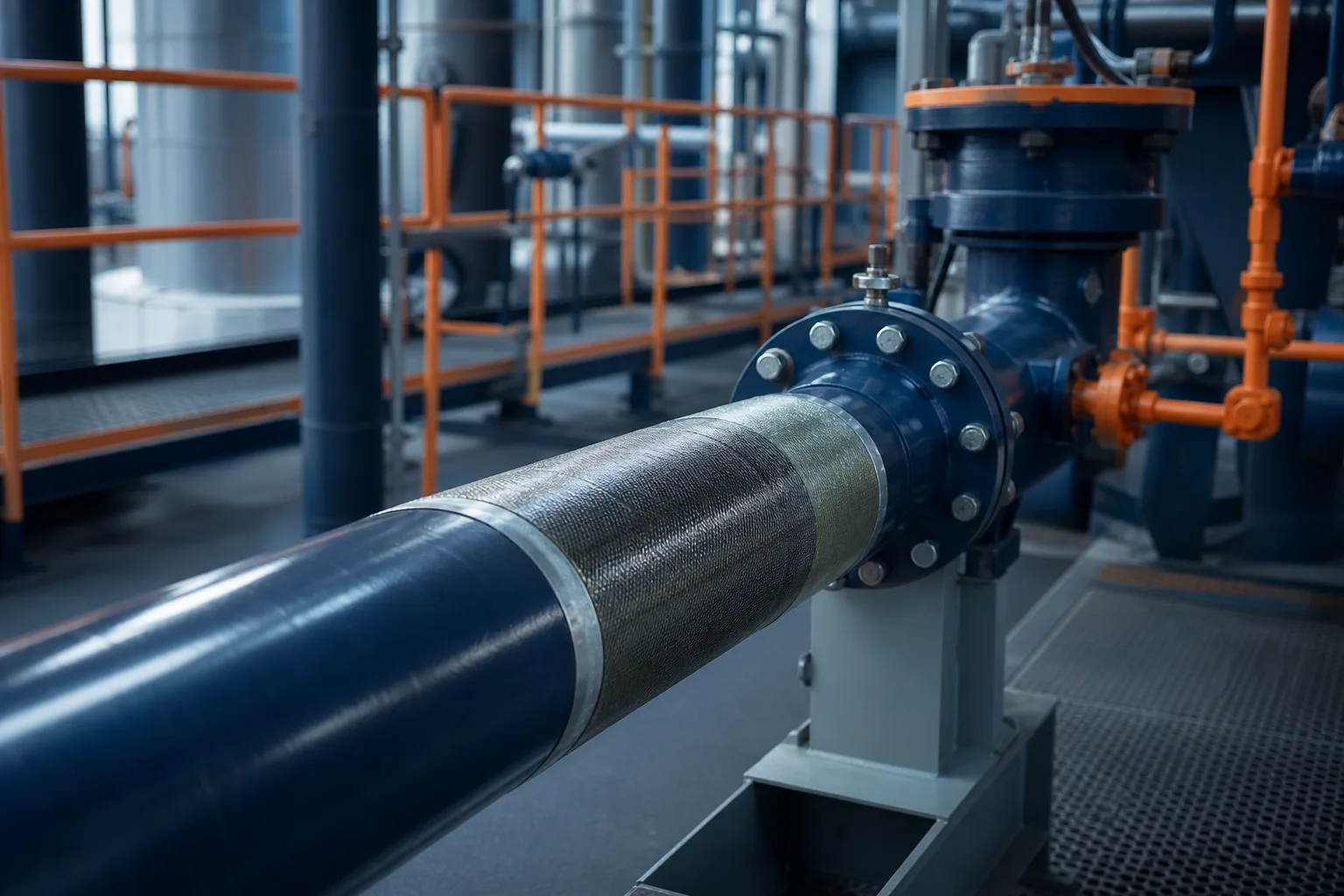
Composite pipe reinforcement uses a bonded composite layer to strengthen or stabilize a prepared pipe section. It may suit localized external corrosion, wall loss, or selected mechanical damage when the substrate, load path, and service conditions support an engineered repair. ZDS-CompositeWrap is the primary product route.
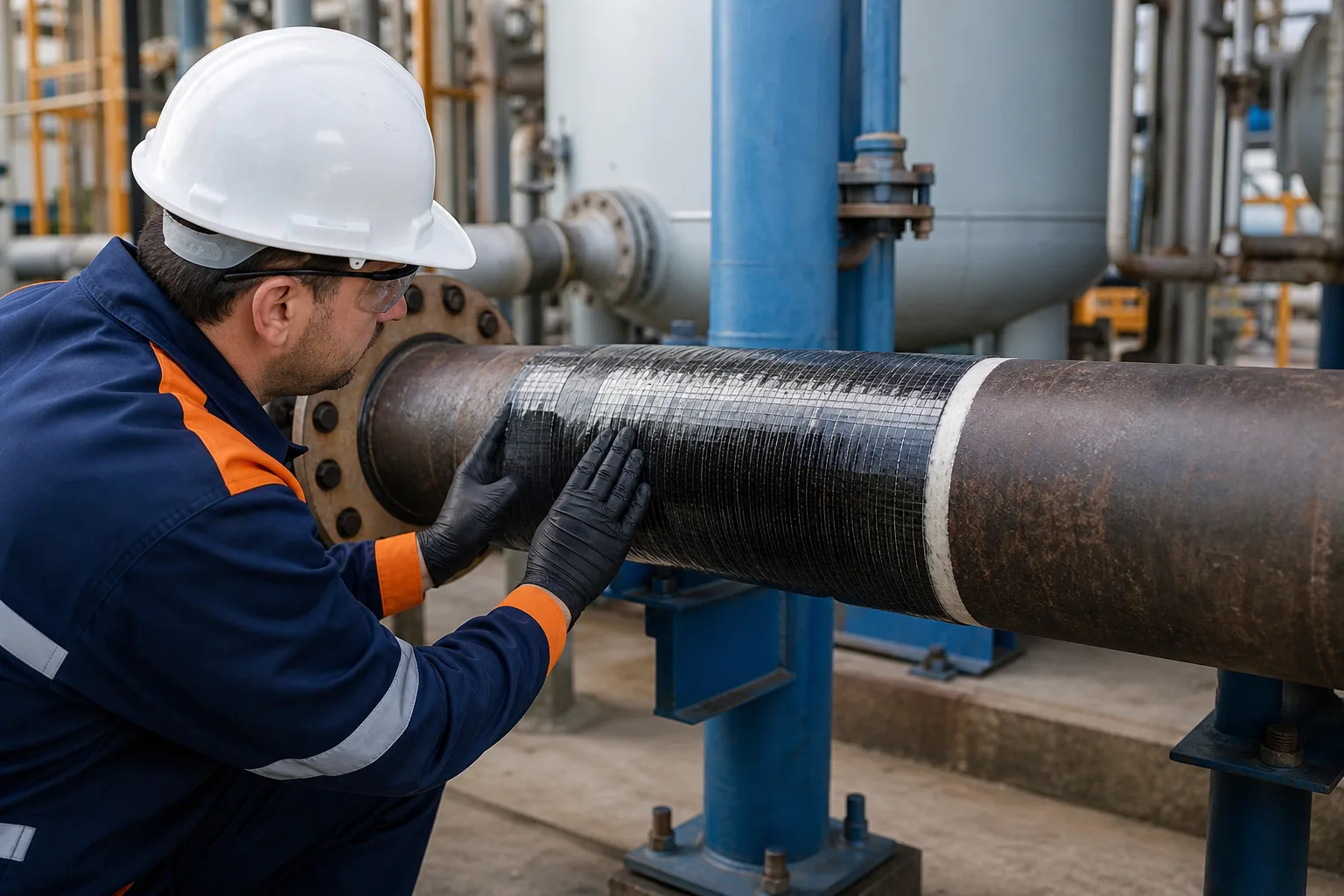
Repair Planning
Where Composite Reinforcement Fits in a Pipe Repair Plan
Selection starts with the pipe material, defect geometry, remaining wall condition, operating service, and required outcome. A composite wrap should not be selected solely because a pipe is leaking or corroded.
Localized Wall Loss
A composite system may be considered when sufficient sound substrate remains and load-transfer requirements can be defined.
Mechanical Damage
Dents, surface damage, and deformation require assessment of geometry, stress concentration, and surrounding pipe condition.
Planned Maintenance
Reinforcement may support a controlled plan when isolation, preparation, installation, and inspection can be scheduled.
Emergency Conditions
Active leakage, wet access, or limited shutdown time may require immediate leak control before reinforcement is considered.
Damage Assessment
Damage Conditions to Assess Before Choosing a Wrap
The same visible defect can require different repair routes depending on the service environment and underlying pipe condition. Initial screening supports a shortlist but does not replace repair design or asset-owner approval.
Corrosion or Wall Loss
Measure the sound wall and the affected area's length, width, and depth before comparing reinforcement with metal rebuilding.
Damage or Deformation
Assess changes to pipe geometry, support condition, and load path before assuming a wrap can restore function.
Active Leak or Breach
Confirm whether the line can be isolated, depressurized, drained, and safely prepared before defining the repair route.
Demanding Service
Check the fluid, temperature, pressure, cycling, and exposure duration against current technical documentation.
Engineering Inputs
Structural Assessment Before Product Selection
Assessment determines whether reinforcement can transfer loads across the damaged zone and remain compatible with operating conditions. Project data must distinguish a surface-protection need from a structural repair need.
Pipe and Substrate
Identify material, outside diameter, wall thickness, lining or coating condition, and dissimilar materials.
Defect Geometry
Record the location, dimensions, depth, shape, and progression of corrosion, erosion, cracking, impact, or wall loss.
Operating Service
Provide the fluid, operating and upset temperatures, pressure, flow, chemical exposure, and cycling pattern.
Mechanical Conditions
Document vibration, movement, supports, bending, thermal expansion, connected equipment, joints, and flanges.
Access and Shutdown
Confirm whether the pipe can be isolated, drained, cleaned, dried, prepared, wrapped, inspected, and held out of service.
Acceptance Requirements
Identify owner standards, engineering procedures, inspection requirements, and regulatory or insurance conditions.
Product Selection Guide
Compare equipment, substrate, damage, and service-condition factors before choosing a material route.
Pipe Repair Guide
Review pipe-specific background for composite repair assessment and planning.
System Components
What a Composite Pipe Reinforcement System Includes
A typical system combines reinforcement, a compatible bonding matrix, and preparation materials. Build-up, reinforcement direction, overlap, and application method depend on the defect and service requirements, not pipe size alone.
Reinforcing Layer
Transfers and distributes loads across the repair zone; orientation, coverage, overlap, and substrate condition affect design.
Bonding Matrix
Bonds reinforcement to the pipe and forms a continuous layer when mixed, applied, and cured as documented.
Preparation Materials
Cleaning agents, primers, conditioners, and related materials support preparation where instructions require them.
ZDS-CompositeWrap Series
The primary series for composite pipe reinforcement, FRP repair, and structural laminating systems.
Technical Data Sheets
Confirm product identity, compatibility, handling requirements, and documented service limits before selection.
Surface Preparation
Surface Preparation for Composite Pipe Repair
The composite layer must bond to a clean, stable, compatible substrate. Coatings, rust, oil, moisture, salts, loose scale, and damaged metal can alter the repair route and must be addressed before application.
01
Make the Area Safe
Control pressure and temperature, isolate where required, and prevent uncontrolled exposure to process hazards.
02
Define the Boundary
Mark the affected area and inspect surrounding pipe for hidden corrosion, cracking, deformation, or coating failure.
03
Remove Contamination
Remove oil, loose corrosion, scale, damaged coatings, and contaminants using substrate-compatible methods.
04
Create the Surface
Establish the required condition and profile while controlling dust, moisture, and recontamination.
05
Confirm Readiness
Check the prepared area, ambient conditions, access, and materials against current product instructions.
Installation
Typical Composite Wrap Installation Sequence
The exact procedure depends on the selected system and repair design. The sequence controls planned installation without assigning unverified working times, cure times, pressure ratings, or temperature limits.
Confirm the Plan
Verify the defect boundary, reinforcement arrangement, material quantity, access, and return-to-service criteria.
Prepare the Substrate
Complete preparation and protect the area from moisture, dust, and renewed contamination.
Prepare the Materials
Check product identity, batch details, storage condition, mixing requirements, and supporting materials.
Apply the System
Place matrix and reinforcement according to the approved orientation, coverage, overlap, and consolidation method.
Inspect the Repair
Check for incomplete wet-out, trapped air, wrinkles, gaps, edge lifting, contamination, or other defects.
Cure and Release
Follow documented cure and return-to-service requirements, record inspections, and obtain required acceptance.
Buyer Workflows
How B2B Buyers Use the Selection Process
Distributors, MRO suppliers, contractors, engineers, and plant teams use the assessment data differently while working toward a technically defined repair and a practical purchasing route.
01
Repair Contractors
Use defect dimensions, substrate data, service conditions, access details, and the intended outcome to plan materials and quantities.
02
Maintenance Teams
Separate planned reinforcement from emergency leak control and prepare documentation for review and shutdown planning.
03
Distributors and MRO
Use product series, documentation, sample evaluation, and application routes to plan assortments for pipe repair needs.
Product Routes
Recommended ZDSChem Product Routes
Selection must follow the damage mechanism and service condition. These routes organize an initial comparison but do not establish suitability for a specific pipe, pressure system, or repair design.
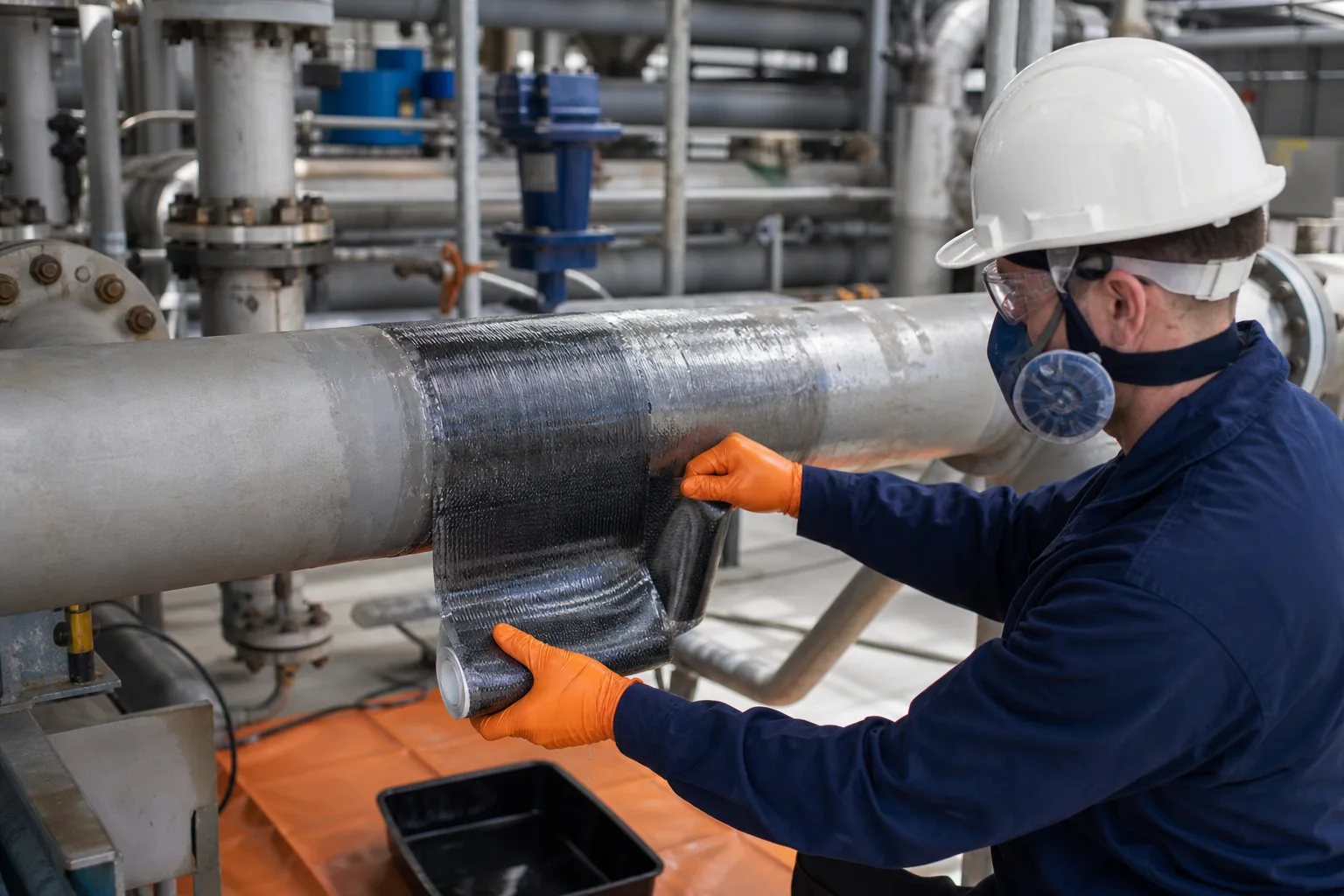
ZDS-CompositeWrap
Start here when the project requires designed composite reinforcement, FRP repair, or structural laminating.
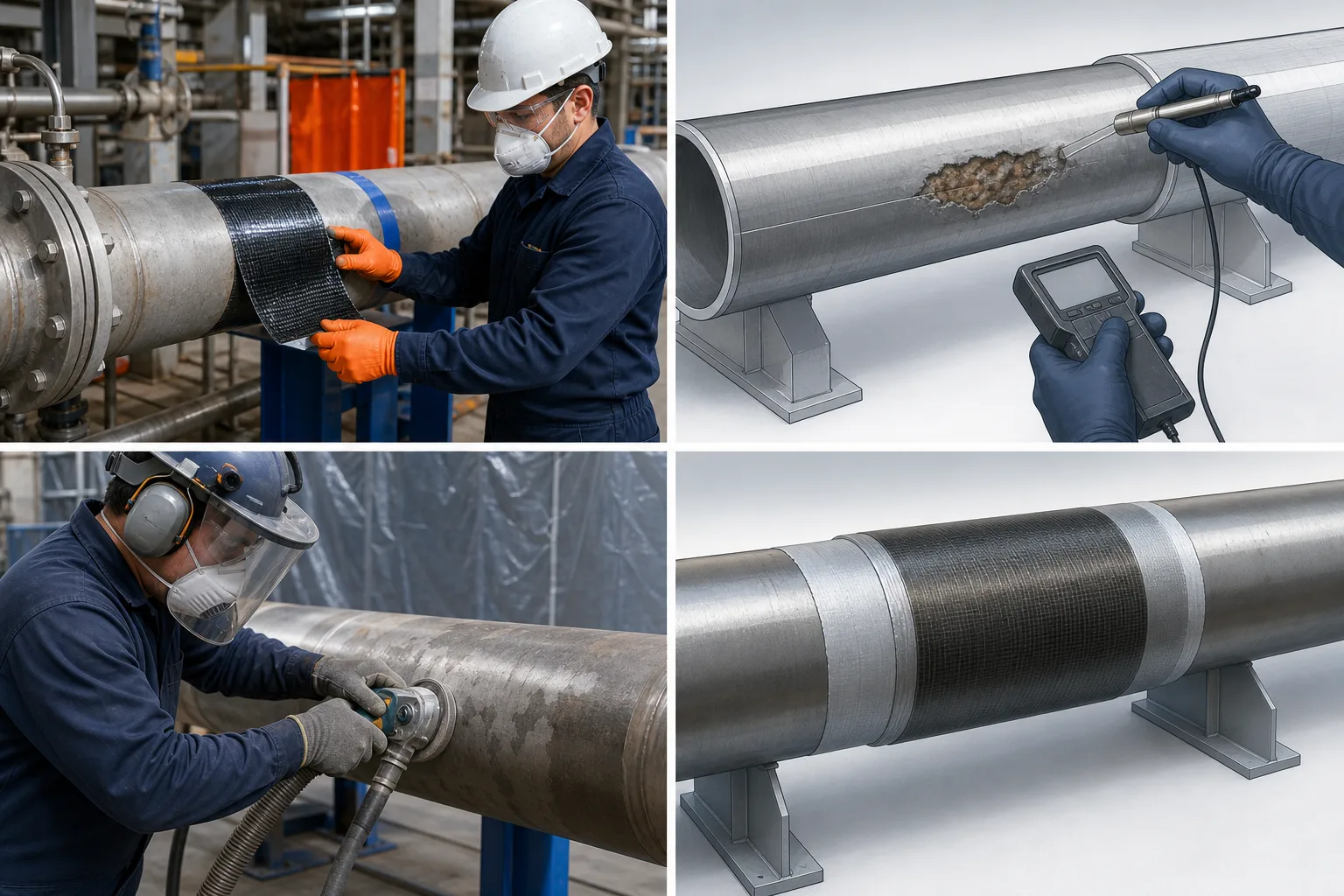
ZDS-MetalRebuild
Compare for metal rebuilding, cold repair, dimensional restoration, leak sealing, or structural bonding.
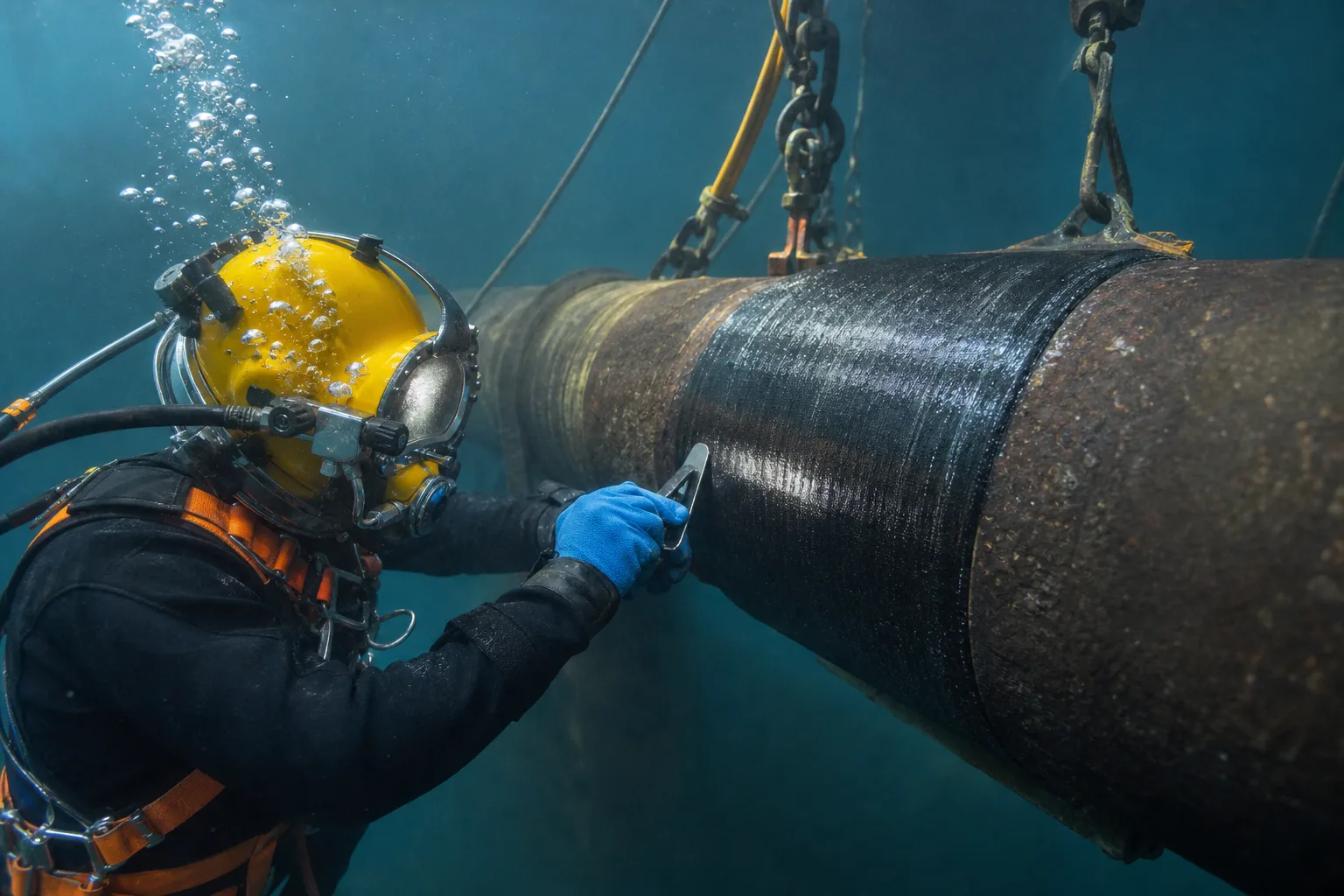
ZDS-AquaShield
Consider when wet-surface, underwater, marine, or emergency conditions control access and preparation.
ZDS-FluidGlide
Compare when high-temperature repair, chemical-resistant lining, sealing, or fluid-equipment coating is the primary need.
Selection Limits
Limitations and Escalation Points
Composite reinforcement is not an automatic substitute for replacement, welding, or an engineered pressure-containing repair. Decisions must account for pipe condition, damage cause, service environment, and failure consequences.
Active Leaks
Through-wall breaches require immediate isolation and a defined leak-control response before reinforcement is selected.
Unstable Substrates
Severely degraded, unstable, or contaminated surfaces may not provide the required bond or load path.
Complex Loading
Deformation, cracking, support failure, vibration, or complex stresses can require specialist engineering analysis.
Service Compatibility
Temperature, chemicals, pressure cycling, fluid compatibility, and exposure duration require documented checks.
Restricted Installation
Limited access, underwater work, poor weather control, or inadequate surface preparation can change the repair method.
Owner Acceptance
Owner procedures, engineering codes, inspection rules, and local requirements may govern service acceptance.
Supplier Evidence
Technical Support Behind the Product Recommendation
ZDSChem's industrial repair material platform is supported by ZDS, a professional chemical manufacturer providing chemical manufacturing, product development, technical support, and application-specific solution review.

Technical Review
Start with the Pipe and Service-Condition Data
Provide the pipe material, defect information, operating conditions, access constraints, and required repair outcome so the relevant product route and documentation needs can be evaluated before sampling, quotation, or stocking discussions.
FAQ
Frequently Asked Questions
Composite pipe reinforcement uses a bonded reinforcing layer to strengthen or stabilize a prepared pipe section. The repair route depends on the pipe substrate, defect geometry, operating service, and required engineering acceptance.
Potential candidates include localized external corrosion, wall loss, and selected mechanical damage where sufficient sound substrate remains and the load path can be assessed. A visible defect alone is not enough to confirm suitability.
An active leak or through-wall breach should not be assumed suitable for direct composite wrapping. The line may need isolation, depressurization, leak control, and engineering assessment before a structural reinforcement route is considered.
Useful information includes pipe material and dimensions, defect location and measurements, photographs, fluid, pressure, temperature, chemical exposure, cycling, access conditions, shutdown requirements, and the intended repair outcome.
Sample evaluation can be discussed after the application, substrate, service conditions, and evaluation objectives are supplied. The testing method, sample scope, acceptance criteria, and commercial terms require confirmation before evaluation begins.
No. ISO 9001 and IATF 16949 are quality-management system certifications. They do not automatically certify an individual ZDSChem product, confirm product performance, or approve a specific pipe repair application.