
ZDS-CompositeWrap Composite Pipe Repair System
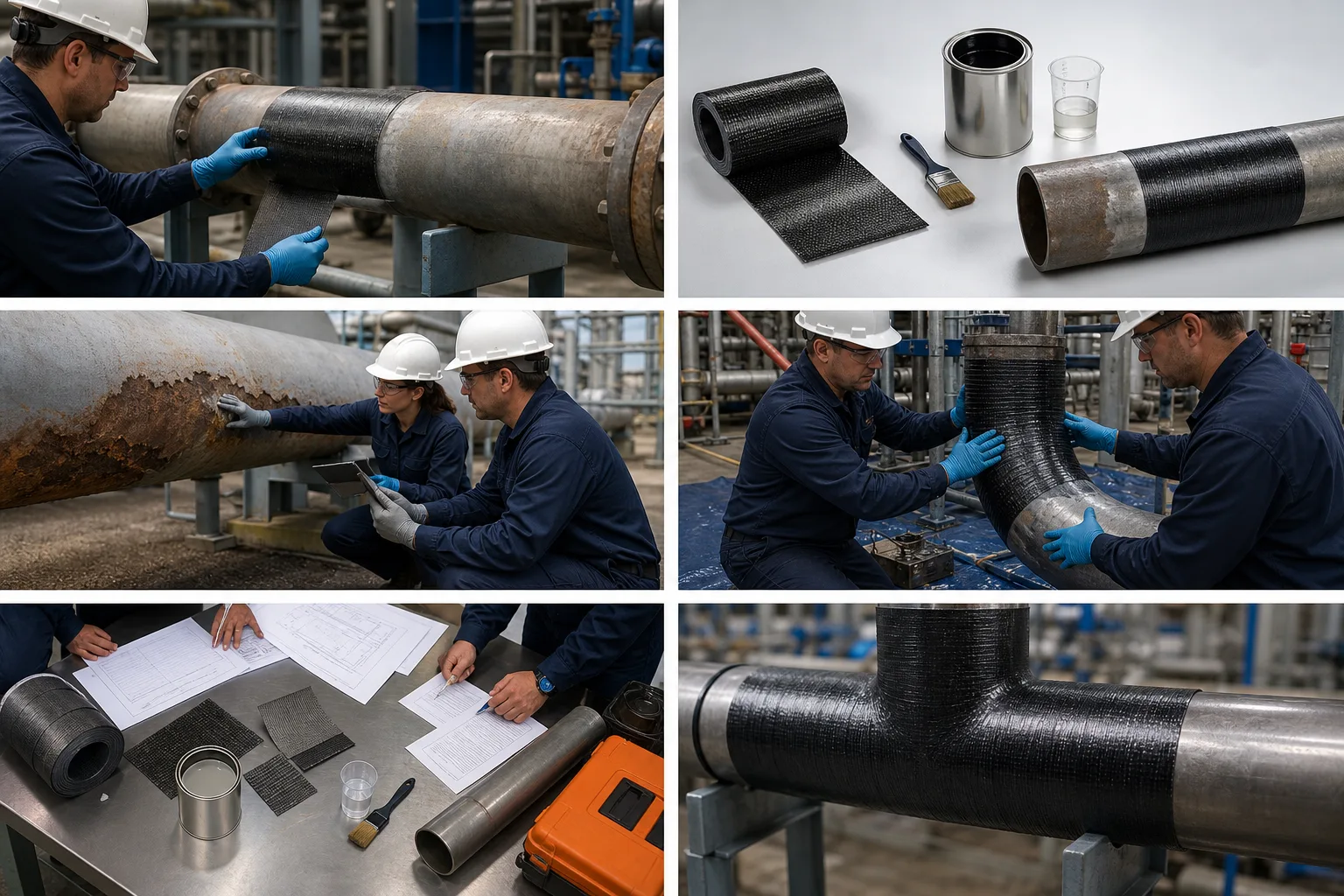
ZDS-CompositeWrap is the ZDSChem series for composite pipe reinforcement, FRP repair, and structural laminating applications. Selection begins with the pipe substrate, damage pattern, operating conditions, repair geometry, and required documentation.
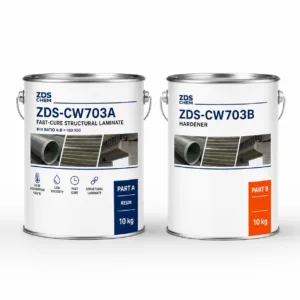
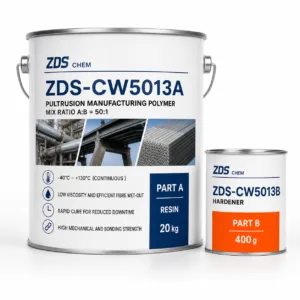
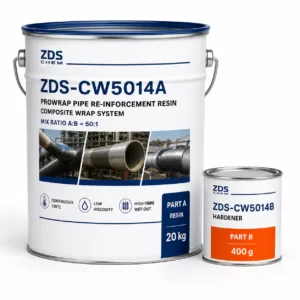
System Components
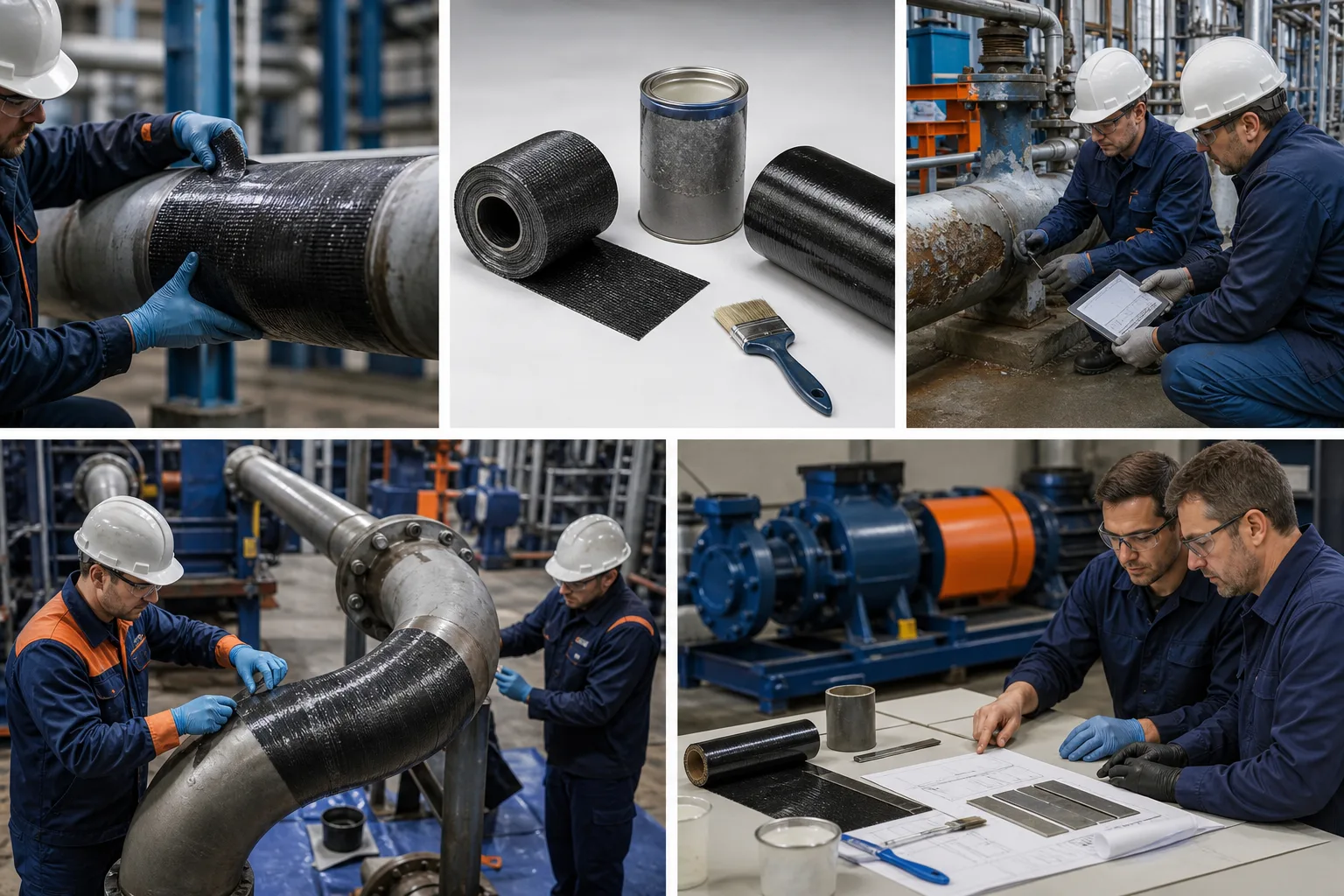
What the ZDS-CompositeWrap System May Include
The final configuration depends on the pipe, damage, service conditions, and installation method. Technical evaluation may cover reinforcement, resin selection, surface preparation, and application documentation.
Reinforcing Layer
Fabric orientation, overlap, layer count, and repair geometry are selected for the application and required engineering approach.
Resin Matrix
Selection considers substrate condition, cure environment, temperature, chemical exposure, and available installation time.
Surface Preparation
Cleaning agents, primers, conditioners, and supporting materials should be selected as part of the complete repair procedure.
Application Documentation
Instructions, technical data, safety information, and project records help teams align material selection with site requirements.
ZDS-CompositeWrap TDS Library
Compare composite wrapping, structural lamination and pultrusion systems by intended use, service temperature and cure profile, then open the model-specific technical data sheet.
| Model | Product & best for | Service temperature | Working time (25°C) | Cure profile | TDS |
|---|---|---|---|---|---|
| ZDS-CW5014 | ProWrap Pipe Re-Inforcement ResinIndustrial pipelines, metal components; structural reinforcement, sealing, repair and rebuilding. | continuous 130°C | Typical: 30-45 min | 24 h / 7 daysfull properties Typical: 12-24 h | |
| ZDS-CW703 | Fast-Cure Structural LaminateIndustrial pipelines, metal components; structural reinforcement, bonding. | Heat distortion temperature: 140°C | Typical: 5-15 min | 2 h at room temperature Typical: 15-30 min | |
| ZDS-CW5013 | Pultrusion Manufacturing PolymerIndustrial pipelines; structural reinforcement. | -40°C ~ +130°C (continuous ) | Typical: 5-15 min | 120°C x 3 min (Full cure: ); Working time: >60-120 min Typical: 15-30 min |
Application Review
Pipe Repair Situations for Evaluation
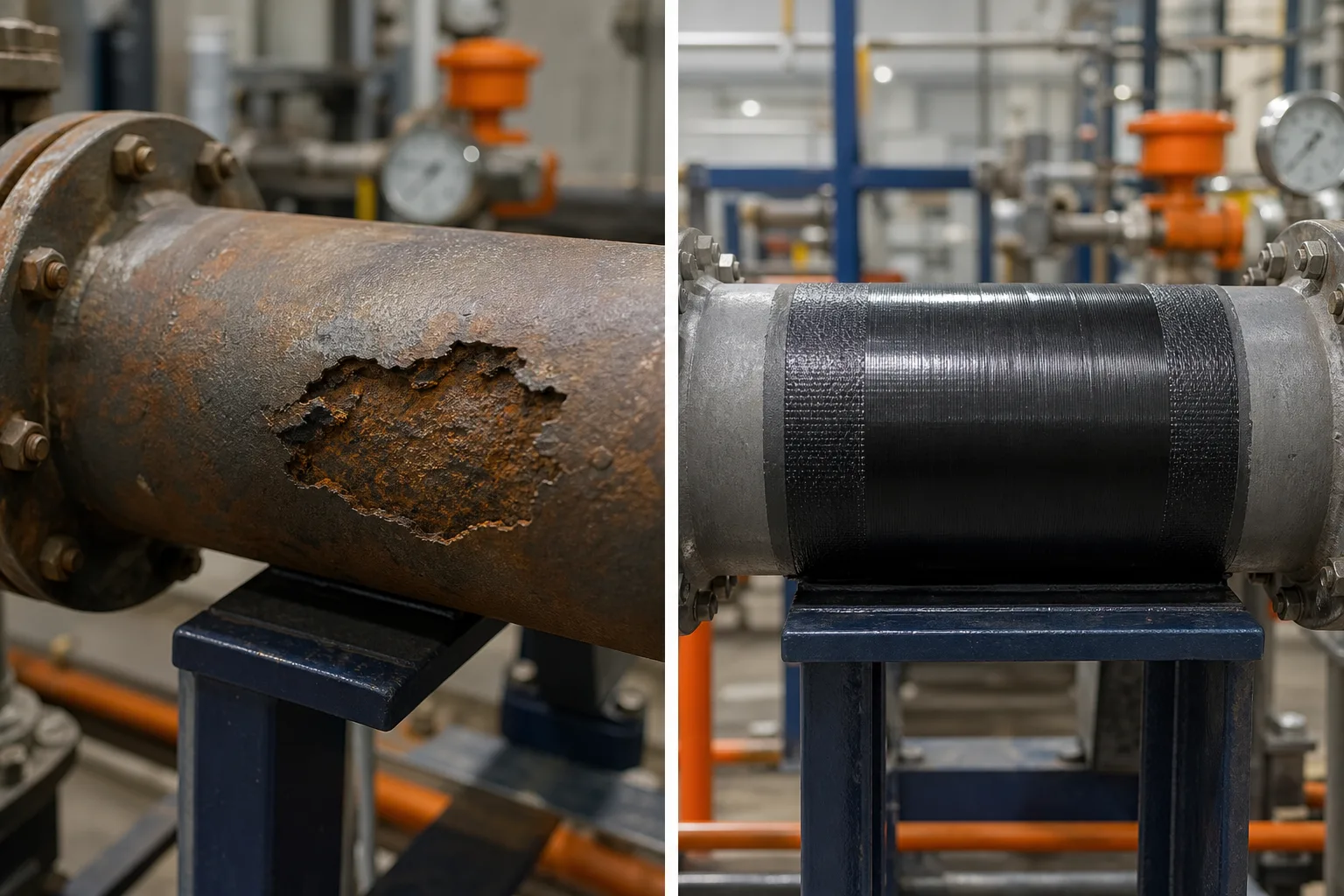
Composite pipe repair is most useful when the damaged area can be clearly identified and the remaining pipe condition is suitable for reinforcement.
Localized Wall Loss
External corrosion or localized wall thinning on process piping may be evaluated for reinforcement.
Defined Damage Areas
Pipe sections may be assessed when reinforcement is required around a clearly defined damaged area.
Wrappable Geometry
Straight runs, bends, transitions, and other geometries require sufficient access for controlled wrapping.
Documented Service
Industrial water, utility, chemical, energy, and process piping require documented operating conditions.
Planned Maintenance
Evaluation should account for the repair area, access, shutdown window, and inspection requirements.
Selection Inputs
Damage and Substrate Information Required
A composite pipe repair system cannot be selected from pipe diameter alone. Substrate, geometry, defect, inspection, and operating information are needed to prepare a practical shortlist and determine whether composite reinforcement is appropriate.
Service Conditions
Operating Environment
Final suitability requires confirmation against current product documentation and the actual repair design.
Method Comparison
Comparing Composite Repair with Other Repair Routes
The appropriate route depends on the failure mechanism, remaining substrate, safety requirements, access, shutdown plan, and engineering acceptance criteria.
Composite Reinforcement
For defined pipe damage requiring bonded external reinforcement; assess substrate, geometry, service conditions, and repair design.
Metal Rebuilding
For localized dimensional loss, worn metal, or leak sealing; assess metal type, defect profile, exposure, and finishing needs.
Replacement or Mechanical
For severe damage or unsuitable substrate; assess inspection results, site requirements, access, isolation, and approval.
Work Planning
Installation Requirements to Plan Before Ordering
Successful installation depends on more than material selection. The repair team should establish a controlled work sequence before ordering samples or project quantities.
01
Confirm the Defect
Record the damage location, dimensions, substrate condition, and available inspection evidence.
02
Define Service Conditions
Document fluid exposure, temperature, pressure, moisture, immersion, and expected operating demands.
03
Prepare the Work Area
Plan isolation, cleaning, surface preparation, access, ventilation, tools, and waste handling.
04
Confirm Repair Design
Establish wrap direction, overlap, layers, termination areas, and inspection points under the project method.
05
Evaluate the Material
Use representative samples and documented acceptance criteria before moving to bulk purchasing.
Surrounding Scope
Repairs Involving Connected Equipment
Projects involving pumps, valves, flanges, or connected equipment may require a different product combination. Define the surrounding repair scope before confirming the material system.
Technical Checks
Limitations and Technical Checks
Composite repair is not a universal replacement for welding, mechanical reinforcement, engineered sleeves, or pipe replacement. It may be unsuitable when the substrate is unstable, damage is not characterized, wrapping access is inadequate, or conditions exceed documented limits.
Confirm substrate preparation, material
compatibility, and curing conditions.
Confirm operating limits and inspection
requirements.
Confirm applicable site, industry, and
engineering standards.
Use product data sheets for material
information, not as a substitute for project-specific engineering assessment or approval.
Supplier Evaluation
Why Evaluate ZDS-CompositeWrap with ZDSChem
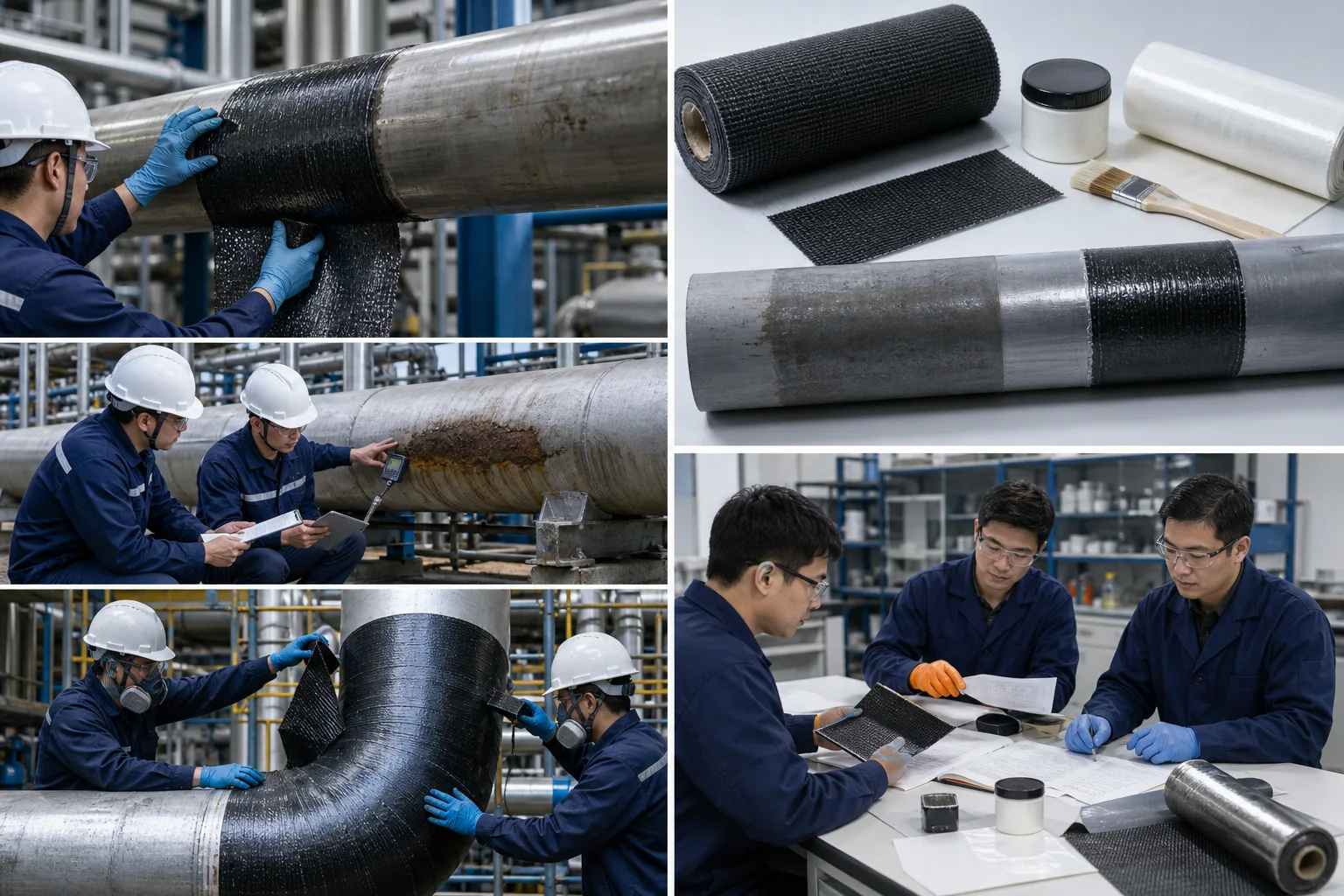
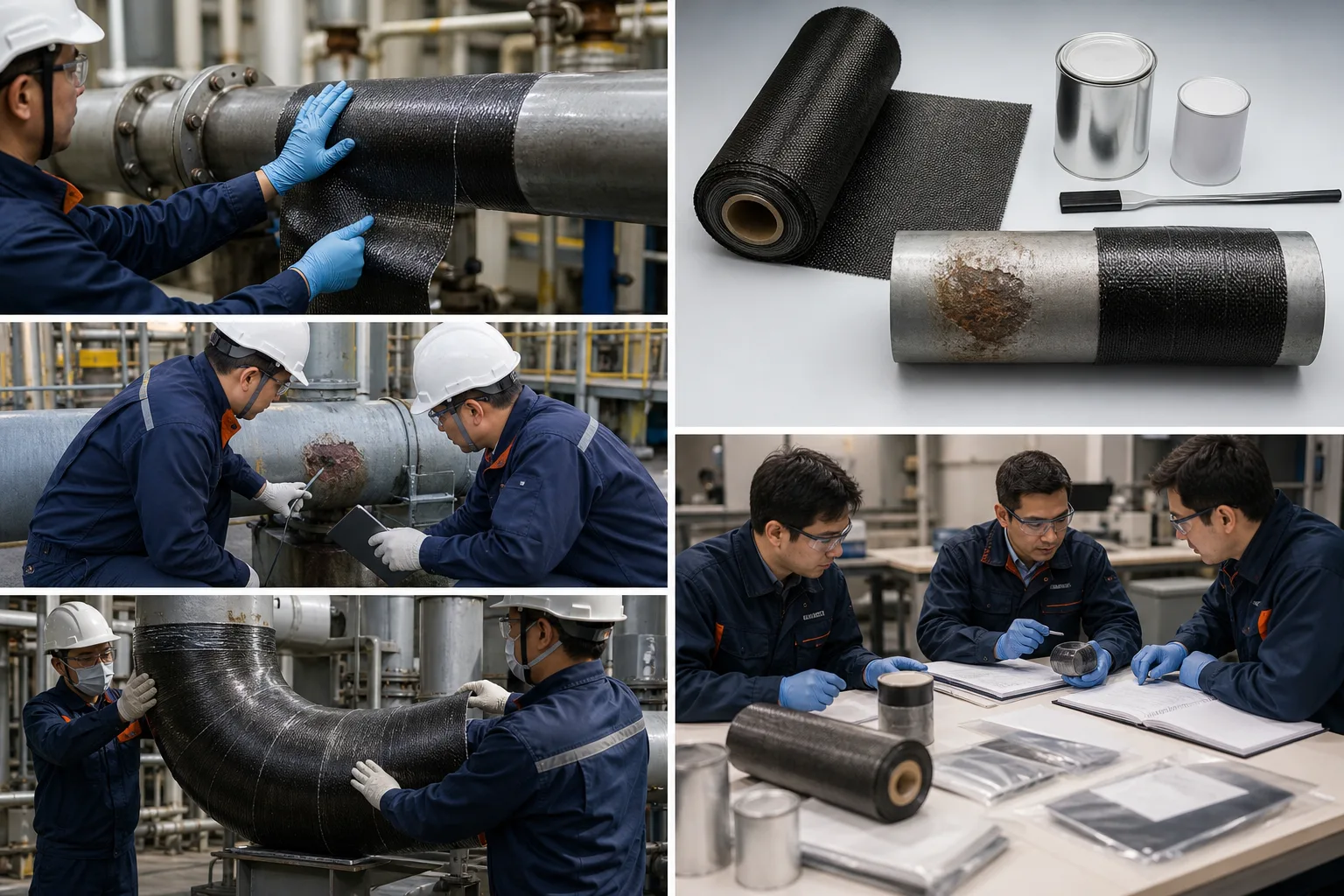
ZDSChem supports industrial buyers through product selection, technical documentation, sample evaluation, and project quotation routes. The wider ZDS chemical manufacturing background dates back to 1998.
Custom Requirements
Customer-Specific Formulation and System Review
Customer-specific formulation or system requirements can be evaluated according to the application, specification, expected volume, and target market. Technical and commercial feasibility must be confirmed after the relevant information is supplied.
Quality Framework
Quality Control and Technical Documentation
ISO 9001 and IATF 16949 support the company's quality-management and process-control framework. These management-system certifications do not certify individual product performance.
Project Evaluation
Evaluate the Repair System
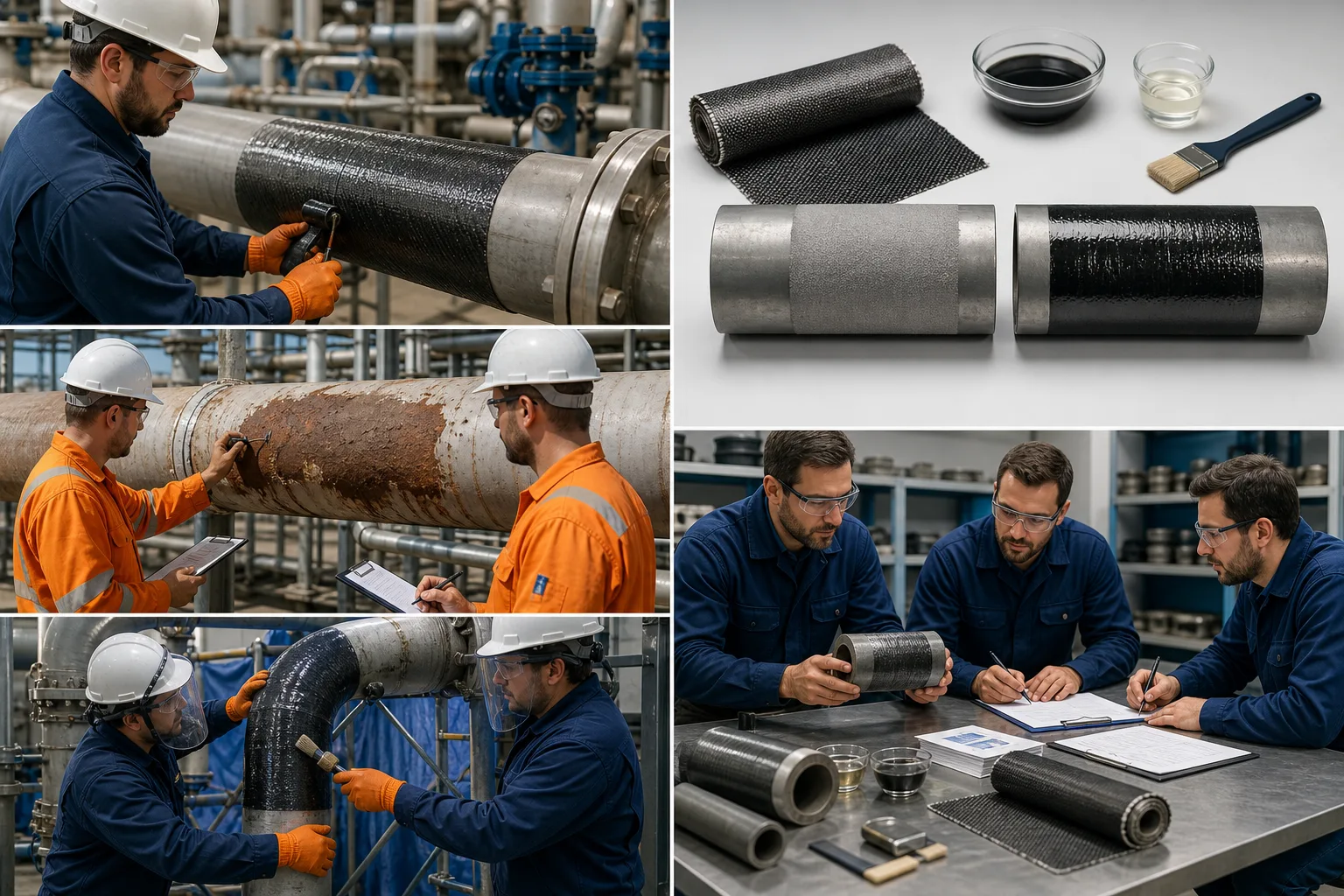
Start with a representative sample when the repair method, surface preparation, or service-condition compatibility needs practical evaluation. For a defined project, include the repair scope when requesting pricing and supply terms.
FAQ
Frequently Asked Questions
A composite pipe repair system uses a reinforcing fabric or laminate with a compatible resin matrix to reinforce a prepared pipe section. The repair route is selected according to the substrate, damage, geometry, service conditions, and project requirements.
No. Suitability depends on the source and severity of the leak, remaining substrate condition, access, isolation, service conditions, and the selected repair design. Active leaks may require isolation or another emergency containment method before composite application.
Useful information includes pipe material and dimensions, damage location and size, photographs or inspection records, fluid type, temperature, pressure, moisture, chemical exposure, access conditions, shutdown time, and the required technical documentation.
Qualified buyers can request a sample for evaluation. The sample selection and evaluation method should be matched to the proposed substrate, surface preparation, service condition, acceptance criteria, and intended purchasing scope.
Customer-specific formulation or system requirements can be submitted for technical and commercial review. Feasibility depends on the application, performance targets, expected volume, documentation needs, and target market; customization is not guaranteed before evaluation.
ISO 9001 and IATF 16949 are quality-management system certifications. They support the company’s management and process-control framework but do not automatically certify the performance, safety, compliance, or suitability of an individual product.