
ZDS-AquaShield Underwater Repair Materials
ZDS-AquaShield is the ZDSChem product series for underwater-curing, wet-surface, marine, and emergency repair material selection. It supports distributors, repair contractors, and maintenance teams when equipment cannot be fully dried or removed from service. Selection depends on substrate, damage, water movement, access, and service conditions. Confirm product-specific limits in current technical documentation.
Application Definition
What Underwater-Curing Repair Materials Do
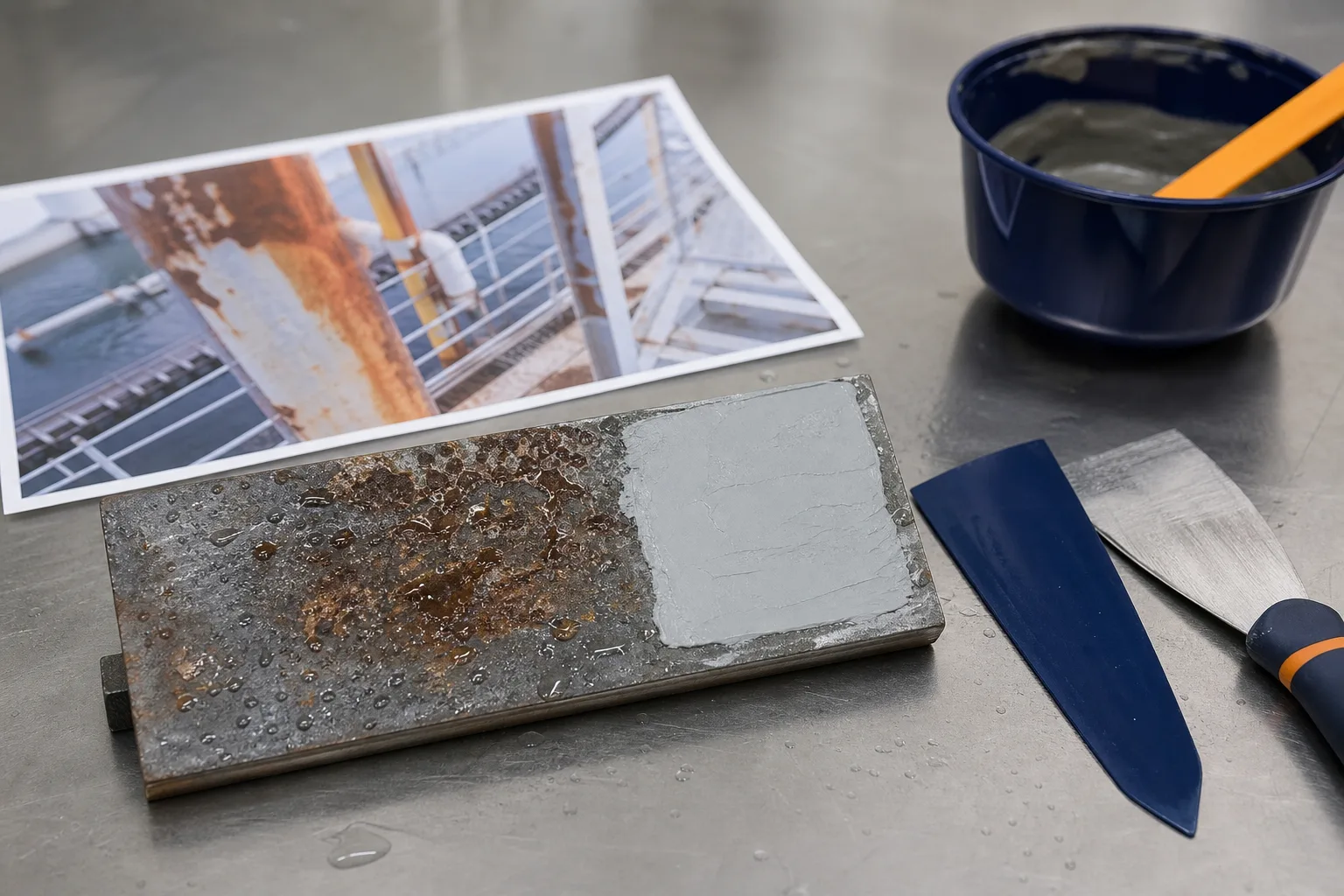
Underwater repair epoxy is a general term for a repair compound intended for wet or submerged application. It does not identify one universal chemistry or performance level. ZDS-AquaShield provides a starting point where moisture, immersion, marine exposure, or limited shutdown access affects material choice. Final selection follows product documentation and site conditions.
Wet-surface repair when residual moisture
cannot be fully eliminated.
Submerged maintenance on selected marine
water-treatment, pipe, pump, valve, or flange components.
Emergency repair planning where access
shutdown time, or dewatering affects the repair route.
Product assortment evaluation for
distributors, importers, wholesalers, and MRO suppliers serving wet environments.
ZDS-AquaShield TDS Library
Compare wet-surface and underwater repair systems by intended use, service temperature and cure profile, then open the model-specific technical data sheet.
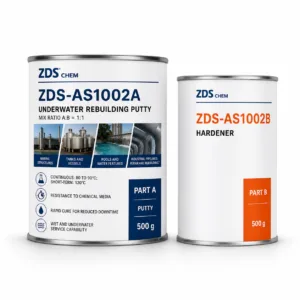
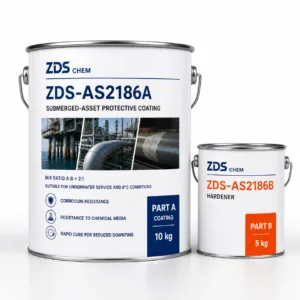
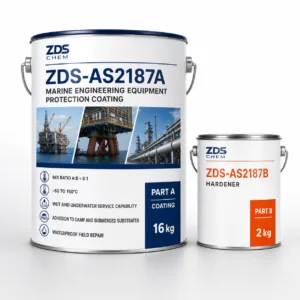
| Model | Product & best for | Service temperature | Working time (25°C) | Cure profile | TDS |
|---|---|---|---|---|---|
| ZDS-AS1002 | Underwater Rebuilding PuttyMarine structures, tanks and vessels, pools and water features, industrial pipelines; repair and rebuilding. | Continuous: 80 to 90°C; short-term: 120°C | 3-6 min | Working time: 3-6 min; Initial cure: 5-10 min; Full cure: 24 h | |
| ZDS-AS2186 | Submerged-Asset Protective CoatingMarine structures, industrial pipelines; protective coating, repair and rebuilding. | Suitable for underwater service and 0°C conditions | Typical: 5-15 min | Initial cure: 1 h / Full cure: 24-48 h | |
| ZDS-AS2187 | Marine Engineering Equipment Protection CoatingOffshore platforms, marine structures, industrial pipelines; protective coating. | -60 to 150°C | Typical: 30-45 min | 24 h Typical: 4-6 h |
Repair Conditions
Repair Situations to Screen Within the AquaShield Series
The series is organized around difficult application conditions rather than a promise that one material handles every submerged repair. Prepare the information needed for a technical recommendation.
Wet-Surface Equipment
For damp, partially submerged, or water-exposed components, record the substrate, damage profile, water movement, access, and isolation options.
Marine Maintenance
Marine intake areas, water-handling equipment, submerged fittings, and related structures may involve moisture, salt or fresh water, restricted access, and continued operation.
Emergency Repair
When dewatering or a full shutdown is difficult, assess an underwater-curing material as one possible route. Safe access, inspection, and responsible-team acceptance remain necessary.
Application Routes
Separate Wet Access from the Failure Mode
Compare equipment-specific guidance to distinguish a wet-surface problem from a structural, pressure, wear, or chemical-service requirement.
Pipe leak repair
Pump repair and protection
Valve and flange repair
Selection Criteria
Factors That Determine Underwater Repair Material Selection
A reliable shortlist begins with the repair condition, not with the word underwater alone. Use these factors to compare an underwater repair epoxy with other repair categories and identify required documentation.
Substrate and Layers
Identify metal, concrete, fiberglass or FRP, rubber-lined parts, painted areas, and other coatings. Compatibility varies between materials and grades.
Damage Geometry
Record seepage, leaks, corrosion, erosion, cracks, gaps, missing material, worn surfaces, or bonding needs, including area, depth, and edges.
Water and Exposure
Distinguish fresh, salt, or brackish water; continuous immersion or intermittent wetting; flow or turbulence; and clean or contaminated service.
Mechanical and Chemical Duty
Document pressure, vibration, movement, impact, abrasion, temperature, chemical contact, and the consequence of repair failure.
Access and Service
Record access location, isolation options, application method, working time, cure conditions, inspection plan, and return-to-service basis.
Substrate Assessment
Substrates and Damage Information to Record
A wet or submerged repair may bond to exposed metal, old coating, corrosion products, concrete, or composite layers. Photographs, sketches, and construction details help technical reviewers understand the interface.
Metal Surfaces
Identify the alloy where known, remaining wall condition, corrosion profile, loose scale, and existing coatings.
Concrete and Masonry
Note porosity, saturation, cracking, joint condition, and whether the objective is sealing, surface repair, or a load-related intervention.
Composite Surfaces
Record laminate type, exposed fibers, delamination, and whether the need is local repair or structural reinforcement.
Rubber Components
Identify rubber type where known, flexibility requirements, abrasion, and movement before comparing elastomer repair materials.
Site Conditions
Application Conditions That Affect the Shortlist
Site conditions influence preparation, placement, inspection, and product suitability. Match each condition to the current technical data for the selected grade.
Surface preparation under moisture
Remove loose material, unstable corrosion, marine growth, oil, and other contamination as far as the site and safety plan allow. Review Surface Preparation Products as a supporting category.
Water movement and access
Record flow, turbulence, tide, depth, visibility, confined access, diver or remote-tool limits, isolation options, and control of material placement.
Temperature, immersion, and service load
Compare water and material temperature, immersion, chemicals, vibration, pressure, and movement with product-specific limits.
Category Comparison
Where AquaShield Fits in a Repair Plan
This initial comparison identifies the ZDSChem series that deserves technical review. It is not a substitute for product data or engineering acceptance.
Wet or Submerged Access
Review AquaShield for underwater, wet-surface, marine, or emergency access. Confirm the grade for the substrate and service condition.
Dry Metal Rebuilding
Review MetalRebuild when the component can be isolated, dried, and repaired through metal rebuilding or dimensional restoration.
Composite Reinforcement
Review CompositeWrap when the repair requires a designed pipe reinforcement or structural laminating system.
Wear or Cavitation
Review CeramicArmor when wear protection is the primary failure-mode requirement rather than wet-access repair.
Chemical or Heat Service
Review FluidGlide when chemical exposure, lining service, or elevated temperature dominates material selection.
Evaluation Process
From Site Condition to Sample Evaluation
A structured evaluation connects site information with technical suitability and purchasing requirements.
01
Describe the asset
provide equipment type, location, substrate, dimensions, operating role, and access conditions.
02
Define the repair objective
state whether the need concerns seepage control, local rebuilding, bonding, gap filling, surface protection, or another goal.
03
Document the environment
include water type, flow, temperature, immersion, pressure, vibration, chemical contact, and return-to-service conditions where known.
04
Set evaluation criteria
agree how preparation, application, handling, inspection, adhesion, sealing, or other criteria will be assessed.
05
Plan supply after evaluation
connect accepted sample feedback with purchasing information, packaging review, and repeat-supply planning.
Use Limitations
Limitations to Check Before Use
ZDS-AquaShield should not be selected solely because a repair is underwater. Product-specific and project-specific confirmation is required before use.
Exact product grade, chemistry, cure
mechanism, and compatibility with the actual substrate or existing coating.
Water movement, depth, temperature
salinity, contamination, access, and achievable preparation level.
Active leaks, pressure boundaries
structural damage, and safety-critical equipment requiring isolation, engineering review, or formal acceptance.
Return-to-service timing, continuous
immersion, chemical contact, vibration, movement, and expected service conditions.
Whether an emergency patch is an interim
maintenance measure or an accepted repair for the intended service period.
No pressure rating, exact cure schedule
temperature limit, chemical-resistance value, adhesion value, or service-life guarantee is provided by this series page.
Company Background
Technical Background for Product Evaluation
ZDSChem applies its chemical manufacturing and formulation background to industrial repair material development. ZDS has operated as a professional chemical manufacturer since 1998. A dedicated 30-person R&D team supports product development, formulation review, product improvement, and application-specific evaluation. This background does not replace product-specific evidence or guarantee suitability for every submerged condition.
Procurement Context
Begin Procurement Qualification
Review ZDSChem company information for broader supplier and company context before beginning procurement qualification.
FAQ
Frequently Asked Questions
Underwater repair epoxy is a general term for a repair compound intended for wet or submerged application. It does not identify one universal chemistry or performance level. ZDS-AquaShield is the product series to review for underwater-curing, wet-surface, marine, and emergency repair conditions.
The ZDS-AquaShield series covers wet-surface and underwater-curing repair materials. The exact product grade, preparation method, water movement, substrate, and service conditions must match current technical documentation before use.
Substrate compatibility is product-specific. The inquiry should identify whether the surface is carbon steel, cast iron, stainless steel, concrete, fiberglass or FRP, rubber-lined, coated, or another material. A sample evaluation can help assess the selected product against the actual repair interface.
No general pressure or leak-sealing guarantee should be assumed from the series name. Active leaks and pressure boundaries require safe isolation, engineering review, and confirmation that the selected grade and repair method are appropriate for the equipment and operating conditions.
Provide the equipment type, substrate, damage type and size, water exposure, flow, temperature, pressure, chemical contact, access, preparation method, return-to-service requirement, photographs or drawings, and expected quantity. This information helps prepare a practical product shortlist.
A distributor can request a sample for evaluation, define the intended market and applications, review current technical and safety documents, and discuss purchasing requirements. Sample feedback, technical suitability, and commercial terms should be confirmed before initial stocking or repeat supply.