
Abrasion and Erosion Protection for Industrial Equipment
Limit surface loss caused by sliding solids, repeated particle impact, or fast-moving fluids carrying suspended particles. Material selection depends on equipment location, substrate, damage mechanism, media, flow, temperature, and repair access.
Wear Mechanisms
What Abrasion and Erosion Protection Addresses
Abrasion and erosion are related but distinct forms of material loss. Industrial equipment may also experience corrosion, cavitation, thermal cycling, or vibration, so selection must address the complete service condition.
Solid-Contact Abrasion
Dry solids, minerals, clinker, and aggregate can slide, roll, gouge, or cut across chutes, hoppers, mixers, and transfer points.
Flow-Driven Erosion
Particle-laden liquid or gas can cause localized loss where velocity, turbulence, impact angle, or solids loading is high.
Combined Wear
Abrasion or erosion may occur with corrosion, cavitation, thermal cycling, or vibration and require a multi-factor review.
Equipment Locations
Where Abrasion and Erosion Damage Develops
Wear is rarely uniform across an asset. Mapping damaged zones helps determine whether the work requires a surface coating, localized rebuilding, structural reinforcement, lining, or an elastomer repair route.
Slurry and Process Piping
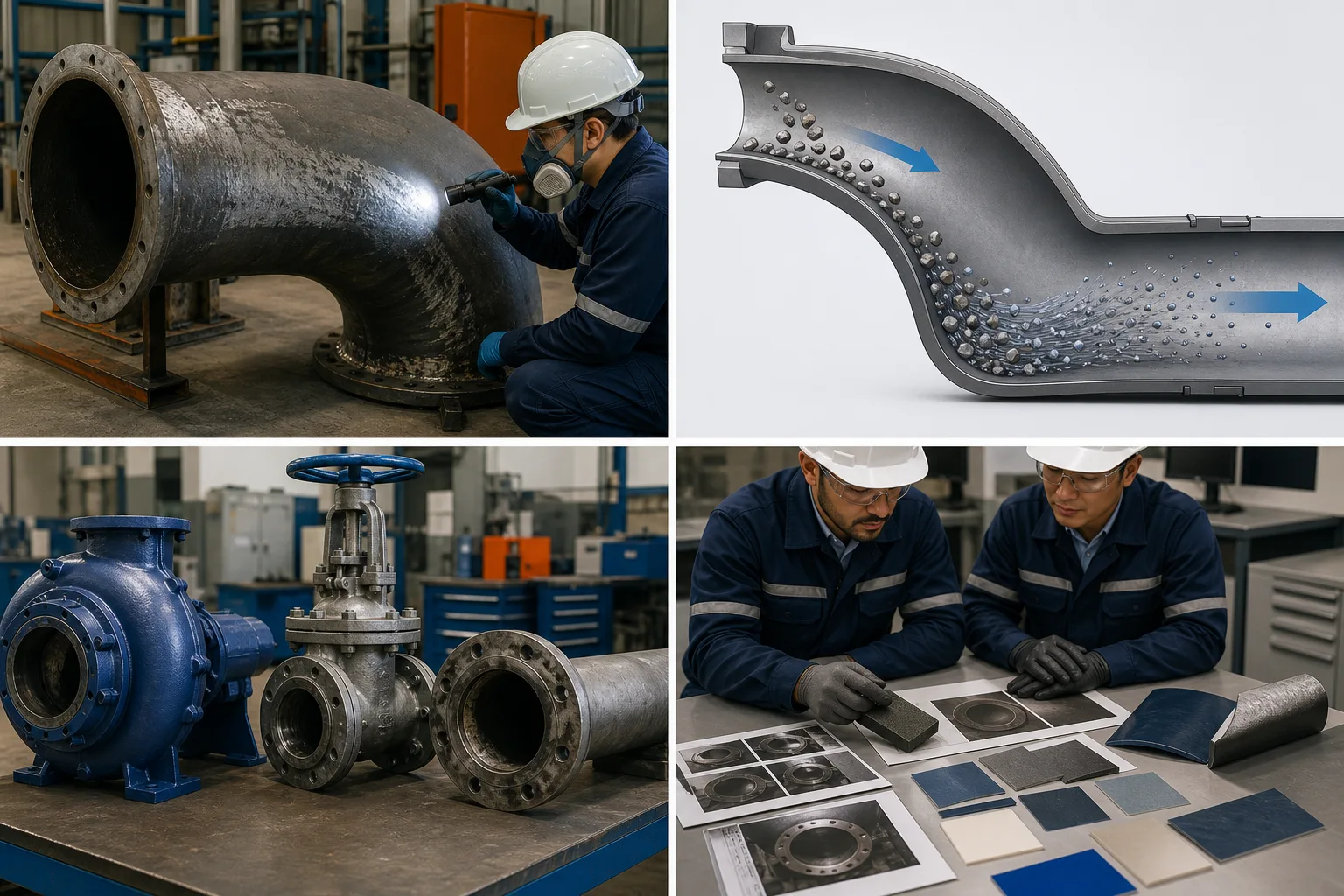
Inspect elbows, reducers, tees, branches, and sections after pumps or restrictions for concentrated particle impact.
Pumps and Valves
Casings, impeller areas, seats, bodies, and flow-control surfaces may experience combined erosion and corrosion.
Tanks and Vessels
Review inlets, outlets, agitator zones, bottoms, and areas below solids discharge points for lining or local protection.
Bulk-Material Equipment
Assess chutes, hoppers, transfer points, screw conveyors, and feeders by particle size, drop height, angle, and access.
Flue and Dust Equipment
Particle-laden gas can wear bends, ducts, fans, separators, and outlets under combined temperature and chemical exposure.
Heavy Process Equipment
Mining, cement, and steel equipment face recurring wear from abrasive minerals and process solids.
Service Conditions
Data to Review Before Product Selection
Documenting the service envelope helps narrow the material category and identify where technical documents, samples, or additional engineering review are needed.
Media and Particles
Record dry, wet, or slurry service plus particle type, size, shape, concentration, hardness, and contaminants.
Velocity and Impact
Note flow, direction changes, turbulence, drop height, impact angle, pressure, restrictions, and moving interfaces.
Heat and Chemistry
Provide normal and peak temperatures, thermal cycling, moisture, cleaning chemicals, and known corrosion mechanisms.
Substrate and Access
Identify the substrate, remaining section, existing lining, contamination, moisture, geometry, access, and shutdown window.
Material Routes
Material Routes for Abrasion and Erosion Protection
These ZDSChem series provide a practical starting shortlist but are not interchangeable. Final selection depends on substrate, damage, service conditions, application method, and current product documentation.
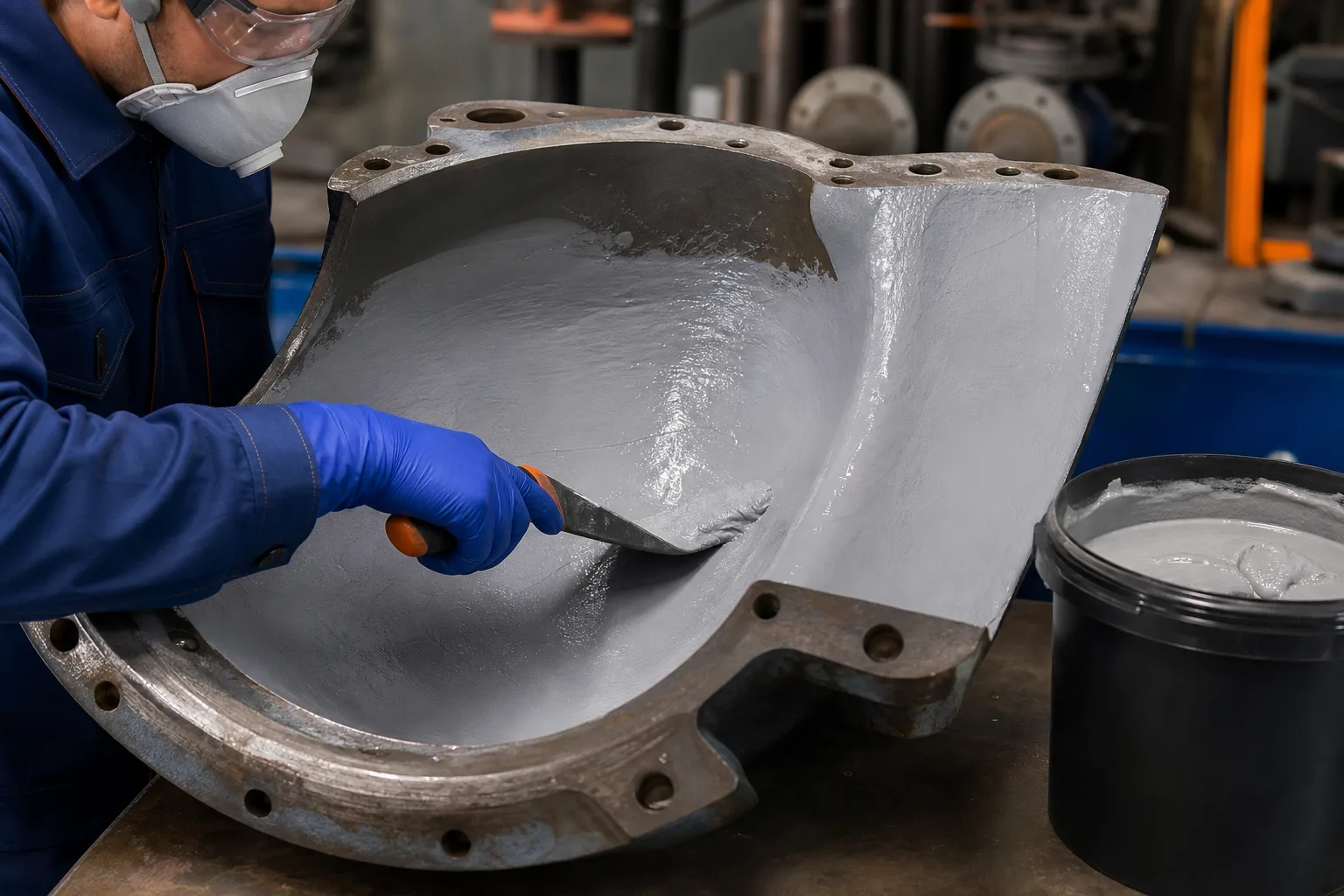
ZDS-CeramicArmor
Ceramic-filled materials for wear, erosion, cavitation, and heavy-duty equipment protection in hard-surface wear zones.
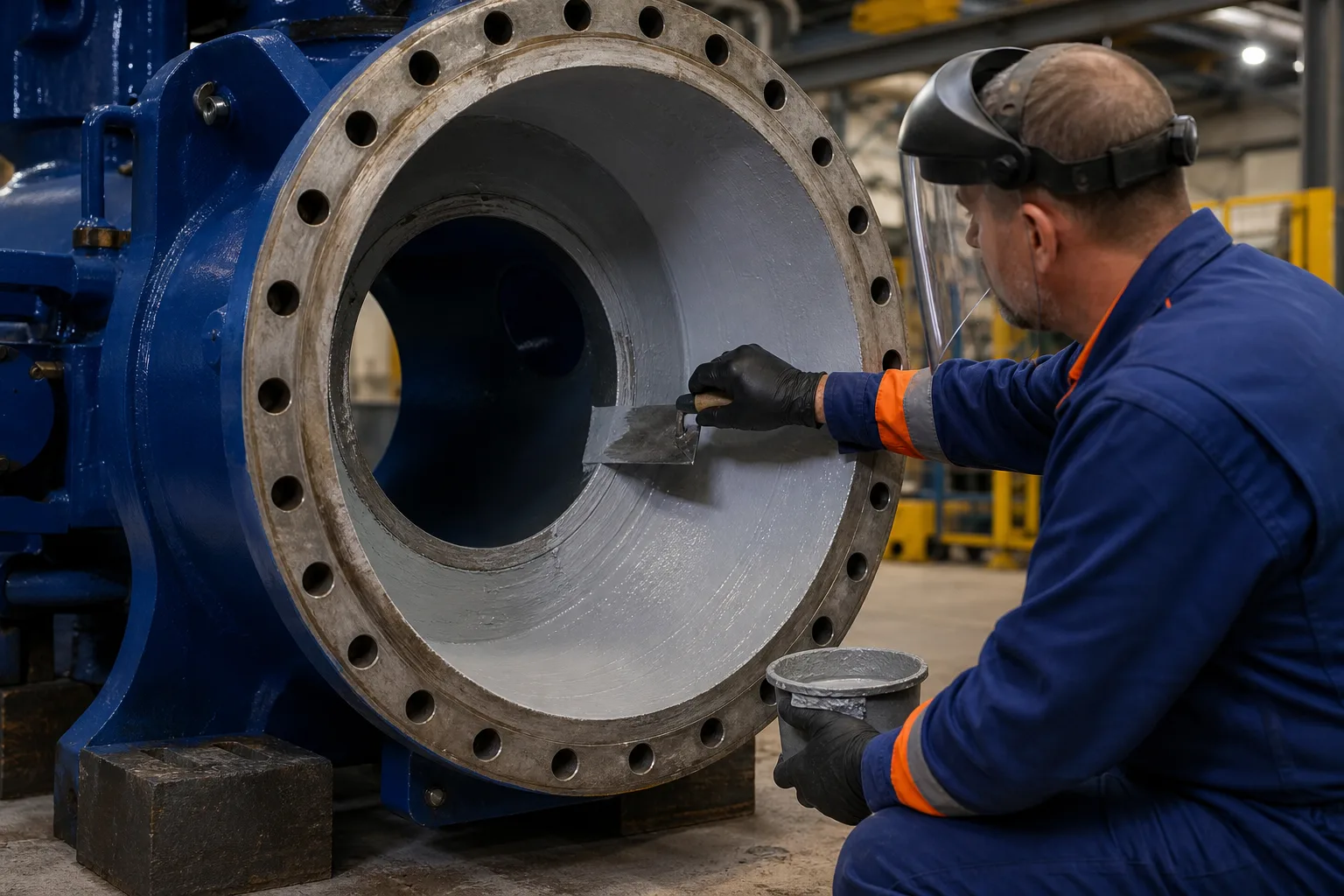
ZDS-FluidGlide
Consider when erosion occurs with heat, chemical exposure, sealing, fluid-equipment coating, or broader lining needs.
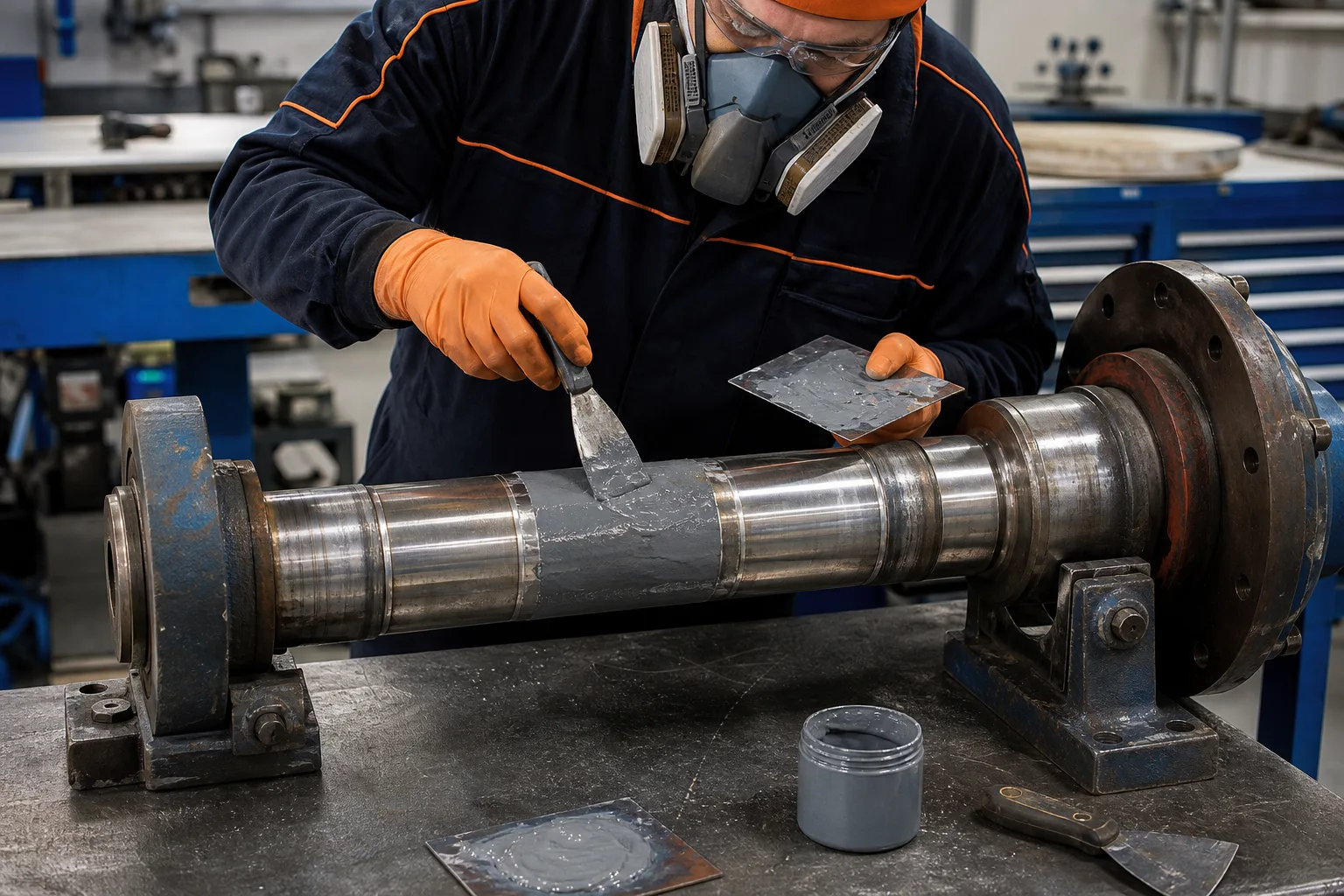
ZDS-MetalRebuild
Supports localized metal rebuilding, cold repair, dimensional restoration, leak sealing, and structural bonding.
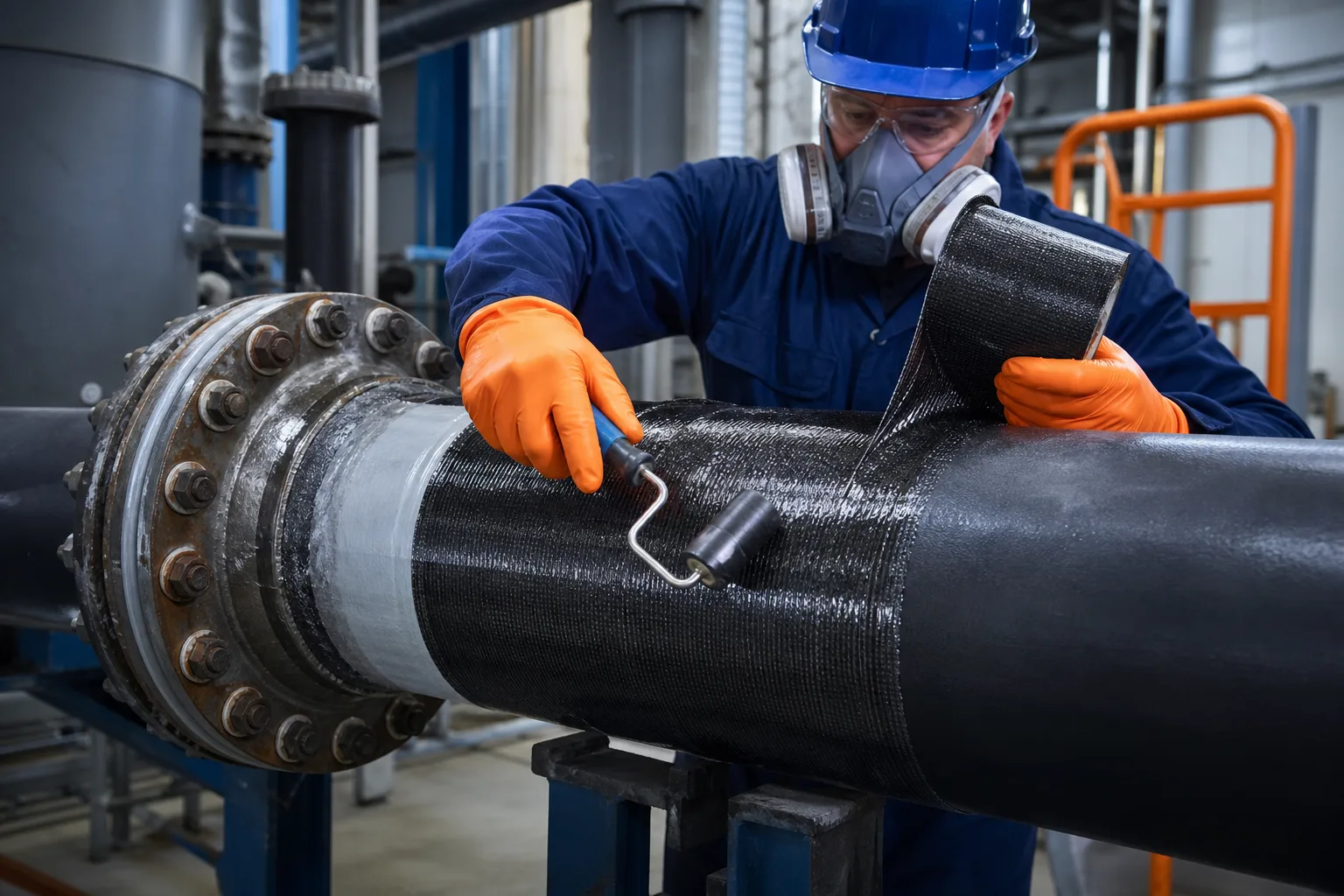
ZDS-CompositeWrap
Consider for pipe reinforcement, FRP repair, or structural laminating when structural support is also required.
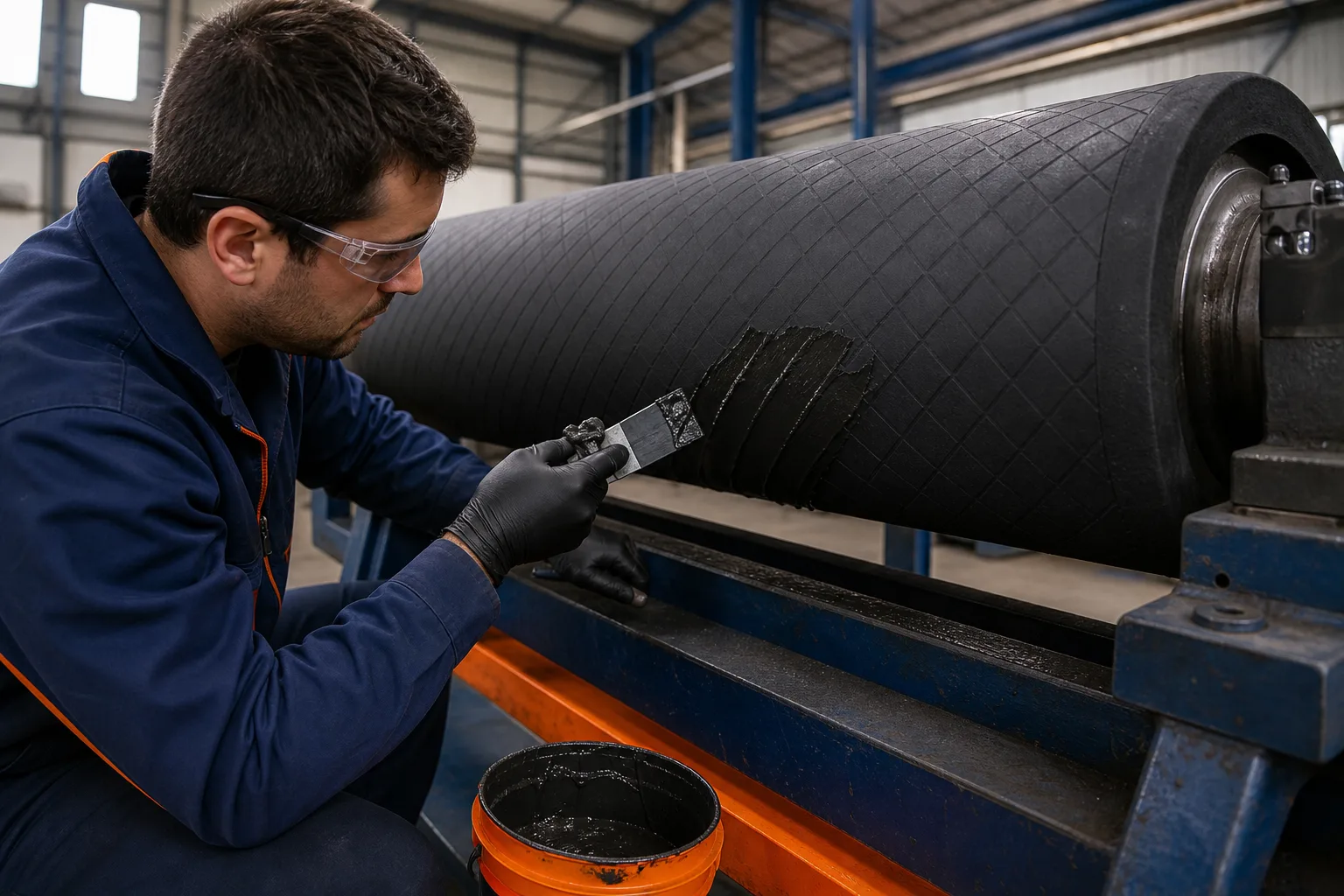
ZDS-RubberElast
Supports repair of rubber linings, belts, rollers, cables, tires, and other flexible elastomer components.
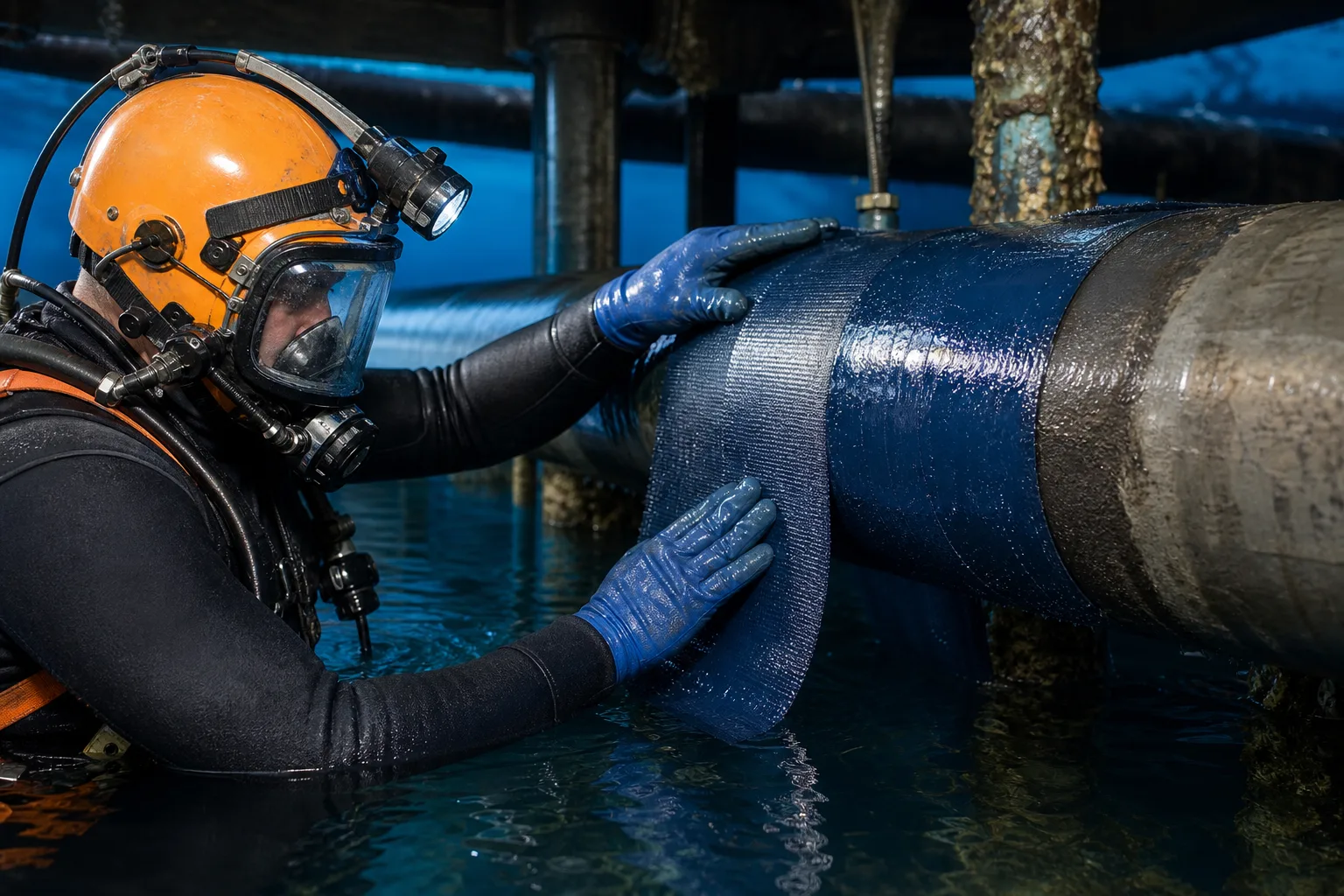
ZDS-AquaShield
Provides a separate route for underwater-curing, wet-surface, marine, and emergency repair conditions.
Repair Preparation
Thickness, Geometry, and Surface Preparation
Repair thickness is an engineering decision influenced by material loss, wear direction, edge geometry, repair area, allowable profile, load, and product instructions. Coatings, build-ups, and structural repairs have different objectives.
01
Surface Preparation
Organize the required cleaning, priming, and surface-conditioning products for the selected repair system.
02
Application Guides
Review current instructions for preparation, mixing, application, cure, and stated limitations.
03
Technical Data Sheets
Confirm documented application limits, compatibility, storage, cure, and acceptance requirements.
Evaluation Path
A Practical Evaluation Path
A structured evaluation sequence helps maintenance teams and repair contractors reduce unsuitable product requests and prepare clearer information for technical and quotation review.
1. Map the Failure
Identify the equipment, exact wear location, damage pattern, and whether loss is uniform, directional, or impact-related.
2. Record Service Data
Collect media, particles, flow, temperature, chemistry, pressure, operating cycle, and return-to-service conditions.
3. Choose a Route
Compare wear protection, lining, metal rebuilding, composite reinforcement, or elastomer repair.
4. Plan Evaluation
Define sample selection, evaluation criteria, and required technical information before bulk purchasing.
5. Confirm Supply Needs
Review evidence, documents, pack information, expected volume, destination market, and quotation requirements.
B2B Evaluation
Evaluation Support for Industrial Buyers
ZDSChem organizes selection around equipment, substrate, damage, and service condition. This supports maintenance teams, distributors, MRO suppliers, repair contractors, engineers, and procurement buyers.
Decision Limits
Limits That Affect the Repair Decision
Material selection must reflect the complete failure environment and current technical documentation. Surface protection cannot automatically correct structural damage or the underlying process cause of wear.
Process Causes Remain
Flow direction, particle loading, alignment, support, or operating practices may still need correction.
Structural Review
Severe loss, cracking, distortion, pressure-boundary damage, or safety-critical failure requires engineering assessment.
Wear Data Matters
Particle size, hardness, concentration, velocity, angle, temperature, and chemistry can change the selection.
Application Conditions
Wet, submerged, contaminated, or restricted surfaces require a repair route specifically suited to those conditions.
Current Documents Apply
Confirm preparation, cure, compatibility, storage, application limits, and acceptance requirements before use.
Technical Consultation
Turn Wear Conditions Into a Product Shortlist
Share the equipment location, substrate, wear mechanism, media, operating conditions, and repair constraints. ZDSChem can identify the relevant product category and explain which documents or samples are needed next.
FAQ
Frequently Asked Questions
Abrasion is usually associated with mechanical contact as solid particles slide, roll, or cut across a surface. Erosion is associated with moving liquid or gas carrying particles into a surface. Industrial equipment can experience both mechanisms at the same time.
ZDS-CeramicArmor is the ZDSChem series organized around ceramic-filled materials for wear, erosion, cavitation, and heavy-duty equipment protection. The final choice still depends on the substrate, particle conditions, temperature, chemistry, geometry, and current product documentation.
Not automatically. Severe section loss, cracking, distortion, or pressure-boundary damage may require an engineering assessment, structural repair, or equipment replacement. A surface coating should be selected only after the condition and safety requirements are understood.
Provide the equipment and damaged location, substrate, remaining section, media, particle characteristics, flow or movement, temperature, chemical exposure, pressure, access, repair dimensions, and planned operating conditions. Photos and sketches can support the initial review.
ISO 9001 and IATF 16949 describe certified quality-management systems. They do not certify an individual ZDSChem product or confirm its suitability for a particular abrasion or erosion application. Current certification scope and product documents should be checked when required for procurement.
Customer-specific formulation or application requirements may be reviewed according to the application, performance targets, expected volume, and target market. Technical and commercial feasibility must be confirmed before any development route begins, and a custom result is not guaranteed.