
ZDS-FluidGlide High-Temperature Repair and Chemical Linings
ZDS-FluidGlide is the ZDSChem series for high-temperature repair, heat-related sealing, chemical-resistant lining, tank lining, flue protection and fluid-equipment coatings. Selection begins with the substrate, damage, service environment and current product documentation.
Series Scope
What the ZDS-FluidGlide Series Covers
FluidGlide supports repair and protection duties affected by heat, chemical exposure, fluid contact or lining condition. It is one of seven primary ZDSChem product series. Formulations differ in application, service range, cure conditions and resistance.
High-Temperature Repair
For localized restoration or protection where continuous heat, peaks, thermal cycles and interface temperature must be assessed.
Heat-Related Sealing
For flanges, joints, housings, covers and interfaces where heat, fluid exposure, movement, pressure and gap geometry affect selection.
Chemical-Resistant Linings
For barrier duties evaluated against the specified fluid, concentration, temperature, contact pattern, cleaning cycle and duration.
Tank and Fluid Equipment
For internal or external surfaces on tanks, vessels, flues and fluid-handling equipment, subject to job-specific evaluation.
ZDS-FluidGlide TDS Library
Compare high-temperature and chemical-service protection systems by application, service temperature and cure profile, then open the model-specific technical data sheet.
| Model | Product & best for | Service temperature | Working time (25°C) | Cure profile | TDS |
|---|---|---|---|---|---|
| ZDS-FG2113 | Novolac High-Velocity Barrier CoatingHeat exchangers and tube sheets, pumps and pump casings, valves, pipe elbows and tees, tanks and vessels, flue and air ducts; protective coating. | Dry: 280 to 300°C; wet: ≤180°C | 4-6 h | Pot life: 4-6h; Tack-free: 16-20h; Full cure: 7 days (recommended post-cure 200°C x 30min) 16-20 h | |
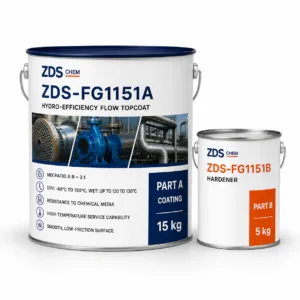
| ZDS-FG1151 | Hydro-Efficiency Flow TopcoatHeat exchangers and tube sheets, pumps and pump casings, valves, tanks and vessels, flue and air ducts, industrial pipelines; protective coating. | Dry: -40°C to 180°C; wet: up to 120 to 130°C | 35-45 min | Pot life: 35-45 min; Full cure: 7 days Typical: 12-24 h | |
| ZDS-FG4018 | Ultimate Acid-Storage Tank LinerIndustrial pipelines, metal components; protective coating. | 80°C / 120°C | Typical: 30-45 min | Tack-free: 20-24h, Full cure: 7 days 20-24 h | |
| ZDS-FG1157 | Titanium Alloy Repair CompoundPipe fittings, industrial pipelines, metal components; repair and rebuilding. | -60 to 180°C | Typical: 30-45 min | 24 h Typical: 4-6 h | |
| ZDS-FG2123 | High-Temperature Enamel Repair CompoundBoilers, flue and air ducts, furnace and refractory components, industrial pipelines; protective coating. | -60 to 200°C | Typical: 30-45 min | 24 h Typical: 4-6 h | |
| ZDS-FG2114 | 300°C High-Temperature Enamel Repair CompoundBoilers, flue and air ducts, industrial pipelines; repair and rebuilding. | -60 to 300°C | Typical: 30-45 min | 24 h Typical: 4-6 h | |
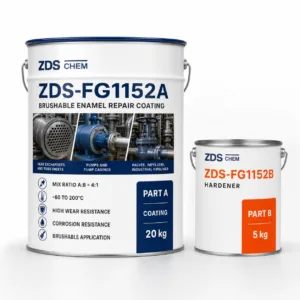
| ZDS-FG1152 | Brushable Enamel Repair CoatingHeat exchangers and tube sheets, pumps and pump casings, valves, impellers, industrial pipelines; repair and rebuilding. | -60 to 200°C | Typical: 30-45 min | 24 h Typical: 4-6 h | |
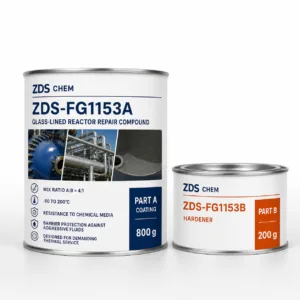
| ZDS-FG1153 | Glass-Lined Reactor Repair CompoundReactors, industrial pipelines, protective linings; repair and rebuilding. | -60 to 200°C | Typical: 30-45 min | 24 h Typical: 4-6 h | |
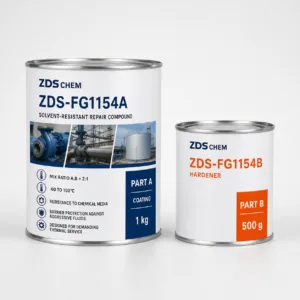
| ZDS-FG1154 | Solvent-Resistant Repair CompoundPumps and pump casings, valves, tanks and vessels, industrial pipelines, protective linings; repair and rebuilding. | -60 to 100°C | Typical: 30-45 min | 24 h Typical: 4-6 h | |
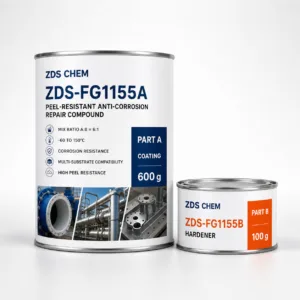
| ZDS-FG1155 | Peel-Resistant Anti-Corrosion Repair CompoundCeramic and glass-lined equipment, industrial pipelines, metal components; repair and rebuilding. | -60 to 150°C | Typical: 30-45 min | 24 h Typical: 4-6 h | |
| ZDS-FG2115 | Super High-Temperature Metal Repair CompoundBoilers, flue and air ducts, industrial pipelines, metal components; repair and rebuilding. | Typical: -40°C to +180°C | Typical: 30-45 min | Typical Initial cure: 4-6 h; Full cure: 24 h at 25°C Typical: 4-6 h | |
| ZDS-FG1156 | High-Corrosion-Resistance Enamel Repair CompoundReactors, industrial pipelines, protective linings; repair and rebuilding. | Typical: -40°C to +180°C | Typical: 30-45 min | Typical Initial cure: 12-24 h; Full chemical cure: 7 days at 25°C Typical: 4-6 h | |
| ZDS-FG2124 | High-Temperature Repair CompoundValves, boilers, flue and air ducts, furnace and refractory components, industrial pipelines; repair and rebuilding. | -60 to 300°C | Typical: 30-45 min | 24 h Typical: 4-6 h | |
| ZDS-FG2116 | High-Temperature Sealing CompoundFlanges, boilers, industrial pipelines; sealing. | -60 to 350°C | Typical: 30-45 min | 24 h Typical: 4-6 h | |
| ZDS-FG2117 | Flexible High-Temperature SealantFlanges, industrial pipelines; sealing. | -60 to 450°C | Typical: 15-25 min | 24-72 h Typical: 30-45 min | |
| ZDS-FG2118 | High-Temperature Flue Anti-Corrosion CoatingBoilers, flue and air ducts, industrial pipelines; protective coating. | -60 to 500°C | Typical: 30-45 min | Heat cure required Typical: 4-6 h | |
| ZDS-FG2119 | High-Temperature Nano-Ceramic AdhesiveHeat exchangers and tube sheets, boilers, industrial pipelines; bonding, repair and rebuilding. | -60 to 800°C | Typical: 30-45 min | Heat cure required Typical: 4-6 h | |
| ZDS-FG2120 | High-Temperature Inorganic Structural AdhesiveFurnace and refractory components, ceramic and glass-lined equipment, industrial pipelines; bonding. | -60 to 1000°C | Typical: 30-45 min | Heat cure required Typical: 4-6 h | |
| ZDS-FG2121 | High-Temperature Inorganic AdhesiveFurnace and refractory components, ceramic and glass-lined equipment, industrial pipelines; bonding. | -60 to 1200°C | Typical: 30-45 min | Ambient cure Typical: 4-6 h | |
| ZDS-FG2122 | Ultra-High-Temperature Inorganic AdhesiveFurnace and refractory components, ceramic and glass-lined equipment, industrial pipelines, protective linings; bonding. | -60 to 1800°C | Typical: 30-45 min | Heat cure required Typical: 4-6 h |
Application Planning
Where FluidGlide Fits in Industrial Repair Planning
Start with the equipment problem and service conditions, then compare the relevant material category. Application and industry guidance can help organize the operating profile before a formulation is shortlisted.
High-Temperature Equipment
Document thermal cycling, heated surfaces, flue duties and the complete operating profile before selecting a repair material.
Tanks and Vessels
Assess fluid contact, surface preparation, geometry and access for tank interiors, vessel surfaces and containment areas.
Chemical Exposure
Organize fluid identity, concentration, temperature and exposure details when corrosion or chemical attack is the main concern.
Pumps and Flow Equipment
Compare coating, sealing, rebuilding and wear-protection needs for pump casings, housings and flow-related components.
Flues and Process Systems
Consider heat, condensate, chemical gases and restricted access together when planning flue protection work.
Selection Factors
Service Conditions to Review Before Product Selection
A responsible shortlist connects the repair objective with the actual operating environment. Maintenance teams, contractors, procurement buyers and distributors should prepare the following information for technical review.
Temperature Profile
Record normal temperatures, peaks, startup and shutdown conditions, thermal cycles and temperature at the repair interface.
Fluid and Chemical Exposure
Identify the fluid, concentration, pH where relevant, contact method, cleaning chemicals and exposure duration.
Substrate and Damage
Describe the substrate, existing lining, damage type, affected area, depth, edges, joints and access constraints.
Pressure and Flow
Note pressure, vacuum, flow velocity, vibration and pressure cycling, and distinguish surface protection from structural restoration.
Application Window
Confirm whether the asset can be isolated, drained, cleaned, ventilated and cooled within the available shutdown period.
Repair Objective
Define whether the duty is restoration, sealing, chemical separation, surface protection, lining renewal or a combination.
Evaluation Process
How to Evaluate a FluidGlide Repair Route
A disciplined evaluation helps buyers avoid matching a broad product label to the wrong duty. Use the sequence below to compare repair, sealing, lining and coating routes and to plan a meaningful sample evaluation.
01
1. Describe the Failure
Record what changed, where the damage is located, whether it is progressing and whether the equipment remains in service.
02
2. Define Preparation
Identify contamination, corrosion, loose material, moisture, old coatings, access limits and cleaning or priming needs.
03
3. Build a Shortlist
Compare repair, sealing, lining and coating routes without assuming that one formulation covers every duty.
04
4. Check Documents
Review current technical data sheets, safety data sheets and application guides before approving a material for evaluation.
05
5. Evaluate Before Buying
Define the sample objective, acceptance criteria, application conditions and records needed before stocking or bulk purchasing.
Series Comparison
How to Compare FluidGlide with Related Repair Series
FluidGlide is not automatically suitable for every hot, wet or damaged component. Compare the dominant failure mechanism, substrate, preparation method, service conditions, safety requirements and current documentation.
ZDS-MetalRebuild
Compare when the main need is metal rebuilding, cold repair, dimensional restoration, leak sealing or structural bonding.
ZDS-CeramicArmor
Compare when wear, erosion, cavitation or heavy-duty equipment protection is the primary concern.
ZDS-PolyAspartic
Compare for UV-resistant, weather-stable outdoor topcoats where elevated temperature is not the only selection factor.
ZDS-AquaShield
Compare for underwater-curing, wet-surface, marine or emergency repair conditions.
Inquiry Preparation
Information to Prepare for Samples and Quotations
Technical and procurement teams can shorten the initial review by providing a clear equipment description, operating conditions, application constraints, evaluation purpose and purchasing context.
Equipment and Damage
Provide equipment type, location, substrate, damaged area, photographs and a simple sketch or dimensions.
Operating Conditions
Include normal and peak temperature, thermal cycling, fluid identity, concentration, contact pattern, pressure and flow.
Application Constraints
State preparation options, access limitations, ventilation, shutdown time and the required return-to-service sequence.
Purchase Context
Define the sample purpose, expected quantity, target market, pack or label needs and documents required for approval.
Supplier Background
Manufacturing and Formulation Background
ZDS was established in 1998 and has operated as a professional chemical manufacturer. A dedicated R&D team of 30 professionals supports product development, improvement, application adaptation and customer-specific requirement review.
Application Limits
Limits to Confirm Before Application
FluidGlide is a product series, not a universal compound. Exact temperature limits, cure times, pressure ratings, adhesion values and chemical-resistance tables must be confirmed for the selected formulation in current ZDS documentation.
Technical Data Sheets
Confirm formulation-specific properties, application requirements, cure conditions and stated service limits.
Safety Data Sheets
Review current handling, storage, hazard and safety information for the proposed material.
Application Guides
Check preparation, mixing, application, thickness and curing instructions for the selected product.
Technical Inquiry
Move from Product Screening to Sample Evaluation
Send the equipment type, substrate, damage description, operating temperature range, fluid or chemical exposure, preparation conditions, dimensions and target quantity. ZDSChem can assess whether a suitable FluidGlide route is feasible.
FAQ