
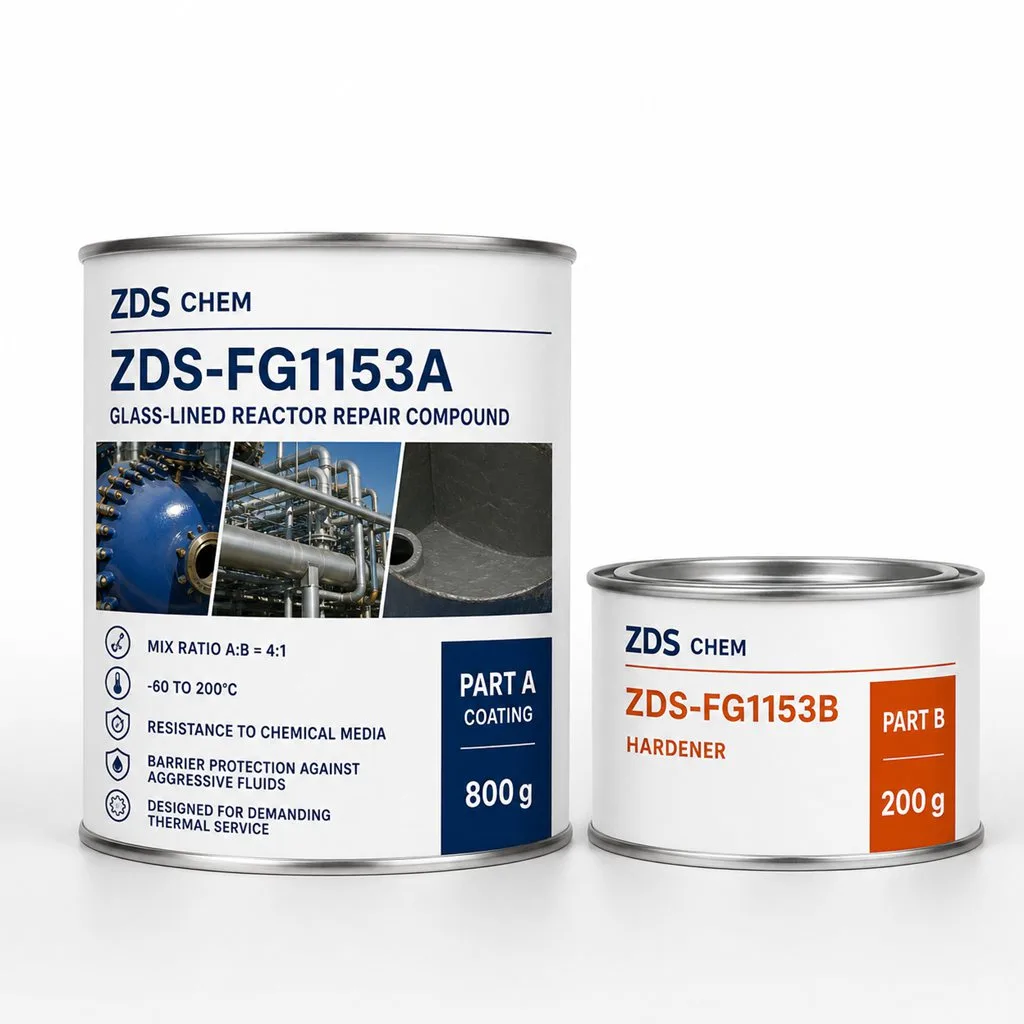
ZDS-FG1153
ZDS-FG1153 Glass-Lined Reactor Repair Compound
ZDS-FG1153 repairs and rebuilds damaged reactor, pipeline, and protective lining areas. It provides chemical resistance and barrier protection for demanding service.
Product overview
Glass-Lined Reactor Repair
Resistance to chemical media and suitability for demanding thermal service make the compound relevant to harsh process environments. Check the operating fluid, exposure conditions, repair size, and access before selecting it for a job.
Key material properties
- Chemical resistance: Identify the fluid, concentration and temperature when discussing suitability.
- Barrier protection: The fluid and exposure conditions matter when selecting the protective material.
- Thermal-service applications: Use the stated temperature limits to compare the operating conditions.
Evaluate the material
ZDS-FG1153 technical specifications
| Property | Value / conditions |
|---|---|
| Product model | ZDS-FG1153 |
| Product series | ZDS-FluidGlide |
| Product family | High-temperature & chemical service |
| Substrates and equipment | Reactors, industrial pipelines, protective linings |
| Form and color | Coating; Typical: Dark grey |
| Working time at 25°C | Typical: 30-45 min |
| Initial cure at 25°C | Typical: 4-6 h |
| Full cure / cure conditions | 24 h |
| Service temperature | -60 to 200°C |
| Recommended application temperature | Recommended: 10°C to 35°C |
| Recommended thickness per coat | Recommended: 0.5-1.0 mm / coat |
Questions about your operating conditions?
Repair Applications
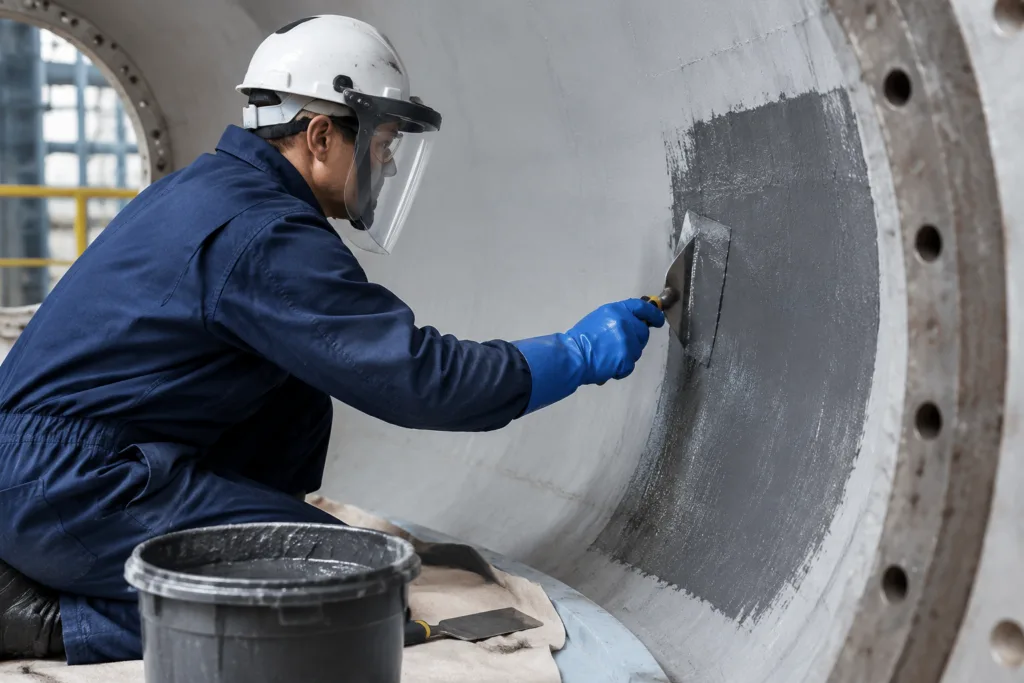
Reactors and protective linings
ZDS-FG1153 repairs and rebuilds damaged areas on reactors and protective linings. Its resistance to chemical media helps form a barrier where aggressive fluids contact the repaired surface. Identify the fluid, concentration, and temperature when checking the fit.
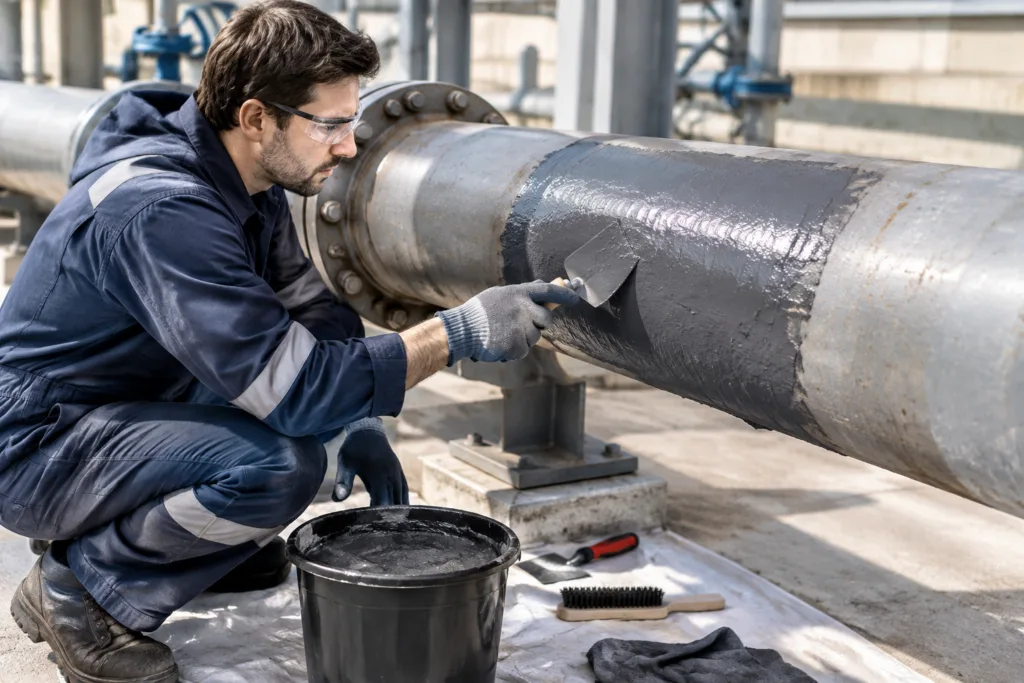
Industrial pipeline repair
Use ZDS-FG1153 for repair work on industrial pipelines where chemical exposure and demanding thermal service are part of the operating environment. The repair dimensions and available access affect how much material can be placed and how the finished area can be shaped.
Prepare the work surface
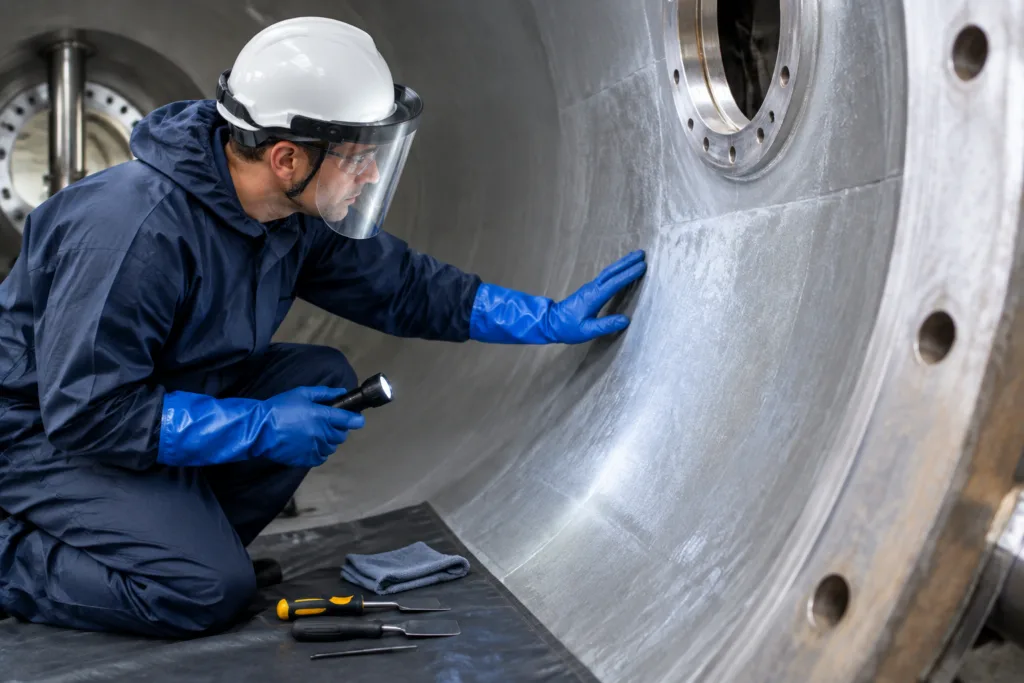
Prepare the repair area using the product-specific preparation instructions.
- Inspect the damaged area and the surrounding component for loose material and contamination.
- Arrange access to the full work area and the tools needed for the next step.
- Address contamination using the preparation method specified for this product and the actual surface.
Plan the work
Application and cure planning
- Prepare the repair area and arrange access and tools before starting.
- Mix the components according to the product instructions after surface preparation and setup are complete.
- Place and shape the repair material according to the product instructions.
- Use the technical table to plan the cure stages. Follow the applicable repair or application procedure for handling, loading and return to service.
Product selection questions
How much working time is available?
The typical working time at 25°C is 30-45 min. Complete surface preparation and setup before mixing.
What is the full-cure schedule?
Full cure: 24 h. Follow the product instructions for the applicable cure conditions.
What temperatures apply?
Recommended application temperature: 10°C to 35°C. Service temperature: -60 to 200°C. Application and service temperatures describe different conditions.
What thickness is recommended?
Recommended: 0.5-1.0 mm / coat. Use the stated thickness type and range when planning the work.