
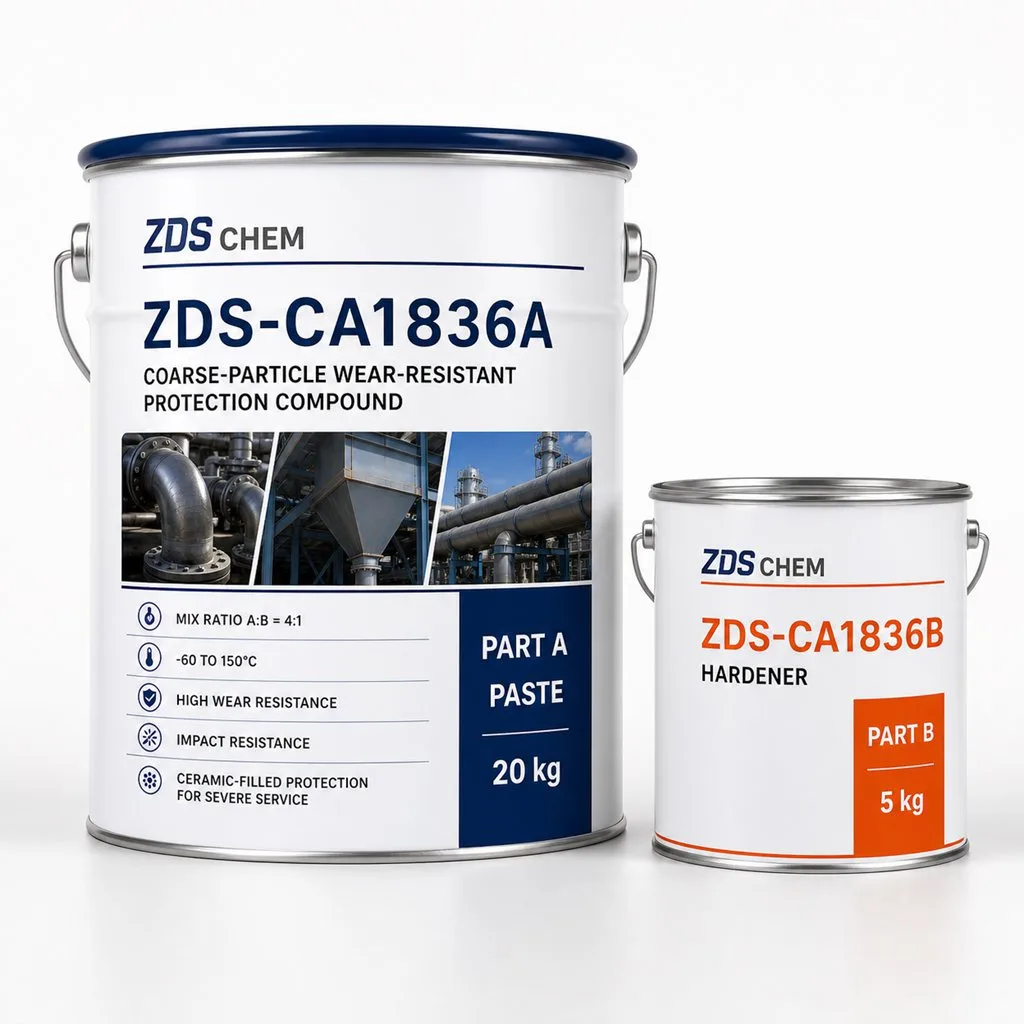
ZDS-CA1836
ZDS-CA1836 Coarse-Particle Wear-Resistant Protection Compound
ZDS-CA1836 protects industrial pipe and material-handling surfaces from severe wear. Its ceramic-filled compound offers wear and impact resistance.
Product overview
Ceramic-filled wear protection
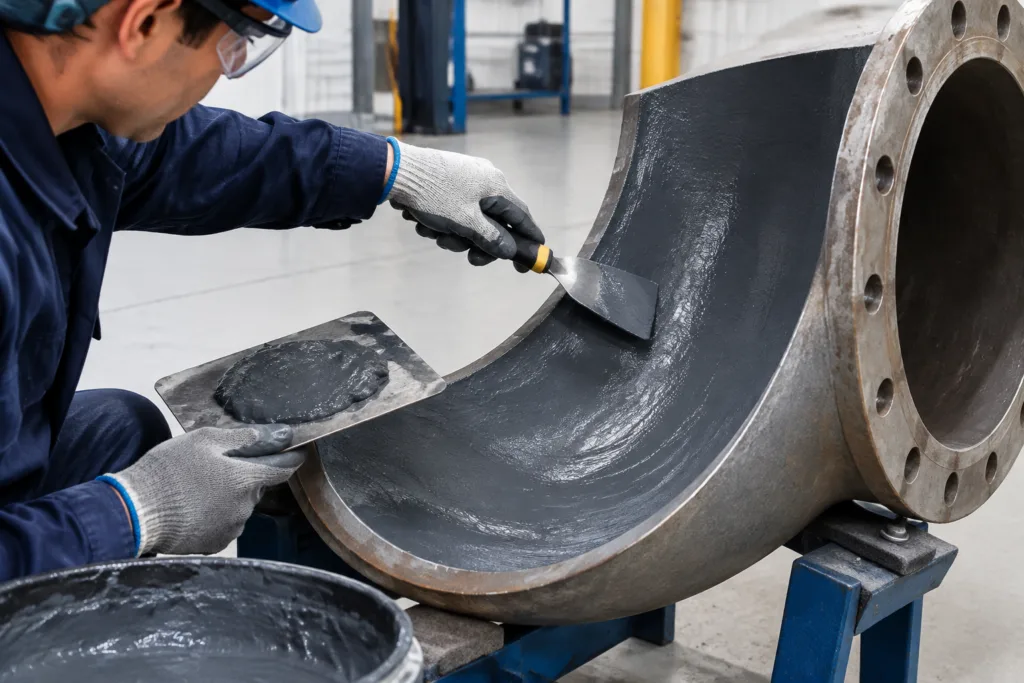
ZDS-CA1836 is a paste coating for protecting pipe elbows, tees, chutes, hoppers and industrial pipeline areas from severe wear. It is intended for slurry and bulk-material systems where exposed surfaces need a durable protective layer.
Its ceramic-filled material combines high wear resistance with impact resistance. These properties matter when material repeatedly flows across a surface or strikes it during handling. Select the product by reviewing the coating area and the actual wear or fluid exposure.
Key material properties
- Wear resistance: A useful property when selecting material for worn industrial surfaces.
- Impact resistance: A material property to consider when the component is exposed to impact.
- Ceramic-filled material: A protective material option for the equipment and exposure described for this product.
Evaluate the material
ZDS-CA1836 technical specifications
| Property | Value / conditions |
|---|---|
| Product model | ZDS-CA1836 |
| Product series | ZDS-CeramicArmor |
| Product family | Wear & erosion protection |
| Substrates and equipment | Pipe elbows and tees, chutes and hoppers, slurry and bulk-material systems, industrial pipelines |
| Form and color | Paste; Typical: Dark grey |
| Working time at 25°C | Typical: 30-45 min |
| Initial cure at 25°C | Typical: 4-6 h |
| Full cure / cure conditions | 24 h |
| Service temperature | -60 to 150°C |
| Recommended application temperature | Recommended: 10°C to 35°C |
| Recommended application thickness | Recommended: 3-10 mm |
Questions about your operating conditions?
Where to use ZDS-CA1836
Protect pipe elbows, tees and material-handling surfaces
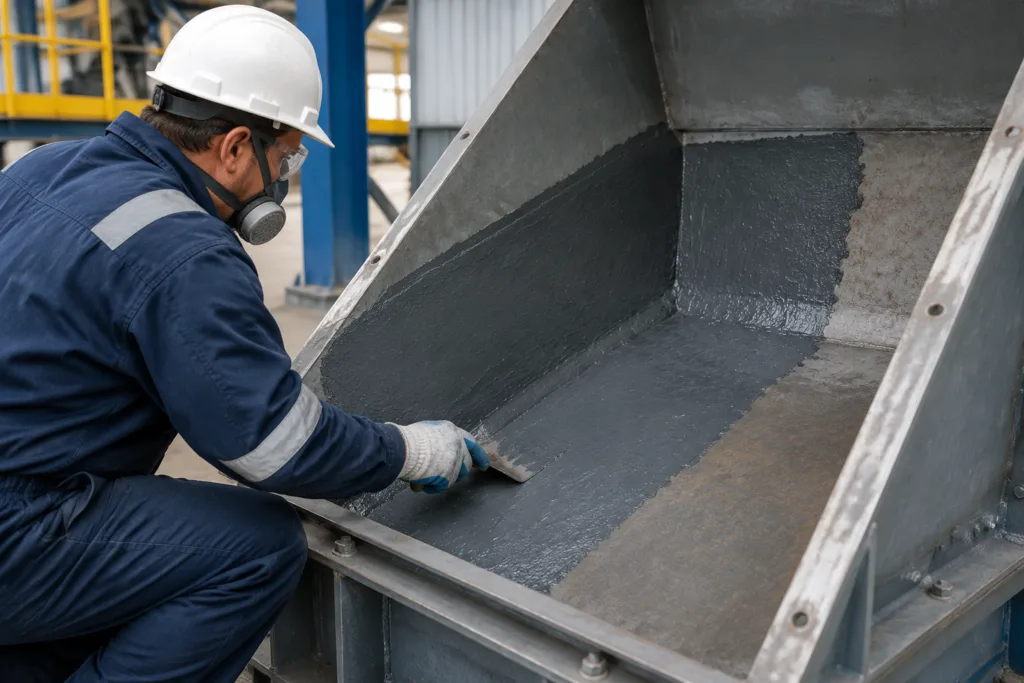
Use ZDS-CA1836 as a protective coating for pipe elbows and tees, chutes, hoppers and industrial pipeline areas exposed to wear. Its ceramic-filled composition is suited to severe-service coating tasks involving slurry or bulk materials.
Match the coating to the exposure area
Consider the size and accessibility of the surface, along with the type of wear or fluid exposure. High wear resistance helps when abrasive flow repeatedly contacts the equipment, while impact resistance matters where moving bulk material strikes the coated surface.
Prepare the work surface
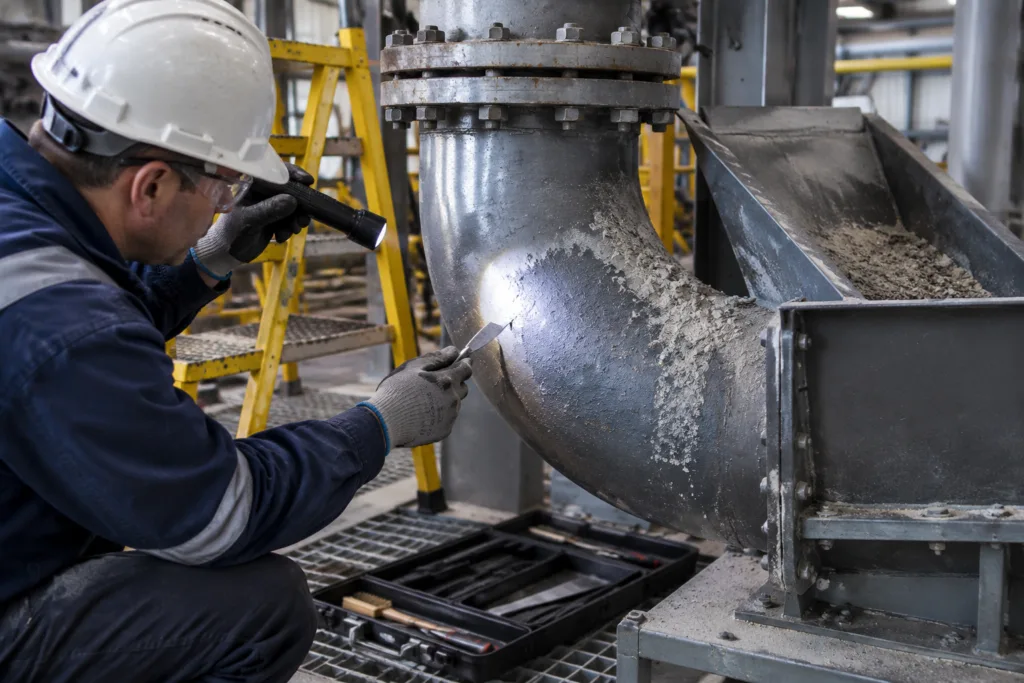
Prepare the coating area using the product-specific preparation instructions.
- Inspect the coating area for loose material, contamination and the condition of any existing surface layer.
- Arrange access to the full work area and the tools needed for the next step.
- Address contamination using the preparation method specified for this product and the actual surface.
Plan the work
Application and cure planning
- Prepare the coating area and arrange access and tools before starting.
- Mix the components according to the product instructions after surface preparation and setup are complete.
- Apply the coating or lining according to the product instructions and the recommended thickness where given.
- Use the technical table to plan the cure stages. Follow the applicable repair or application procedure for handling, loading and return to service.
Product selection questions
How much working time is available?
The typical working time at 25°C is 30-45 min. Complete surface preparation and setup before mixing.
What is the full-cure schedule?
Full cure: 24 h. Follow the product instructions for the applicable cure conditions.
What temperatures apply?
Recommended application temperature: 10°C to 35°C. Service temperature: -60 to 150°C. Application and service temperatures describe different conditions.
What thickness is recommended?
Recommended: 3-10 mm. Use the stated thickness type and range when planning the work.